by Arielle Weaver | Oct 24, 2012 | Global Cooperation, United Nations
“We are living through a period of profound turmoil, transition and transformation. Insecurity, inequality and intolerance are spreading. Global and national institutions are being put to the test. With so much at stake, the United Nations must keep pace across the spectrum of its activities – peace, development, human rights, the rule of law, the empowerment of the world’s women and youth.”
Secretary-General Ban Ki-moon
Today, 67 years ago, the United Nations Charter was ratified and, with this document, the United Nations was born. There is no doubt how significant this establishment has been and today we should take a minute to reflect on this accomplishment.
As Secretary-General Ban Ki-moon stated, the United Nations is the entity in which we as Americans can help in the global fight for human rights, women’s advancement, and peace. It is the one place in the world where all nations can come together and work together. In the final U.S. Presidential Debate, both candidates expressed support for international cooperation. Governor Romney noted: “We need to have strong allies. Our association and connection with our allies is essential to America’s strength.” President Obama stated that working with other nations was essential so that; “We do have to make sure that we’re protecting religious minorities and women because these countries can’t develop unless all the population, not just half of it, is developing. These countries can’t develop if young women are not given the kind of education that they need.”
Showing support for global institutions is (and should be) a bi-partisan issue. We all believe in universal human rights, in working against gender based violence, rule of law, and ensuring peace around the world. Having the United Nations as an entity to fight for these truths has helped us tackle the issues together and cooperatively.
Today let us all celebrate the together the men and women of the world who make the United Nations possible.
by Julia Bunting | Sep 27, 2012 | Climate Justice, Global Cooperation
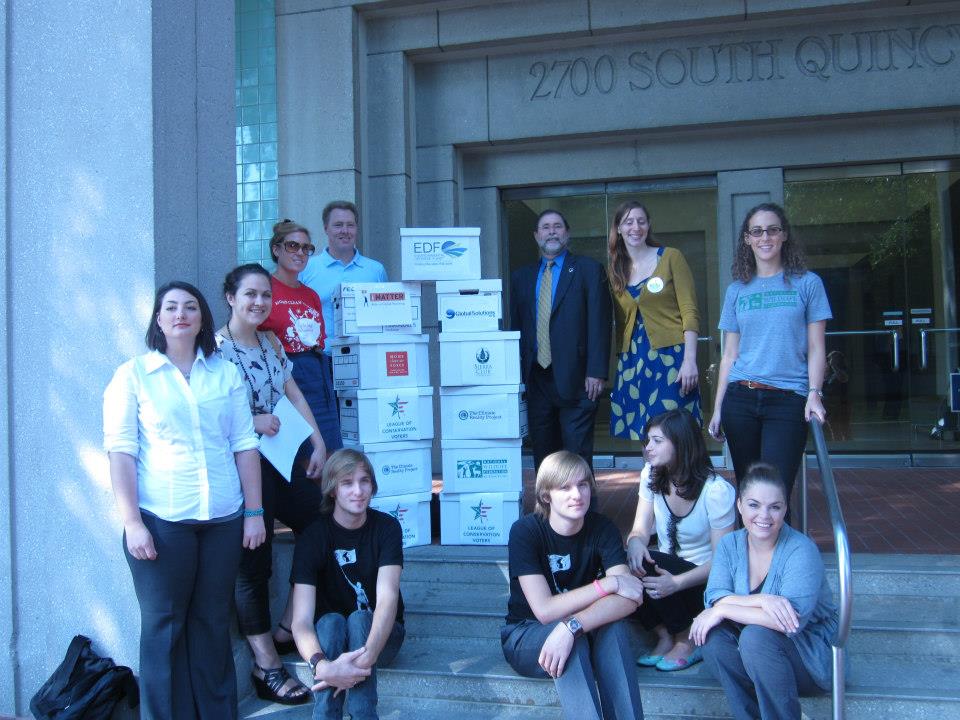
Over the last two months, the team here atCitizens for Global Solutions has been working to make climate change a bigger election issue this cycle, starting with the first presidential debate on October 3rd hosted by Jim Lehrer of PBS’s NewsHour. This morning, Citizens for Global Solutions, along with eight other organizations like the League of Conservation Voters and the Environmental Defense Fund, delivered over 160,000 of your petitions to the Newshour offices. Representatives for NewsHour accepted our petitions and guaranteed that our voices would be heard by Mr. Lehrer. According to one staff member, this petition is the largest they have received this election cycle.

Over 3,200 of the signatures were from Citizens for Global Solutions members, demanding that the presidential campaigns make climate change a focus this fall. According to Don Kraus, CEO of Citizens for Global Solutions, “Climate change is a global challenge that affects Americans and people worldwide. The next leader of the free world must have a plan to address it. What good is a debate about bolstering the economy when the environment it rests upon is degrading? Mr. Lehrer must hold President Obama and Governor Romney accountable on this critical issue.”
Thanks to your support, we’ve brought climate change to the attention of the first debate moderator. We aren’t going to stop until we’ve heard a serious debate from our candidates on how they’re going to address one of the most pressing issues of our time!
For more information on both Romney’s and Obama’s statements on climate change, check out the interactive guides we’ve created on Storify:
http://storify.com/GlobalSolutions/barack-obama-energy-and-climate-change-1
http://storify.com/GlobalSolutions/mitt-romney-climate-change-and-energy
by Carolyn Blake | Sep 13, 2012 | Global Cooperation, News, Peace & Disarmament
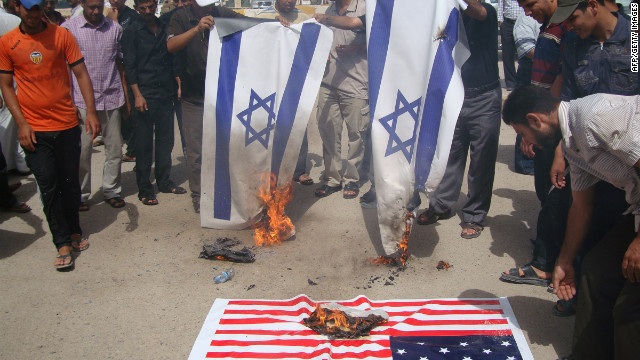
The violent protests against a U.S.-based film that started in Egypt last Tuesday continue to spread throughout the Arab world. The most notable of these occurred outside the U.S. embassy in Libya, where four American diplomats lost their lives. Anti-American demonstrations have also been reported in Yemen, Tunisia, Morocco, Sudan, and Gaza City.
Among the four Americans lost, was the U.S. Ambassador to Libya, Chris Stevens. Ambassador Stevens was a career diplomat who was committed to working with the Libyan people. He was the American envoy to the revolutionaries during the uprising in Libya, and helped bring down Moammar Gadhafi. Ambassador Stevens embodied what it truly means to be a diplomat. He was passionate about building a relationship between the United States and Libya, and cared about the people, not just the politics. He helped free the Libyan people, and his death is a tragedy for American diplomacy.
Among those killed, was also U.S. Foreign Service Information Management Officer Sean Smith. Smith was assigned to Libya on a temporary mission. Our diplomats overseas are more than just our representatives or negotiators; they are our peacemakers, our community builders, our innovators, and our trailblazers. They commit their lives to serving the greater good.
The motivation from these protests came from a film produced in America, called the Innocence of Muslims. The film was a gross depiction of the prophet Mohamed, who is characterized in the film as a child molester and womanizer, among other things. The film is insulting to say the least, but such depictions are considered more than insulting in the Muslim world, where they do not have the same notions about free speech. However, the film was widely unknown to the American population before the events last Tuesday. It was not being shown in our movie theaters or advertised on our television networks.
Still, this obscure film inspired Islamic groups within several countries to set U.S. embassies ablaze, and tear down American flags. It is not just the American people who are confused as to where this film came from, but the cast and crew themselves. In interviews, cast members have stated that they were unaware of the intent of the film and do not even remember a Prophet Mohamed in the original script. It is said that the Producer, thought to be Israeli-American Sam Bacile, misled the crew and re-edited the film.
It is sad and unjust that the actions of one person would lead to the death of American diplomats and the maligning of the United States. In a moment of anger, protestors confused a little-known film motivated by one individual and the United States government as a whole. While the film’s offensive attitude towards Muslims is ill-advised, nothing justifies taking the lives of innocent diplomats trying to promote peace and democracy abroad. The Obama Administration has said that the U.S. will work with the governments of these countries to bring the groups behind these killings to justice.
by Sean Langberg | Aug 15, 2012 | Climate Justice, Global Cooperation
Much has been made of the sizzling weather this summer. You’ve heard about it around the water cooler and in line at Starbucks. This week, the National Oceanic and Atmospheric Administration announced that July was the hottest month in United States history. 3,215 daily high temperature records were set or tied in June. More than 63 percent of the country in the lower 48 states is experiencing drought. Whether the high temperatures are caused by a broader climate change trend is unclear, but the heat will inevitably affect short-term crop supply, meat prices, and land arability. Moreover, the heat, if part of a climate change regime, could also affect the frequency, duration, and intensity of armed conflicts.
The side supporting the idea, partially made popular by Jeffrey Sachs, says areas most affected by rising temperatures such as the Sahel and Horn of Africa will also experience more armed conflicts. The causes of the conflicts will be droughts, desertification, water and food scarcity, and population pressure. Sachs cites long-term conflicts in Afghanistan, Chad, Ethiopia, Iraq, Pakistan, Somalia, and Sudan as places where “tribal and often pastoralist communities [struggle] to survive deepening ecological crises.” This fight for survival eventually turns into armed conflict in those communities.
The side denying the link claims that conflicts exclusively arise because of political, social, or economic tension not caused by environmental stress. John Ransom of Townhall.com claimed that wars in the Global South are “so numerous that [he] could probably make a statistical argument that one in five wars are due to the AFC winning the Super Bowl” alleging an erroneous correlation between climate change and conflict.
There are two moderate positions that bridge the divide between the absolutist stances above: climate as a conflict multiplier and climate as a conflict intensifier. The conflict multiplier theory states that climate change causes new conflicts and prolongs existing ones. This is the more radical of the two bridge theories in that it projects an increased frequency in conflicts. Conversely, the conflict intensifier theory claims that climate change will intensify and potentially lengthen conflicts caused by tensions relatively unrelated to environmental stress.
Reconciling the two moderate positions is a separate project, but noting key complicating factors is essential. First, conflicts are caused by many stressors that bring a situation from cold and tense to hot and violent. Political tension, leadership transitions, economic shock, rights suppression, weapons acquisition, state aggression and minority rule are among thousands of other conflict-drivers. Often, if not always, these drivers overlap to cause large-scale violence. Conflict in Sudan is not only driven by ethnic tension; conflict in the Democratic Republic of the Congo is not only caused by outside intervention; conflict in Burma is not only caused by military control of government. It is becoming increasingly clear, however, that environmental stress caused by climate change should be included in the set of factors that cause, reinforce, and intensify conflict.
Clearly climate change and conflict are both complex issues which makes drawing a direct connection between the two difficult. Unlike conflict-drivers such as leadership transitions, it must be proven that climate change caused sufficient environmental stress which damaged local economies enough to spark violent tension. For example, Habyarimana’s death in mid-1994 almost certainly sparked violence in Rwanda that killed about 800,000 people in three months. But the link between environmental stress and genocide in Darfur, deemed the first “climate conflict,” is weaker, but still plausible. Minority ethnic groups in Darfur scrambled for resources throughout the late 1990’s and 2000’s while the central government in Khartoum rushed to secure arable land and water as sanctions crippled their economic infrastructure. However, it’s equally plausible that Khartoum’s aggression and the Darfuri response was caused by a mix of ethnic tension, state instability, and economic woes unrelated to climate change.
Viewing conflict through a climate change lens could be an opportunity for the atrocities prevention community for two reasons. First, it provides an opportunity to connect the environmental and civilian protection movements. The two are largely considered to be mutually exclusive, in youth and adult circles, but drawing a clearer line between the two would expand the respective constituencies and provoke innovative thought leadership. Suddenly, the Sierra Club, Enough Project, and 350.org have a reason to collaborate. Second, it helps solve a problem plaguing civilian protection communities. Often people do not engage with the movement because it does not affect them directly. Civilians dying in Darfur or North Kivu are seen as too far away by the average US citizen and too disconnected from their daily lives. If climate change is added to the list of reasons mass atrocities and genocides occur, advocates can potentially connect their neighbors’ transportation methods, eating habits, and housing choices to conflict thousands of miles away. Simply, our everyday choices can cause and heighten existing tension.
The connection also opens new space for legislators interested in curbing domestic greenhouse gas emissions. Environmental advocates are often plagued with the stigmas of being a “tree hugger” or those pesky people reminding us to turn down the air conditioning. However, a link to conflict allows climate change to be a national security issue rather than a special interest, making it an easier sell in Congress. If lawmakers address greenhouse gas emissions, they are ensuring a more stable environment, but they are also preventing violent threats. Moreover, climate change as a prevention measure could also be seen as in the US’s economic interests (the other easy sell in Congress). A Friends Committee on National Legislation statistic (one of the most valuable for prevention advocates) says for every one dollar spent on conflict prevention sixty dollars are spent on conflict response. Food aid, democracy-building, and early warning systems are some of the conventional prevention strategies, but climate change efforts could feasibly be included in that group.
It is in the best interest of the atrocities prevention community to make the link between climate change and armed conflict more explicit. More evidence, fewer abstractions, and clearer language would bolster it’s efforts on the grassroots and national levels. The argument would inevitably meet resistance from climate change deniers and traditional conflict analysts, but would benefit both causes in the long-term. At a Holocaust Museum event last month, Yale professor Tim Snyder said climate change acts as a “multiplier of other resource crises” that will “lead to mass killings in the decades to come” but “the gap between sound foreign policy and genocide prevention might be rather small.”
by Citizens for Global Solutions | Jul 31, 2012 | Global Cooperation, Peace & Disarmament
The Arms Trade Treaty (ATT) will not pass this year and sources suggest the United States was central to its failure. The US showed little dissatisfaction throughout the month-long conference, but raised major concerns in the final hours of negotiations that ultimately killed the treaty.
The potential treaty would have been a historic advancement for international peace and security. It sought tougher regulation of the international sale of arms and the transfer of arms to perpetrators and potential perpetrators of atrocities.
GlobalSolutions.org remains committed to passing a meaningful arms treaty. We highlighted the broad significance of the treaty by sending the names of over 5,000 supporters to Secretary Clinton and other top diplomats. The Control Arms coalition also presented negotiators with several hundred thousand petition signatures supporting more regulation.
Unsurprisingly, regressive right-wing groups like the National Rifle Association (NRA) continued their relentless assault against the treaty until the closing bell. Its fear campaign began months ago as the initial meetings began before the four weeks of marathon negotiations this month in New York. A belief that the treaty would violate the Second Amendment and a wholesale rejection of international institutions is the basis of their opposition. The ATT seeks greater regulation of the weapons trade between international actors only. Thus, it would have no impact on a US citizen’s ability to participate in any activity protected by the Second Amendment.
However, the NRA’s fear mongering and enormous campaign contributions slyly seduced a majority of the Senate to oppose the treaty. It’s CEO Wayne LaPierre went on a successful media blitz which culminated in a speech at the United Nations expressing his unsubstantiated concerns. Election year politics is likely why fifty-one Senators adopted a hardline position. The gun lobby won the domestic debate and millions of deadly weapons will flow across borders, largely unrestricted, for at least another year.
The treaty’s defeat is a loss for most of the international community and the millions of civilians killed or injured by weapons each year. However, there is one point of hope. By requesting more time to consider the treaty, the Obama Administration suggested a desire to continue the conversation – just not during an election. If Obama is reelected, signing a treaty at the United Nations General Assembly is a possibility. We might not be able to say the same if his opponent wins.
Co-authored by Emily David and Sean Langberg.
by Sean Langberg | Jun 26, 2012 | Global Cooperation, World Federation
The Rio+20 summit, intended to develop a global sustainable development agenda, concluded last week. In the words of author Gwynne Dyer, “rarely has such a large elephant laboured so long to give birth to such a small mouse.” 150 world leaders were unwilling and incapable of creating substantive reforms to reduce greenhouse gas emissions because of a lack of political will and competing economic interests. The United Nations, the G-8, G-20, and other major multinational conferences suffer from many of the same ills. This begs the question, what is the alternative?
Nonetheless, the past few months were busy for the world’s major international institutions. The International Criminal Court, which is about to celebrate its tenth anniversary, convicted Thomas Lubanga in March marking a major milestone for the international justice community. However, others have not been so successful. The United Nations is struggling to resolve the fifteen-month long crisis in Syria that has killed more than 10,000 people. The most recent G-20 summit also recently concluded in Mexico producing piecemeal economic recovery efforts and meaningless statements about violence in Syria.
Clearly these institutions, in their current form, are largely incapable or unwilling to solve some of the world’s most pressing global issues. Climate change hurts marginalized populations and ecosystems, nuclear proliferation threatens to shatter fragile international peace agreements, small arms flow through violent transnational networks, and massive debt forces central governments to adopt crippling austerity measures. There are a multitude of successes that go largely unnoticed, however, such as the UN World Food Program’s extensive distribution network and the gradual eradication of some infectious diseases.
However, at a time when technology facilitates instant communication across borders and information is more readily available than ever before, the international community finds itself at a crossroads. It could maintain traditional power structures in our international institutions or it could adjust to accommodate more modern theories of cooperation. Sovereign states could continue to act on the basis of short-term national interests or adopt more progressive thinking that prioritizes global well-being. Heads of state could refrain from joining treaties such as the Rome Statute and respecting norms such as the Responsibility to Protect or they could aid in developing cooperative policy. The challenge is pushing our policy makers, public intellectuals, and fellow citizens to choose the latter (or as close as possible).
A primary concern of those advocating for institutional reform is inclusiveness. The UN Security Council only prioritizes the five world powers who dominated international relations at the conclusion of World War II. The G-8 and G-20 forums exclude dozens of countries whose economies disqualify their voices. Even at summits such as Rio+20, where a majority of the world’s states participate, the interests of the largest economies are prioritized and determine the policy of smaller countries through a trickle-down or paternal relationship. However, meaningful reform is unlikely without serious engagement with world powers who dominate existing institutions. The United States and others who controlled the international system during the Cold War need to adapt to include emerging states and a multipolar power structure.
What type of forum will facilitate meaningful dialogue and solutions to pressing global issues? How should we judge the effectiveness of sweeping international agreements and norms? What role should regional bodies play? Should we focus on reforming existing institutions or creating new ones? How does the international community best incorporate marginalized voices? Overall, how do we create a new global system that works for the benefit of all rather than those within strict national borders?
These questions do not have singular or easy answers. However, the human rights community should always be thinking of new ways to facilitate international cooperation and promote peace. An honest conversation about our successes and failures is a step in the right direction. Making changes to the UN Security Council, expanding the G-20 to be the G-30 or G-40, and promoting ambiguous “localized solutions,” are go-to reforms often cited as most feasible. However, thinking about why the institutions even exist and who they are supposed to serve might spark some unconventional ideas that radically transform the status quo.
We welcome thoughts in the comments section below about these questions and any other issues you feel should be considered.