by Citizens for Global Solutions | May 16, 2013 | Global Cooperation, Human Rights, News
A guest blog post by Tony Fleming as posted on the Global Memo:
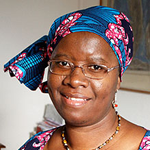
Yesterday was the deadline for nominations for Executive Director of UN Women. The candidates will succeed the organization’s first head, Michele Bachelet, who resigned suddenly in March to return home and stand for election to Chile’s presidency.
At least six candidates are rumored to be under consideration.
Rebeca Grynspan is considered a strong contender and possibly the front runner for the post. Grynspan is the former Vice President of Costa Rica and currently serves as an Associate Administrator at UNDP. An elections official at the Costa Rican permanent mission in New York stated to Global Memo that the Latin American and Caribbean region is eager to keep the post.
Lakshmi Puri is the current Acting Executive Director, stepping in shortly after Bachelet’s resignation. A source with a leading U.S. human rights group however suggests that few women’s rights groups see her as preferred successor to Bachelet. In December, her husband, Ambassador Hardeep Singh Puri, wrapped up his presence on the UN Security Council as India’s 2-year term on the body concluded. What impact his influence will have his wife’s candidacy and the selection is of particular interest.
Radhika Coomaraswamy, the former special advisor to the Secretary General on Children and Armed Conflict, is looked upon more favorably by women’s groups, according to the same source. She had been under consideration in 2010. From Sri Lanka, she is currently a visiting scholar at New York University’s Center for Constitutional Transitions.
Tarja Halonen, former President of Finland, is also rumored to be a nominee. Like Coomaraswamy, she had also been nominated in 2010, but was not seriously considered as the Secretary General was reportedly seeking a woman from the Global South to head up the new agency initially.
Kim Campbell, the former and first female Prime Minister of Canada, confirmed she has been nominated by her government in mid-April after its leaked in Azerbaijani media reports. Ms. Campbell was the former board chair at the International Women’s Forum and the Council of Women World Leaders. She now sits on the board of the International Crisis Group.
Nyaradzayi Gumbonzvanda is currently the General Secretary of the World YWCA. She is a trained human rights lawyer from Zimbabwe with extensive experience in conflict resolution and mediation, including 20 years experience on issues of women and children’s human rights, with a special focus on crisis countries.
If the process unfolds as it did in 2010, the Secretary General’s senior appointment team will vet the nominees and present to Mr. Ban a short list of three candidates. Following interviews with each, Ban will make the final decision on whom he will appoint to take over the post. The 2010 vetting process and selection was wrapped up in 7 weeks, in part to have the first Executive Director in place before the General Assembly convened. Last month, John Hendra, Associate Executive Director at UN Women, noted that a new search could take up to three months.
But if this year’s process is less competitive, i.e. fewer than 25+ candidates as in 2010, we may see a nominee before the body’s Executive Board meets at the end of June or shortly thereafter.
Unlike in 2010, women’s groups have been very unengaged in regards to the transparency of the Secretary General’s selection or qualifications of any of the candidates. Women Thrive is not active on the race this year, nor is the GEAR campaign, which spearheaded efforts in ensuring the 2010 candidates were highly qualified for the post.
The only NGO known to be engaging in any meaningful way this year is the Association for Women in Development (AWID), which plans to interview each candidate. William Pace, Executive Director of WFM/IGP, stated that “it would be best if the SGs process were more transparent.”
As expected, the Secretary General’s office is officially tight-lipped on the candidates, refusing even to confirm the final number of nominees received.
Tony is a communications and advocacy professional with over 12 years experience supporting progressive non-profit organizations in web design, social media development, program evaluation, and staff training. He serves on the national board of GlobalSolutions.org and with his local United Nations Association chapter.
by Alex Penler | Apr 22, 2013 | Global Cooperation, Peace & Disarmament
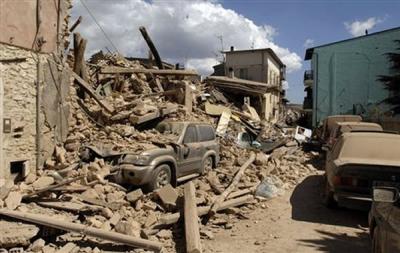
While the US was dealing with the grips of a terrorist attack in Boston, the most powerful earthquake in over forty years hit Iran. A 7.8 magnitude quake occurred 56 miles beneath the ground but luckily the casualties were minute for such a large seismic event. It was the second earthquake in a week for the gulf country that rests on a tectonic plate, making it prone to numerous earthquakes. They actually on average experience at least one slight earthquake a day.
Besides the obvious destruction caused by the earth moving underneath people’s lives, Iran is faced with another problem; their nuclear facilities. The first earthquake struck just miles from Iran’s Bushehr nuclear plant, prompting the Gulf Co-operation Council to call for international inspectors to be sent to the plant for fear of radiation leaks.
The Bushehr nuclear plant is near a fault line and has caused many of Iran’s neighbors to worry recently even as the Iranian government claims nothing bad will happen. Kuwait is especially nervous because, like most gulf countries, most of its water comes from desalination and if radioactive debris escapes the plant, it could pollute the water.
Since Iran plans to construct more nuclear plants and has blocked IAEA inspections, the region has cause to worry. Iran will not even cooperate with its neighbors and come up with a sort of contingency plan, refusing to believe anything is wrong. In the wake of Fukushima a secret report by Iranian scientists claimed that a future earthquake could devastate Bushehr especially with concerns over the foundations which are over 40 years old. Unfortunately the government has ignored these concerns, even those of their own citizens and top nuclear experts.
Questions have been raised on whether or not Iran is capable of handling a nuclear disaster. Iran though ignores these calls and instead has plans to actually expand the program and the Bushehr facility. Iran continuously claims that Bushehr can withstand an 8.0 earthquake yet fears remain.
Another growing problem is their underground uranium enrichment facility they are building in northwest Iran. They claim to be building it under a mountain due to fears of a US or Israeli attack on their facilities. While Iran denounces their plans for nuclear weapons, it is well known around the world that they have been enriching uranium past what is needed for nuclear energy.
If they were to build a bomb underneath said mountain and an earthquake were to occur, it could cause an even bigger explosion. It has been repeatedly said by numerous experts that it is not safe to have any nuclear activity in all of Iran, whether that be energy or to create a weapon of mass destruction. After Tuesday’s recent underground earthquake the fears have continued due to Iran’s lack of transparency in their nuclear programs.
An earthquake followed by a nuclear disaster has the potential to be worse than Fukushima and Chernobyl combined. Not to mention that it’s in a more populated area than both Japan and Russia, it also is one of the most resource rich parts of the planet. Iran might not agree to ending their program for the safety of the rest of the world, but perhaps if they understood the risks posed to their own county and their fragile neighbors, they might reconsider at least letting in IAEA inspectors to make sure everything is up to the proper standards.
by Alex Penler | Apr 22, 2013 | Climate Justice, Global Cooperation
Cleveland is known for many things. It’s the hometown of John D. Rockefeller, Lebron James, Rock and Roll, the traffic light and the Cleveland Clinic. It’s also one of the starting places for Earth Day.
On June 22, 1969 the Cuyahoga River, the major river that flows from Lake Erie and a center of trade in the region, caught on fire. The fire occurred when sparks from a blow torch ignited pollution and oil on the river’s surface. The river was so polluted that there were no fish for long stretches. Lake Erie was full of sewage run off and parts were declared dead. It is known as the event that started “environmentalism” and the founding of the EPA, as well as the passing of the Clean Water Act.
Over 40 years later both the lake and the river are cleaner and the environment is a hot topic in both politics and culture. Earth Day, started just one year after the iconic river fire, is a day to promote saving the planet. Now a holiday celebrated around the world, it even has its own theme, and this year that theme is climate change.
Climate change is still somehow a controversial issue in our political system. While 99% of scientists say that climate change does exist, a small extremely conservative fraction of the GOP has managed to wreck havoc on the environmental policy in America. Koch Industries has spent tens of millions of dollars on groups that deny climate change. Now some federal legislators are selling their souls to the devil, giving up their own values and those of their constituents in favor of those that fund their campaigns.
So what does climate change actually lead to if we do nothing? It means less water for drinking (which now the only safe drinking water is at 1%), and less water for agriculture, creating a potential food shortage. This will lead to more children starving in the global south, more sweltering hot days, and overall, more deaths.
There is hope for stopping this. State Governments are starting to make an impact, as they no longer believe the federal government will step in and do something. California has started a cap and trade program and 29 states, as well as the District of Columbia, have renewable electricity standards. Ohio, the state that was once caught on fire because of pollution, has one of the best environmental policies. The state has over 300 wind and solar companies that have created over 8,000 jobs.
Our planet has done a lot for us. It feeds us, protects us, gives up its resources for us, and has sustained life for thousands of years. Now it’s our turn to do something nice for Mother Earth. So spread the word to stop climate change. Spread knowledge to stop climate deniers. Most of all; recycle, plant a tree, and curb your garbage. The most we can do for our planet is little things at home and here’s a list of how you can start right now.
by Don Kraus | Feb 13, 2013 | Global Cooperation, Peace & Disarmament
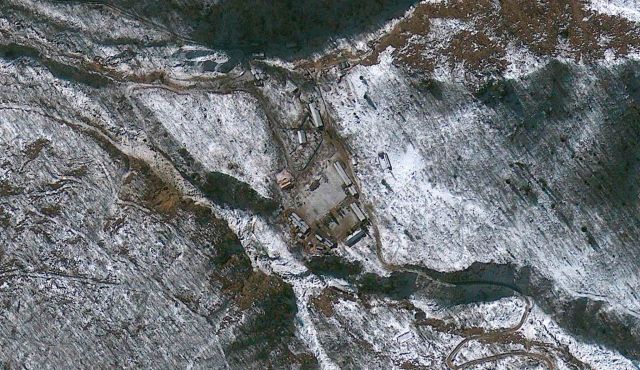
North Korea’s latest nuclear test highlights the limits of what the United Nations and its member states can do when an outlaw nation is determined to run roughshod over existing international laws.
Policymakers and diplomats in Washington, DC and at the UN are scrambling for a way to respond to the young dictator Kim Jong Un’s latest delinquency.
President Obama called the detonation a “highly provocative act” following North Korea’s December 12 ballistic missile launch which “violates North Korea’s obligations under numerous United Nations Security Council resolutions… and increases the risk of proliferation.”
The President said that, “North Korea’s nuclear weapons and ballistic missile programs constitute a threat to U.S. national security and to international peace and security” and called for “swift and credible action” by the international community. During his State of the Union Speech he said that North Korea’s nuclear test “will only isolate them further, as we stand by our allies, strengthen our own missile defense, and lead the world in taking firm action in response to these threats.”
Although he did not say what that could entail, UN Ambassador Susan Rice told reporters that Security Council members could “not only tighten existing measures but aim to augment the sanctions regime that is already quite strong.” Following an emergency Security Council Meeting she said that the Council “must and will deliver a swift, credible and strong response by way of a Security Council resolution that further impedes the growth of [North Korea’s] nuclear and ballistic missile programs.” She reminded reporters that the Security Council has already warned North Korea that it would carry out “significant action” if it conducted another nuclear or ballistic missile test “and indeed we will do so.”
However, North Korea is already the most heavily sanctioned nation in the world. UN restrictions already include a total embargo on the supply, sale or transfer of arms and arms-related material to or from North Korea; a ban on imports and exports of a list of goods and technology; a ban on exports of luxury goods; frozen assets; a travel ban preventing access to individuals listed by the UN; and multilateral action to prevent illicit trafficking in nuclear, chemical or biological weapons, ballistic missiles and related technology. Unfortunately, these steps have not yet had the desired effect.
So what else? Daryl Kimball and Greg Thielmann call for ratification of the Comprehensive Test Ban Treaty (CTBT) in an Arms Control Association blog saying that:
“The latest DPRK nuclear test explosion… makes it all the more important that … the U.S. and China, reinforce the global taboo against testing by taking concrete action to bring the CTBT into force, which will help us better detect and deter nuclear testing … in the future.
“As President Obama said in 2009, “After more than five decades of talks, it is time for the testing of nuclear weapons to finally be banned.” Indeed.”
Another possible way to limit North Korea’s options is to impose a new innovative pressure tactic originally developed for use in Syria and Libya by the Center for Global Development (CGD) called contract sanctions. Under this scenario, the United States and Great Britain, the world’s leading financial centers, with support from the European Union and other players would announce that any new contracts signed with the Kim Jong Un’s regime are illegitimate. How would governments and firms considering doing business with Kim Jong Un respond if they knew that there was a significant risk that they would not get paid?
According to CDG’s Kimberly Ann Elliott and Owen Barder:
“Unlike traditional trade sanctions, preemptive contract sanctions are self-enforcing. Trade sanctions offer those who violate them a windfall: potential profits increase since competition from those who comply with the sanctions has been eliminated. In contrast, preemptive contract sanctions increase the risk for those who would violate them. The incentive to sign a long-term contract with the target regime is decreased.”
The bottom line is that North Korea’s latest nuclear blast shows just how reliant we are on an effective global network of institutions and laws; and how relatively weak that network still is. Kim Jong Un’s nuclear tantrum should be seen not only as a threat, but as a clear message that we need a cooperative global system with the capacity and means to ensure a safer future for us all. And we are not there yet.
by Tiffany Tse | Feb 11, 2013 | Global Cooperation, United Nations
On February 11th, the United Nations Foundation organized a panel on the United Nation’s Post- 2015 Development Agenda, featuring Mr. Will Davis, director of Washington’s United Nations Development Programme and Mr. John Norris, executive director of the Center of American Progress.
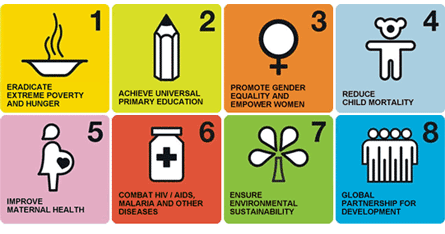
The United Nation’s Millennium Development Goals (MDGs) were created “to establish peace and a healthy global economy” by highlighting major issues such as children’s health, female empowerment sustainable environment, poverty, disease and development. These goals were created in 2000 and were set to be achieved by 2015. The year 2015 is approaching and the United Nations has so far been doing a successful job in achieving these goals- but what happens after 2015?
Davis and Norris both emphasized the continuing need for developmental goals after 2015 and how as a society, we must continue to not only achieve these existing goals but also create goals that are both realistic and broad. There is a strong need for educating people on the existing MDGs. Only 8% of the world is fully aware of the MDGs and we need to increase that percentage in order to make these goals more realistic and successful. This can be accomplished in several ways, such as educating the youth early on in school systems, involving non-government and non-profit organizations, creating alliances with United States agencies and engaging the private sector.
Overall, the United Nations Foundation hosted an excellent panel discussion pertaining to the future of the United Nation’s Millennium Development Goals. I invite you to read more about their findings on WorldWeWant2015.org.
by Stefanie Cook | Jan 25, 2013 | Climate Justice, Global Cooperation
When will climate change become a priority? Probably, when war, rape, and child suffering no longer exist. Unfortunately, however, these horrible tragedies are perpetuated by the effects of climate change. As the earth’s climate warms, insecurity in First and Third World countries rises. As a result, now is the time to focus on climate change so that we can prevent future starvation and suffering.
Unfortunately, it is easy for Congress to push the formation of legislation that eases the effects of climate change aside. Climate change feels distant; guns and budget cuts are pressing issues today. Congress won’t get re-elected on issues that we aren’t yet feeling the full effects of. However, in his second inaugural address on Monday, President Obama stepped up to the plate and renewed the United States’ commitment to respond to climate change.
You also agree that climate change must be a priority in President Obama’s second term. A survey conducted by Global Solutions.org members and supporters shows that Americans sill care about the issues surrounding climate change. Members and supporters rated climate change and the environment the highest priority issue for GlobalSolutions.org to focus on in 2013.
New York Times cited Global Carbon Project, saying that “emissions continue to grow so rapidly that an international goal of limiting the ultimate warming of the planet to 3.6 degrees, established three years ago, is on the verge of becoming unattainable.” Researchers reported that they expect to see a 2.6 percent jump in global carbon dioxide emissions in 2012. While emissions are decreasing in more developed countries such as the United States, they are increasing in developing countries, where manufacturing and economic growth is booming.
Climate change, however, does not discriminate. It impacts the smallest and weakest of nations as well as the largest and strongest of nations.
According to scientists, climate change is responsible for catastrophes such as that of Hurricane Sandy in Northeastern United States this past November and the 2011 famine in the Horn of Africa. Food shortages perpetuate intra- and inter-state crisis. In search of food and water, families and clans migrate outside their traditional borders. They are forced to adapt to new land characteristics and qualities and to new forms of agriculture.
In the Afar region of Ethiopia nomadic pastoralists’ livelihoods are increasingly threatened by erratic rainfall that amplifies the deaths of livestock. They are often forced to relocate to new regions of the country and to adapt to new forms of agriculture that they lack familiarity with.
BBC News recently reported that the Santa River Valley in Peru, whose “hundreds of thousands of inhabitants rely heavily on glacier water for agriculture, domestic consumption, and hydropower,” could face major water shortages due to glaciers in the tropical Andres shrinking by 30-50% since the 1970s.
Livelihood insecurity escalates fighting over natural resources. For instance, in San Antonio, Texas, the Brazos River Authority wants to divert water from the Brazos River to booming cities for future usage. Critics worry about the impact that doing so will have on fish and other wildlife, as well as on water quality. Similarly, conflict over rights to the Jhelum River has threatened to produce war between Pakistan and India. Time World says Pakistan fears that “upstream dams allow India to manipulate the flows of water as it sees fit,” affecting Pakistan’s agriculture-based economy.
We cannot stand by and wait for the ocean to rise above our homes, for the polar bears to go extinct, and for thousands of lives to be lost to tsunamis. NOW is the time to prioritize legislation that eases the effects of climate change. GlobalSolutions.org is raising its voice to urge the White House and the 113th Session of Congress to consider legislation that protects our climate and the future of people around the globe for centuries to come. Because we know that conversation surrounding climate change cannot occur within the United States alone, we will push the United States to become part of a global conversation requiring international cooperation.