by Zoey Krulick | Jun 12, 2013 | Climate Justice, Global Cooperation
My fellow Research Associates and I were talking this morning about what we’ve learned so far about climate change. As our knowledge is increasing, so is our fear. Part of our job here at Globalsolutions.org is to remain up to date on current events. This is great in terms of making me a well-informed citizen, but also disheartening because it takes away the bliss of ignorance. I have always known that climate change is happening, and that we have to act now to help repair and hopefully reverse its damaging effects. However, reading the news every day drives this point home with frequency.
In a recent report, the International Energy Agency calculated that making clean energy investments sooner would be cheaper than leaving them until after 2020. To meet climate targets before 2020 would require about $1.5 trillion, but to achieve the same results after 2020 would take $5 trillion. So, a delay in making the transition to lower carbon energy systems is not only risky, but costly.
The IEA’s report also states that carbon dioxide emissions from energy rose by 1.4% in 2012 to a record high level. The report warns that due to the rapid rise of greenhouse gas emissions, relying on a replacement for the Kyoto Protocol (which would be signed in 2015, but wouldn’t take effect until 2020) would be doing too little too late. Chief economist for the IEA, Faith Birol, warned that greenhouse gas emissions were rising so fast that continuing to do nothing will set the world on a path to 5⁰C of warming. For other metrics-system challenged people, the level of temperature rise that is considered “safe” is set at 2⁰C above pre-industrial levels. Beyond this limit, global warming is likely to be “catastrophic and irreversible.”
This is terrifying. It is something we need to fix now.
So why aren’t we trying to fix it? Is it that people don’t know, or is it that we, as a people, are not scared enough? We’ve all heard about the many negative effects global warming will have on our lives even within this generation, but I think it is all too easy to pretend they aren’t happening. That is why I completely support GlobalSolution.org’s #CoverClimate campaign. I definitely think a major part of the problem is the lack of urgency felt by the general public, in part due to lack of climate change coverage or failure of the media to connect extreme weather events they cover to climate change. I think in this case, fear is a good thing. More people need to be as scared as I am because that is the only way change will happen.
You can sign our petition here.

by Zoey Krulick | Jun 9, 2013 | Global Cooperation, Human Rights
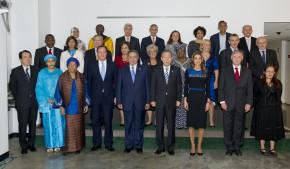
The Secretary-General of the United Nations’ panel of experts recently released a report detailing goals for the Post-2015 Development Agenda. This 27-person panel made recommendations for development beyond 2015, building upon and amending the Millennium Developmental Goals of 2000.
As before, the overarching objective is to eradicate extreme poverty from the earth by 2030. The overall tone of the report is positive, with the panel stating they have a “great optimism that a transformation to end poverty through sustainable development is possible within our generation.” To help achieve this, the panel illustrates five fundamental or transformative shifts, summarized below:
1) Leave No One Behind:The panel emphasizes that we cannot simply focus on reducing extreme poverty, but instead must focus on ending it. No person should be denied universal human rights or basic economic opportunities.
2) Put Sustainable Development at the Core: We need to focus on development that is long-lasting and environmentally friendly. The panel argues that at least 1/3 of the activities needed to lower global carbon emissions (such as switching to LED lighting) more than pay for themselves under current market conditions, although we still need incentives to make people more willing to take actions that foster sustainable development.
3) Transform Economies for Jobs and Inclusive Growth: The panel emphasizes the need to ensure everyone has access to quality education, healthcare, clean water, electricity, telecommunications, and transport. With this comes the imperative for implementing good urban management, raising productivity, and providing a stable environment that allows businesses to flourish.
4) Build Peace and Effective, Open and Accountable Public Institutions: We need transparent, accountable governments and public institutions.
5) Forge a new Global Partnership: The panel stresses the need for a spirit of solidarity and that countries need to cooperate to achieve these goals. National governments have the responsibility for ensuring human rights, deciding on national targets, taxes, policies, plans and regulations that will make the goals a reality. We also need to bring in local authorities because targets might be pursued differently at the sub-national level.
Finally, the panel advises that goals and targets be SMART: Specific, Measurable, Attainable, Relevant and Time-bound.
I really don’t want to bash this report or the guiding spirit behind it. However, in some ways, it eerily reminds me of my own New Year’s Resolutions. Let’s take an example: one of my resolutions was to cook more real meals, rather than just throwing jelly on a bagel and calling it breakfast (or lunch, or dinner). I realized that it would be beneficial to cook more and it was easy to think of specific ways to meet this goal, such as finding exciting new recipes and planning grocery store trips. The problem came in the implementation: it was up to me to make myself actually get myself out the door to the grocery store or into the kitchen to cook – and that is where I encountered all of the real difficulties. (As an aside – this resolution is still very much a work in progress).
The report is commendable in that the goals are all worthy, and, happily, the panel has detailed some concrete steps for how countries can work towards them. But, as we have learned so many times in the past, the UN has problems actually enforcing its recommendations. This report leaves all of the responsibility up to each individual country to determine how it wants to implement the goals, but does little to indicate any sort of mechanism that will hold countries accountable.
I understand that the UN has neither the power nor the desire to be a world-wide babysitter, but I just can’t imagine their goals being prioritized in each country without an incentive or enforcement apparatus in place. Will the countries follow through, or will there be another update 15 years from now singing roughly the same old song? What do you think?
by Jake LaRaus | Jun 6, 2013 | Global Cooperation, Peace & Disarmament
A full two and a half years after the start of the Arab Spring, it seems that things are not as well off as would have been hoped. The deluge of democratic populism that flooded Tahrir Square in 2011 has given way to a depressed apathy (at best) and a simmering anger (at worst) for President Mohamed Morsi’s Freedom and Justice Party government. According to a Pew Research Center study from mid-May, Egyptians are “increasingly glum,” with 62% dissatisfied with the state of the country (only 7 percentage points below pre-revolution 2010), and only a lukewarm 39% think the country is better of post-Mubarak. Further, 56% of Egyptians interviewed feel dissatisfied with the way democracy has been working in the country. Perhaps, though, this might change.
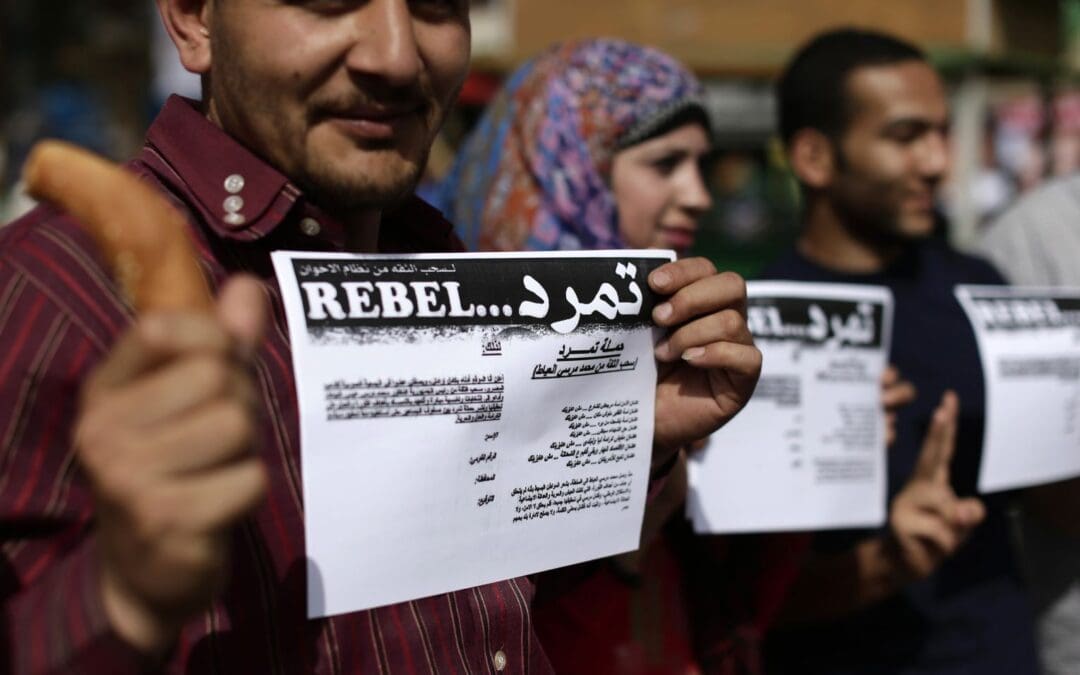
Recently, a new grassroots movement has sprung up in Egypt: the Tamarod Campaign. Tamarod, Arabic for “rebellion,” has taken root in the foundation of Egypt’s centrist and liberal populace, with the sole goal of ousting Morsi and holding new democratic elections. As of the end of May, the campaign has picked up more than 7 million signatures from around Egypt, approximately 8% of Egypt’s population of 85 million. The movement, which began symbolically in Tahrir Square, hopes to collect and deliver 15 million signatures by June 30th, the day President Morsi was sworn in.
Tamarod has not gone unnoticed by both sides of Egypt’s political divide. Opposition leader and initial presidential contender Mohamed ElBaradei met with members of the movement, and expressed his “‘strong admiration for the campaign'” and his belief that it was “an integral part of the national opposition” to Morsi and the Muslim Brotherhood. ElBaradei has mirrored Tamarod’s call for elections, saying that Morsi has lost the trust of both the opposition and the Egyptian people. Conversely, proponents of the Morsi government have been quick to belittle the movement, either denigrating it as a precipitously unstable alliance or flippantly dismissing it as something that surfaced from nowhere and is going nowhere, as the government-owned Al Ahram did. The Morsi government itself has also flexed its muscles in response to the rise of Tamarod, referring a doctor to the prosecutor’s office for campaigning for the movement, having four members of the campaign detained by Homeland Security, and ransacking a Tamarod-allied office. One supporter of the government went even so far as to pursue legal action against the entirety of Tamarod and its allies, filing a report with the Supreme State Security Prosecution, accusing Tamarod of “attempting to overthrow the regime.” Perhaps it’s the English-Arabic divide, but when you use the word “regime” while attempting to quash claims of governmental tyranny, you’re not really helping yourself out.
The success of the movement, much like the success of Arab Spring, has been propelled by social networking sites and technology. Instagram is filled with sepia-tone pictures relating to the campaign, twitter is afire with hashtagged tweets of support, and the movement’s Facebook page climbs in likes every day, likely having already surpassed today’s 269,000 likes.
But, for the most part, outside of Egyptian and Middle East-focused news outlets, the Tamarod Movement is not news. Only nine months after the beginning of Egypt’s revolution, the New York Post, long-lauded for its ardently pursued quality journalism (see: sarcasm),was already writing the revolution’s obituary, obnoxiously asserting that the concept of democracy was incapable of permeating the Arab bubble. The Post is not alone in its derision for the Arab Spring and the events that followed; conservative figures were quick to retrospectively condemn Tahrir as a liberal machination to install an “Obama acolyte” that failed, or a mistake that left us “worse off” without Mubarak, or simply an opportunity to express their Islamophobia. As many Americans are wont to do, the aforementioned individuals have only been able to view the Arab Spring and the Egyptian revolution in the context of and with regard to America; the needs and desires of Egyptians, for example, are completely ignored, because who better to pass judgment on the state of the revolution than the country who worked closely with the tyrant that the revolution toppled? For a number of conservatives, it’s difficult to imagine a successful democratic revolution that the United States didn’t have a hand in, so any opportunity to criticize the fruits of the Arab Spring is quickly taken.
This mindset is something that is truly telling about Americans’ point of view. Domestically, we see and acknowledge the presence of grassroots movements everywhere: the Occupy Movement, the Tea Party, President Obama’s election and reelection campaigns. But we’re hesitant to similarly label comparable movements abroad; instead of calling them grassroots movements or campaigns, they’re riots, uprisings, and rebellions. Srilatha Batliwala, an Indian feminist and visiting fellow at Harvard, characterized grassroots movements as “movements of, for, and by people most directly affected by the consequences of public policies.” What, then, is so wrong with using this designation? Third world, especially Middle Eastern, civilian grass roots demonstrations are often quick to be tagged by the more conservative wing of Western media as somehow violent or destructive. By reducing true populist aspirations for recognition to little more than attention-seeking antics, we cheapen our own revolutionary past.
But the proof is in the pudding. No matter what the talking heads say, June 30th will hopefully be the “watershed in the history of the Egyptian revolution.” As Americans, who sometimes take their freedom for granted, we must voice our support for this movement. The American and world media were alight with eagerness at the beginning of the Arab Spring, and we must bring back this fire for Egypt’s Arab Spring 2.0. The Tamarod Movement is a grassroots campaign that wants to “achieve a society of dignity, justice and freedom.” These are goals that the American public can and should sympathize with. We should not be blasé about the movement’s path, and we should do all we can to show our support. This country was founded by a scrappy grassroots movement of concerned citizens, and who are we to deny another such movement its legitimacy?
by Jake LaRaus | Jun 3, 2013 | Global Cooperation, Peace & Disarmament
The United States likes to picture itself as a prominent player and arbiter in the international community, paving the way for progress on a number of global fronts. A key part of maintaining our legitimacy in the international community is signing the Arms Trade Treaty, which opened for signatures today at the United Nations. Secretary of State Kerry indicated in a statement that the United States looks forward to signing the Treaty, and will soon be able to do so once “the process of conforming the official translations” is finalized. This is a firm step in the right direction.
The Arms Trade Treaty is a multilateral international agreement, in the making since 2006 and negotiated at a 2012 global conference, that seeks to implement and enforce standards in the international sale and transfer of “all conventional arms” (tanks, planes, artillery, ships, missiles, small arms, etc.). Don Kraus, President and CEO of GlobalSolutions.org, succinctly described the purpose of the ATT, explaining how it “is designed to help prevent the more than 500,000 deaths worldwide that happen as a result of armed violence.” Further, the ATT will bring “foreign governments up to US export standards” and prohibit arms transfer when a country knows that the arms would be used in the commission of genocide or crimes against humanity.
Assistant Secretary of State Thomas Countryman previously said that the United States would sign the ATT “in the very near future.” And why shouldn’t it? The United States was an incredibly positive influence in crafting the text of the ATT, which reflects longstanding US foreign policy on the international arms trade. Signing the treaty is entirely in line with American domestic and foreign interests, and the act will show the global community that the United States is dedicated to both stemming the illicit arms trade and preventing the human rights abuses these weapons cause. But as of today, over sixty countries have already signed the treaty – and the US is not yet one of them.
(The video in this post is no longer available.)
Conservative groups like the Heritage Foundation have advocated refusing to offer an exact time when the United States will sign the ATT (or completely refusing to sign it), arguing that more review of the agreement is necessary. But there is little substance behind this argument; right wing organizations simply want to throw as many roadblocks in front of the US signing the treaty as possible so as to keep the country from participating in such a landmark international venture. The National Rifle Organization has similarly played fast and loose with the facts, claiming that signing the treaty would directly infringe with the Second Amendment’s right to bear arms. Even though the ATT explicitly states that “the sovereign right of any State to regulate and control conventional arms exclusively within its territory” will not be affected by the treaty, right-wing entities, like Breitbart.com and Fox News, and other gun-rights activists still choose to use fear-mongering over facts to barrel forward with their objective.
Yet, the United States is undeterred by fear, and will not bend to the will of a vocal yet small minority of Americans who believes it’s their duty to keep the country from guiding the international community. The United States will likely sign the Arms Trade Treaty – this is clear; there is only the question of when. By signing the treaty today, we could have shown the world that we are as committed to humanity as we are to our own country. But the opportunity for American global leadership still exists; we must prove to the world, by signing the Treaty this week, that the United States is willing to play a more cooperative and responsible role in the international affairs. We must prove that human rights are not less important to us than corporate rights. We must show that we are a true member of the global community.
We’ve taken the first step, but one step is not enough. It’s time to lead. It’s time to sign.
by CGS Blog Archive | May 23, 2013 | Climate Justice, Global Cooperation
The scene of rescue workers frantically looking for survivors is all too familiar, especially in the past couple of years. 2012 was ranked as the 2nd most disastrous year on record, only behind 2011 (both years collectively brought in an estimated 25 billion dollars). With the latest disaster in Oklahoma already being called one of the worse in history, 2013 is not far behind.
Why is this happening?
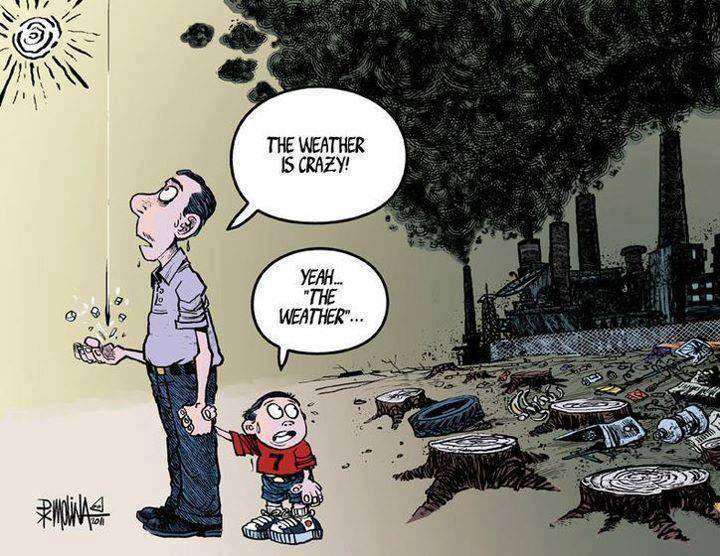
According to NASA, “small changes in temperature correspond to enormous changes in the environment.” In the last century, rising CO₂ levels, due to human activities, have contributed to the earth’s temperature rising one degree Fahrenheit. Minnesota State Representative Glenn Gruehagen (R-Glencoe) recently made a statement on the House floor that climate change is a, “complete United Nations fraud and lie…” Climate deniers like Gruehagen, want us to believe that climate change is a hoax, something made up. Super storms like Sandy and Katrina and earthquakes tipping the Richter scale, prove one thing… climate change is very real.
Don’t think that one degree Fahrenheit is a big deal? Well consider this:
At the end of the last ice age, when the Northeast United States was covered by more than 3,000 feet of ice, average temperatures were only 5 to 9 degrees cooler than today.
by Harrison Phillips | May 16, 2013 | Climate Justice, Global Cooperation
Last week, planet earth reached a landmark! CO2 emissions exceeded 400 parts per million. So why aren’t scientists celebrating? Well, this is nothing to celebrate. Al Gore expressed a common sentiment among global warming sympathizers, tweeting that the event was “a sad milestone.” Action must be taken to reduce carbon emissions and the burning of fossil fuels.
The Mauna Loa Observatory in Hawaii has been monitoring CO2 emissions since 1958. On Thursday, May 10th, it released a report that stated a new, unprecedented level of CO2 had been recorded in the atmosphere. Carbon Dioxide is a greenhouse gas that traps heat in our atmosphere and has been linked to rising temperatures, ice melting and sea level rising.
We need to signal to governments around the world that action must be taken to reduce the burning of fossil fuels. The Rio Framework Convention on Climate Change in 1992 and the adoption of the Kyoto Protocol in 1997 attempted to hold governments responsible for pursuing policy aimed at clean energy and reducing carbon emissions. However, the United States did not sign onto that agreement. In addition, other rapidly industrializing nations such as India and China disregarded the suggested regulations. The consequences of our reliance on fossil fuels are severe. Super-storms such as Hurricane Katrina and Tropical Storm Sandy have impacted the United States with devastating human, environmental and financial loss. Watch this video produced by Climate Reality to find out the true cost of Carbon.
Reaching this “sad milestone” is discouraging. Mark Pagani, a Yale geochemist and paleoclimatologist, told The New York Times. “I feel like the time to do something was yesterday.” However, organizations like GlobalSolutions.org and 350.org are committed to reducing carbon emissions.