by Hania Solecka | Jul 8, 2013 | Climate Justice, Global Cooperation
At GlobalSolutions.org, we believe one of the best ways to get the U.S. government to pass sensible climate change policies is by getting T.V. networks to increase their coverage of climate change. If NBC, CBS, and ABC increase their coverage of climate change, more Americans will become aware of the dangers of climate change and the U.S. government will feel compelled to act.
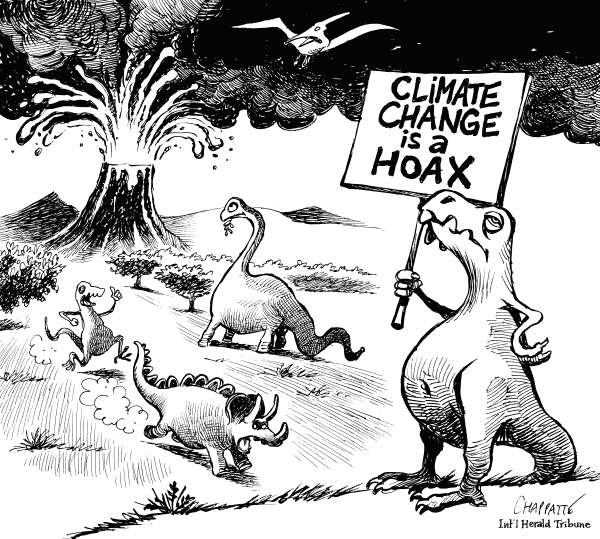
Our efforts, unfortunately, could be undermined by climate deniers. Climate deniers run the gamut from disbelieving entirely in climate change to believing it is part of our planet’s natural cycle. There are deniers who are very vocal, including some members of Congress. As seen in this clip, they have several theories on climate change. Some believe it’s an elaborate hoax, while others think it’s caused by a shift of the Earth’s axis. In contrast to these members of Congress, other climate deniers are far less showy and far slyer. So sly, in fact, that much of the American public doesn’t even know they exist. Three men in particular come to mind: David Koch, Charles Koch, and Art Pope.
David and Charles Koch run Koch Industries, an oil conglomerate that is the second largest private corporation in the United States. In addition to running the company, the Koch brothers are set on blocking any legislation that aims to combat climate change. A study released July 1st by American University’s Investigative Reporting Workshop drew attention to the Koch Brother’s “No Climate Tax pledge,” distributed by Americans for Prosperity (AFP)― a nonprofit organization that received $3.6 million from the Koch foundation between 2007 and 2011. Signatories of the pledge promise “to not spend federal money to fight climate change without an equal amount of tax cuts.” The pledge was signed by over 100 House members, all Republicans. The New Yorker aptly described this pledge “as yet another roadblock to action.”
Art Pope is closely affiliated with the Koch brothers. He serves as one of the national directors of AFP and is one of its main funders. Pope and the Koch brothers are some of the most generous funders to climate denial groups. Between 1997 and 2008, the Koch brothers donated over $48 million to 39 climate denial organizations. Over the same time frame, Pope gave over $24 million to 27 of those 39 groups. The Koch brothers can easily give so much to these organizations because they are the 5th richest Americans, according to Forbes’ list of the 400 richest Americans. Pope’s $24 million may pale in comparison to the Koch brothers’ $48 million, but given that he didn’t even make Forbes’ list, it’s incredibly generous.
Acceptance of the reality of climate change and its devastating effects is the first step in getting the conversation going on enacting effective climate change policies. At Global Solutions, through our #CoverClimate campaign, we are striving to accomplish this goal. As with any noble cause, there will be those who try to prevent it from happening. It’s important for the American public to be educated about climate change and understand that it’s a very real threat. It is, however, equally important for the American public to be informed about individuals and groups that deny the existence of climate change and stealthily work to make sure it does not become a national priority.
by Harrison Phillips | Jul 2, 2013 | Climate Justice, Global Cooperation
Thinking of climate change and its subsequent effects as a national security threat is a growing global trend. A Pew Research Center study from June shows that climate change is viewed as the number one threat to national governments according to a selection of international respondents. Pew stated that “[p]ublics around the world are concerned about the effect of global climate change and international financial instability.” U.S. respondents ranked global warming behind North Korea’s nuclear program, Islamic extremist groups and Iran’s nuclear program. This is in stark contrast to countries around the world that viewed climate change as a top priority. It is the top concern in every country in Latin America and in the top three in most European countries.
While the American public might rank climate change behind other national security issues, the U.S. military does not. A recent report by the U.S. Center for Naval Analyses (CNA) stated that climate change is a bigger national security threat than the country’s dependence on foreign oil. Retired Marine Corps Brig. Gen. Stephen Cheney, of the American Security Project, stated in an interview that “rising sea levels and extreme drought could be just as dangerous as terrorists and crises.”
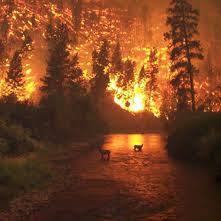
These reports shouldn’t come as a surprise. The recent devastation inflicted by superstorms and natural disasters have had a tremendous human and financial impact on governments. Superstorm Sandy alone heaped $50 billion worth of damage and destruction onto the northeast and mid-Atlantic. Most recently, droughts and wildfires in Nevada, Arizona and California have been brought on by widespread heat waves, caused by an unprecedented rise in temperatures (which could peak at 130 degrees in some areas of the US).
The U.S. military report by the CNA outlines one key solution to combat climate change. It stated that the American public and its politicians need to be educated on the realities of a changing climate. In order to create action on a global scale, our people have to fully understand the issue and accept the facts. That means silencing the climate deniers and moving back to a time when creating environmental policy was a non-partisan issue.
Now that our Department of Defense and our President have signed on to combating climate change, the only question is when the American public will follow suit.
by Zoey Krulick | Jul 2, 2013 | Global Cooperation
President Obama is currently in Africa with his family, making a three-nation trip (including Senegal, South Africa, and Tanzania) in hopes of bolstering a partnership between the United States and the African continent. However, the tour has provoked some reproach that his administration has not focused on Africa as thoroughly as it should have during the past several years of his respective terms.
As the President’s trip winds down today in Tanzania, we should consider the significance of his journey both in terms of his personal outreach to the home of his forebears, as well as U.S.-Africa relations as a whole.
Many believe that the trip is an excellent effort by the Obama administration in demonstrating our country’s interest in the continent’s future development while solidifying diplomatic and economic relations with individual African nations.
President Jacob Zuma of South Africa stated this about Obama’s stop in his country: “This is a significant visit which will take political, economic and people-to-people relations between the two countries to a higher level, while also enhancing cooperation between the U.S. and the African continent at large.”
However, as is bound to happen with any high profile presidential action, Obama has received much criticism for various aspects of his excursion. One such criticism is that even with Obama’s travels, U.S. engagement with Africa is weak compared to that of China’s. Current Chinese President Xi Jinping has already signed 16 trade, cultural and diplomatic agreements in Tanzania alone, while former President Hu Jintao visited 17 African nations between July 2006 and February 2007.
In my opinion, Obama has had plenty of things to deal with for the past four and a half years, including a deep recession and a resistant Congress unwilling to support much of his agenda. To criticize him for neglecting Africa as he is actively working to improve U.S.-African relations seems off the mark.
There has also been some controversy both over his choice of countries to visit, and of the visit, itself, for not being comprehensive enough. One major critique is the fact that he is passing over Nigeria, Kenya, and Ethiopia. But considering the expense and security concerns surrounding his expedition in the first place, his agenda could not possibly include every country on everyone else’s wish list. Had he gone to more places, there probably would have been more criticism about his trip being too long and expensive. It is very likely that a great deal of thought was put into the choice of countries he did visit, taking into account the multiple factors of time, cost, and safety.
In regards to magnitude, while Obama only visited three countries, the impact of his trip will be extended far beyond their borders. For example, the Trade Africa partnership he initiated plans to focus first on member states of the East African Community – Burundi, Kenya, Rwanda, Tanzania and Uganda. This arrangement aims to increase trade both within Africa and among African nations, the U.S., and other global markets. Also during this trip, Obama pledged $7 billion to help combat power blackouts in sub-Saharan Africa through a program called Power Africa that will involve the partner countries of Ethiopia, Ghana, Kenya, Liberia, Nigeria, Tanzania, Uganda, and Mozambique.
Also notable is the fact that Obama did not limit his trip to purely economic matters. He spent time touring Robben Island, where Nelson Mandela was held for 18 of his 27 years as a prisoner of South Africa’s apartheid regime and his speech at the University of Cape Town, fifty years after a similar address by Robert Kennedy from the same podium, celebrated Mandela’s successful struggle for political freedom. In Tanzania, he joined former President George W Bush for a wreath-laying ceremony commemorating the August 1998 attack on the US Embassy in Dar es Salaam.
Overall, I think we should view Obama’s trip to Africa as a success. As Tanzania’s President, Jakaya Kikwete, said to Obama, “the people of Tanzania love you…there has never been a visit by a head of state to Tanzania that has attracted such big crowds.”
As the ancient saying goes, “a journey of a thousand miles begins with a single step.” Certainly President Obama has more than begun the long walk that will ultimately lead to a future of friendship and economic cooperation between our cultures.
by Ellen Moore | Jun 26, 2013 | Climate Justice, Global Cooperation
I had the opportunity to interview Dr. Michael MacCracken last week as part of a series of interviews I’m conducting of top US climate scientists. The GlobalSolutions.org team is interested to hear what these experts have to say about the lack of coverage of climate change in the broadcast media and which climate stories they feel deserve more coverage. Eventually, we’re hoping to package these stories for the media and promote their coverage.
Dr. MacCracken has been the Chief Scientist for Climate Change Programs at the Climate Institute in Washington, D.C. since 2002. Prior to this, he was a senior global change scientist to the interagency Office of the US Global Change Research Program. In addition, his testimony on global climate change and its impacts on specific regions was cited favorably by Supreme Court Justice Stevens in the 2007 decision of Massachusetts et al. v. EPA.
Here are some key excerpts from my interview with Dr. MacCracken:
GS.org: What do you think of the coverage of climate change in today’s media?
Dr. MacCracken: Well it seems to me what we need is coverage that pushes us towards action. The people have gained an understanding that climate change is not good for them, but what would be helpful to provide would be suggestions to help them figure out what directions to take. [People are wondering:] “Is there really a strategy to get through this or are we just going to end with the situation getting worse and worse?”
GS.org: Why do you think the media’s coverage of climate change has been so sparse?
Dr. MacCracken: I think the problem is we don’t have enough fireside chats on the issue. I think we sort of lack a national spokesperson. One of the papers I first did when I came back to Washington was trying to understand, given all the science I thought we knew twenty years ago, why all the contention? And my view is there are a number of different perspectives on the issue. Scientists offer a perspective… the fossil fuel industry [offers a perspective]… the environmental community …the economists …the energy security people… [They all offer different perspectives.] …What we need are people that pull views and pull perspectives together.
…The question is, when you have a society as a whole… who is representing thinking broadly across all these things? What about future generations? Does it matter what happens to future generations? And what are our ethical responsibilities as stewards of the world for future generations?
GS.org: You’re a big proponent of the advancement of the clean energy industry and its co-benefits for people. Do you think that’s a story the media should be covering?
Dr. MacCracken: I think that’s fair…I put solar panels on my roof, and because of the way it works in Maryland, I’m making a 10% tax free return on my investment. That’s pretty good! Very good! Sort of guaranteed…And the company that did that is hiring new people to do installations, and is doing a fair bit of business without advertising…They’re figuring out how to make the benefits of rooftop solar available to people who live in apartments or don’t have good roof exposures…There’s a lot of potential to do these types of things. …It just seems to me there are a lot of opportunities to step forward and take action…
GS.org: What kind of climate-related news do you see on the horizon that you feel the media should cover?
MacCracken: The media needs to relate what’s happening to people and what matters to people. To help people prepare, more attention needs to be placed on the emerging impacts of climate change. We also need to realize that what happens to us in the US is connected to what happens to others elsewhere in the world. The world is interconnected. We’re interconnected through the economy and in sharing the world’s natural resources. If there are problems [feeding certain populations] and a transition into famine in Africa or elsewhere, the effects are going to be felt here as well….Our investments, our resources, come from all over the world. We’re all dependent on each other. …We’re inter-coupled with the global economy. We’re interconnected because we all draw things from the global commons. …
One of the specific emerging concerns is what’s going to happen to food production around the world due to the severe weather that’s occurring in many of the major agricultural areas. There are experts who know far more about the international food market than I do who are very worried about what’s going to happen to food prices. …There are only 5 or 6 countries that …grow enough grain [to be able to] export large amounts. There’s the US, Canada, Russia, Argentina, Australia, maybe a couple of others. And if you look at the increasing trend in weather disruptions in these areas, production could be more and more affected over coming years. In the mid-1970s, when farmers in the Soviet Union had a very poor harvest, that sent shock waves through the markets around the world…As the world has become more and more inter-connected, we have in some ways increased our vulnerability, such that a disruptive weather event in a particular place can now have an impact that spreads around the world.
This interview, and the others I have done, has helped shed light on many important and poorly covered aspects of climate change. Stay tuned for further posts on my other interviews!
by Alisondra Maykranz | Jun 25, 2013 | Climate Justice, Global Cooperation
I grew up in the Rocky Mountains – in Aspen, Telluride, and most recently Jackson Hole. Many places I haven’t lived, I’ve visited. Out of the entire Rocky Mountain range, one of my favorite places is Glacier National Park. I went hiking there one summer and found the glacier-covered scenery absolutely breathtaking. For one week I was surrounded by a view so beautiful I thought it could only exist in photographs, but there I was, taking it in with my own eyes.
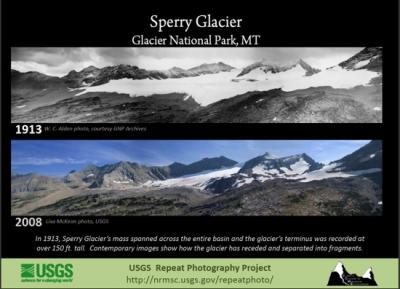
Tragically, this view will soon only exist in photographs. In 2003 the U.S. Geological Survey determined that all the glaciers in Glacier National Park will melt by 2030. Today, however, scientists predict the glaciers will disappear as early as 2020.
This news is one of the haunting realities of climate change – an ever-present issue that never seems to get addressed. In 2012, networks only covered climate change 12 times on the nightly news. Congress has remained deadlocked on the issue, and in fact, there are several dozen Congressmen and women who still deny that climate change even exists.
It is in this context that I applaud President Obama’s efforts to take action. His climate change speech made today at Georgetown University at 1:35 EST was a big step in the right direction. As frustrating as it is that Congress has failed to act on this issue that affects us today and will affect future generations even more, it is encouraging that the President is determined to do what he can through executive and regulatory actions that do not require congressional approval.
President Obama outlined his plan of action in his speech. The plan includes developing clean energy, increasing fuel efficiency standards, cutting energy wastes in families and businesses, reducing greenhouse gas emissions, and preparing for the effects of climate change.
While these are encouraging first steps, these unilateral actions will do little to slow the global phenomenon of climate change. For example, it is China that currently emits the greatest share of greenhouse gases in the world, and India’s emissions are increasing drastically. Our domestic policy does nothing to address these threats, though we will be just as affected by China and India’s emissions as by our own.
For this reason, it is also encouraging that the President recognized the need for international action and for the U.S. to play a leading role in this action. It is evident that a global agreement is needed to address the threat of climate change. Promoting a global agreement requires a national conversation, and this is difficult to have when the media doesn’t even cover climate change. I hope that President Obama’s speech today will be a turning point, but whether it leads to new climate legislation and global accords – or even a national dialogue – remains to be seen.
In the mean time, I encourage everyone to sign our petition asking the media to cover climate change more often. Oh, and go visit Glacier National Park before it’s too late!
by Zoey Krulick | Jun 20, 2013 | Global Cooperation, Human Rights
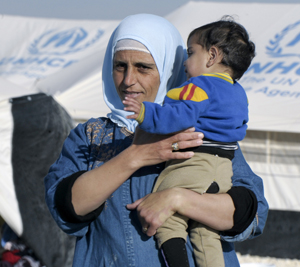
World Refugee Day is upon us and while my instinct is to do what I do on every such anniversary, which is to wish everyone a “Happy World Refugee Day!” I think we all can agree that this is no happy occasion. World Refugee Day was established by the United Nations in December 2000 and is celebrated each June 20th, to honor the world’s refugees for the courage they must possess when compelled to flee their homes and travel to unfamiliar lands, often with no certain hope of return.
Most people don’t recognize the sheer volume of refugees in the world today: according to the UN’s refugee agency, the number of people who have been forcibly displaced by war and other crises in 2012 was approximately 45.2 million people – higher than it has been in almost two decades. Antonio Guterres, the UN High Commissioner for Refugees, adds, “This means one in each 4.1 seconds. So each time you blink, another person is forced to flee.”
One every 4.1 seconds? That number is difficult to fathom. And I think it is all too easy to be misinformed or even completely unaware about the plight of all those people. One common misconception lies in confusing refugees with immigrants. But unlike immigrants, refugees usually have little to no choice over the timing of their departure or their destination. Also, refugees typically are not people moving from poor countries into rich countries in search of a better life or more opportunities. In fact, 87 percent of the world’s refugees were protected by developing countries, with Pakistan as the world’s top host nation in 2012.
Among the 45.2 million refugees, 28.8 million are internally displaced, 15.4 million are border-crossing, and 937,000 are asylum seekers. And although the asylum seekers are a relatively small piece of the pie, they are arguably the most important segment to the United States because for seven years in a row the U.S. was the largest recipient, among the industrialized nations, of new asylum claims.
Unfortunately, even the asylum-seeking system is riddled with problems. According to Human Rights First, refugees to the United States are often unnecessarily denied due to an arbitrary one year filing deadline. This deadline causes problems for many reasons: some refugees are unaware that they might be eligible for political asylum and others don’t know how to apply until it is too late. Additionally, women asylum seekers are disproportionately affected by the filing deadline due to the disparate cultural traditions in their countries of origin; they may be caring for children, they may come from places where women don’t typically interact with the legal system, or they may be trapped in abusive or restrictive relationships.
Clearly, the world’s refugee problem is complex and worrisome. Worldwide, we need to address the situations that necessitate refugees fleeing in the first place, both within and between countries. Regarding our domestic legal system, we need to reform asylum-granting in order to make it more efficient and fair.
It is completely appropriate to have a day applauding the courage of refugees as they are forced to leave their homes, an act many people cannot even imagine – but I don’t want to be counting unhappy wanderers every time I blink. That is both unacceptable and terrifying.