by Starlyn Matheny | Sep 14, 2013 | Global Cooperation, Human Rights
Not Quite the World Wide Web: a three-part series about the importance of full access to the internet for all
Imagine a world where wifi signals were more accessible than sunlight. You won’t have to wait for very long because Google is already on it.
In the last post in this series I discussed the motivations and intensions behind the push to provide cheap and reliable internet access for all. This week I want to explore just exactly how companies like Google, Facebook and Soni Ericson plan on doing this.
Facebook founder Mark Zuckerberg launched a new plan, in August, to connect the remaining two thirds of the world to the internet. Companies like Samsung, Qualcomm, Nokia, and Ericsson have joined forces with Facebook and call the plan “Internet.org.” Zuckerberg believes that in order to widen their market, the telecom and tech industries need to make systematic changes. He also estimated that it will take at least 10 years for significant progress. He outlined the three biggest hurdles that the initiative faces:
- Reduce the cost of technology(Think plastic phones and laptops)
- Improve data compression to make networks more efficient(Also by reducing the amount of data popular apps need to run on a mobile device)
- Invent business models that balance connectivity and revenue(Providing internet to the world would not be sustainable as a charity case)
Internet.org is in its infancy and has not yet outlined the specific ways it intends to cross these hurdles but the mere fact the Zuckerberg has been able to unite so many industry leaders behind this cause is a testament to its potential.
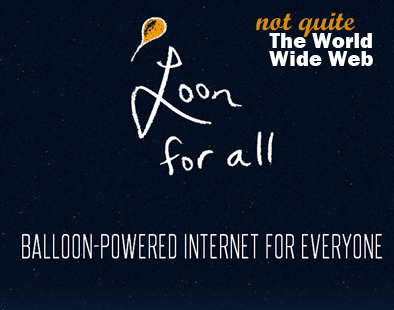
Facebook is not the only tech giant who has decided to throw their weight behind this cause. Google began testing on their new initiative, Project Loon, in June. The basic plan is to launch giant weather balloons into the Earth’s atmosphere to amplify and carry internet service to rural areas. The balloons are solar powered, would require very little maintenance, and their locations can be controlled by manipulating air currents. All a small village would need to access the balloon powered internet is a small receiver that would be installed on the outside of a community building. Google has thought of everything, they even work with air traffic control to time and schedule the launches and retrievals of balloons. Cliff Biffle, lead Tech on Project Loon, remarked, “Balloon powered internet sounds positively mad and in a way it is but its mad in a very practical way that just might work.” I think Cliff accurately summarizes my feelings toward Project Loon. It sounds out of this world (literally) but it is this kind of radical, out of the box thinking that is needed to reach out to the 5 billion people without internet access.
Read the WIRED Magazine article to learn more about the technical aspects of the project. http://www.wired.com/business/?p=82095
(The video in this post is no longer available.)
by Matt Woodford | Sep 11, 2013 | Global Cooperation, Peace & Disarmament
The Syria question continues to dominate both domestic American politics and international affairs. The biggest opponent to U.S. involvement is Vladimir Putin and Russia. But while the Kremlin calls for diplomatic and political methods for peace in Syria, it continues to be the biggest seller of weapons, vehicles, and munitions to Assad’s government.
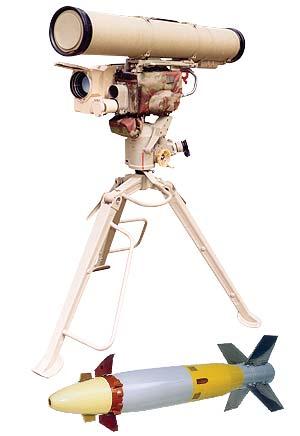
Prior to the start of the civil war, Russia accounted for 50% of all Syrian arms imports. The Russian government did halt weapons sales in the beginning of the conflict but resumed earlier this year when relations between the Kremlin and Washington turned sour. Since then, according to Reuters, over 9 trips have been made between Damascus and the Ukrainian port of Oktyabrsk, which is the main port utilized by the Russian state arms company, Rosoboronexport. The ships shut down their radar systems while leaving the port, indicating that Russia desired to keep the shipments secret. The ships most likely contained small arms and more anti-tank Kornet missile launchers and missiles, a system that Russia has fulfilled 6 or 7 contracts for since 1998.
Many countries, including the United States, have supplied weapons to one side or the other in the Syrian conflict. What makes the Russian case so damning is that first of all, the government is profiting from shipping weapons to a regime believed to have used chemical weapons against their own people. Secondly, Russia is the biggest opponent of military action and biggest proponent of a negotiated settlement but still continues to arm one side. Russia would have much firmer ground to stand on if it had continued to halt arms shipments like it did at the beginning of the war. The continued sales of weapons brings Russia’s motives into question, does the Kremlin actually want peace in Syria? Or does Putin actually want to just keep opposing and shutting down U.S. interests in the region? If Putin does decide to halt weapons sales to Assad, Russia’s call for alternatives to military action would be seen in a much better light.
Should the UN pass the Arms Trade Treaty this practice of selling weapons to questionable regimes will be unveiled and forced into the international limelight. Countries such as Russia would be forced to make a decision; either give up the trade and fully commit to finding a peaceful solution, or keep selling weapons and face international pressure and consequences. The Arms Trade Treaty would prohibit countries from selling arms and weapons systems to other states if the state “has knowledge at the time of authorization that the arms or items would be used in the commission of genocide, crimes against humanity, grave breaches of the Geneva Conventions of 1949, attacks directed against civilians protected as such, or other war crimes.” Because Syria has attacked civilians with conventional and chemical weapons, Russia would not able to claim it can legally sell weapons to Syria.
We are currently pressuring the Obama Administration to sign the Arms Trade Treaty at the United Nations General Assembly on September 24th. Send an email to President Obama urging him to sign the Arms Trade Treaty.
by Father Ben Urmston | Sep 10, 2013 | Global Cooperation, World Federation
I don’t remember when or how, but one day it dawned on me what our world would be like if we had a democratic world federation. Ever since, when I read a newspaper or watch the news, I imagine how a democratic world federation could help global climate change, the global economy, and the suffering of war and violence.
Wouldn’t we be more secure, more open to other cultures and peoples, with better communication with other nations? I invite you to do your own visioning (and commenting). Not that there wouldn’t be challenges and difficulties. Nothing will work if we don’t work at it. But wouldn’t it be “easier to be good” as the mentor of Dorothy Day, Peter Maurin used to say? Even if we went more in that direction toward a sharing world community, wouldn’t that be a better world? Happy envisioning!!
A different way to look at our world is presented in a readable way by Deb Reich in No More Enemies. She invites us to change enemies into partners by envisioning alternatives. Trees take in carbon dioxide and emit oxygen. We can be inundated by the violence in our world and give out love which unites us.
I also suggest my article in Tikkun on Ersatz Security.
by Mona Funiciello | Aug 20, 2013 | Climate Justice, Global Cooperation
The first – and so far only – time I visited Idaho I stayed in a rustic cottage surrounded by open fields. The mountains on the horizon were so far off they blurred into the distant haze and looked more like hills. But, being a hiker, I knew the peaks were just hidden and planned to return one day for a trek into the wilderness. Now a huge chunk of that area is either scarred or gone.
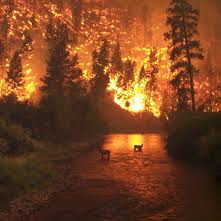
In the last few days, wildfires have incinerated more than 100,000 acres in the Sawtooth mountain range and scorched homes, businesses, and wilderness areas across 11 U.S. states – one of the many devastating impacts of droughts that have reached near historic levels. “I’ve never seen anything like this,” said Dale Byington, a restaurant manager who has lived and worked in Ketchum, Idaho for 23 years. I heard and read that same line over and over during superstorm Sandy and following other severe weather events in recent years. But the shock and disbelief expressed by people closest to these catastrophes hasn’t budged Congressional gridlock on climate change.
Not so with terrorism. In early August the U.S. issued a worldwide travel alert and shut down 21 embassies and consulates in response to al-Qaeda threats. U.S. citizens and government officials quickly heeded the warnings, despite considerable disruption and inconvenience. It’s understandable that few are willing to risk another 9-11 or Benghazi. But if the safety, health, and well-being of American citizens are truly paramount, then climate change would be treated as a security risk on par with terrorism.
There’s ample evidence that climate change poses near-term risks – not just 20, 50, or 100 years from now. “I think there is a fundamental error: that is, to talk about it in the future tense…there are pretty clear manifestations now and considerable data from the last several decades showing that it’s happening,” says Doug Boucher, a climate expert with the Union of Concerned Scientists.
A recent Harvard study identified four climate-related security risks that will impact the U.S. in the near-term: Water, Energy, Food, and Critical Infrastructure. Public health risks also loom large. High-level government officials have publicly acknowledged the links between climate change and security going back several years. Tom Donilan, former National Security Advisor to President Obama, recently spoke about them at Columbia University’s Center on Global Energy Policy: “The change wrought by a warming planet will lead to new conflicts over refugees and resources; new suffering from drought and famine; catastrophic natural disasters; and the degradation of land across the globe.”
However, as GlobalSolutions.org reported in July, U.S. concern about climate change takes a back seat to fears of terrorism. Americans ranked ‘Islamic extremist groups’ among the nation’s top three security threats, with global climate change coming in a distant sixth. This stands in stark contrast to survey respondents in Canada, Europe, the Middle East, the Asia/Pacific region, Latin America, and Africa, who all placed global climate change at or near the top of their lists of security threats.
Obama developed his national climate action plan as a way to bypass the partisan gridlock that has halted legislative action on climate change. His reasoning was unequivocal: “It demands our attention now.” Clearly political will for action on climate change is accelerating, but not fast enough. The threats to Americans’ safety and security are imminent.
These wildfires are a warning flare that Congress can’t ignore. Carrying on with business-as-usual is sure to result in death and destruction on a far greater scale than any terrorist attack. The U.S. must elevate climate change on its national security agenda, break partisan gridlock, and take a leadership role at the November 2013 climate negotiations.
U.S. legislators have the power to mitigate the worst impacts of climate change, but must act now. As temperatures continue to rise the U.S. has one last chance to get it right and there’s no room for error.
by Starlyn Matheny | Aug 13, 2013 | Global Cooperation, Human Rights
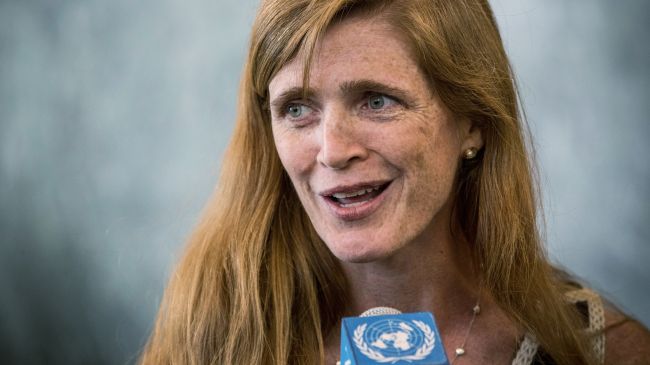
“OMG,” Samantha Power is excited about viral videos and social media as a lever of change. The youngest US Permanent Representative to the United Nations, at age 42, gave her first speech as an Ambassador to the Fourth Estate Leadership Summit this weekend. The event was hosted by Invisible Children, an advocacy NGO with the goal of bringing members of the Lord’s Resistance Army to justice and ending child conscription in Sub-Saharan Africa.
Her speech was current and geared toward encouraging the world’s youth to take action in whatever creative or unconventional forms. She praised the work of Invisible Children in their “Stop Kony” campaign and the efforts they have taken since their viral video release last year. “Today ordinary citizens don’t just advocate for change and action, they force change and they take action themselves,” Powers remarked. She gave examples of how today’s youth don’t have to become Washington lobbyists to catalyze global change like Invisible Children’s effort to design fliers that encourage LRA fighters to defect, to distribute them to LRA-affected areas in DRC and the Central African Republic, and to build radio stations in areas of high LRA activity.
While Power embraces youth movements such as viral videos and social media, she also stressed the importance of result focused action saying, “everything else is just noise. But this new generation understands that the video is not what matters; the number of twitter followers is not what matters. These are just means to an end… What matters is the real world scoreboard.”
With her speech arriving only a few days before International Youth Day, August 12th, her message is particularly significant, now more than ever. A recent report by Population Action International estimated that over half the world’s population is under the age of 30. For the US, this means activists grew up in the age of globalization and 24-hour news networks, using cell phones and the internet. This generation grew up knowing about issues that affect people on the other side of the globe and had the capability to a difference from afar. Both Samantha Power and GlobalSolutions.org know what a wealth of potential this demographic holds for the future of our planet and want to know what matters to you.
Tweet what matters to you and remember to include the handle: @GlobalSolutions and the hashtag #WhatMatters. Power has vowed to respond to her favorite tweets on Thursday, August 15th. Ambassador Power concluded in her speech with, “It is the courage and creativity of those in this room and young people everywhere that gives me hope, that we too can accomplish great things, united.”
by Zoey Krulick | Aug 1, 2013 | Global Cooperation, News, World Federation
Last weekend I had the opportunity to attend the Annual Conference for GlobalSolutions.org at Hofstra University in New York. The conference focused largely on skills that can be used to become more engaged in our campaigns and to help build the GlobalSolutions.org movement. The staff at the conference certainly accomplished that, teaching many invaluable skills such as building community networks, fundraising, and using social media. Overall, I left the conference with an abundance of knowledge on how to build our movement effectively, and I hope other conference participants feel the same.
Of course, the most inspiring part of the conference was not the information itself, but the energy in the room. While the mood changed several times over the course of the day, sometimes serious, sometimes less so, the overall atmosphere was inspiring. Some of the participants hadn’t seen their old friends in years, yet still spoke as if it were yesterday. And of course, many new friendships were made. Overall, the room was filled with exciting discussion and intense energy – you could tell that everyone there had a passion to change the world.
If you didn’t get to attend the conference, don’t worry! We have a page with a summary of everything covered, including the information we handed out at the conference and helpful tutorials so you can learn these skills from home. Also, you can still let us know what you think we should work on and how you’d like to be engaged by filling out our survey. Until next year, GlobalSolutions.org’ers!