by Anders Bakkethun | Oct 15, 2013 | Global Cooperation, Peace & Disarmament
Syria, what? After weeks of vigorous debate on The Hill and internationally on whether to intervene in Syria following the sarin attacks on August 21st, the joint Syrian-Russian gambit is paying off. Saber-rattling in the White House seems to have rattled President Putin’s mettle; He reached out to Bashar al-Assad and arranged a deal to dismantle and destroy the government’s chemical weapon stockpiles. It was hailed internationally as a victory, but removing a tool from Assad’s repertoire does nothing to resolve the conflict. If all the weapons are abolished, Assad will have diminished capacity to cause mass casualties, but will continue to bitterly fight the opposition and cling to power–leaving 2 million refugees displaced, hungry, and disenfranchised.
Russia was loath to act on Syria for the past two years of the conflict, going as far as to veto UN Security Coucil votes to condemn the conflict. There are a few possible reasons Russia has forestalled any actions in the UNSC and propped up the regime:
- To thumb their nose at the US. The US has been hesitant to step up and do anything about Syria, but has been an outspoken critic of Assad. Putin will take any chance he can to antagonize the US because it is popular with his constituents and puts Russia on equal footing.
- Russia has a broiling insurgency of its own called the North Caucuses. Though it is kept under control by the undemocratically appointed strongman Ramzan Kadyrov, Russians still eye the Caucuses with suspicion, fearing secessionist sentiment and terrorism. Putin is afraid of blowback in the area if Assad falls, despite Western analysts’ assertions that he will suffer blowback regardless of the outcome in Syria.
- Lastly, Russia is comfortable with the status quo and the enemy they know. Putin has no strong attachment to Assad’s regime, but any potential change could be detrimental to Russian interests in Syria and the Middle East at large. They especially fear a radical Sunni Muslim regime taking power.
Russian interests in Syria are complex and not easily discernible. What can be gleaned from recent events is Russia does not want another American foray in their backyard. Maybe the hawkish rhetoric from the Obama administration did more good than more subdued calls for peace…

by Don Kraus | Oct 9, 2013 | Global Cooperation, Global Justice
A “Big Lie” is a “deliberate, gross distortion of the truth used especially as a propaganda tactic.” My colleague Jake LaRaus just published a great paper: Birth of a Big Lie – How Misinformation Fuels Treaty Opposition: A Disability Treaty Case Study.
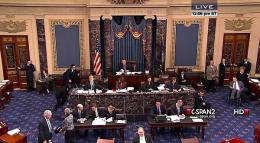
Last December, Bob Dole, former GOP presidential candidate and decorated veteran watched from his wheelchair on the Senate floor as all but eight of the Republicans in that chamber shamefully voted down the UN Convention on the Rights of Persons with Disabilities. It takes two-thirds of the Senate to ratify a treaty, and even with all 53 senators in the Democratic caucus supporting it, too few Republicans got on board for it to pass.
The treaty’s opponents seem stuck in a partisan twilight zone of UN black helicopters and conspiracy theories that undercuts U.S. influence in global affairs. They’ve perfected a method of defeating virtually every treaty that comes along. Since controversial treaties never pass in the Senate, opponents make any unobjectionable agreement divisive by inventing a Big Lie.
LaRaus examines the Disability Treaty 2012 ratification effort and how the opposition quickly mobilized and diminished support for a modest treaty that was modeled after the landmark Americans with Disabilities Act (ADA). The anti-ratification coalition sowed discord with mischaracterizations and mistruths through a vertically-integrated echo chamber. They not only damaged the United States’ global reputation, but also deprived other nations that have ratified the treaty the benefit of America’s experience implementing the ADA. This is an important report. Understanding how the opposition defeated the Disability Treaty will help supporters of this and other agreements successfully prepare in the future to meet resistance head-on.
Secretary of State John Kerry recently added the United States’ signature to the Arms Trade Treaty. This treaty is a great step forward in dealing with the unregulated and illicit global trade in conventional weapons and ammunition, which fuels wars and human rights abuses worldwide. But the NRA has it in its sights and is already utilizing the Big Lie to derail its ratification.
LaRaus divides and rebuts the mistruths used by Disability Treaty opponents into three broad categories: efficacy and efficiency of the treaty itself, sovereignty-related issues, and qualms of the homeschoolers and parental rights organizations. Here’s an example:
- BIG LIE: Senator Mike Lee (R-UT): “I and many of my constituents who home-school or send their children to religious schools have justifiable doubt that a foreign body based in Geneva, Switzerland, should be deciding what is best for a child at home in Utah.”
- REALITY: Article 36(1) clearly says that the CRPD committee will issue “suggestions and general recommendations” to state parties, which are in no way binding. The committee makes no decisions or decrees – it just gives advice. The role of the Committee was clarified in the RUDs adopted by the Senate Foreign Relations Committee last year. A similar RUD could be recommended again in order to clarify this understanding.
We know that international cooperation is essential to resolve global challenges and build a safer, more secure world. Multilateral treaties establish rules that allow countries to cooperate with clarity and predictability. Since the founding of the United Nations, the U.S. has been a leader in crafting these agreements. However, the United States Senate has not successfully ratified a major multilateral treaty since the Chemical Weapons Convention in 1997.
The Senate’s failure to commit has damaged the U.S.’s security, economy, and global leadership. This failure is not accidental. A well-funded and well-organized opposition has emerged that works to fend off and defeat multiparty international agreements, particularly those associated in any way with the United Nations. Birth of a Big Lie is an essential read for anyone who cares about treaties, U.S. global leadership, and the future of our world.
by Kevin Burke | Oct 9, 2013 | Climate Justice, Global Cooperation
One of the key outcomes of UN Week was an important development in development: the UN General Assembly formally adopted language that makes the post-2015 agenda focus on what our Sustainable Development Goals (SDGs) should be and how we should attain them by 2030. Over the next two years, at a series of meetings and conferences, diplomats and bureaucrats will be deciding on the nuts and bolts of the successor to the Millennium Development Goals.
Why does this matter? And after endless frustration over environmental action of any kind at the UN, how can we make the SDGs make a difference?
First, it matters that the UN agreed to make the Sustainable Development Goals the focus of the post-2015 development agenda because the gains made by seeking the Millennium Development Goals are only sustainable with a long-term focus on environmental goals. Studies consistently show that the global poor are the most vulnerable to the effects of climate change, and it’s not the only environmental challenge we face: land degradation, desertification, ocean acidification, biodiversity loss, and human outcomes like food security and access to water matter as well. If Millennium Development Goals like decreasing poverty, child survival rates, or rates of HIV/AIDS are achieved only to be dashed as communities become newly stressed due to drought, or famine, or natural disasters, then what did we really achieve?
Second, the fact that the states who make up the General Assembly have agreed to integrate sustainability into traditional poverty and global health goals means we’re making progress, even if it’s tenuous, on convincing developing countries that environmental goals are in their interest. Their narrative has long held that since modern industrialized states didn’t have environmental standards as they became the economic powerhouses they are today, developing states should have few restrictions, too–this has especially been the claim of China, Brazil, and India, for instance. And these states had been trying to keep these goals separate. The fact that they joined the international consensus means, to some extent, that we’re making progress on getting political leaders in these states to recognize the potentially devastating consequences to them and to their citizens if we don’t take the environment seriously.
Third, this is an important step toward re-invigorating action on global environmental goals. Major industrialized countries like the US and Canada have opted out of the Kyoto Protocol, and developing countries’ emissions targets are non-binding. Progress has stalled on the global diplomatic front where the environment is concerned. But most importantly, perhaps, we’ve learned a lot since the original Rio Conference in 1992 and the signing of the Kyoto Protocol in 1997–while emissions are still an important part of our understanding of climate change and our legacy to the future, we now understand that fighting environmental problems is about more than just government treaties and legislation. We have to involve businesses, NGOs, and local organizations to help us plan for disasters, provide for water and food security, design urban areas, preserve native species, and much more. We know now that providing for humanity’s long-term health is about more than just government yammering–it’s about all of us working together at the local, regional, and global level to mitigate the disasters we know are coming and to prevent the problems to which we are clearly contributing. The Sustainable Development Goals and the process that creates them will provide us with a public measuring stick to work with and a new public standard to which we can hold all our leaders–public, private, and non-profit–accountable.
Finally, how will having the SDGs on the post-2015 agenda make a difference for the environment? After all, we’re just a year removed from the Rio+20 Summit on Sustainable Development and we just had a massive IPCC (Intergovernmental Panel on Climate Change) report explaining what we know about climate change and how it may affect us in the short- and long-term. Isn’t the environment getting enough attention?
Of course not.
It’s been a while, so you may have forgotten that there was a mass walkout from–and mass dissatisfaction with–the Rio+20 Summit. People were frustrated that the final result of that process was an overly bureaucratic, please-everyone document that actually committed to not-so-much. But when the General Assembly approved treating SDGs as an integral part of the post-2015 development agenda, we took the first real step toward realizing what those protestors actually hoped for: real action. The Millenium Development Goal process has used achievable, measurable goals, that member states, NGOs, UN bodies, and even lending institutions can use as policy priorities. Imagine if these kinds of goals were set for the environment and sustainable development.
Now imagine if you got input into what those environmental goals are. That, above all, is the opportunity this news affords us: the chance to get involved and make a difference on a global scale.
And while the UN is and will remain an inter-governmental body, there are plenty of organizations that inform those governments on how to make decisions–including this one! You might also want to connect with the US Mission to the UN directly to inform their participation in discussions. Or comment on this post below to let us know what you think!
by Kevin Burke | Sep 24, 2013 | Global Cooperation, United Nations
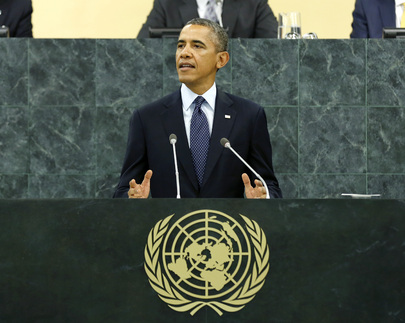
As delegates have been meeting for the 68th plenary sessions and General Debate (“UN Week”) at the UN General Assembly this week, September 23rd to October 1st, at UN Headquarters in New York City, it’s worth taking a moment to focus on the General Assembly as an institution and not just as an annual headline-generating device. It’s a great reminder of how far humanity has come these past 68 years in improving diplomacy, collaboration, and peace-building, and yet we still have far to go.
The UN General Assembly is the main deliberative, policymaking, and representative body of the United Nations; it is a deliberative body but not a legislative body in that it has the ability to offer non-binding resolutions to its member states, but it does not make laws. It makes policies for itself and the UN system but does not have the power to compel its member states. Its representation is equal among states: each state has one vote regardless of population, land area, or GDP. The General Assembly does have the power of the purse, as it passes the annual budget for the United Nations and determines how much each member state owes; it also elects the UN Secretary General, the non-permanent (and non-veto-bearing) members of the UN Security Council, the fifteen judges of the International Court of Justice, the fifty-four members of the Economic and Social Council, and new members of the United Nations itself.
What good does this deliberative body do?
Quite a bit.
At the moment, the General Assembly is the only true forum for world opinion – it calls itself the “parliament of nations,” and with 193 members as of September 2013, it admits more opportunities for input than any other international organization: people from every corner of the planet have at least a small voice at the General Assembly. It may not seem like much, but providing marginalized states and people a permanent, institutionalized forum to explain how global problems – or the actions of other states – are affecting them can be an invaluable tool for working out better solutions to those problems.
Furthermore, the General Assembly is a major source of knowledge for policymakers and non-governmental organizations around the world when it commissions reports and gathers conferences on a variety of topics. Subjects discussed this year include progress on HIV/AIDS, road safety, peace and security, human rights, macroeconomic policy, climate change, globalization, poverty, the advancement of women, and much, much more. Just a glance at the agenda for this year’s General Assembly showcases the vast amounts of knowledge manufactured at the request or through the funding of the General Assembly.
And despite the much more involved bureaucracy of the UN Secretariat and the Economic and Social Council, the UN General Assembly has some important bureaucratic roles of its own. The UN Human Rights Council, the UN Disarmament Commission, and the UN Peacebuilding Commission are just a few of the subsidiary organs within the UNGA that work to keep member states informed, cooperating, and actively working toward the lofty goals of the San Francisco conference of 1945. Of course, these councils and commissions are not without controversy – mere membership on the Human Rights Council comes with great responsibility – but the day-to-day work of diplomacy on these issues is an important end in itself.
Criticism of the UN General Assembly (including that of former UN Secretary General Kofi Annan) has focused on its tendency to seek consensus resolutions that meet the approval of all members rather than to try to pass stronger, more meaningful resolutions. The General Assembly also has a reputation for being excessively tedious with resolutions that are not only ineffective but often repetitive in nature. And these are non-binding resolutions!
It’s also worth noting that the UNGA is not a truly representative body. Each member state gets equal representation at the General Assembly, but India and Mauritius are treated equally: India has 1,000 times as many people and 1,600 times as much land area, as one example. States are an important part of how people solve political problems, but global problems may require that individuals get more input into how they are affected by global phenomena. Potential solutions may include weighted voting (cf. The Schwartzberg System of GlobalSolutions.org member Dr. Joseph Schwartzberg) or a parliamentary assembly (a UNPA, so to speak) of elected representatives.
Don’t forget, though, that while the UN General Assembly is a flawed organization that both succeeds and fails in supporting the aims set forth in the UN Charter, it’s also a daily, ongoing diplomatic process. The UNGA today isn’t the UNGA of a year ago, ten years ago, 68 years ago, or the one envisioned by its founders, and it will change tomorrow, next year, and decades into the future – it may have a different name or even be replaced by a different organization altogether. This process of change is good: as we get better at working together on global problems, we change our institutions to better suit our needs. So as you read another news story about a meeting or a speech from the UN this week, remember that the strengths and weaknesses of the UN, and its General Assembly, are ours to use for the good and to change the future.
by Jake Keyel | Sep 17, 2013 | Global Cooperation, Peace & Disarmament
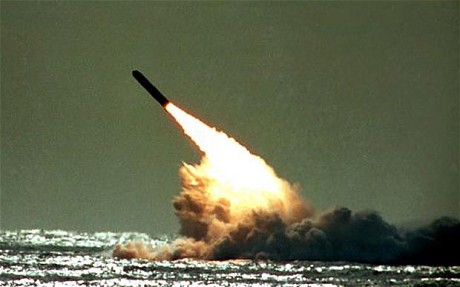
With the intense media attention that Syrian chemical weapons have generated for the last month, now is the time to consider other weapons of mass destruction and the pressing need to eliminate them for good. Chief among such weapons are of course nuclear weapons. While we hope that the Assad regime will sign on to the Chemical Weapons Convention and turn over its stockpiles, Syria is not the only country in the region that has weapons of mass destruction. Syria’s neighbor to the southwest, Israel, has an arsenal of 80 nuclear warheads.
Along with Israel, eight other countries have nuclear weapons. Without a doubt, nuclear warheads have the most destructive potential of any weapons yet devised. One has only to look at the terrible consequences of the U.S. nuclear bombings of Hiroshima and Nagasaki to understand this; bombs built after World War II are exponentially more powerful. And even though nuclear weapons have not been used since, the long history of near misses, or “broken arrows“, shows the extreme danger that looms over all of us as long as these weapons exist.
In 2010 the United States and Russia, holders of the first and second largest operational nuclear arsenals respectively, signed a bilateral agreement, known as New START, in which both countries agreed to significantly reduce their number of active nuclear weapons. While this was a good first step, the agreement allows both countries to maintain 1,550 active nuclear devices, 700 of which are permitted to be deployed. In June of this year, U.S. president Barack Obama spoke in Berlin about the need for continuing negotiations with Russia to reduce U.S. and Russia nuclear stockpiles even further.
This track is important for the United States to continue to pursue. Even better would be for the United States to take the lead in multilateral negotiations with all of the world’s nuclear powers to first bring non-party states on to the Nuclear Non-Proliferation Treaty (NPT) and second to pressure all nuclear states to live up to their commitments under the NPT to reduce and eventually eliminate their nuclear arsenals.
Rather than continuing to penalize (and demonize) countries like Iran for pursuing nuclear programs, the United States should practice what it preaches and dismantle its own nuclear weapons. This would set a powerful disarmament precedent. We as citizens of the United States and as human beings cannot afford to continue to let any nation, particularly our own, stockpile weapons with the capability of wreaking havoc on the planet’s environment and literally destroying civilization as we know it. The stakes are just too high to put this issue on the back burner any longer.
by Melanie Pino-Elliott | Sep 16, 2013 | Climate Justice, Global Cooperation
New research reveals a connection between extreme weather and climate change. A report published by the American Meteorological Society found that human-caused climate change was a contributing factor in half of the 12 extreme weather events that occurred last year. We are seeing the impacts of climate change and it’s time for us to get serious about reducing carbon pollution before things get worse.
For some 2012 extreme weather events, especially those involving rainfall or drought, researchers did not find evidence of climate change. A warming climate was not responsible for Britain’s rainy summer or for the Netherlands’ cold spell. They also did not find any relationship between climate change and the droughts in the American Midwest, Kenya, and Somalia. High levels of precipitation in Britain, the United States, China and Japan were attributed to natural variability. However, researchers detected a link to climate change in the rainfalls in Australia and New Zealand.
The heat waves the US experienced last spring and summer had been attributed to normal atmospheric dynamics, but climate scientists now estimate that climate change was responsible for about one-third of the magnitude of that warmth. The study claims that such heat waves are now up to 12 times more likely to occur because of global warming. The report also blamed human-caused climate change for the warmer ocean and atmosphere accounting for the record loss of Arctic sea ice. Though climate change probably did not cause hurricane Sandy, the storm that devastated New York and New Jersey, the increase in sea level may have exacerbated its impact.
Though scientists have previously been reluctant to hold climate change responsible for weather events, advances in research and computer models are making more accurate attributions possible. They also increase the ability to predict the effects climate change will have in the future. Climate change is heating and drying some areas, making them more susceptible to wildfires in the long run. According to an article from the American Ecological Society, high-latitude areas are at risk because their peat soil is high in carbon and will burn under extreme weather conditions. Regions like the American West and parts of Australia are more likely to experience fires in coming years. These predictions already have started to come to fruition with the string of wildfires in the west, such as the Rim Fire that recently razed 134,000 acres of Yosemite National Park.
One of the major things we have to do to head off climate change and prevent more events like this is reduce carbon emissions. The fossil fuels we burn in factories, cars, and homes are a major source of carbon pollution. Clean energy alternatives, such as wind and solar energy, are needed to reduce our dependence on fossil fuels.