by Jake Keyel | Nov 2, 2013 | Global Cooperation, Peace & Disarmament
One of the new facets of the continuing fallout from Edward Snowden’s NSA document leaks this summer is the revelation that U.S. intelligence services have been spying on allies in Europe. German Chancellor Angela Merkel, for example, has apparently had her personal cell phone under surveillance since 2002, even though this surveillance, and the surveillance of other leaders, has produced “little reportable intelligence.” Considering that the NSA collected millions of European phone records, outrage by European citizens is legitimate. The outrage by European leaders like Merkel, however, is somewhat disingenuous and more a function of “optics” than genuine surprise.
The United Kingdom has recently come under fire for spying on its allies. Canada and Australia have also been implicated in helping the United States to collect intelligence on allies through their foreign embassies. Again, unsurprising as the United States, Britain, Canada, Australia, and New Zealand have had an intelligence sharing alliance since World War II. These nations belong to an alliance known as Five Eyes. And while they may not spy on each other, they certainly help one another spy on others. Israeli leaders expect to be surveilled by the United States despite the two nations’ close alliance. Clearly, given the world of real-politik that we live in, the surprise is not that the United States was spying on its allies; it is that it got caught.
According to Brigham A. McCown at Forbes.com: “At issue is whether the NSA’s spy program is a necessary evil to protect the country against foreign attack, or whether the program is so out of control that is knows no bounds, and heeds no law.” It appears abundantly clear that the latter is the case. U.S. intelligence agencies spy domestically on American citizens, on numerous allied nations, and of course on so-called “enemy” nations. It seems nowhere is safe from this expansive system of surveillance.
Amos Harel recently wrote on Haaretz.com that “now that its activity [U.S. surveillance of allies] has been exposed, the U.S. cannot play innocent. Its friends know what it is doing behind their backs. The era of hypocrisy is over.” Unfortunately, I do not share Mr. Harel’s optimism. This incident will likely have few repercussions for the United States and it will certainly not stop such hypocritical actions. The NSA is already shifting blame away from itself and onto the intelligence agencies of the nations on which it is accused of spying. Also consider a forthcoming UN resolution condemning illegal electronic surveillance that fails to condemn specifically this rampant behavior by the United States. However, the revelations may spur U.S. intelligence services to cover their tracks better.
This continuation of Cold War policies of paranoia treats every other nation as a potential enemy and will only serve to create enemies, even where none existed before. Dialog and diplomacy done in the light would serve everyone better than spying and intrigue done in the dark.
by Anders Bakkethun | Oct 25, 2013 | Global Cooperation, Human Rights
Freedom is a popular rhetorical tool. It’s central to the American narrative of democracy, market capitalism, and civil rights. It’s often alluded to in our foreign policy when we push for countries to adopt similar polices of open government. In the past decade we have seen this narrative take a more extremist tone with libertarians espousing interpretations of this concept that most people would find unfathomable or unrealistic at the least.
Unabated freedom can also be dangerous. No policy area has seen the effect deregulation has had on our society than technology and more specifically the internet. While the internet has been an invaluable engine for growth, it has also been utilized by the less wholesome. This is especially true for the Darknet, an encrypted internet that exists on the same servers as the “regular internet”, can only be accessed by special software and allows its users to remain mostly anonymous. Of course, this can be used to subvert government surveillance and censorship, but it is also the home of illicit arms and drug dealers and pedophiles rings.
The Darknet made international news with the arrest of Ross Ulbricht, the proprietor of Silk Road, an online marketplace for illicit drugs. Two years after founding the website, he made 3.6 million dollars and months before he was arrested, was in the process of paying a hit man to assassinate a cofounder of the website.
While the Darknet allows for near unlimited freedom in how it’s used, it can also be used for good. It was originally made to subvert SOPA, John Hopkins University, Purdue University, the State Department, and the One Laptop Per Child program have all experimented with similar models to circumvent censorship by foreign regimes or in OLPC’s case, provide internet access to users who don’t have access to ISPs.
As is the case with many emerging technologies, policy is always one step behind. Just as we grapple with what it means to be free, we must also debate how to move forward with the free, anonymous, Darknet.
by Kevin Burke | Oct 22, 2013 | Global Cooperation, United Nations
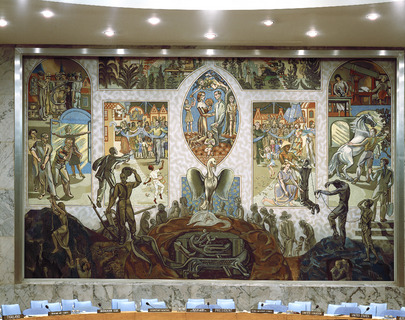
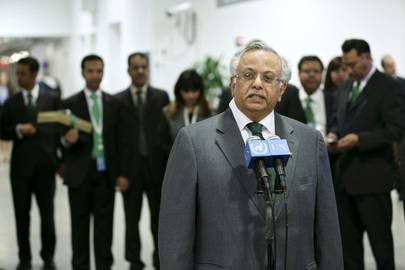
Last week, Saudi Arabia was one of five states elected to the UN Security Council for a two-year term. In a surprise move, they released a statement to the press the next day rejecting their seat. In what follows, I’m going to explore their decision and why the hierarchical nature of the Security Council is frustratingly difficult to overcome. That hierarchy has a real effect on smaller, less powerful, or historically disadvantaged states, and the Saudis’ frustration is the latest sign that Security Council reform has a long way to go.
So here’s what happened:
Over the past few years, Saudi Arabia has actively pursued membership on the UN Security Council – they’ve lobbied for a seat, trained staff, even celebrated their election to the Security Council on the floor of the General Assembly. This was a big deal to them.
Then Friday, the Saudi Foreign Ministry issued a press release denouncing the UNSC for its failures on the Israel-Palestine issue, Syria, and “work mechanisms and double-standards on the Security Council” that make it ineffective. Why the sudden change of heart?
As we can assume all states do, Saudi Arabia is seeking its rational self-interest in international affairs (we may not always agree what that is or how to achieve it, but that’s the idea). The Saudis’ conception of their self-interest is primarily focused on their regional rivalry with Iran, which they see through the lenses of sectarian difference (Sunni Saudi Arabia vs. Shi’ite Iran), military power (Iran’s nuclear program is a big concern), and economics (sanctions against Iran have an effect on Iran’s ability to export oil and compete in other economic arenas).
Now consider Saudi Arabia’s self-interest in Syria as it relates to Iran. The Assad regime is backed by Iran, and remains one of Iran’s primary allies so long as it remains in power. The majority of the population in Syria is Sunni; whether Saudi Arabia’s support for the rebels is religious or purely self-interested is less certain than the fact that they benefit both from a prominent role in ending the war and from regime change. They can remove a major ally of Iran and possibly gain one of their own, even if this takes time and effort. Certainly the UN Security Council’s feet-shuffling on this issue must have been maddening for a state seeking to influence the regional balance of power.
Note also that Iran is now in a series of negotiations regarding its nuclear programs. Negotiations with whom? The five permanent members (P5) of the Security Council plus Germany. Not the full Security Council as an ad hoc negotiating group or Informal Council. Just the P5(+1). We’ll come back to the implications of those states’ membership in a bit.
Add in a little flavor, namely that Saudi Arabia’s relationship with the United States has become more distant over Middle East issues like Egypt, where Saudi Arabia has chosen to support the military even after the US has withdrawn support, and you can see how a royal family might feel like its overtures to power were being…stymied, perhaps by other states, but perhaps also by institutional design. It’s also likely that Saudi Arabia had some concerns about taking public stances on particular issues and that the differences with the US over Egypt drew this concern into stark relief.
Does this mean Saudi Arabia did the right thing for their self interest? It’s hard to say. Analysts have mostly been baffled by the decision, noting that Security Council members, even the elected non-permanent ones, have important roles in agenda setting and crafting the non-binding Press Statements that come from the Council. But this is bold! No one’s ever done this before! Is this actually going to result in some kind of reform?
That last question is the most interesting to me. Because even though it’s true that a UN Member State who is on the Security Council has more power on security issues than one who isn’t, Saudi Arabia has pointed out one of the biggest problems with the Security Council: it is fundamentally hierarchical, the power structure in that hierarchy is very asymmetrical, and that hierarchy is the aspect of the UNSC that is most difficult to change.
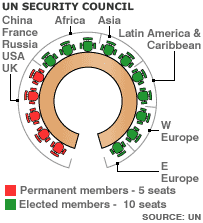
What do I mean by a hierarchy? Here’s the deal: each state in the UN is not created equal when it comes to matters of security. In the General Assembly, everybody gets one vote, and while it’d be a stretch to call it a democracy, at least all the states are treated as roughly equal. In the Security Council, the great powers who won World War II (the US, UK, France, Russia, and China) set themselves up with permanent seats that have a veto over any of the binding (potentially backed by sanctions or force) resolutions that the Security Council issues. In other words, any one of those five states can, by their disagreement alone, prevent the resolution of any issue that comes before the Council, at any time. The veto makes these members immensely powerful on the Security Council. The elected, non-permanent members have the ability to vote on binding resolutions (these votes do matter – if the P5 all voted for a measure and were outvoted by the elected members, their will would be overturned; in practice this never happens), and they serve rotating terms on the Council’s presidency; since the Council does much of its work by consensus, elected members get substantial say in the agenda, work, and output of the Council.
But their influence isn’t nearly the same as the permanent members. Because any state can come before the Security Council when its interests are directly affected by an issue before the Council, all UN members have some presence on the Council. But many have never held a seat on the Council, and have much less experience of its procedures and standards. So the hierarchy goes something like this:
(1) Permanent members (always Russia, France, the UK, China, and the US)
(2) Elected, non-permanent members with two-year terms
(3) UN member states not currently on the Council who’ve been there before
(4) All other UN member states
(5) Everybody else (non-member states, regional organizations, NGOs, individuals affected by an issue before the council, etc.)
And as you go down the hierarchy you have less power.
But the most important thing, the thing Saudi Arabia’s trying to draw our attention to, isn’t that they were trying to jump from number 4 to number 2 on that hierarchy. It’s that the five states in bucket number 1 have such a great amount of power as to nearly make buckets 2 through 5 insignificant by comparison. Moving anywhere along the rest of the hierarchy, we might interpret Saudi Arabia to be saying, is a waste of resources. The permanent members of the Security Council have a substantially larger amount of power that affects everything about the way the council works, and it’s in the UN Charter itself!
Think back to Syria. Saudi Arabia has put endless diplomatic hours into the issue. They’re actively supporting rebel groups financially, militarily, the whole deal. But when the US threatened to attack Syria over chemical weapons, a relative non-issue for the Saudis (they’re certainly not angels on the issue of human rights, as its pummeling at the UN Human Rights Council on Monday made clear), and Russia worked with the US to craft a new Security Council resolution that neither resolved the conflict nor met the Saudis’ interest, it suddenly became clear that the Security Council was not nearly so influential a body as they had hoped. Two states suddenly decided to take action where fifteen working allegedly in concert did nothing. And none of the elected, non-permanent members had a substantive say in that process.
So while we can see the Saudis’ announcement through their eyes now, we can also see it as a clear demand for reform on the UN Security Council. Because all the permanent members were decided upon when the UN Charter was originally agreed to in 1945, its membership is an historical anachronism. Because the council has an asymmetrical hierarchy, reform is a matter of justice: the imbalance of power affects small states substantially, and even though their issues may be pressing, they can be ignored or marginalized if their interests don’t align with a P5 member. Even heavily populated states like India and Brazil or economically powerful states like Germany and Japan get left out of the all-important veto. What about the have-nots? Security issues could come up for just about anybody, and do, frequently, all over the globe.
So it’s not just about Saudi Arabia. Reform affects everybody. How’s that going, anyway?
UN Security Council reform focuses on three key issues:
A) Expansion of the number of states with the veto*;
B) Membership of the UNSC itself, expanding from 15 to (e.g.) 24 members, or adding regional bodies like the EU to the council, etc.;
C) Modification of working methods within the council, to improve results, accountability, and the perceived legitimacy of council actions.
The more substantive or specific the reform, though, the harder the pushback from the P5. They have all this power: why give it up? For instance, in 2005, a group nicknamed the “small five” (S5, consisting of Costa Rica, Jordan, Liechtenstein, Singapore, and Switzerland), frustrated with the 2005 World Summit and its weak attempts at UN reform, made a political push to at least change the way the Security Council did its business. Theoretically, this is the easiest kind of reform, since it doesn’t require changes to the UN Charter. But push back the P5 did, eventually bullying the S5 from introducing a draft resolution on the subject in 2012.
Saudi Arabia’s rejection of the Security Council is a whole new kind of challenge to the institutional order. We might call it civil disobedience, even, since it’s more than just an angry letter: this will (likely) require a new election on the Security Council or could end up causing the council to be one member short (less likely), depending on the formal language used in the notification sent to the President of the General Assembly: either way, this is going to be disruptive to the actual day-to-day work of the United Nations itself in addition to all the controversy.
And it could be the rallying cry for a new kind of unity on Security Council Reform. At least 100 states reportedly supported the S5’s attempts at changing working methods; can Saudi Arabia start a new working group with supporting states?
Or is this the sort of banner that other states will take up? Or the sort of thing that’s better left to NGOs and think tanks, so that we can design and lobby for institutional changes that make sense to the P5 and to the wider UN?
The answer isn’t obvious, but we should all care about this issue. Even if we care more about the humanitarian situation in Syria than Saudi Arabia does, UN reform, and especially UN Security Council reform, doesn’t happen by accident or by magic. The weight of the issues before the UN Security Council requires people taking thoughtful advantage of political opportunities like this one. Let’s do that, shall we?
***
* I would be remiss if I didn’t mention the Responsibility Not to Veto, a proposal for reform that encourages the P5 to adopt a standard that they will not use (or threaten) a veto in cases of genocide and mass atrocity. As proposed by GlobalSolutions.org, this need only be a voluntary step, a standard operating procedure. If this were the norm in the Security Council, we may not be in this situation at all, as Russia would likely have agreed to resolutions on Syria that satisfied the human rights community, which might have affected the Saudis’ decision on Friday.
by Melanie Pino-Elliott | Oct 19, 2013 | Climate Justice, Global Cooperation
Bees are dying off. A phenomenon known as colony collapse disorder is occurring around the world, in which bees abruptly disappear from their hives en masse. This image may not be as moving as endangered tigers or abused dogs or starving children. But if bee decline continues at its current rate, we’re going to be in serious trouble.
About 90 percent of the world’s commercial plants–including fruits, vegetables, nuts, coffee, cotton, and alfalfa hay–depend on bees for pollination. But in the U.S. and in Europe, beekeepers typically report annual hive losses of 30 percent or more. Similar declines have been observed in Asia and Africa. Globally, colonies have been reduced by half since 1960.
There’s no consensus on the cause of these massive declines, but experts points to a number of influences. One is the switch from natural fertilizers to synthetic ones. Pre-World War II, U.S. farmers grew bee-friendly cover crops such as clover to fertilize soil. Now they use fungicides and herbicides, which kill many plants that bees depend on.
Insecticides also present a threat to bee populations. Some research shows that chemicals in pesticides can fog honeybees’ brains, which prevents them from finding their way back to the hive and endangers the survival of the colony. GMO farming, known to increase the use of pesticides and herbicides, is a contributing factor to this problem.
Bees appear to be suffering from poor nutrition, also due partially to GMOs. Genetically engineered crops tend to have less nutritional value, which compromises bees’ immune systems. This makes them more susceptible to pathogens, including mites, viruses, and fungi. Some experts believe climate change has exacerbated this problem as well.
This convergence of threats is a major problem. A large portion of farm output around the world depends on insect pollination, and honey bees are the most efficient pollinators. Their decline represents a major risk to food security, biodiversity, and the livelihoods of farmers and consumers alike.
What can you do about this? Entomologist Marla Spivak recommends the following: plant bee-friendly flowers, campaign to have them planted in public spaces (such as roadsides), and keep them free of pesticides.
“We need to behave more like a bee society, where each of our small actions can contribute to a grand solution,” she says. “Let planting flowers be the driver of large-scale change.”
by Matt Woodford | Oct 18, 2013 | Global Cooperation, News, Peace & Disarmament
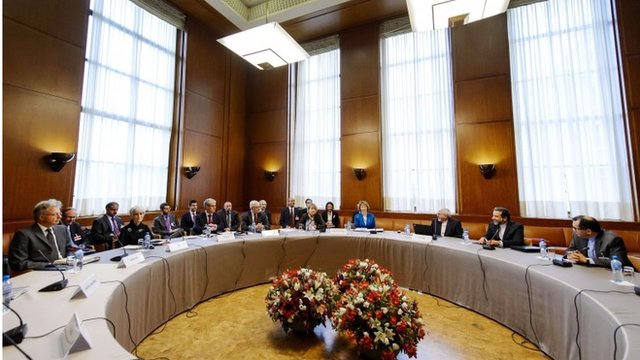
New negotiations concerning Iran’s nuclear program occurred this week in Geneva. Iran met with the P5+1 countries, the permanent members of the UN Security Council plus Germany. During the meeting, Iran officials said they proposed a plan to ease back Iran’s nuclear program. The plan focused on specific aspects of the program which EU officials found encouraging. The participants hope to meet again in Geneva in the near future to continue the discussion that. These are the first nuclear talks that have occurred since Rouhani was elected President of Iran.
The results of this meeting will hopefully lead to better relations between Iran and the United States. If Iran opens up about its nuclear program more can be done to ensure that it is in fact a nuclear energy project and will lead to more trust. Eventually both sides can open up formal diplomatic relations with one another, leaving the past in the past and moving on.
The actions and speeches from Netanyahu’s Israel are very concerning. Netanyahu is loudly proclaiming that Rouhani is deceitful, and nothing has really changed. Netanyahu is acting as a spoiler to moving forward in diplomacy; he obviously does not want anyone to have any relations with Iran beyond hostile ones. In global politics there can never be complete trust but there is a difference between being reasonable and laying one’s cards on the table for all to see. A little trust is required for negotiations to go anywhere, –not blind or unreasonable trust, just a small amount of good faith. If Iran is not consulted, and not treated like an important player in the region why should they not develop nuclear weapons?
The outcome of this initial meeting was very positive and hopefully will lead to further negotiations. The international community can then verify Iran is not developing nuclear weapons, in which case diplomatic relations may improve and economic sanctions can be loosened.

 What do I mean by a hierarchy? Here’s the deal: each state in the UN is not created equal when it comes to matters of security.