by Christopher Davis | Jan 31, 2014 | Climate Justice, Global Cooperation
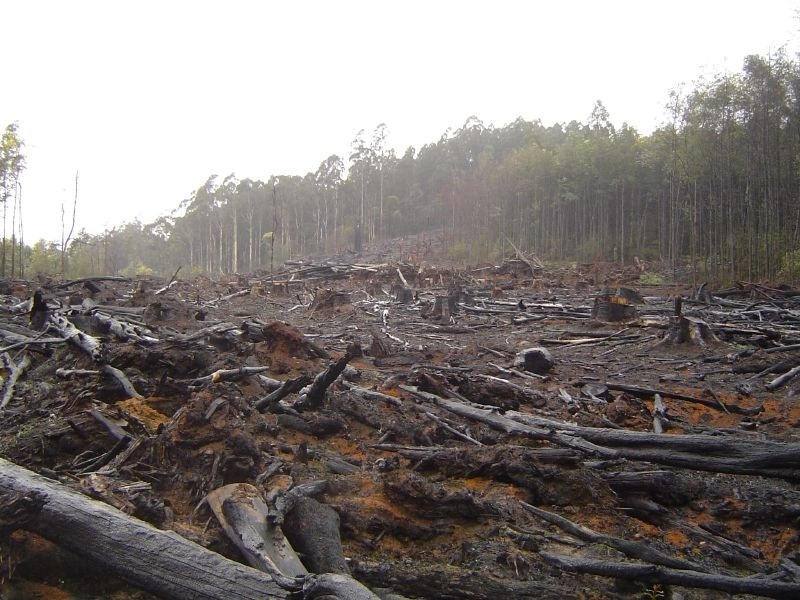
Deforestation, second to only energy consumption, is a leading contributor of greenhouse gasses. The World Wildlife Fund (WWF) estimates approximately 50 million square miles of forest are lost each year. While no region is immune to the impacts of this environmental issue; less developed and developing countries are especially susceptible to the repercussions.
In rapidly growing areas such as Bangladesh these impacts are only magnified. Periodic catastrophic flooding here can be directly linked to deforestation in the Himalayas, increasing runoff and devastating regional lowlands. Additional deforestation in the headwaters of the Ganges and Brahmaptura rivers creates a dangerous environment for the region’s populations.
Unfortunately this is not an isolated environmental concern. The world’s largest rainforest, the Amazon Rainforest, is one of the most affected regions in the world. Population booms in Central and South America have accelerated the perceived need for deforestation to create space to support human expansion. 70% of the Amazon that has been deforested has been utilized for new human habitation, livestock, agriculture, and wood exports.
Following the United Nations “Earth Summit” in Rio de Janeiro in 1992, the UN established the Intergovernmental Panel on Forests (IPF) and the Intergovernmental Forum on Forests (IFF). The IPF and IFF outlined over 270 proposals providing guidance on sustainable forest management.
In 2000, the UN Economic and Social Council (ECOSOC), with its Resolution 2000/35, created the UN Forum on Forests (UNFF). The main objective of the UNFF is to promote the management, conservation and sustainable development of all types of forests, and to strengthen long-term political commitment to this end.
The UNFF maintains universal membership of all UN member States; showing eagerness from the international community to combat deforestation globally. Additionally, in 2007, the UN General Assembly universally adopted the UNFF proposal for the Non-legally Binding Instrument on all Types of Forests (NLBI). The NLBI, a landmark agreement, is the first time that the UN has adopted an international instrument on forest management.
The UN Programme on Reducing Emissions from Deforestation and Forest Degradation (UN REDD), launched in 2008, assists developing countries prepare and implement strategies for conservation, sustainable forest management and reducing carbon emissions. The Programme currently supports 48 countries directly with financial support coming in the form of pledges from UN Member States and other organizations; currently more than $165 million has been donated.
While these efforts mark great progress, much is left to be desired. Due to the increasingly complex global economic interdependency, any future efforts must be supported in international law. Without legal incentives, a large number of developing countries will continue to exploit their resources for economic growth.
Emerging states have been hesitant to cooperate in reducing greenhouse gas emissions possibly viewing such disregard of industrial revolutions past as integral to economic growth. This hesitancy will undoubtedly prevent a global, legally binding treaty from taking shape.
A reasonable solution is to manage forest resources and halt clearcutting. The practice of most or all of the trees in an area being uniformly cut down, or clearcutting, is a popular and profitable method of logging. Currently some regional efforts are limiting the effects of clearcutting by granting long-term land leases to tend and regrow trees.
We are still far from an agreement on this environmental crisis. If we fail to ride the coattails of these efforts, and subsequently fail to ratify an international treaty on climate change, we will stumble in our battle against deforestation. If we fail to reverse the devastation created by deforestation and forest degradation, places like the Amazon will soon cease to exist.
by Josh Spesaison | Jan 13, 2014 | Global Cooperation, Peace & Disarmament
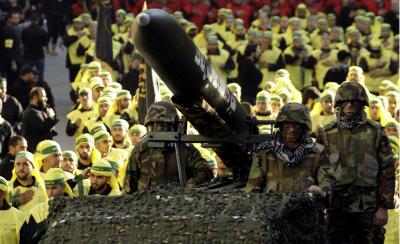
U.S. officials now believe up to 12 Russian made Yakhont missiles have been smuggled from Syrian Government hands to Hezbollah in Lebanon, according to a report by ForeignPolicy.com. In addition to possibly exacerbating regional tension, this flags should also concern Russian security officials and advocates for legal norms regarding arms trade. In 2007 Russia signed a contract with Syria that transfers Yakhont missiles, which fly at speeds capable of evading radar detection, to the Syrian government. This contract calls for the transfer of these weapons to cease if any leave direct Syrian control.
The U.S. government has previously made clear to Russia that the diversion of Russian-supplied missiles out of Syrian control directly violates Russia’s 2007 contract with Syria. Though potentially fueling a civil war and enabling the Assad regime to commit war crimes, Russian officials have stated that it is legally obligated to fulfill contracts agreed to prior to Syria’s civil war. The violation of this “end user agreement” should allow Russia to halt any further transfer of weapons into the hands of the Bashar al-Assad regime. The transfer of Yakhont missiles to Hezbollah may prove to be the most legally binding reason for Russia to end weapon sales to the Syrian Government.
We will have to wait and see if Russia acts lawfully. The situation is a prime example highlighting the importance of multilateral (as opposed to bilateral) agreements on arms trade. The Arms Control Treaty, signed by the United States last September, creates common international standards for the regulation of the international weapons market, particularly when human rights are being violated. If enforced, the ATT can provide states the proper avenue to make great strides towards eliminating the black-market sale of weapons as may have occurred under the bilateral Russia-Syria agreement.
The treaty shows promise to effectively promote transparency, global and regional peace. The United States, though not yet a full party to the treaty, should use the violation of the arms contract with Syria to encourage Russia to join it as a signatory. Apart from strengthening regional security, the U.S. and Russia should do this in the self-interest of supporting the goals of the Arms Trade Treaty as a powerful extension of their respective national and global security interests. As a signatory to the ATT, the U.S. can leverage its commitment to arms trade restrictions in pressuring Russia. If the United States had failed to sign the ATT, attempting to scold Russia over its failure to enforce its bilateral agreement would have been a non-starter at best, if not hypocritical.
As a signatory, the U.S. should at a minimum work with others in pressuring Russia to recover their Yakhont missiles, ensure more weapons do not enter illegitimate hands in violation of their agreement, and enhance security by signing the ATT. The U.S. should also demonstrate lasting commitment to the principles of the ATT by completing its ratification of the treaty.
The transfer of Yakhont missiles from Syria to Hezbollah control is not strictly a regional concern or issue. This problem involves the proliferation of weapons, terrorism, and a civil war that has already lead to humanitarian crises beyond the confines of national borders. Now, the United States, along with other ATT signatories and parties, must take a stand – pressure Russia to cease the flow of weaponry into Syria, re-secure the missiles from Hezbollah if possible, and join the international community adhering to the Arms Trade Treaty.
by CGS Blog Archive | Jan 12, 2014 | Global Cooperation, World Federation
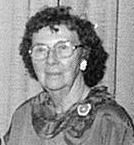
Cleo P. Michelsen, long-time world federalist, died on September 15, 2013, at the age of 104. Cleo took a leading role in establishing the Washington, DC chapter immediately after the United World Federalists founding assembly in 1947. Upon moving to Los Angeles in 1965, where she was a teacher (and co-author of a popular book “Enjoying English”), she provided the major stimulus in making the Southern California Region a center for national leadership. In 1987, Cleo returned to the DC area and founded the Virginia Chapter, while compiling historical material for WFA’s 40th anniversary. In 1995, she received the “WFA Presidential Award” from John Anderson for her strong leadership over the years. Upon news of her passing, encomiums flowed in from all over the country.
- “More than anyone I have known, she not only knew what we need to do to create a world in which human beings can survive, but worked hard at doing it.” – Felix Rosenthal
- “Cleo was one of the most committed to our cause.” – Ed Rawson
- “She was a great motivator, and a great conciliator for a person of such strong views.” – Ira Struass
- “Thanks for your life as a tour de force, Cleo!” – Deb Metke
- “She was a fount of information and ideas….She gave a very high percentage of her income [to WFA]….She quite literally was a force that inspired and moved people to action.” – Tom Camarella
- “She was always ready to help others.” – Ron Glossop
On a final note, Cleo’s husband, Vince Della Penna passed away on December 7, 2013. Although not a world federalist himself, he was a globalist who shared Cleo’s long-term goals. He was also an active member of the Philadelphia and Virginia Global Solutions chapters. Vince and Cleo had a productive and loving dialogue focused upon how to make the world a better place, with a special emphasis on education at all levels. As Ed Rawson noted, “Vince was definitely devoted to her and it would be safe to give him credit for her reaching 104.”
by Don Kraus | Jan 2, 2014 | Global Cooperation, World Federation
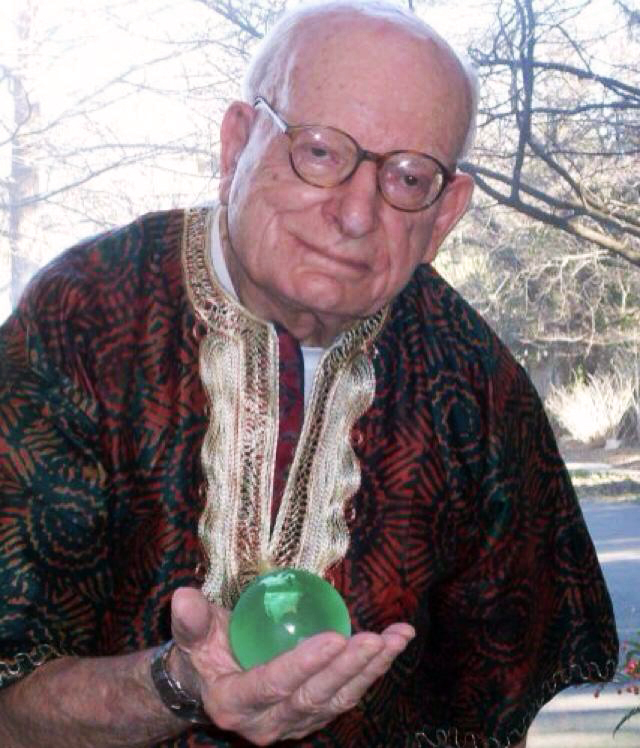
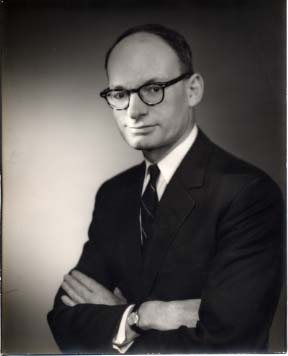
With the passing of the old year, we lost a beloved friend, benefactor and leader, Edward Rawson. He passed away quietly at his home in McLean, Virginia surrounded by his family. He would have been 100 this February. We knew him as Ed, Mr. Rawson and Grandpa. For so many of us he was “my friend” and “my teacher.”
Ed has been part of Global Solutions movement from the beginning. He attended the 1947 founding of the United World Federalists in Asheville, North Carolina. Ed was the World Federalist Association’s (WFA) Treasurer for 20 years, retiring in 1996. He served for several years as Executive Vice President of the Campaign for UN Reform, and served until his passing as a Trustee of the World Federalist Endowment Fund, which he helped to establish. He was a past president of the WFA DC Metro Chapter, past chair of the WFA Executive Committee, and a recipient of the WFA “Presidential Award”. Received a B.A. from Harvard University and a J.D. from Yale Law School, he served abroad with the State Department and Agency for International Development, and eventually as AID coordinator for relations with other federal agencies.
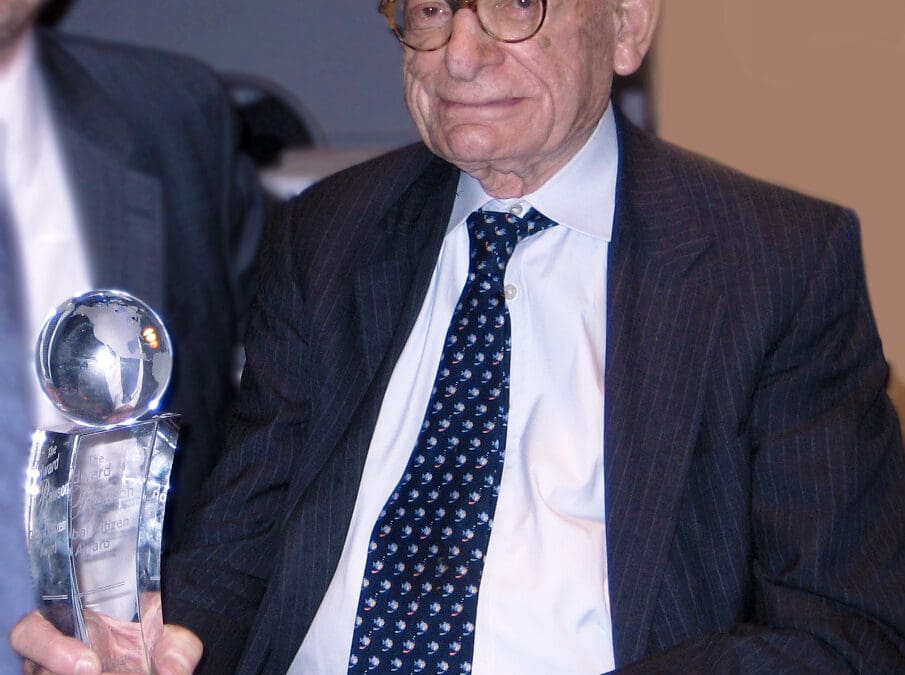
Ed’s legacy includes the Edward Rawson Fellowship, which allows recent graduates to gain hands-on experience working on global issues. He also was the inspiration and first recipient in 2010 of the Edward Rawson Global Citizen Award, which “recognizes an individual who has made an outstanding lifetime contribution … to education and advocacy for a world in which nations work together to abolish war, protect our rights and freedoms, and solve the problems facing humanity that no nation can solve alone.” In his acceptance speech, he recalled his role in the founding conference and remarked if he knew then that he would be the first to receive such an award, “I would never have believed it.” Ed then stated, “I am today privileged to accept this award on behalf of thousands who have labored with me since the founding of our movement for a peaceful and just world governed by law.”
Watch Ed’s Global Citizen Award speech
Ed was my dear friend and role model. I will always be thankful for his generosity, which laid the foundation for so much that our organization has accomplished. Our lunch conversations covered the world. His emails always grabbed my attention. Anyone who lives as full a life as he did, and remains as sharp and passionate as he was, is truly blessed.
There has been an outpouring of sentiments for Ed worth sharing. The following is an excerpt from a longer memorial written by Ira Straus:
“Born to a family that goes back to the Mayflower, Edward Rawson made his entry into the world in the fateful year of 1914 — together with the first of the series of global wars and conflicts that were to rock the world for the better part of the next century, until 1989. He bore a propitious ancestry for this difficult era: an earlier Edward Rawson, 1615-1693, had been Colonial Secretary of the Massachusetts Bay Colony.
The political experience of his youth was a tormenting one — world war, failed peace, trade wars, currency wars, great depression, rising totalitarianisms of Left and Right, a helpless slide toward a new world war… The experience of the generation was summed up for him, and for many others, in a book, Union Now, by [Clarence Streit] the New York Times correspondent at the League of Nations. It proposed a federation of the world’s leading democracies as a solution both to these urgent specific problems and to the general problem of how to form a nucleus for a governed world, one that would naturally tend to evolve into a full-fledged, yet free and democratic, world government. He read the book when it came out in 1939, and immediately joined the movement it inspired — the Inter-Democracy Federalist Unionists (a name simplified in 1940 to Federal Union, in 1984 changed to Association to Unite the Democracies, AUD).
It was the beginning of the main public commitment of his life.
In 1947 he made the hard trek, through rough weather and roads to the Asheville, NC conference where UWF, the United World Federalists, was founded (a name later simplified to WFA, World Federalist Association, changed in 2003 to CGS, Citizens for Global Solutions).…
World federalism was central to Ed’s identity. So central that he put it into the one name he truly chose for himself — his email address: WorldFedEd (he later changed it to WorldGovernance, avoiding any conflict with WFA’s name change). He was a supporter from the moment of the initial meeting that founded Federal Union in New York in 1939. He served as Treasurer-Administrative Director of the World Federalist Association from 1976 to 1997. He remained active in both organizations to the end on December 30, 2013, 74 years later.
Ed also had a government career, which he chronicled as follows: He joined the State Department as Director for the Yugoslavia Relief Program in 1949 and subsequently served as Economic Attaché in the Embassy in Belgrade. During the mid-1950s, he was Program Operations Officer for Korea and Philippines with the International Cooperation Administration (ICA), the predecessor to the US Agency for International Development (USAID). In 1958, he returned to Washington as Special Assistant to the Deputy of Administration of the ICA, and in accordance with a presidential request, served as the liaison officer between the US government and Project Hope. Following a tour with ICA’s office for International Relations, he was administrative coordinator for AID’s program outsourced to other government agencies until his retirement in 1976.
Ed also had a tenure as President of the Capital Investment Association, a club that mischievously bore the acronym of the Federal security agency a mile from his home. And was President of the Rawson Family Enterprises.”
Many others have also voice their love, respect and admiration for Ed. (You can add your thoughts in the comments below.):
“An intellectual giant and an inspiration for World Federalists until the end. He will certainly be missed. He was very lovable. He was really something, right up until the end. A wonderful world citizen. I corresponded with Ed up until about a month ago. He was always interested in what was going on in the world and eager to offer thoughts to fix things. He was totally interested and involved with life. I’m glad he went peacefully, with loved ones around him all through last week. It sounds like his staff adored him.” – Deb Metke
“It was Ed’s generosity in funding the Rawson fellowship that gave me my start at CGS. What a great man and an amazing life he lived.” – Melissa Kaplan
“What a great encouragement he was to us all.” – Elisabeth Garrett
“Ed was a friend and mentor for me since I became involved with the international affairs work which has been my entire professional life. He was always a kind and patient guide, always encouraging and always happy to learn what we younger members of the staff and board were working on to make this a better world. He will be missed by so many people, so many generations whom he inspired.” – Tony Fleming
“Ed was my mentor. He will be missed.” – Matt McDonough
“My friend Ed was always full of stories, always up on the latest world news, and always excited to talk about a hopeful future over some good food with friends. I’m sorry he passed before his 100th birthday in a little over a month…he was very much looking forward to a big centennial party. So tonight I toast a new year and the passing of a beautiful friend. Cheers, Ed!” Valerie Schrock
“Oh, Ed, what an amazing human being. May his beautiful intelligence and passion live on.” – Jessica Brown
“Ed was one Good Dude. Unassuming, tremendously helpful, approachable, just a very fine person who will be missed.” – James T. Ranney
“Ed was a wonderful guy, a class act, and perhaps most importantly, a real imp. I will miss him.” – Charlie Brown
“Ed was the best! I loved that man.” – Kathleen Umrein
“He was a very generous and kind soul I will miss his sunny disposition.” – Keith Stabler
“I had the opportunity of meeting him at one of the council meetings, I think it was Geneva in 2007 when he spoke at length on WFMs growth and progress. May his soul rest in peace.” – Vijayam Raghu
“He was a sweet, dedicated, and thoughtful man. A true Gentleman.” – Adam Ortiz
“I have had the opportunity to meet with him periodically over a long period, and admire immensely his conviction and his spirit in support of a governed world. Ed was a one of a kind and irreplaceable leader of our movement, a leader whom we shall remember for a very long time.” – Felix Rosenthal
“Ed was a great and exceptionally devoted World Federalist. Age did not deter his activism. He will be greatly missed.” – Joe Schwartzburg
“I’m saddened by this news. I have fond memories of Ed, what a wonderful guy.” – Meredith Dixon
“He was a very generous person and was a great leader in the world federalist movement.” – Robert Lincoln Barnett
“He will be sorely missed. He was a wonderful man.” – Staci Alziebler
“Beloved, excellent Edward Rawson peacefully became a real angel today. He was by far the finest man I’ve ever known. I will miss him until the day I die. I was blessed to be witness to his incredible humanity. What a massive loss. RIP and well done sir.” – Blonnie Thomas
Edward Rawson is survived by his son and daughter-in-law, Rick and Marshall Rawson and four grand-daughters. Click here for informaton about his memorial service. The family has requested that in lieu of flowers, a contribution in his memory may be made to GlobalSolutions.org in support of the Edward Rawson Fellowship Program to allow recent college graduates an opportunity to promote active citizen engagement in global institutions and governance while developing leadership skills in government relations, communications, and grassroots outreach.
by Don Kraus | Nov 21, 2013 | Climate Justice, Global Cooperation, News
Time is running out for countries to forge a new global agreement to address climate change. The intent of the COP19, this year’s meeting of the UN Framework Convention on Climate Change in Warsaw, Poland, was to lay the foundation of a new agreement. The hope was that then, world leaders would commit to substantial reductions in greenhouse gas emissions at a UN Climate Summit in 2014 in New York, with climate accords signed in Paris in 2015 – to come into force by 2020.
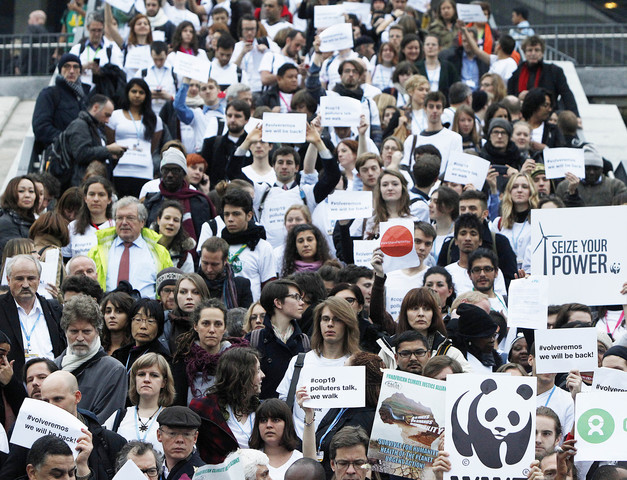
However, hundreds of activist walked out of COP19 to protest a lack of progress. The walkout was organized by groups such as Greenpeace, Oxfam, 350.org, the International Trade Union Confederation, ActionAid International, WWF and Friends of the Earth. Here’s a Democracy Now report on the walkout:
Their action followed a walk out by a group of 133 developing nations from an important negotiation. The issue at the core of this controversy is centered on how much responsibility nations that have emitted the most greenhouse gas should have to compensate developing nations that are receiving the brunt of damage from climate induced extreme weather.
In addition, emerging economies like China and Brazil are resisting a push to lay down clear commitments by 2014. The U.S. has also said its commitments would not be ready until early 2015 (my guess is to avoid controversy in the 2014 midterm elections). Japan announced that because of the Fukushima disaster, instead of a 25% greenhouse gas reduction by 2020, it would have a 3% increase. Canada, Russia and Australia are also reported to be walking away from previous commitments.
“If we go with the spirit of the lack of urgency that we see in these talks, we are headed for another disaster in Paris in 2015 and we need to avert it at all cost,” Greenpeace head Kumi Naidoo told The Associated Press. “We cannot afford to get it wrong again in 2015,” he said.
The bottom line is that climate change must be resolved. We face no greater challenge. It demands a global solution. Our immediate goal should be to focus on U.S. leadership in New York in 2014. President Obama must come armed with an agreement that can be accepted around the world and in Washington. Not an easy goal, but an essential one. More to come on this topic.
by Don Kraus | Nov 15, 2013 | Global Cooperation, Human Rights
The international community is scrambling to deliver emergency aid to cyclone-devastated areas of the Philippines. The United States’ response to the crisis is strong and welcomed. However, antiquated policies are hampering efforts to get food to starving storm victims.
Congress is currently debating reforming food aid as part of the Farm bill. An NRP story explains how limited funds are being used to purchase food locally in the Philippines. But this fund, which also is helping to deliver food to war-torn Syria, is shrinking fast and U.S. law requires that the vast majority of food aid must be in the form of crops grown and shipped from the U.S. A 2008 pilot program for the local purchase of food items showed that we could provide aid at half the cost and delivery time in both emergency and non-emergency settings.
My friend Eric Schwartz was the assistant secretary of state for refugees. Brian Atwood served as the administrator of the U.S. Agency for International Development. Their op-ed in the Minneapolis StarTribune (written before Typhoon Haiyan struck) explains why Congress must act to save the lives of millions more, at no additional cost to taxpayers. It’s worth reading and taking action to urge your House and Senate representatives to support a bipartisan, common-sense proposal for the U.S. to play a more cooperative and responsible role in the world:
In the coming days, Congress has an opportunity to reform the way our government provides food aid to victims of conflict and natural disasters around the world.
A House-Senate conference committee…is now negotiating a final version of the U.S. farm bill. It will consider a bipartisan proposal that would increase the number of people we could assist around the world — at no additional cost to taxpayers.
The United States has always been generous; the U.S. “Food for Peace” program has helped alleviate hunger for decades. But many of its key features are antiquated, and the absence of reform has prevented America from saving the lives of millions more.
As the former heads of U.S. programs providing billions of dollars in aid around the world, we witnessed the suffering of refugees from Rwanda, Kosovo and Somalia, the ravages of natural disasters in Haiti and Central America, and the horrific scenes of children and their families escaping conflict in the Middle East. Each of these tragedies evoked heartfelt responses from the American people, who quite naturally demand an urgent and efficient assistance effort from our government. Yet our outdated laws tie the hands of officials, slowing response times and limiting options.
In Somalia, for example, a 2011-12 drought put millions at risk, and brought more than 750,000 to the brink of starvation. The U.S. Agency for International Development mobilized a large-scale food aid effort, but shipments of U.S.-supplied food were blocked by armed groups affiliated with Al-Qaida.
In contrast to failed efforts to ship food, U.S.-supported cash transfers and food vouchers extended a lifeline to communities that U.S. food could not reach. But current law imposes strict limitations on such transfers in favor of large-scale commodity shipments that often make no sense.
As a result, and due to competing needs in places like Syria, the cash transfer and food voucher program was cut back this year, serving 350,000 fewer people — including 155,000 fewer children. Tragically, U.S. officials have faced similar frustrations in other parts of the world where our cash and voucher assistance could save lives.
The bipartisan proposal contained in the Senate version of the farm bill, now being negotiated with House members, would give U.S. aid officials more freedom to select the most effective response to a crisis. Even with reform, the law would still require that the majority of assistance come from the purchase of commodities from U.S. farmers. But the reforms would give officials more latitude to buy food closer to where it is needed, alongside the commodities we transport across oceans.
Reforms similar to those in the Senate bill were initially defeated in the House by 17 votes. At the time, lobbyists exaggerated the impact on the financial interests of their clients. Jobs lost in the U.S. shipping industry would be near zero, according to a Defense Department study. The impact on U.S. farm income would be negligible. U.S. food aid accounts for less than 1 percent of total agriculture exports, and in 2011 accounted for only 0.56 percent of net farm income.
Yet reform could enable lifesaving aid to reach millions of additional people in need, according to a study from two highly respected development organizations, Oxfam America and the American Jewish World Service.
As the former and current deans of the Hubert H. Humphrey School of Public Affairs, we know well of the contributions of Minnesota’s favorite son in promoting generous U.S. support for those in need around the world. If Hubert Humphrey were alive today, he would be cajoling Minnesota’s Senate and House delegations to support improvements to a food aid program he had a major role in creating. In short, he’d be urging House conferees to accept the Senate provision.

 Ed has been part of Global Solutions movement from the beginning. He attended the 1947 founding of the United World Federalists in Asheville, North Carolina. Ed was the World Federalist Association’s (WFA) Treasurer for 20 years, retiring in 1996. He served for several years as Executive Vice President of the Campaign for UN Reform, and served until his passing as a Trustee of the World Federalist Endowment Fund, which he helped to establish. He was a past president of the WFA DC Metro Chapter, past chair of the WFA Executive Committee, and a recipient of the WFA “Presidential Award”. Received a B.A. from Harvard University and a J.D. from Yale Law School, he served abroad with the State Department and Agency for International Development, and eventually as AID coordinator for relations with other federal agencies.
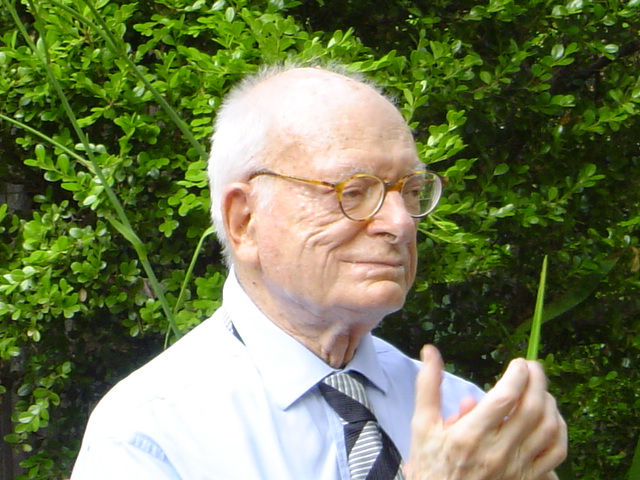 Ed’s legacy includes the Edward Rawson Fellowship, which allows recent graduates to gain hands-on experience working on global issues. He also was the inspiration and first recipient in 2010 of the Edward Rawson Global Citizen Award, which “recognizes an individual who has made an outstanding lifetime contribution … to education and advocacy for a world in which nations work together to abolish war, protect our rights and freedoms, and solve the problems facing humanity that no nation can solve alone.” In his acceptance speech, he recalled his role in the founding conference and remarked if he knew then that he would be the first to receive such an award, “I would never have believed it.” Ed then stated, “I am today privileged to accept this award on behalf of thousands who have labored with me since the founding of our movement for a peaceful and just world governed by law.”
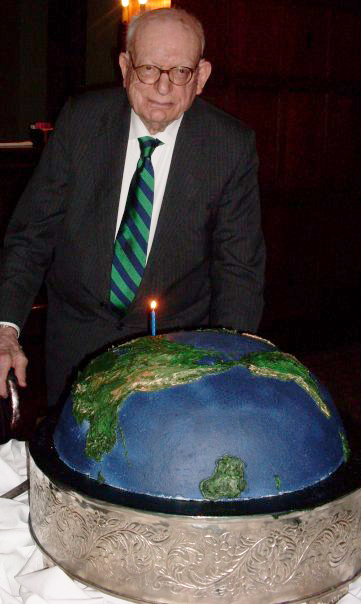 World federalism was central to Ed’s identity. So central that he put it into the one name he truly chose for himself — his email address: WorldFedEd (he later changed it to WorldGovernance, avoiding any conflict with WFA’s name change). He was a supporter from the moment of the initial meeting that founded Federal Union in New York in 1939. He served as Treasurer-Administrative Director of the World Federalist Association from 1976 to 1997. He remained active in both organizations to the end on December 30, 2013, 74 years later.