
Originally published on the CGS blog on January 31, 2014.
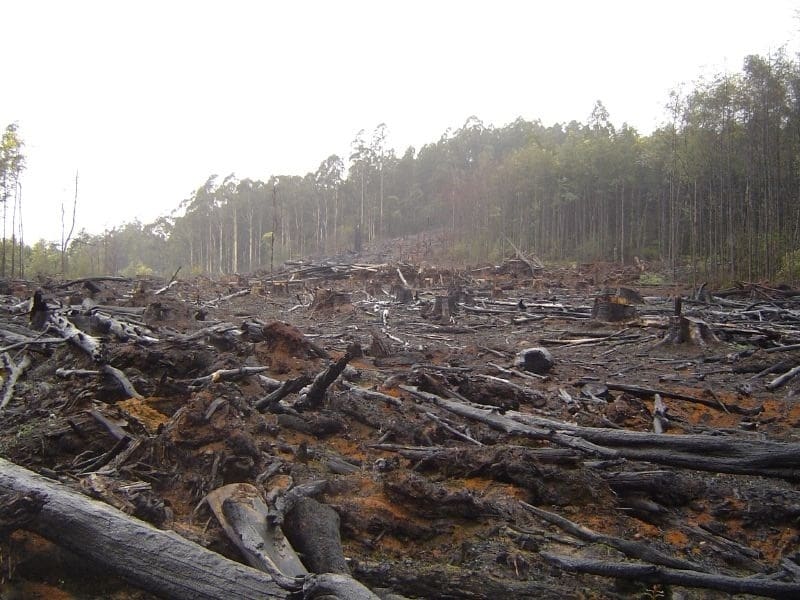
Deforestation, second to only energy consumption, is a leading contributor of greenhouse gasses. The World Wildlife Fund (WWF) estimates approximately 50 million square miles of forest are lost each year. While no region is immune to the impacts of this environmental issue; less developed and developing countries are especially susceptible to the repercussions.
In rapidly growing areas such as Bangladesh these impacts are only magnified. Periodic catastrophic flooding here can be directly linked to deforestation in the Himalayas, increasing runoff and devastating regional lowlands. Additional deforestation in the headwaters of the Ganges and Brahmaptura rivers creates a dangerous environment for the region’s populations.
Unfortunately this is not an isolated environmental concern. The world’s largest rainforest, the Amazon Rainforest, is one of the most affected regions in the world. Population booms in Central and South America have accelerated the perceived need for deforestation to create space to support human expansion. 70% of the Amazon that has been deforested has been utilized for new human habitation, livestock, agriculture, and wood exports.
Following the United Nations “Earth Summit” in Rio de Janeiro in 1992, the UN established the Intergovernmental Panel on Forests (IPF) and the Intergovernmental Forum on Forests (IFF). The IPF and IFF outlined over 270 proposals providing guidance on sustainable forest management.
In 2000, the UN Economic and Social Council (ECOSOC), with its Resolution 2000/35, created the UN Forum on Forests (UNFF). The main objective of the UNFF is to promote the management, conservation and sustainable development of all types of forests, and to strengthen long-term political commitment to this end.
The UNFF maintains universal membership of all UN member States; showing eagerness from the international community to combat deforestation globally. Additionally, in 2007, the UN General Assembly universally adopted the UNFF proposal for the Non-legally Binding Instrument on all Types of Forests (NLBI). The NLBI, a landmark agreement, is the first time that the UN has adopted an international instrument on forest management.
The UN Programme on Reducing Emissions from Deforestation and Forest Degradation (UN REDD), launched in 2008, assists developing countries prepare and implement strategies for conservation, sustainable forest management and reducing carbon emissions. The Programme currently supports 48 countries directly with financial support coming in the form of pledges from UN Member States and other organizations; currently more than $165 million has been donated.
While these efforts mark great progress, much is left to be desired. Due to the increasingly complex global economic interdependency, any future efforts must be supported in international law. Without legal incentives, a large number of developing countries will continue to exploit their resources for economic growth.
Emerging states have been hesitant to cooperate in reducing greenhouse gas emissions possibly viewing such disregard of industrial revolutions past as integral to economic growth. This hesitancy will undoubtedly prevent a global, legally binding treaty from taking shape.
A reasonable solution is to manage forest resources and halt clearcutting. The practice of most or all of the trees in an area being uniformly cut down, or clearcutting, is a popular and profitable method of logging. Currently some regional efforts are limiting the effects of clearcutting by granting long-term land leases to tend and regrow trees.
We are still far from an agreement on this environmental crisis. If we fail to ride the coattails of these efforts, and subsequently fail to ratify an international treaty on climate change, we will stumble in our battle against deforestation. If we fail to reverse the devastation created by deforestation and forest degradation, places like the Amazon will soon cease to exist.


