
Originally published on the CGS blog on September 4, 2013.
Not Quite the World Wide Web: a three-part series about the importance of full access to the internet for all
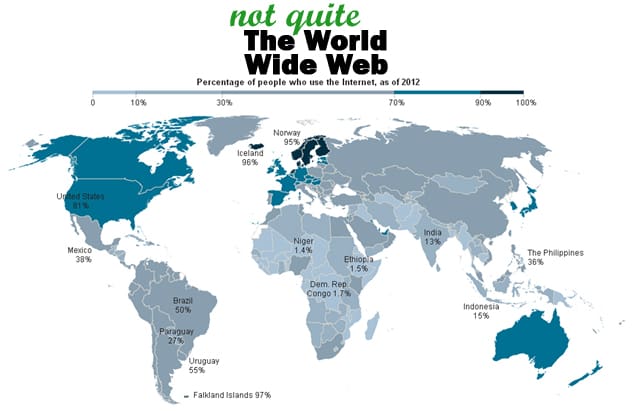
Only one third of the world’s population has internet access; both Mark Zuckerberg and the UN think this is unacceptable. Sure, I like checking Facebook as much as the next girl but is a connection to the internet a basic human right? This is a question that international leaders have been debating over the last few years. The UN Human Rights Council unanimously decided, in 2012, that free expression and a connection to the internet are human rights. The resolution encourages nations with poor internet access to take steps to increase connectivity and admonishes nations with filters and blocks on certain parts of the internet. The Council recognized the two basic issues within this subject; providing access to people who don’t have it, and liberating the internet for those who do. These two concerns will be addressed in the next installments of, “Not Quite the World Wide Web” series.
The UN is not the only power that is working on these issues. Facebook founder, Mark Zuckerberg, has launched a collaborative project to provide internet for the other two thirds of the world. Last week Zuckerberg released his plan to connect the other 5 billion people to the internet saying, “I’m focused on this because I believe it is one of the greatest challenges of our generation.” Zuckerberg views access to the internet in the developing world not as a platform to post harlem shake videos or see what the latest “Lol Cats” are up to but has a vehicle to change people’s lives for the better. There are many advantages of having better internet access in developing and rural areas. Farmers can use more accurate weather data to schedule harvests, communities without access to medical care can consult with a physician remotely, and children can have access to online learning tools even if they are miles away from the nearest school. As the internet is facilitating more and more of our basic human rights such as free speech, cultural identity, and security, the difference between having and not having internet access becomes even more polarizing.
So, obviously the internet can be used for more than superficial social interactions but is it a basic human right? Human rights are usually considered inalienable, meaning that humans are born with these freedoms and neither nations nor states nor corporations can take these rights away. Declaring internet access as a human right complicates this belief. Since a human has yet to be born with a wifi receiver in their brain (though I’m sure Google has thought about it), internet has to be provided to us. If access is classified as a human right, the next question becomes, who’s responsibility is it to provide that access? Can we mandate countries that don’t have enough money to feed their citizens to start building cell towers and burying cable lines? I think we are a long way from this drastic measure but I believe that the UN is saying that, where available, the internet needs to be a free and open form of communicating information.
In the next post in the “Not Quite the World Wide Web” series I will be talking about the innovative ways that Zuckerberg, Google and the rest of Silicon Valley are planning on providing internet to the entire planet.
Do you think internet access is a basic human right? Comment below and tell us what you think!


