by Alisondra Maykranz | Jun 25, 2013 | Climate Justice, Global Cooperation
I grew up in the Rocky Mountains – in Aspen, Telluride, and most recently Jackson Hole. Many places I haven’t lived, I’ve visited. Out of the entire Rocky Mountain range, one of my favorite places is Glacier National Park. I went hiking there one summer and found the glacier-covered scenery absolutely breathtaking. For one week I was surrounded by a view so beautiful I thought it could only exist in photographs, but there I was, taking it in with my own eyes.
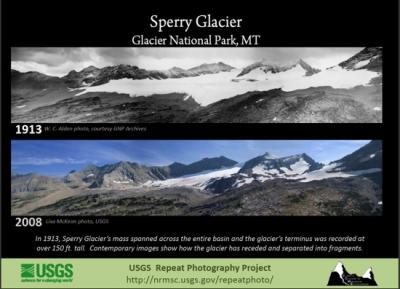
Tragically, this view will soon only exist in photographs. In 2003 the U.S. Geological Survey determined that all the glaciers in Glacier National Park will melt by 2030. Today, however, scientists predict the glaciers will disappear as early as 2020.
This news is one of the haunting realities of climate change – an ever-present issue that never seems to get addressed. In 2012, networks only covered climate change 12 times on the nightly news. Congress has remained deadlocked on the issue, and in fact, there are several dozen Congressmen and women who still deny that climate change even exists.
It is in this context that I applaud President Obama’s efforts to take action. His climate change speech made today at Georgetown University at 1:35 EST was a big step in the right direction. As frustrating as it is that Congress has failed to act on this issue that affects us today and will affect future generations even more, it is encouraging that the President is determined to do what he can through executive and regulatory actions that do not require congressional approval.
President Obama outlined his plan of action in his speech. The plan includes developing clean energy, increasing fuel efficiency standards, cutting energy wastes in families and businesses, reducing greenhouse gas emissions, and preparing for the effects of climate change.
While these are encouraging first steps, these unilateral actions will do little to slow the global phenomenon of climate change. For example, it is China that currently emits the greatest share of greenhouse gases in the world, and India’s emissions are increasing drastically. Our domestic policy does nothing to address these threats, though we will be just as affected by China and India’s emissions as by our own.
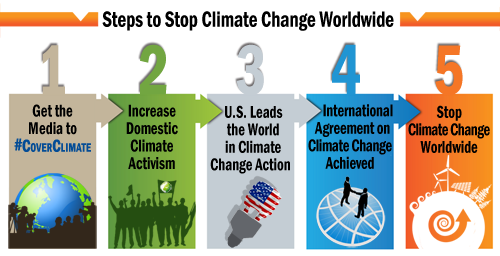
For this reason, it is also encouraging that the President recognized the need for international action and for the U.S. to play a leading role in this action. It is evident that a global agreement is needed to address the threat of climate change. Promoting a global agreement requires a national conversation, and this is difficult to have when the media doesn’t even cover climate change. I hope that President Obama’s speech today will be a turning point, but whether it leads to new climate legislation and global accords – or even a national dialogue – remains to be seen.
In the mean time, I encourage everyone to sign our petition asking the media to cover climate change more often. Oh, and go visit Glacier National Park before it’s too late!
by Ellen Moore | Jun 25, 2013 | Climate Justice
My coworkers and I — along with countless others worldwide — continue to be astounded by how little the major television networks cover issues relating to climate change. In 2012, ABC, CBS, and NBC covered climate change in their evening broadcast a total of only 12 times combined, and this year it’s been mentioned just 6 times!
According to a study done by Nielson Media Research and presented by Pew Research Center, 22.5 million viewers watch nightly news on ABC, CBS, or NBC. Overall, 30% of Americans get their news from these networks. The fact that their news outlets are leaving them uninformed about the very real dangers of climate change is unacceptable.
Those who don’t get this important information will miss out on the chance to become part of the dialogue on climate change. Without them, it will be difficult for the US to take global leadership on the climate change issue.
This is why we launched our newest campaign: #CoverClimate. Will you join us?
In addition to the petition we’ve launched and other actions we’re taking to demand the broadcast media start paying more attention to climate change, we’re also working on identifying what top US climate scientists think about this issue. I have had the pleasure of interviewing several of them to determine what they think are the major climate-related news stories that aren’t getting enough coverage and which stories deserve future coverage. We want to package these stories and give them to the major networks to cover.
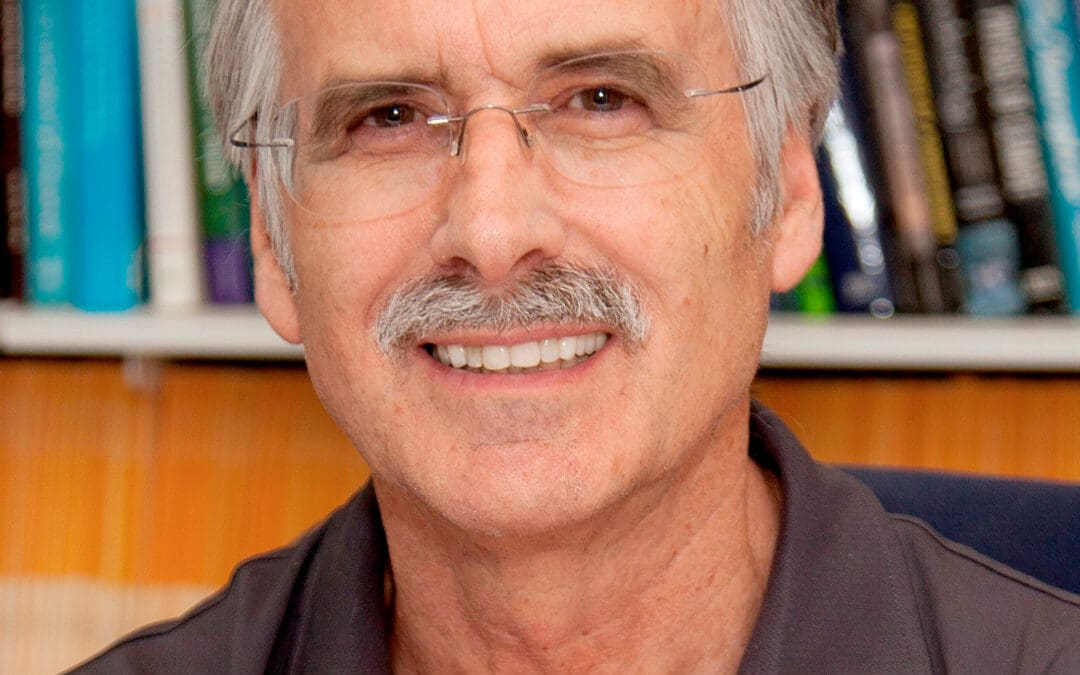
My first interview was with Dr. Kevin Trenberth. Dr. Trenberth is a Distinguished Scientist in the National Center for Atmospheric Research‘s Climate Analysis Section. He was a lead author on the Intergovernmental Panel on Climate Change’s 1995, 2001, and 2007 reports and shared in the Nobel Peace Prize won by the IPCC in 2007. He currently chairs the Global Energy and Water Exchanges (GEWEX) scientific steering group. Dr. Trenberth has studied and published widely on climate variability and on many different aspects of climate change.
Here are some key excerpts from my interview with Dr. Trenberth:
GS.org: What do you think of the coverage of climate change in today’s media?
Dr. Trenberth: Well as little as… ten years ago, but it may be more, a lot of newspapers had a science reporter or somebody who handled technical aspects. Those have mostly gone. Even some of the big papers… they’ve downgraded the positions. …And so, the education of reporters these days with regard to science, and with regard to climate, has diminished substantially and is really quite poor.
… Last year was a standout year in the US for climate related issues because there was a major drought, and major heat waves and wild fires. There was also superstorm Sandy…[And] the reporting was extremely poor and as a result the general public doesn’t tie the climate and wildfires together very well: it is a major problem.
GS.org: More specifically, which particular climate related issues do you feel have not gotten sufficient coverage?
Dr. Trenberth: …The big stuff that’s going on at the moment is all of the wildfires out in the West, and the drought in the West. In general, especially west of the Rockies-in the Southwest-the drought is a major story, and the wildfires. There’s a role of climate change in all of these.
In other areas at the moment, in Europe, there has been some major flooding and I haven’t tracked it to see the extent to which climate change is linked in. But, the risk of flooding goes up because there’s more moisture in the atmosphere. The hydrological cycle speeds up. Often for events that are some distance away, people don’t pay much attention to. But the stories are incomplete. And ensuring that these kinds of events have a climate change tag attached to them would be very helpful in many cases.
GS.org: What do you think contributes to this lack of coverage?
Dr. Trenberth: [One thing is, there’s always]this undercurrent of politics and the inability to actually take this on, and the US is a major part of the problem internationally in this whole issue. The US has done a certain amount, as it turns out. The Administration has managed to do certain things, but the framework is not really there to do it properly and there’s no international framework to do this all in a proper manner that is fair and equitable.
GS.org: What kind of climate-related news do you see on the horizon that you feel the media should cover?
Dr. Trenberth: The …drought and wildfires are going to probably continue to be with us. … There are prospects for a more vigorous hurricane season this year. That’s the official forecast from NOAA [the National Oceanic and Atmospheric Administration]… [that says] the conditions seem favorable, very favorable for an active hurricane season. While we have seen several active hurricane seasons in recent times there is no guarantee that any storms will make landfall. …There’s always a drought somewhere in the US, it varies in size and intensity and this year we’ve already got a drought in the West and Southwest, but not so much in the East in the moment. … The weather pattern is not the same this year as last year. I don’t think it’s generally as favorable for a repeat of the big nationwide drought that we had last year. I don’t see that coming.
GS.org: What are the top few things that you think should be done quickly to reduce carbon emissions?
Dr. Trenberth: [I would love to see] a national policy relating to putting a cost on carbon, which then has to propagate throughout the economy and throughout foreign trade and foreign policy related matters. So people can’t undermine this, then, by importing goods from China that are not subject to this kind of thing. It has implications probably with regard to foreign policy, and trade and tariffs, and things like that. And this is why some people don’t like it and why many people will fight it very strongly. But this is why it’s an issue that needs to be addressed at the highest level. At the moment there are certainly a number of politicians that are quite interested but it hasn’t gotten to… a high enough level to really make a difference. But this could be a game changer. That’s the thing a number of us have in the back of our minds. You know if there is a real game changer than maybe things can really develop and take off differently in the future. But, it requires a new framework to provide a different incentive base.
I was glad to have had the opportunity to speak with Dr. Trenberth about these issues and learned a great deal about climate change. I hope you’ll stay tuned for my future posts about the other interviews I’ve been doing!
by CGS Blog Archive | Jun 20, 2013 | Climate Justice, Global Justice
On June 17, 2013, World Day to Combat Desertification, UN Secretary General Ban Ki-Moon called for a collective global response to combat drought. He went on to explain the need to “shift from crisis management to drought preparedness and resilience.” This year’s theme for World Day to Combat Desertification was drought and water scarcity. The goal was to “create awareness about the risks of drought and water scarcity in the drylands and beyond, calling attention to the importance of sustaining healthy soils as part of post Rio+20 agenda, as well as the post-2015 sustainable development agenda.”
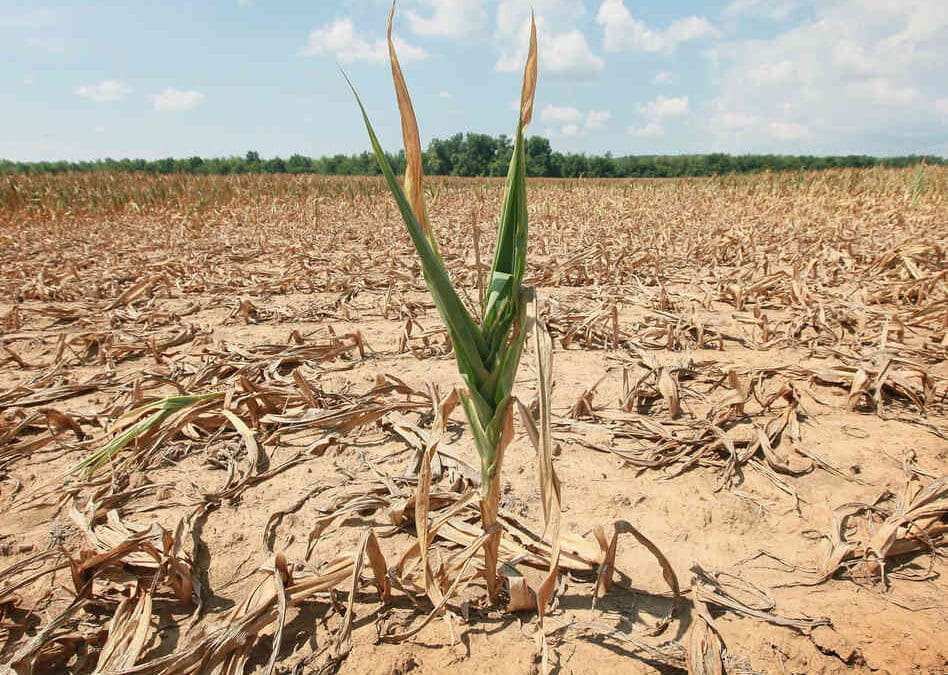
Desertification is a significant global ecological and environmental problem, caused by various factors, including climate change. Drought produces a large number of socio-economic impacts, as water is the key to life. The severity of droughts around the world affects agriculture, water supply, and human health. The spread of desertification has made populated regions more arid, which makes accessing vegetation and fresh water challenging. For instance, in Ethiopia, an estimated 8 million of Ethiopia’s 60 million people are at immediate risk due to drought (UNICEF estimates that 1.4 million of those at risk are children under five).
Of all the water on Earth, only 2.5 percent is freshwater. Of all this freshwater, the total usable supply for ecosystems and humans is less than 1 percent. Climate change is intensifying the circulation of water on, above, and below the surface of the Earth, causing drought and floods to be more frequent.
Not only are droughts more frequent, but they are also becoming more severe due to rising temperatures. Due to the aridity, areas are also more susceptible to disasters like wildfires. An increase in spring and summer temperatures have increased fire frequency by 400 percent and have increased the amount of land burned by 650 percent since 1970. The wildfires raging in the United States, due to last year’s drought, are considered to be the most extensive in the country since the 1950s.
In his speech, Secretary-General Ki-Moon stated that “the price of preparedness is minimal compared to the cost of disaster relief,” and encouraged countries to build resilience to droughts by implementing the outcomes of the High-level Meeting on National Drought Policy. Executive Secretary of the UN Convention to Combat Desertification, Luc Gnacadja, agreed, stating, “Investing in our resilience today costs a fraction of the relief price we will pay tomorrow and its benefits are worth far more. Becoming a drought-resilient global society is not only possible and affordable; it must be our first and only option.”
by Zoey Krulick | Jun 12, 2013 | Climate Justice, Global Cooperation
My fellow Research Associates and I were talking this morning about what we’ve learned so far about climate change. As our knowledge is increasing, so is our fear. Part of our job here at Globalsolutions.org is to remain up to date on current events. This is great in terms of making me a well-informed citizen, but also disheartening because it takes away the bliss of ignorance. I have always known that climate change is happening, and that we have to act now to help repair and hopefully reverse its damaging effects. However, reading the news every day drives this point home with frequency.
In a recent report, the International Energy Agency calculated that making clean energy investments sooner would be cheaper than leaving them until after 2020. To meet climate targets before 2020 would require about $1.5 trillion, but to achieve the same results after 2020 would take $5 trillion. So, a delay in making the transition to lower carbon energy systems is not only risky, but costly.
The IEA’s report also states that carbon dioxide emissions from energy rose by 1.4% in 2012 to a record high level. The report warns that due to the rapid rise of greenhouse gas emissions, relying on a replacement for the Kyoto Protocol (which would be signed in 2015, but wouldn’t take effect until 2020) would be doing too little too late. Chief economist for the IEA, Faith Birol, warned that greenhouse gas emissions were rising so fast that continuing to do nothing will set the world on a path to 5⁰C of warming. For other metrics-system challenged people, the level of temperature rise that is considered “safe” is set at 2⁰C above pre-industrial levels. Beyond this limit, global warming is likely to be “catastrophic and irreversible.”
This is terrifying. It is something we need to fix now.
So why aren’t we trying to fix it? Is it that people don’t know, or is it that we, as a people, are not scared enough? We’ve all heard about the many negative effects global warming will have on our lives even within this generation, but I think it is all too easy to pretend they aren’t happening. That is why I completely support GlobalSolution.org’s #CoverClimate campaign. I definitely think a major part of the problem is the lack of urgency felt by the general public, in part due to lack of climate change coverage or failure of the media to connect extreme weather events they cover to climate change. I think in this case, fear is a good thing. More people need to be as scared as I am because that is the only way change will happen.
You can sign our petition here.
by Jake LaRaus | Jun 12, 2013 | Climate Justice
Twelve. That’s the number of times ABC, CBS, and NBC combined mentioned climate change in 2012. Does that surprise you? Shock you? Scare you? It should.
Though climate change is a global problem, it seems that the American public’s interest in the issue has cooled. According to a Pew Research Center report, as of January 2013, only 28% of Americans believe that dealing with global warming should be a public policy priority. While a respectable 52% say that protecting the environment ought to be a priority, the fact that these two response numbers are so divergent shows that the link between environmentalism and climate change has yet to be firmly established. To a large degree, the media’s silence on climate change is to blame for this disinterest.
In a Journal of Media Psychology paper, Dr. Stuart Fischoff makes the point that the “dealer-user paradigm” of the media’s relationship with the public prevents substantive coverage of important events from making it through the ratings sieve. Fischoff writes that in times of crisis, after the initial onslaught of expected coverage and “the alarm of an unfolding crisis fades, economics and competition quickly reassert themselves as the principal engines that drive media coverage and focus.” To put it simply, crises are only beneficial to the media in the short-run, or when there’s a plethora of sad-faced victims, bodies, and conspiracies to continually ruminate on for weeks on end.
Climate change, conversely, is a crisis that isn’t new or flashy. It doesn’t make crying widows or mourning communities bare themselves in front of the flashbulbs and cameras. It doesn’t have the imminence or vigor that other crises flaunt. And when communities are ravaged by the effects of climate change, the here-and-now dangers take precedence in the media over climate change; environmental disasters, believed by many scientists and laymen alike to be linked to the changing climate, are often blamed for their destruction while the underlying root of climate change is ignored. Hurricane Sandy devastated most of the United States’ eastern seaboard and even though the UN climate panel’s number two scientist said that the storm’s ferocity was likely caused by climate change, many in the media failed to publicize the link.
This is the problem: climate change isn’t sexy or popular or emotionally-manipulative. It’s looming, dangerous, and potentially-world ending, but because the media can’t milk it as a developing crisis, it’s not worth anything to them. By allowing this media silence to continue as the status quo, we are ceding global leadership on the issue to others unwilling or unable to take up the banner of climate change. Our responsibility within the international community is being shirked, and our legitimacy is diminished as each year progresses without substantial climate change coverage.
This year, we’re already on our way to another sad excuse for climate change coverage, with just six mentions. This can change. This must change. We will change it together.
If you believe the climate is worth saving and worth covering, then get involved here!
GlobalSolutions.org is committed to ending the media’s silence on climate change, but we can’t do it without your help. The #CoverClimate Campaign will fight to make the media cover climate change widely and responsibly. Increased media coverage generates public awareness of the issue, which begets progress in US policy. We cannot claim to be a world leader on sensible climate policy if we have no real track record on it. To make a difference in the world, we must first make a difference at home.
by CGS Blog Archive | May 23, 2013 | Climate Justice, Global Cooperation
The scene of rescue workers frantically looking for survivors is all too familiar, especially in the past couple of years. 2012 was ranked as the 2nd most disastrous year on record, only behind 2011 (both years collectively brought in an estimated 25 billion dollars). With the latest disaster in Oklahoma already being called one of the worse in history, 2013 is not far behind.
Why is this happening?
According to NASA, “small changes in temperature correspond to enormous changes in the environment.” In the last century, rising CO₂ levels, due to human activities, have contributed to the earth’s temperature rising one degree Fahrenheit. Minnesota State Representative Glenn Gruehagen (R-Glencoe) recently made a statement on the House floor that climate change is a, “complete United Nations fraud and lie…” Climate deniers like Gruehagen, want us to believe that climate change is a hoax, something made up. Super storms like Sandy and Katrina and earthquakes tipping the Richter scale, prove one thing… climate change is very real.
Don’t think that one degree Fahrenheit is a big deal? Well consider this:
At the end of the last ice age, when the Northeast United States was covered by more than 3,000 feet of ice, average temperatures were only 5 to 9 degrees cooler than today.