by Harrison Phillips | May 16, 2013 | Climate Justice, Global Cooperation
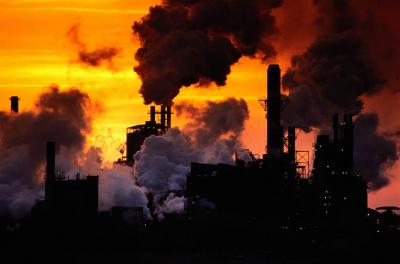
Last week, planet earth reached a landmark! CO2 emissions exceeded 400 parts per million. So why aren’t scientists celebrating? Well, this is nothing to celebrate. Al Gore expressed a common sentiment among global warming sympathizers, tweeting that the event was “a sad milestone.” Action must be taken to reduce carbon emissions and the burning of fossil fuels.
The Mauna Loa Observatory in Hawaii has been monitoring CO2 emissions since 1958. On Thursday, May 10th, it released a report that stated a new, unprecedented level of CO2 had been recorded in the atmosphere. Carbon Dioxide is a greenhouse gas that traps heat in our atmosphere and has been linked to rising temperatures, ice melting and sea level rising.
We need to signal to governments around the world that action must be taken to reduce the burning of fossil fuels. The Rio Framework Convention on Climate Change in 1992 and the adoption of the Kyoto Protocol in 1997 attempted to hold governments responsible for pursuing policy aimed at clean energy and reducing carbon emissions. However, the United States did not sign onto that agreement. In addition, other rapidly industrializing nations such as India and China disregarded the suggested regulations. The consequences of our reliance on fossil fuels are severe. Super-storms such as Hurricane Katrina and Tropical Storm Sandy have impacted the United States with devastating human, environmental and financial loss. Watch this video produced by Climate Reality to find out the true cost of Carbon.
Reaching this “sad milestone” is discouraging. Mark Pagani, a Yale geochemist and paleoclimatologist, told The New York Times. “I feel like the time to do something was yesterday.” However, organizations like GlobalSolutions.org and 350.org are committed to reducing carbon emissions.
by Alex Penler | Apr 22, 2013 | Climate Justice, Global Cooperation
Cleveland is known for many things. It’s the hometown of John D. Rockefeller, Lebron James, Rock and Roll, the traffic light and the Cleveland Clinic. It’s also one of the starting places for Earth Day.
On June 22, 1969 the Cuyahoga River, the major river that flows from Lake Erie and a center of trade in the region, caught on fire. The fire occurred when sparks from a blow torch ignited pollution and oil on the river’s surface. The river was so polluted that there were no fish for long stretches. Lake Erie was full of sewage run off and parts were declared dead. It is known as the event that started “environmentalism” and the founding of the EPA, as well as the passing of the Clean Water Act.
Over 40 years later both the lake and the river are cleaner and the environment is a hot topic in both politics and culture. Earth Day, started just one year after the iconic river fire, is a day to promote saving the planet. Now a holiday celebrated around the world, it even has its own theme, and this year that theme is climate change.
Climate change is still somehow a controversial issue in our political system. While 99% of scientists say that climate change does exist, a small extremely conservative fraction of the GOP has managed to wreck havoc on the environmental policy in America. Koch Industries has spent tens of millions of dollars on groups that deny climate change. Now some federal legislators are selling their souls to the devil, giving up their own values and those of their constituents in favor of those that fund their campaigns.
So what does climate change actually lead to if we do nothing? It means less water for drinking (which now the only safe drinking water is at 1%), and less water for agriculture, creating a potential food shortage. This will lead to more children starving in the global south, more sweltering hot days, and overall, more deaths.
There is hope for stopping this. State Governments are starting to make an impact, as they no longer believe the federal government will step in and do something. California has started a cap and trade program and 29 states, as well as the District of Columbia, have renewable electricity standards. Ohio, the state that was once caught on fire because of pollution, has one of the best environmental policies. The state has over 300 wind and solar companies that have created over 8,000 jobs.
Our planet has done a lot for us. It feeds us, protects us, gives up its resources for us, and has sustained life for thousands of years. Now it’s our turn to do something nice for Mother Earth. So spread the word to stop climate change. Spread knowledge to stop climate deniers. Most of all; recycle, plant a tree, and curb your garbage. The most we can do for our planet is little things at home and here’s a list of how you can start right now.
by Stefanie Cook | Jan 25, 2013 | Climate Justice, Global Cooperation
When will climate change become a priority? Probably, when war, rape, and child suffering no longer exist. Unfortunately, however, these horrible tragedies are perpetuated by the effects of climate change. As the earth’s climate warms, insecurity in First and Third World countries rises. As a result, now is the time to focus on climate change so that we can prevent future starvation and suffering.
Unfortunately, it is easy for Congress to push the formation of legislation that eases the effects of climate change aside. Climate change feels distant; guns and budget cuts are pressing issues today. Congress won’t get re-elected on issues that we aren’t yet feeling the full effects of. However, in his second inaugural address on Monday, President Obama stepped up to the plate and renewed the United States’ commitment to respond to climate change.
You also agree that climate change must be a priority in President Obama’s second term. A survey conducted by Global Solutions.org members and supporters shows that Americans sill care about the issues surrounding climate change. Members and supporters rated climate change and the environment the highest priority issue for GlobalSolutions.org to focus on in 2013.
New York Times cited Global Carbon Project, saying that “emissions continue to grow so rapidly that an international goal of limiting the ultimate warming of the planet to 3.6 degrees, established three years ago, is on the verge of becoming unattainable.” Researchers reported that they expect to see a 2.6 percent jump in global carbon dioxide emissions in 2012. While emissions are decreasing in more developed countries such as the United States, they are increasing in developing countries, where manufacturing and economic growth is booming.
Climate change, however, does not discriminate. It impacts the smallest and weakest of nations as well as the largest and strongest of nations.
According to scientists, climate change is responsible for catastrophes such as that of Hurricane Sandy in Northeastern United States this past November and the 2011 famine in the Horn of Africa. Food shortages perpetuate intra- and inter-state crisis. In search of food and water, families and clans migrate outside their traditional borders. They are forced to adapt to new land characteristics and qualities and to new forms of agriculture.
In the Afar region of Ethiopia nomadic pastoralists’ livelihoods are increasingly threatened by erratic rainfall that amplifies the deaths of livestock. They are often forced to relocate to new regions of the country and to adapt to new forms of agriculture that they lack familiarity with.
BBC News recently reported that the Santa River Valley in Peru, whose “hundreds of thousands of inhabitants rely heavily on glacier water for agriculture, domestic consumption, and hydropower,” could face major water shortages due to glaciers in the tropical Andres shrinking by 30-50% since the 1970s.
Livelihood insecurity escalates fighting over natural resources. For instance, in San Antonio, Texas, the Brazos River Authority wants to divert water from the Brazos River to booming cities for future usage. Critics worry about the impact that doing so will have on fish and other wildlife, as well as on water quality. Similarly, conflict over rights to the Jhelum River has threatened to produce war between Pakistan and India. Time World says Pakistan fears that “upstream dams allow India to manipulate the flows of water as it sees fit,” affecting Pakistan’s agriculture-based economy.
We cannot stand by and wait for the ocean to rise above our homes, for the polar bears to go extinct, and for thousands of lives to be lost to tsunamis. NOW is the time to prioritize legislation that eases the effects of climate change. GlobalSolutions.org is raising its voice to urge the White House and the 113th Session of Congress to consider legislation that protects our climate and the future of people around the globe for centuries to come. Because we know that conversation surrounding climate change cannot occur within the United States alone, we will push the United States to become part of a global conversation requiring international cooperation.
by Don Kraus | Nov 2, 2012 | Climate Justice, Global Cooperation
Sandy did what Candy didn’t: Kick start a full blown conversation on climate change.
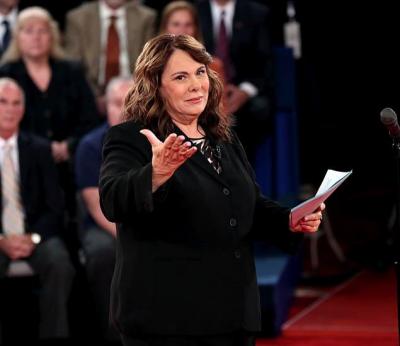
GlobalSolutions.org was part of an effort to insert this critical topic into the presidential debates. But despite 160,000 petition signatures, press releases and winning Google moderator votes; Candy Crowley, Bob Schieffer and Jim Lehrer refused to bring up the topic, the first time climate or the environment was left out of presidential debates since 1978.
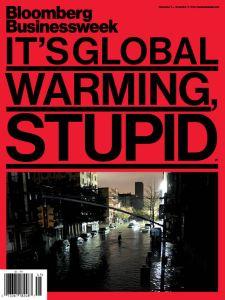
Now Superstorm Sandy has changed all of that. Finally the main stream media and politicians are once again taking this seriously. The Bloomberg Business Week cover says it all: “It’s Global Warming, STUPID.”
The Washington Post columnist Eugene Robinson points out, “The traditional dodge – that no single weather event can definitively be attributed to global warming – doesn’t work anymore. If something looks, walks and quacks like a duck, it’s a duck. Especially if the waterfowl in question is floating through your living room.” Too true, but unfortunately Robinson winds up a strong column saying that”
Climate change is a national challenge. Ignoring it is not a solution. Pretending it isn’t happening will not make it stop.
Wrong. It’s not a national problem. It’s a local, national, and global problem, and will take people and nations around the world working together to solve it. The U.S. conversation must do more than focus on hardening its infrastructure. In addition we must talk about hardening our resolve to hammer out a global agreement that truly address the green house gas emissions that fueled Sandy. And this will take presidential leadership.
Whether or not the next president will take this on comes down to a key question just asked by CBS News: “Will the dialogue on extreme weather and climate that has emerged in Sandy’s wake alter the national conversation (or lack thereof) on climate change? Or will that discussion recede with Sandy’s floodwaters and the week’s news cycle?”
I believe the media itself must take some responsibility in making sure this growing emergency remains in the public eye. Wen Stephenson, was a former editor at The Atlantic and The Boston Globe and, most recently, the senior producer of NPR’s On Point who has become a climate change activist. In a moving article titled “A Convenient Excuse“, Stephenson lays out a powerful call to his former media colleagues to treat climate change like the emergency that it is. He says that:
Failure is repeated across the mainstream media landscape – the product of a mindset in which climate change is simply another environmental problem, albeit a particularly complex one for which we’ll eventually find a technical fix, mainly by doing more or less the same things we’re doing now, only more efficiently and with better technology.
Sandy is our wakeup call. Now it’s up to all of us – politicians, the media and you — to stay awake. Many of us feel burnt out and disillusioned. The failure of the 2009 Copenhagen climate talk took a lot of wind out of our sails. But Sandy’s message is clear, “Too bad. Dealing with climate change is not optiontional.”
Wen Stephenson puts it more bluntly: “Silence, and near silence, is no longer acceptable. To use a phrase from the heroic struggle for AIDS awareness in the ’80s and ’90s: silence equals death. For countless millions of people, climate silence equals death.”
by Don Kraus | Oct 17, 2012 | Climate Justice
Candy Crowley, I want to start by congratulating you on the great job you did moderating the Town Hall Presidential Debate. But disappointed doesn’t begin to express how I feel about a question you didn’t choose from the audience. You had a chance get the candidates on record on how they will deal with climate change and you blew it.
Some great topics were debated last night, but unless Bob Schieffer changes his mind and adds global warming to his issue list in next week’s foreign policy forum, this will be the first presidential election since before 1980 in which the presidential and vice presidential debate series did not include a direct question about climate change, environmental protection or conservation.
A whole bunch of us tried to make it easy for you. Over 160,000 signed petitions that went to both you and Jim Lehrer. Google and the Commission on Presidential Debate asked folks to weigh in on important topics for the Town Hall debate, and over 11,000 chose “What actions will you take to address climate change and reduce greenhouse gas emissions?” as the most popular question. You ignored all of us.
For me, this is personal. I’m very worried about what kind of world my 15 year old daughter Hilary will inherit. Sure I am concerned about jobs, the economy and her getting a fair deal as a woman. Lord knows I’d feel better if assault weapons were off the street. But what does all of that mean if global warming goes out of control?
When I think of what kind of future she could face with coastal cities flooded by storms or rising sea levels, climate induced famines and resource wars igniting across the globe – well the bread and butter concerns of this election seem relatively tame.
Despite what some conservatives still say, climate change is real and I believe the American people ought to know how the next leader of the free world plans on addressing this issue. So Candy, would you mind putting in a call to Bob and say “oops, I missed this one” and see if he would ask the climate question. After all, this is one problem that no nation, no matter how powerful, can solve on its own. Ending global warming will require international cooperation, making it a clear “foreign policy” issue. If you are half as strong with him as you were with Obama and Romney, I’m sure he’ll say yes.
by Julia Bunting | Sep 27, 2012 | Climate Justice, Global Cooperation
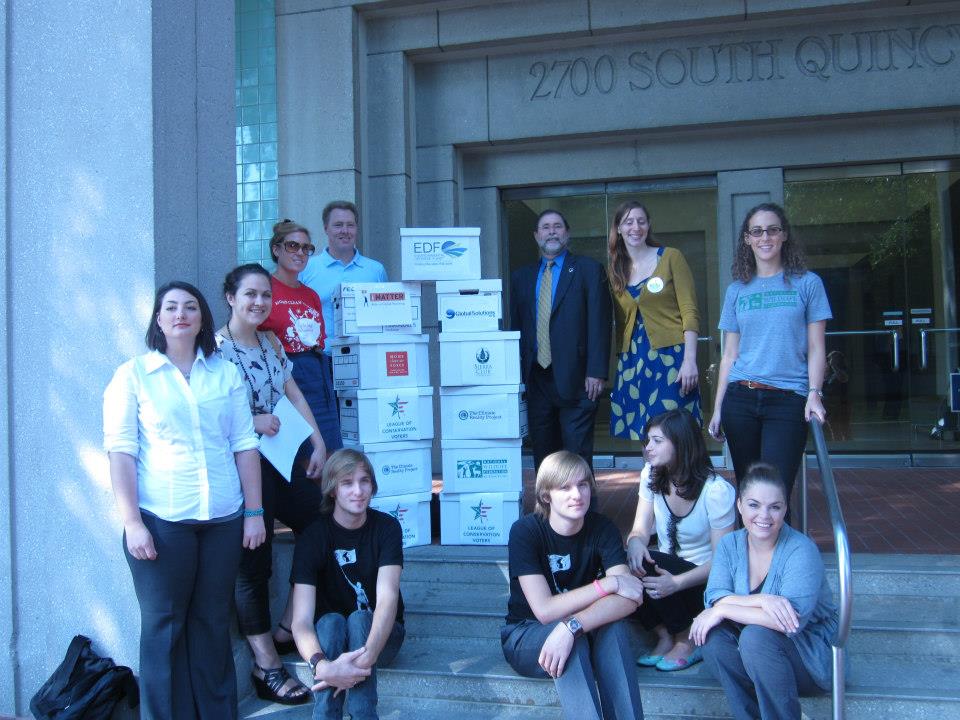
Over the last two months, the team here atCitizens for Global Solutions has been working to make climate change a bigger election issue this cycle, starting with the first presidential debate on October 3rd hosted by Jim Lehrer of PBS’s NewsHour. This morning, Citizens for Global Solutions, along with eight other organizations like the League of Conservation Voters and the Environmental Defense Fund, delivered over 160,000 of your petitions to the Newshour offices. Representatives for NewsHour accepted our petitions and guaranteed that our voices would be heard by Mr. Lehrer. According to one staff member, this petition is the largest they have received this election cycle.
Over 3,200 of the signatures were from Citizens for Global Solutions members, demanding that the presidential campaigns make climate change a focus this fall. According to Don Kraus, CEO of Citizens for Global Solutions, “Climate change is a global challenge that affects Americans and people worldwide. The next leader of the free world must have a plan to address it. What good is a debate about bolstering the economy when the environment it rests upon is degrading? Mr. Lehrer must hold President Obama and Governor Romney accountable on this critical issue.”
Thanks to your support, we’ve brought climate change to the attention of the first debate moderator. We aren’t going to stop until we’ve heard a serious debate from our candidates on how they’re going to address one of the most pressing issues of our time!
For more information on both Romney’s and Obama’s statements on climate change, check out the interactive guides we’ve created on Storify:
http://storify.com/GlobalSolutions/barack-obama-energy-and-climate-change-1
http://storify.com/GlobalSolutions/mitt-romney-climate-change-and-energy