by Julia Bunting | Sep 27, 2012 | Climate Justice, Global Cooperation
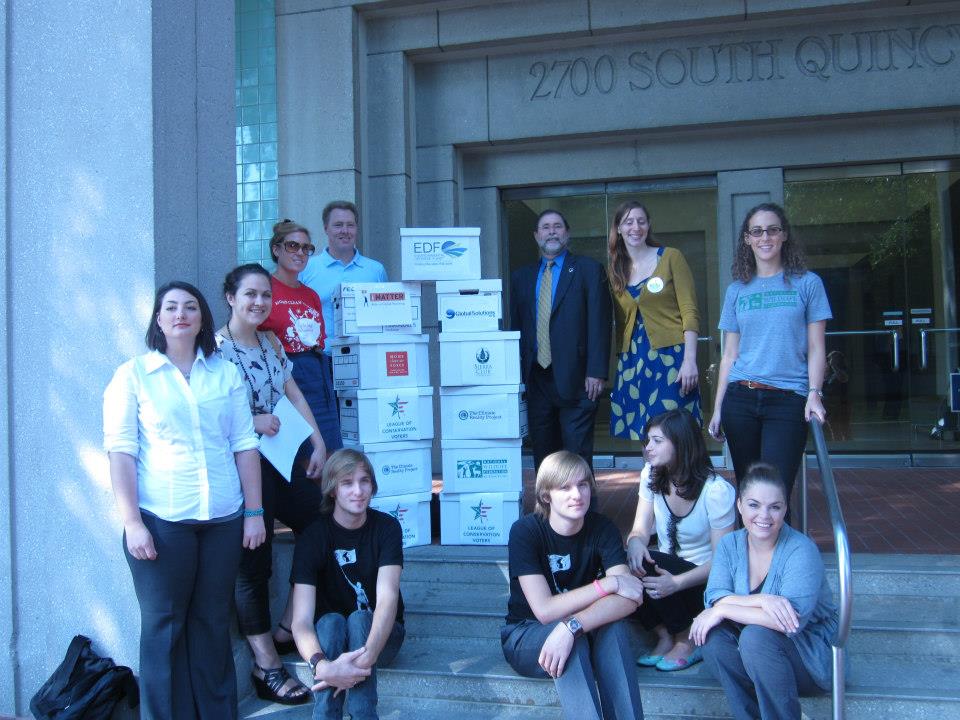
Over the last two months, the team here atCitizens for Global Solutions has been working to make climate change a bigger election issue this cycle, starting with the first presidential debate on October 3rd hosted by Jim Lehrer of PBS’s NewsHour. This morning, Citizens for Global Solutions, along with eight other organizations like the League of Conservation Voters and the Environmental Defense Fund, delivered over 160,000 of your petitions to the Newshour offices. Representatives for NewsHour accepted our petitions and guaranteed that our voices would be heard by Mr. Lehrer. According to one staff member, this petition is the largest they have received this election cycle.

Over 3,200 of the signatures were from Citizens for Global Solutions members, demanding that the presidential campaigns make climate change a focus this fall. According to Don Kraus, CEO of Citizens for Global Solutions, “Climate change is a global challenge that affects Americans and people worldwide. The next leader of the free world must have a plan to address it. What good is a debate about bolstering the economy when the environment it rests upon is degrading? Mr. Lehrer must hold President Obama and Governor Romney accountable on this critical issue.”
Thanks to your support, we’ve brought climate change to the attention of the first debate moderator. We aren’t going to stop until we’ve heard a serious debate from our candidates on how they’re going to address one of the most pressing issues of our time!
For more information on both Romney’s and Obama’s statements on climate change, check out the interactive guides we’ve created on Storify:
http://storify.com/GlobalSolutions/barack-obama-energy-and-climate-change-1
http://storify.com/GlobalSolutions/mitt-romney-climate-change-and-energy
by Sean Langberg | Aug 15, 2012 | Climate Justice, Global Cooperation
Much has been made of the sizzling weather this summer. You’ve heard about it around the water cooler and in line at Starbucks. This week, the National Oceanic and Atmospheric Administration announced that July was the hottest month in United States history. 3,215 daily high temperature records were set or tied in June. More than 63 percent of the country in the lower 48 states is experiencing drought. Whether the high temperatures are caused by a broader climate change trend is unclear, but the heat will inevitably affect short-term crop supply, meat prices, and land arability. Moreover, the heat, if part of a climate change regime, could also affect the frequency, duration, and intensity of armed conflicts.
The side supporting the idea, partially made popular by Jeffrey Sachs, says areas most affected by rising temperatures such as the Sahel and Horn of Africa will also experience more armed conflicts. The causes of the conflicts will be droughts, desertification, water and food scarcity, and population pressure. Sachs cites long-term conflicts in Afghanistan, Chad, Ethiopia, Iraq, Pakistan, Somalia, and Sudan as places where “tribal and often pastoralist communities [struggle] to survive deepening ecological crises.” This fight for survival eventually turns into armed conflict in those communities.
The side denying the link claims that conflicts exclusively arise because of political, social, or economic tension not caused by environmental stress. John Ransom of Townhall.com claimed that wars in the Global South are “so numerous that [he] could probably make a statistical argument that one in five wars are due to the AFC winning the Super Bowl” alleging an erroneous correlation between climate change and conflict.
There are two moderate positions that bridge the divide between the absolutist stances above: climate as a conflict multiplier and climate as a conflict intensifier. The conflict multiplier theory states that climate change causes new conflicts and prolongs existing ones. This is the more radical of the two bridge theories in that it projects an increased frequency in conflicts. Conversely, the conflict intensifier theory claims that climate change will intensify and potentially lengthen conflicts caused by tensions relatively unrelated to environmental stress.
Reconciling the two moderate positions is a separate project, but noting key complicating factors is essential. First, conflicts are caused by many stressors that bring a situation from cold and tense to hot and violent. Political tension, leadership transitions, economic shock, rights suppression, weapons acquisition, state aggression and minority rule are among thousands of other conflict-drivers. Often, if not always, these drivers overlap to cause large-scale violence. Conflict in Sudan is not only driven by ethnic tension; conflict in the Democratic Republic of the Congo is not only caused by outside intervention; conflict in Burma is not only caused by military control of government. It is becoming increasingly clear, however, that environmental stress caused by climate change should be included in the set of factors that cause, reinforce, and intensify conflict.
Clearly climate change and conflict are both complex issues which makes drawing a direct connection between the two difficult. Unlike conflict-drivers such as leadership transitions, it must be proven that climate change caused sufficient environmental stress which damaged local economies enough to spark violent tension. For example, Habyarimana’s death in mid-1994 almost certainly sparked violence in Rwanda that killed about 800,000 people in three months. But the link between environmental stress and genocide in Darfur, deemed the first “climate conflict,” is weaker, but still plausible. Minority ethnic groups in Darfur scrambled for resources throughout the late 1990’s and 2000’s while the central government in Khartoum rushed to secure arable land and water as sanctions crippled their economic infrastructure. However, it’s equally plausible that Khartoum’s aggression and the Darfuri response was caused by a mix of ethnic tension, state instability, and economic woes unrelated to climate change.
Viewing conflict through a climate change lens could be an opportunity for the atrocities prevention community for two reasons. First, it provides an opportunity to connect the environmental and civilian protection movements. The two are largely considered to be mutually exclusive, in youth and adult circles, but drawing a clearer line between the two would expand the respective constituencies and provoke innovative thought leadership. Suddenly, the Sierra Club, Enough Project, and 350.org have a reason to collaborate. Second, it helps solve a problem plaguing civilian protection communities. Often people do not engage with the movement because it does not affect them directly. Civilians dying in Darfur or North Kivu are seen as too far away by the average US citizen and too disconnected from their daily lives. If climate change is added to the list of reasons mass atrocities and genocides occur, advocates can potentially connect their neighbors’ transportation methods, eating habits, and housing choices to conflict thousands of miles away. Simply, our everyday choices can cause and heighten existing tension.
The connection also opens new space for legislators interested in curbing domestic greenhouse gas emissions. Environmental advocates are often plagued with the stigmas of being a “tree hugger” or those pesky people reminding us to turn down the air conditioning. However, a link to conflict allows climate change to be a national security issue rather than a special interest, making it an easier sell in Congress. If lawmakers address greenhouse gas emissions, they are ensuring a more stable environment, but they are also preventing violent threats. Moreover, climate change as a prevention measure could also be seen as in the US’s economic interests (the other easy sell in Congress). A Friends Committee on National Legislation statistic (one of the most valuable for prevention advocates) says for every one dollar spent on conflict prevention sixty dollars are spent on conflict response. Food aid, democracy-building, and early warning systems are some of the conventional prevention strategies, but climate change efforts could feasibly be included in that group.
It is in the best interest of the atrocities prevention community to make the link between climate change and armed conflict more explicit. More evidence, fewer abstractions, and clearer language would bolster it’s efforts on the grassroots and national levels. The argument would inevitably meet resistance from climate change deniers and traditional conflict analysts, but would benefit both causes in the long-term. At a Holocaust Museum event last month, Yale professor Tim Snyder said climate change acts as a “multiplier of other resource crises” that will “lead to mass killings in the decades to come” but “the gap between sound foreign policy and genocide prevention might be rather small.”
by Amanda Bowen | May 21, 2012 | Climate Justice, Global Cooperation, News
Today’s Washington Post featured a story about an organizational letter that GlobalSolutions.org, along with nearly two dozen other groups, sent to President Obama that urged him to attend the Rio+20 Earth Summit this June.
The letter read in part,”Your presence at this Summit would signal its critical importance to all Americans, demonstrate our country’s deep concern over urgent global issues that will inevitably affect our security and well-being, and highlight our nation’s determination to be a contender in the race to a low-carbon green economy.” To read the full letter, click here.
GlobalSolutions.org believes strong U.S. leadership at Rio+20 will spur other nations to commit to taking concrete action in preserving our planet for future generations.
If you think President Obama be a leader on sustainable development and attend Rio+20, sign our petition here.
by Julia Bunting | Dec 12, 2011 | Climate Justice, Global Cooperation
Negotiators in Durban, South Africa extended their annual conference on climate change 24 hours beyond the expected close of debate in an effort to find a last minute deal on carbon emissions. Discussions appeared to pay off as representatives from almost 200 countries announced a last-minute compromise yesterday morning. While not yet proposing any legally-binding targets to reduce carbon emissions, the Durban Platform lays out a plan to reach such an agreement by 2015.
The agreement also fleshed out several details from the unfinished talks in Cancun last year. Among these were rules for establishing a global climate fund, a strategy for combating deforestation, the structure of an international network of technology centers, and the guidelines for a system to increase transparency in tracking the carbon-emitting activities of nations.
The bigger challenge centered on the agreement to seek a deal for universal emission cutting within the next four years. However, many environmental researchers and advocates warn that this deal may not yield significant results. The language is broad and vague, not specifying if developing and developed nations will have to agree to the same cuts to emissions. It is likely that nations such as China and India will have very different ideas about what will be acceptable targets than the European Union and other Western nations. Effectively, the Durban Platform pushed off an agreement on this issue, long the biggest sticking point in the climate change debates, for four more years. Others also worry that by the time an agreement will have to take effect, 2020, global greenhouse gas emissions will be far beyond sustainable levels.
The progress made on the global Green Climate Fund and the creation of technology centers, which will aid developing nations and support their pursuit of sustainable development, is an encouraging outcome of the talks in Durban. However, much of the hardest work remains. Global leaders need to get serious on agreements to cut emissions, before irreparable damage to the ozone layer is done. Rather than dragging their heels, American politicians should be leading the way by agreeing to curb our own carbon emissions and investing more in green technology. We cannot continue to postpone progress on climate change for one more day, let alone four more years.
by Julia Bunting | Dec 5, 2011 | Climate Justice, Global Cooperation
As climate change talks in Durban, South Africa head into their second week, hope increased for the passing of a universal, legally-binding agreement to cut greenhouse gases. China’s representative Xie Zhenhua made a statement this morning, laying out their criteria for accepting an agreement. These conditions include a new round of Kyoto targets for cutting emissions in developed nations and advances on climate aid and low-carbon technology sharing.
This statement renewed optimism that a substantial deal could be met during the talks in the Durban. The discussions are being held amongst the members of the U.N. Framework on Climate Change (UNFCCC) in their 17th annual conference. World leaders are meeting to discuss reducing carbon emissions and the disbursement of funds from industrialized nations to developing countries to invest in greener technologies.
The United States has been one of the firmest roadblocks to any serious new agreement on climate change. It is one of the few nations to not have signed the UNFCCC’s Kyoto Protocol, which would have set legally binding targets for emission reduction. And it is also the most resistant to establishing a new treaty to replace the Kyoto Protocol when it expires next year.
Kumi Naidoo, Executive Director of Greenpeace, said that the U.S. is trying to push any commitment on emission reduction beyond 2020 and is trying to halt talks. “If the U.S. cannot see the way forward, we’re going to be calling on them to step out of the way and let the rest of the world move forward,” he said.
While the U.S. deserves shame for its resistance to climate talks, China and other nations calling for a deal do not yet deserve praise. It is yet to be seen whether China would agree to a deal calling for significant reductions in their own emissions. Until now, China has resisted efforts to curb emissions while it still develops as a nation. While it is true that China is still industrializing, they surpass even the U.S. in greenhouse gas emissions.
The European Union has proposed a compromise that would put off establishing a new, legally-binding treaty until the future but would have member nations set a deadline for establishing such an agreement by 2015. The short-term focus for the rest of the talks in Durban would then be on increasing transparency in climate talks and agreeing to logistics for disbursing the Green Climate Fund, funds that industrialized nations have agreed to pay to developing nations to offset their costs of curbing emissions.
The EU’s plan seems like a reasonable compromise between nations like China and the U.S. However, this is absolutely one issue that we cannot keep pushing off to be settled by the next round of negotiators or future generations. Climate change is a global issue on which America has long been lacking, shunning our traditional leadership role in the international community.
It is hypocritical of the United States to accuse other nations of acting in their own economic interests on other issues related to human rights, genocide prevention, and nuclear non-proliferation when we do the exact same thing on climate change. The U.S. cannot bemoan our weakening power in the world if we refuse to step up and lead on one of the most pressing issues facing the global community.
by Kimberly Mills | May 13, 2010 | Climate Justice, Global Cooperation
Is the idea of ‘achieving energy security’ an attainable reality or will it remain a mere proposal?
For those who deeply believe in the importance of energy security and want to see the United States take on a leadership role in the field of renewable energy, the American Power Act, the bill introduced yesterday, might represent a critical step towards making energy security a big priority and as leaders in this emerging field. The American Power Act addresses major topics which include: the expansion of the nuclear power industry, carbon capture and sequestration, and revenue sharing for states that want to conduct more offshore oil and gas production. The bill articulates the goals of reducing carbon emission by 17% by 2020 and by 80% by 2050. Furthermore, the bill offers multiple tax credits as incentives to encourage truck and heavy-duty fleets to use natural gas in addition to encouraging manufacturers of vehicles to create cleaner vehicles and adopt more energy efficient production methods.
What effect will the oil spill in the Gulf of Mexico have on the American Power Act?
Due to what has happened in the Gulf, the American Power Act permits coastal governments to veto exploratory oil drilling up to 75 miles from their shores.
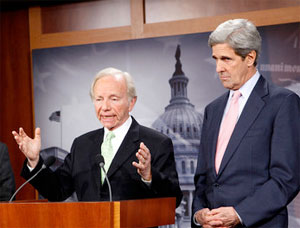
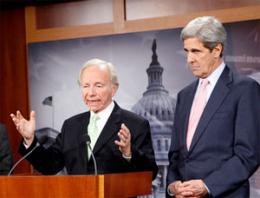
Will it encourage the Senate to pass the energy bill that was unveiled today by Senators Kerry and Lieberman?
President Obama responded to this question by essentially saying that the recent event in the Gulf highlights why this bill must be passed by the Senate and added to our portfolio of energy legislation which includes the American Clean Energy and Security Act passed by the House.