by Ellen Moore | Jul 9, 2013 | Climate Justice, Global Cooperation
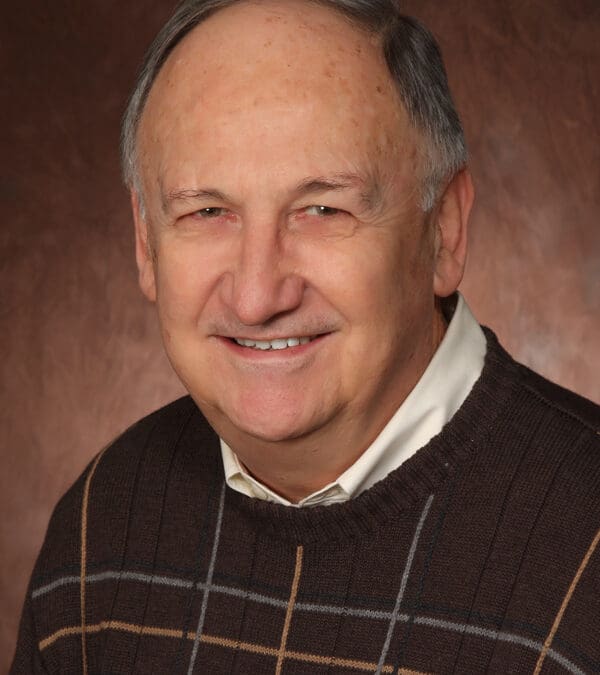
A few weeks ago, I had the chance to visit the Union of Concerned Scientists in Washington, D.C. to interview Dr. Doug Boucher. This interview is one in a series that I have conducted with top U.S. climate scientists in the last month. You can catch up on my other interviews here. Ultimately, the GlobalSolutions.org team wants to learn more about the aspects of climate change that aren’t getting the right kind of coverage in the broadcast media. Who better to ask than the experts?
Dr. Boucher is the Director of Climate Research and Analysis at the Union of Concerned Scientists. He manages the work of scientists, economists, and other analysts who contribute to the Climate and Energy Program. He also directs the Tropical Forest and Climate Initiative, which works with governments, businesses, and consumers in an effort to decrease tropical deforestation and the global warming pollution connected to land use.
Here are some excerpts from my conversation with Dr. Boucher:
GS.org: What do you think about the quality and the quantity of the coverage of climate change by the broadcast media?
Dr. Boucher: I guess I would be pretty critical on both quality and quantity. I think [the broadcast media] misses a lot of stories that are related to climate change even when frankly… it’s a fairly obvious point. I think there’s actually some avoidance of it because of the [sense that] “this is politically touchy, this is controversial and if we can get away with just not saying anything, let’s do that.” The quality I think is also very low. There’s some good coverage but I think in many cases there is a fundamental error that is to talk about it in the future tense. “This is something that’s going to happen, this is something that’s projected, this is something scientists are predicting, etc…” Which is all true but there are also pretty clear manifestations now and considerable data from the last several decades showing that it’s happening. I think one could really do a lot better [at covering climate change].
… A lot of [coverage] is reduced to a few aspects of [climate change] without realizing how broad it is. For example, it is often seen as “just an energy issue.” It’s looked on simply as an energy and fossil fuel issue. …There is no doubt that is the largest piece of it, but there’s a good fourth or more of emissions that come from land, that come from agriculture, from deforestation. And that… is almost always left out. It’s almost always phrased in terms of coal and oil and wind and sun…
GS.org: Why do you think that is the case?
Dr. Boucher: Well I think a fair number of journalists really don’t realize that there are any other kinds of emissions other than fossil fuels. Those who do …often see it as a little too complicating of an already complicated story and [choose to talk about it just in terms of carbon]. [Journalists] don’t want to have to explain what methane and nitrous oxide are or use scientific terms [when] they can depend on the audience to understand what carbon is, or carbon dioxide at least. …So there’s some feeling [among journalists that] this is already a little too scientific to make it an easy story, so let’s not make it even worse.
GS.org: What are some specific climate related topics that you feel haven’t gotten adequate coverage recently?
Dr. Boucher: I think there are two kinds [of issues that have been getting minimal coverage.] One is [the general subject] of land use and deforestation-and agriculture and deforestation-which really has been a letdown. The other and somewhat related [topic] is the success stories, the positive examples of countries, of regions, of industries actually doing some very substantial things to reduce emissions. And quite a few of those are actually related to decreasing deforestation so it’s a particular interest of mine. But I think it’s also notable because it’s a substantial contribution and it shows that [reducing emissions is possible]. And in fact, it shows that not only can it be done but that developing countries can do it. Some of the bigger success stories are not the richest countries, and yet they have done it. Although they’ve certainly gotten some support and aid… a major part of the effort has been using their own resources, basically absorbing the costs themselves.
GS.org: What kind of climate-related news do you see on the horizon that you feel the media should cover?
Dr. Boucher: From a scientific point of view, thinking in terms of probabilities, frequencies and such, we don’t know exactly what and exactly where and exactly when [climate related events are going to happen] but we can be very certain [they’re] going to happen. There will be big storms, sea level rise. [Climate change] will make the damage from [these things] considerably more. …We will have extreme weather events. There will be droughts. There will be floods. There will be …major wildfires and …some of [these] expected results of climate change will manifest themselves in events that can be [used as] good visuals. …You don’t have to know when the hurricanes are going to happen for [the media] to say “well we ought to be prepared to cover a hurricane. Chances are we’ll have one to cover and maybe we’ll have several and maybe they’ll be really important and we ought to be ready for that story.”
GS.org: What has surprised you in your own research on climate change?
Dr. Boucher: A linkage that I hadn’t had any sense of until a couple years ago… is the connection between diet and climate change. …The changing patterns of what humans eat. …make an enormous difference in terms of the way we use land and also the kind [and amount] of livestock that we raise. [These factors] really have big consequences and …there are a lot of different options [for how to address them]. There are ways to reduce emissions associated with meat production for example, depending on the kind of meat. There are ways to reduce emissions associated with vegetable oils, palm oil, soybean oil, and corn oil. I had not realized that they made that much difference to land use and deforestation. I learned there are actually lots of different ways to provide these things and some are just much more drastic, much more damaging to climate.
I learned a lot about climate change and related stories that need to get more media coverage from Dr. Boucher. I’m excited to share the other interviews I’ve conducted with you soon! But, until then you can join us in asking the media to #CoverClimate by signing our petition to demand the major networks do their part.
by Hania Solecka | Jul 8, 2013 | Climate Justice, Global Cooperation
At GlobalSolutions.org, we believe one of the best ways to get the U.S. government to pass sensible climate change policies is by getting T.V. networks to increase their coverage of climate change. If NBC, CBS, and ABC increase their coverage of climate change, more Americans will become aware of the dangers of climate change and the U.S. government will feel compelled to act.
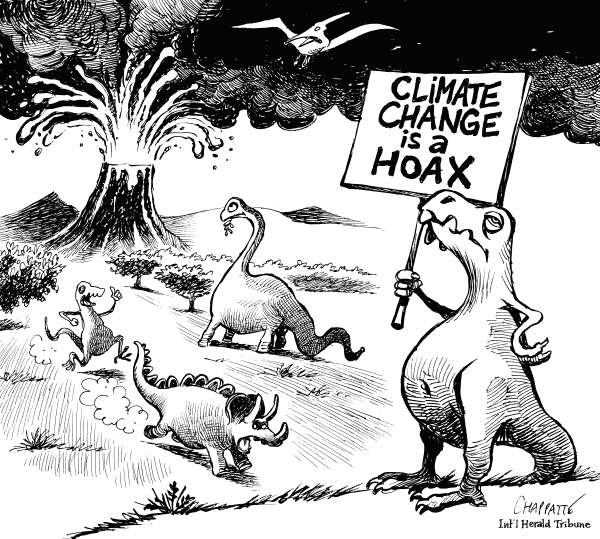
Our efforts, unfortunately, could be undermined by climate deniers. Climate deniers run the gamut from disbelieving entirely in climate change to believing it is part of our planet’s natural cycle. There are deniers who are very vocal, including some members of Congress. As seen in this clip, they have several theories on climate change. Some believe it’s an elaborate hoax, while others think it’s caused by a shift of the Earth’s axis. In contrast to these members of Congress, other climate deniers are far less showy and far slyer. So sly, in fact, that much of the American public doesn’t even know they exist. Three men in particular come to mind: David Koch, Charles Koch, and Art Pope.
David and Charles Koch run Koch Industries, an oil conglomerate that is the second largest private corporation in the United States. In addition to running the company, the Koch brothers are set on blocking any legislation that aims to combat climate change. A study released July 1st by American University’s Investigative Reporting Workshop drew attention to the Koch Brother’s “No Climate Tax pledge,” distributed by Americans for Prosperity (AFP)― a nonprofit organization that received $3.6 million from the Koch foundation between 2007 and 2011. Signatories of the pledge promise “to not spend federal money to fight climate change without an equal amount of tax cuts.” The pledge was signed by over 100 House members, all Republicans. The New Yorker aptly described this pledge “as yet another roadblock to action.”
Art Pope is closely affiliated with the Koch brothers. He serves as one of the national directors of AFP and is one of its main funders. Pope and the Koch brothers are some of the most generous funders to climate denial groups. Between 1997 and 2008, the Koch brothers donated over $48 million to 39 climate denial organizations. Over the same time frame, Pope gave over $24 million to 27 of those 39 groups. The Koch brothers can easily give so much to these organizations because they are the 5th richest Americans, according to Forbes’ list of the 400 richest Americans. Pope’s $24 million may pale in comparison to the Koch brothers’ $48 million, but given that he didn’t even make Forbes’ list, it’s incredibly generous.
Acceptance of the reality of climate change and its devastating effects is the first step in getting the conversation going on enacting effective climate change policies. At Global Solutions, through our #CoverClimate campaign, we are striving to accomplish this goal. As with any noble cause, there will be those who try to prevent it from happening. It’s important for the American public to be educated about climate change and understand that it’s a very real threat. It is, however, equally important for the American public to be informed about individuals and groups that deny the existence of climate change and stealthily work to make sure it does not become a national priority.
by Mona Funiciello | Jul 8, 2013 | Climate Justice, Global Justice
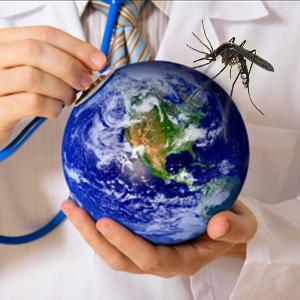
Don Read is a dedicated Texas surgeon who worked 80 hours a week while carving out time to film his daughter’s music recitals and play with his grandchildren. He missed only four days of work over the course of a 27-year career, until he was bitten by a mosquito carrying the West Nile Virus. Within a week he was almost completely paralyzed. It took him nearly a year to regain enough stamina to work more than an hour at a time. Today he wears braces on both legs and no longer performs abdominal surgeries.
Dr. Read is one of an increasing number of Americans who have experienced a profound loss because of the growing impact of climate change. Warming temperatures allowed the mosquito that bit him to breed. In 1999 the Centers for Disease Control reported that 62 people were diagnosed with West Nile Virus, seven of whom died. By 2012, 5,674 Americans were infected and 286 had died. These infectious disease statistics indicate the scale and scope of the growing public health impacts of climate change.
One widely-cited study predicted that “climate change could be the biggest global health threat of the 21st century.” Despite the urgency of this pronouncement, policy makers have yet to sound the alarm. In the four years since it appeared in The Lancet medical journal and was endorsed by American Public Health Association and World Health Organization leaders, public health has remained largely on the periphery of global climate talks. Today, a shift in focus is underway at the global, national, and local levels.
As world leaders set the post-2015 development agenda, public health is beginning to emerge as a focal point of the discussion. This is largely due to fears that any large-scale increase in the spread of disease or disruptions in food, energy, and water systems will reverse the health gains achieved around the world between 1990 and 2015, particularly in the areas of poverty and disease.
Public health is simultaneously gaining traction in the U.S. dialogue on climate change. Policymakers are beginning to acknowledge the “cascade” of climate-related public health impacts we face here in the U.S., including outbreaks of diseases such a Dengue Fever, Yellow Fever, West Nile Virus, and Lyme. So far, the impacts in the U.S. have been somewhat localized but it seems likely that they’ll multiply and spread in tandem with the frequency of extreme weather events.
John Balbus, Senior Advisor for Public Health at the National Institute of Environmental Health Sciences, discussed the issue at the widely-viewed Politics of Climate Change Forum which I attended in Washington, DC. Balbus warned of a looming public health crisis that “will have impacts on things like the ability to feed a population of 9 billion, the ability to provide water, the ability to live in the coastal areas all around the world because of massive sea level rise.” He also explained that changes in air temperature and water temperature will affect the transmission of water- and insect-borne diseases. And if the recent string of storms and extreme weather are an indicator of what’s to come, then cities and towns across the U.S. will need to reassess the emergency response capacity of local hospitals and health systems.
Re-framing climate change as a public health threat might also lead to it being taken more seriously as a national security risk. Last August, the Robert Woods Johnson Foundation released the results of a study that examined three climate change messaging “frames”: environment, national security, and health. Of the three, public health was “the most likely to elicit emotional reactions consistent with support for climate change” and was viewed as “something within their realm of control, something that can make their lives better.”
Balbus admitted that public discourse on climate change and public health is lacking, which he attributed to the length of time it takes for the people to absorb and accept the science. However, simply the presence of a public health expert at such a high-visibility event suggests that it’s being elevated on the national stage.
For Don Read, the devastating impact of climate change is here and now. It is time our policy makers get the message that this global issue is more than melting ice and polar bears. It’s about the welfare of our families, our children and our future.
by Harrison Phillips | Jul 2, 2013 | Climate Justice, Global Cooperation
Thinking of climate change and its subsequent effects as a national security threat is a growing global trend. A Pew Research Center study from June shows that climate change is viewed as the number one threat to national governments according to a selection of international respondents. Pew stated that “[p]ublics around the world are concerned about the effect of global climate change and international financial instability.” U.S. respondents ranked global warming behind North Korea’s nuclear program, Islamic extremist groups and Iran’s nuclear program. This is in stark contrast to countries around the world that viewed climate change as a top priority. It is the top concern in every country in Latin America and in the top three in most European countries.
While the American public might rank climate change behind other national security issues, the U.S. military does not. A recent report by the U.S. Center for Naval Analyses (CNA) stated that climate change is a bigger national security threat than the country’s dependence on foreign oil. Retired Marine Corps Brig. Gen. Stephen Cheney, of the American Security Project, stated in an interview that “rising sea levels and extreme drought could be just as dangerous as terrorists and crises.”
These reports shouldn’t come as a surprise. The recent devastation inflicted by superstorms and natural disasters have had a tremendous human and financial impact on governments. Superstorm Sandy alone heaped $50 billion worth of damage and destruction onto the northeast and mid-Atlantic. Most recently, droughts and wildfires in Nevada, Arizona and California have been brought on by widespread heat waves, caused by an unprecedented rise in temperatures (which could peak at 130 degrees in some areas of the US).
The U.S. military report by the CNA outlines one key solution to combat climate change. It stated that the American public and its politicians need to be educated on the realities of a changing climate. In order to create action on a global scale, our people have to fully understand the issue and accept the facts. That means silencing the climate deniers and moving back to a time when creating environmental policy was a non-partisan issue.
Now that our Department of Defense and our President have signed on to combating climate change, the only question is when the American public will follow suit.
by Don Kraus | Jun 26, 2013 | Climate Justice
It’s summer – time for barbecues, family vacations, and July 4th fireworks.
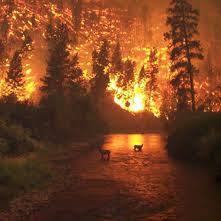
Unfortunately, summer has also become a time for wildfires, drought, triple-digit heat waves, catastrophic storms, and other deadly reminders of the impact climate change has on our planet.
This May, carbon dioxide levels in the atmosphere reached 400 parts per million for the first time in 3 million years. That number offers a stark indicator that current initiatives to slow climate change are failing.
The scientific evidence is mounting. Last year was the hottest year on record, according to the National Oceanic and Atmospheric Administration. The agency described 2012′s extreme heat as part of a longer-term trend of hotter, drier, and potentially more extreme weather.
The heat was apparent at Georgetown University where President Barack Obama sweated under a hot summer sun as he laid out his next steps on climate change before a cheering crowd of mostly college students saying, “I refuse to condemn your generation and future generations to a planet that’s beyond fixing.”
Obama raised the stakes on the Keystone XL pipeline decision, noting the “net effects of climate impact will be absolutely critical to determining whether this project will go forward.” He identified climate change as the major challenge of the century.
This slow motion disaster is big news, right? Not, unfortunately, in the major media. The three major TV networks – ABC, CBS, and NBC – covered climate change in depth on their nightly news programs a total of 12 times in 2012. So far, in 2013, they have only reported segments on the issue nine times (including coverage of Obama’s climate speech), according to the watchdog group Media Matters.
Even with extreme events like Colorado’s wildfires and Superstorm Sandy, the networks aren’t making the connection between the increased tempo of catastrophic events and global warming. This is literally bad news because nearly 30 percent of Americans stay on top of current events by watching network TV. (A slightly larger share of us get our news from cable TV).
A recent Pew Research Center poll found that only one in three Americans believe “global warming is a ‘very serious problem’.” In 2007, the same poll found that nearly half of Americans considered this to be the case.
U.S. media climate change coverage isn’t just spotty – It’s also misleading.
Unfortunately, some of the minimal network and cable TV news coverage on climate issues that Americans do see just provides a platform for groups and individuals who ignore scientific consensus, and deny either that the climate is changing or that global warming is being brought about by human activity.
In his Georgetown speech, Obama dismissed deniers, arguing “it is imperative for the United States to couple action at home with leadership internationally. America must help forge a truly global solution to this global challenge.”
The next global climate talks will take place at a summit in Rio de Janeiro next year. Our nation must play a leadership role in these negotiations. To be a credible leader at these meetings, however, U.S. lawmakers and diplomats need the American people’s support.
And how can our nation have a serious conversation on climate when TV news won’t cover the climate crisis?
GlobalSolutions.org has launched the #CoverClimate campaign to focus attention on the need for better climate coverage. We are also also asking you to sign a petition that calls on broadcast networks to pay more attention to this issue.
Contributor: Hanna Solecka
Distributed via OtherWords. OtherWords.org
by Ellen Moore | Jun 26, 2013 | Climate Justice, Global Cooperation
I had the opportunity to interview Dr. Michael MacCracken last week as part of a series of interviews I’m conducting of top US climate scientists. The GlobalSolutions.org team is interested to hear what these experts have to say about the lack of coverage of climate change in the broadcast media and which climate stories they feel deserve more coverage. Eventually, we’re hoping to package these stories for the media and promote their coverage.
Dr. MacCracken has been the Chief Scientist for Climate Change Programs at the Climate Institute in Washington, D.C. since 2002. Prior to this, he was a senior global change scientist to the interagency Office of the US Global Change Research Program. In addition, his testimony on global climate change and its impacts on specific regions was cited favorably by Supreme Court Justice Stevens in the 2007 decision of Massachusetts et al. v. EPA.
Here are some key excerpts from my interview with Dr. MacCracken:
GS.org: What do you think of the coverage of climate change in today’s media?
Dr. MacCracken: Well it seems to me what we need is coverage that pushes us towards action. The people have gained an understanding that climate change is not good for them, but what would be helpful to provide would be suggestions to help them figure out what directions to take. [People are wondering:] “Is there really a strategy to get through this or are we just going to end with the situation getting worse and worse?”
GS.org: Why do you think the media’s coverage of climate change has been so sparse?
Dr. MacCracken: I think the problem is we don’t have enough fireside chats on the issue. I think we sort of lack a national spokesperson. One of the papers I first did when I came back to Washington was trying to understand, given all the science I thought we knew twenty years ago, why all the contention? And my view is there are a number of different perspectives on the issue. Scientists offer a perspective… the fossil fuel industry [offers a perspective]… the environmental community …the economists …the energy security people… [They all offer different perspectives.] …What we need are people that pull views and pull perspectives together.
…The question is, when you have a society as a whole… who is representing thinking broadly across all these things? What about future generations? Does it matter what happens to future generations? And what are our ethical responsibilities as stewards of the world for future generations?
GS.org: You’re a big proponent of the advancement of the clean energy industry and its co-benefits for people. Do you think that’s a story the media should be covering?
Dr. MacCracken: I think that’s fair…I put solar panels on my roof, and because of the way it works in Maryland, I’m making a 10% tax free return on my investment. That’s pretty good! Very good! Sort of guaranteed…And the company that did that is hiring new people to do installations, and is doing a fair bit of business without advertising…They’re figuring out how to make the benefits of rooftop solar available to people who live in apartments or don’t have good roof exposures…There’s a lot of potential to do these types of things. …It just seems to me there are a lot of opportunities to step forward and take action…
GS.org: What kind of climate-related news do you see on the horizon that you feel the media should cover?
MacCracken: The media needs to relate what’s happening to people and what matters to people. To help people prepare, more attention needs to be placed on the emerging impacts of climate change. We also need to realize that what happens to us in the US is connected to what happens to others elsewhere in the world. The world is interconnected. We’re interconnected through the economy and in sharing the world’s natural resources. If there are problems [feeding certain populations] and a transition into famine in Africa or elsewhere, the effects are going to be felt here as well….Our investments, our resources, come from all over the world. We’re all dependent on each other. …We’re inter-coupled with the global economy. We’re interconnected because we all draw things from the global commons. …
One of the specific emerging concerns is what’s going to happen to food production around the world due to the severe weather that’s occurring in many of the major agricultural areas. There are experts who know far more about the international food market than I do who are very worried about what’s going to happen to food prices. …There are only 5 or 6 countries that …grow enough grain [to be able to] export large amounts. There’s the US, Canada, Russia, Argentina, Australia, maybe a couple of others. And if you look at the increasing trend in weather disruptions in these areas, production could be more and more affected over coming years. In the mid-1970s, when farmers in the Soviet Union had a very poor harvest, that sent shock waves through the markets around the world…As the world has become more and more inter-connected, we have in some ways increased our vulnerability, such that a disruptive weather event in a particular place can now have an impact that spreads around the world.
This interview, and the others I have done, has helped shed light on many important and poorly covered aspects of climate change. Stay tuned for further posts on my other interviews!