
Originally published on the CGS blog on July 9, 2013.
A few weeks ago, I had the chance to visit the Union of Concerned Scientists in Washington, D.C. to interview Dr. Doug Boucher. This interview is one in a series that I have conducted with top U.S. climate scientists in the last month. You can catch up on my other interviews here. Ultimately, the GlobalSolutions.org team wants to learn more about the aspects of climate change that aren’t getting the right kind of coverage in the broadcast media. Who better to ask than the experts?
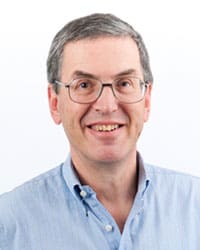
Dr. Boucher is the Director of Climate Research and Analysis at the Union of Concerned Scientists. He manages the work of scientists, economists, and other analysts who contribute to the Climate and Energy Program. He also directs the Tropical Forest and Climate Initiative, which works with governments, businesses, and consumers in an effort to decrease tropical deforestation and the global warming pollution connected to land use.
Here are some excerpts from my conversation with Dr. Boucher:
GS.org: What do you think about the quality and the quantity of the coverage of climate change by the broadcast media?
Dr. Boucher: I guess I would be pretty critical on both quality and quantity. I think [the broadcast media] misses a lot of stories that are related to climate change even when frankly… it’s a fairly obvious point. I think there’s actually some avoidance of it because of the [sense that] “this is politically touchy, this is controversial and if we can get away with just not saying anything, let’s do that.” The quality I think is also very low. There’s some good coverage but I think in many cases there is a fundamental error that is to talk about it in the future tense. “This is something that’s going to happen, this is something that’s projected, this is something scientists are predicting, etc…” Which is all true but there are also pretty clear manifestations now and considerable data from the last several decades showing that it’s happening. I think one could really do a lot better [at covering climate change].
… A lot of [coverage] is reduced to a few aspects of [climate change] without realizing how broad it is. For example, it is often seen as “just an energy issue.” It’s looked on simply as an energy and fossil fuel issue. …There is no doubt that is the largest piece of it, but there’s a good fourth or more of emissions that come from land, that come from agriculture, from deforestation. And that… is almost always left out. It’s almost always phrased in terms of coal and oil and wind and sun…
GS.org: Why do you think that is the case?
Dr. Boucher: Well I think a fair number of journalists really don’t realize that there are any other kinds of emissions other than fossil fuels. Those who do …often see it as a little too complicating of an already complicated story and [choose to talk about it just in terms of carbon]. [Journalists] don’t want to have to explain what methane and nitrous oxide are or use scientific terms [when] they can depend on the audience to understand what carbon is, or carbon dioxide at least. …So there’s some feeling [among journalists that] this is already a little too scientific to make it an easy story, so let’s not make it even worse.
GS.org: What are some specific climate related topics that you feel haven’t gotten adequate coverage recently?
Dr. Boucher: I think there are two kinds [of issues that have been getting minimal coverage.] One is [the general subject] of land use and deforestation-and agriculture and deforestation-which really has been a letdown. The other and somewhat related [topic] is the success stories, the positive examples of countries, of regions, of industries actually doing some very substantial things to reduce emissions. And quite a few of those are actually related to decreasing deforestation so it’s a particular interest of mine. But I think it’s also notable because it’s a substantial contribution and it shows that [reducing emissions is possible]. And in fact, it shows that not only can it be done but that developing countries can do it. Some of the bigger success stories are not the richest countries, and yet they have done it. Although they’ve certainly gotten some support and aid… a major part of the effort has been using their own resources, basically absorbing the costs themselves.
GS.org: What kind of climate-related news do you see on the horizon that you feel the media should cover?
Dr. Boucher: From a scientific point of view, thinking in terms of probabilities, frequencies and such, we don’t know exactly what and exactly where and exactly when [climate related events are going to happen] but we can be very certain [they’re] going to happen. There will be big storms, sea level rise. [Climate change] will make the damage from [these things] considerably more. …We will have extreme weather events. There will be droughts. There will be floods. There will be …major wildfires and …some of [these] expected results of climate change will manifest themselves in events that can be [used as] good visuals. …You don’t have to know when the hurricanes are going to happen for [the media] to say “well we ought to be prepared to cover a hurricane. Chances are we’ll have one to cover and maybe we’ll have several and maybe they’ll be really important and we ought to be ready for that story.”
GS.org: What has surprised you in your own research on climate change?
Dr. Boucher: A linkage that I hadn’t had any sense of until a couple years ago… is the connection between diet and climate change. …The changing patterns of what humans eat. …make an enormous difference in terms of the way we use land and also the kind [and amount] of livestock that we raise. [These factors] really have big consequences and …there are a lot of different options [for how to address them]. There are ways to reduce emissions associated with meat production for example, depending on the kind of meat. There are ways to reduce emissions associated with vegetable oils, palm oil, soybean oil, and corn oil. I had not realized that they made that much difference to land use and deforestation. I learned there are actually lots of different ways to provide these things and some are just much more drastic, much more damaging to climate.
I learned a lot about climate change and related stories that need to get more media coverage from Dr. Boucher. I’m excited to share the other interviews I’ve conducted with you soon! But, until then you can join us in asking the media to #CoverClimate by signing our petition to demand the major networks do their part.


