by Rene Wadlow | Mar 6, 2015 | Global Cooperation, World Federation
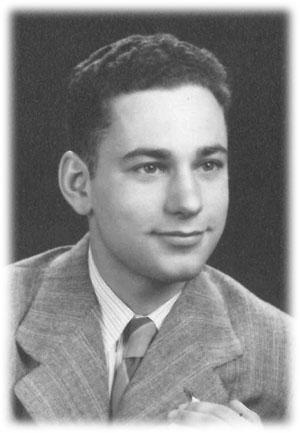
We recently celebrated the birthday of Louis Sohn (born 1 March 1914), who played a key role in the development of world law. His Cases and Other Materials on World Law stressed the difference between “international law,” which is born of treaties between two or more States, and “world law,” which is the composition, functions, powers and procedures of organs of the world society.
World Law consists of norms and values which are binding on all States and individuals, regardless of whether a State has ratified a specific treaty. The 1948 Convention against Genocide, for example, is world law even if a State has not ratified it.
Additionally, when a State joins the United Nations, it pledges to follow the norms set out in the Universal Declaration of Human Rights. However, the Declaration as world law is binding on individuals and the administration of States which are not UN members, such as Abkhazia, South Ossetia, Transnistria, Nagorno-Karabakh, Kosovo, and what may become States in eastern Ukraine.
Louis Sohn, who died in 2006, would no doubt be following current events in Ukraine with passion. He was born in Lviv, then part of the Austria-Hungarian Empire; the city became part of Poland during his youth and university studies, then part of the Soviet Union and now Ukraine − a testimony to the changing nature of States and nationality.
In addition to having national identity imposed by a place of birth, Sohn was by birth considered a Jew − regardless of what his religious ideas may have been. While he was studying law in Poland, there was social discrimination against Jews, especially in the legal profession. Hoping to study in a country without the same restrictions, he received a fellowship to Harvard Law School in 1939 and was able to leave on a boat two weeks before the German invasion.
Both of his parents, who were medical doctors, were sent to concentration camps. His mother died there, and his father, his health broken by the camp experience, died shortly after the end of the Second World War. Thus, Sohn’s advocacy of human rights as a core of world law was linked to direct experience.
At Harvard Law, he worked as an assistant to Manley O. Hudson, who had been a judge on the Permanent Court of International Justice created by the League of Nations. Hudson, as a well-known professor of international law, was asked to be part of the US delegation to draft the UN Charter in San Francisco, and Hudson took Sohn along with him to help with the writing. Sohn worked on the transformation of the Permanent Court of International Justice into the International Court of Justice – similar to the earlier court but now considered an organ of the United Nations.
Sohn, having been present at the birth of the UN, understood both the strength and the limitations of the organization. The San Francisco conference which wrote the Charter in June 1945 worked while the war in the Pacific was still on. Some delegates, in particular those from Australia, were unhappy with the “take it or leave it” presentation of the Charter by the US and UK delegations. Australia insisted that the possibility of a review of the Charter would be on the UN agenda after 10 years of experience in 1955.
With the start of the Cold War and the hot Korean War of 1950, a good number of concerned individuals such as those in the United World Federalists began thinking about what a Charter Review Conference might propose. A prominent New York lawyer with government experience, Grenville Clark, had organized a meeting in 1945 at his home in New Hampshire to study the Charter and he organized in 1953 a new conference in light of a possible 1955 Review.
Clark and Sohn then worked together to write World Peace through World Law, an article-by-article revision of the UN Charter with an emphasis on creating a strong disarmament authority and a UN police force under UN control.
The US and the Soviet Union had collaborated to push a Charter Review Conference in 1955 under the rug in exchange for agreeing to admit a large number of States who were waiting at the door, blocked by Cold War considerations.
Sohn was a pragmatist who continued to work for the transformation of international law into a system of world law based on a common acceptance of values and procedures. He had two main concerns: disarmament and dispute settlement for the new Law of the Sea Treaty. It was around these two major concerns of his that I got to know him and published one of his major essays on disarmament in Transnational Perspectives.
I met him in person in Geneva during a Law of the Sea conference in the 1970s. Sohn was on the US delegation and realized that the extension of national jurisdiction would lead to disputes − as we see these days among China and its neighbors. He worked hard to have dispute settlement procedures written into the treaty. His knowledge and fairness was recognized by many of the delegates, and his suggestions form the base of the dispute settlement procedures.
Sohn saw that world law is a constantly evolving process, based on vision and hope. It is up to us to continue on the path he set out.
by Rene Wadlow | Jan 22, 2015 | Global Cooperation, World Federation
Progress results only from the fact that there are some men and women who refuse to believe that what they know to be right cannot be done.
–Russell Davenport
With the US presidential campaign preliminaries already being discussed in the Democratic and Republican parties, it may be useful to recall one of the most innovative of campaign strategists: Russell Davenport, the spirit behind those chanting “We want Willkie” at the 1940 Republican convention in Philadelphia.
Russell Davenport was one of the founders of the early 1939 World Citizens’ Association along with Quincy Wright, professor of international law at the University of Chicago, and Adlai Stevenson, then a young Illinois lawyer. Davenport was a resolute opponent of the isolationist movement then strong in the Republican Party (and among some Democrats as well). As he wrote,
There come times in history of every people when destiny knocks on their door with an iron insistence…the shape of things to come depends on us: our moral decisions, our wisdom, our vision and our will.
However, it was less because of his role in the world citizens’ movement than because he was the editor of Fortune in Henry Luce’s publishing empire that early supporters of Wendell Willkie brought the two men together in the summer of 1939 at a Fortune brainstorming session with industrialists, bankers, labor union leaders, economists, and sociologists.
Willkie had been a Democrat most of his adult life and was considered a “wild card” among the Republican elite. Moreover, he had never run for a political office, and to start out by running for President struck some as premature. Willkie was disliked by Democrats as a renegade and by Republicans as an interloper. He was a lawyer for large corporations of the sort that advertised in Fortune and had defended the big electric-generating companies against government regulations. Since the TVA and its state-sponsored creation of energy was one of the major projects of FDR’s New Deal, Wendell Willkie became an opponent of Roosevelt’s policies, but without any base among Republicans whom he had joined only at the end of FDR’s first term.
Russell Davenport was a fellow Yale classmate that Henry Luce had brought first to Time, thenLife and Fortune. Davenport was more of a writer and idea person rather than an editor. He had imagination, and Fortune under his editorship produced a number of in-depth reports on world economic conditions. Davenport also edited and published in the April 1940 issue Wendell Willkie’s campaign credo: “We, the People.”
Davenport put his energy, writing skills, and contacts in the publishing world at the service of Wendell Willkie in 1940. The political amateurs with access to considerable money from publishing and other business sources overwhelmed the Republican political establishment, who were divided in their support between Robert Taft, Senator from Ohio, and Thomas Dewey, Governor of New York. The political professionals did not see the Willkie train moving down the tracks until it was too late.
In the 1930s and 1940s, primary elections for party candidates had not taken on the role that they have today, and party conventions were times of political deals in “smoke-filled rooms.” The Willkie campaign, with Davenport as “personal representative,” filled the visitors’ galleries and balcony with Willkie supporters who took up the chant, “We want Willkie” at every occasion with growing force. On the sixth ballot, Willkie was nominated for President and began his campaign just as World War II broke out with the German attack on Norway and France.
Davenport took leave from Fortune to be chief writer on Willkie’s campaign train, which crossed the US several times. Davenport wrote speeches which attacked FDR’s internal policies while supporting his international role in helping England under Nazi attack. Franklin Roosevelt won easily, but Willkie received more votes than had Republicans in the two earlier presidential contests of FDR.
Willkie’s style and the fine prose with which Davenport had filled Willkie’s speeches had impressed Roosevelt and his circle, in particular his right-hand man Harry Hopkins, who was a personal friend of Davenport’s. In 1942, Roosevelt decided to send Wendell Willkie on a round-the-world tour to meet allied leaders to show that the US was united on world policy across the political party divisions. Thus Willkie began a series of meetings with world leaders, including the new Soviet partner Joseph Stalin, as well as going to Africa, the Middle East and China. On his return, Willkie had notes and impressions that Russell Davenport helped pull together, suggesting “One World” as the title.
Willkie’sOne World became a best-seller and the term “one world” became part of everyday vocabulary. World citizens were called “one worlders,” and the isolationist wing of the Republican Party became largely powerless. Unfortunately, Wendell Willkie did not live long after the publication of his book. He died in the autumn of 1944 at the age of 52.
Davenport’s writing skills and imagination were also largely absent from the organized world citizens’ movement which began structuring itself at the end of World War II and the start of the Cold War. His health declined, and most of his writing projects were left unfinished. The more developed were published as The Dignity of Man after his death in 1954 at the age of 53. A little like “We want Willkie,” Davenport’s contribution to cosmopolitan thinking has faded from the scene, his skill with words often replaced by more academic styles. Yet destiny keeps knocking, and the shape of things to come still depends on our moral decisions, our wisdom, and our wills.
by CGS Blog Archive | Jan 8, 2015 | Global Justice, World Federation
As 2014 drew to a close, we said goodbye to a beloved global citizen. Walter F. Hoffmann, prominent civil rights attorney and tireless advocate for world peace, died at age 90 on Wednesday, December 31.
Passionate for UN reform, Walter was a member of World Peace Through Law, founder of the Campaign For UN Reform, the Center for UN Reform Education, and Executive Director of the World Federalist Association in Washington, DC. In 1993, he was appointed by the Speaker of the House of Representatives to serve on the Commission on Improving the Effectiveness of the United Nations.
Born in Newark, Walter grew up in Glen Ridge and spent most of his adult life in Wayne, NJ. Walter was an Eagle Scout, graduated from Glen Ridge High School in 1942, and served with the Marine Corp in the Pacific in World War II. He was stationed on Tinian Island as a member of the 18th Anti-Aircraft Battalion when the Enola Gay took off from Tinian for Hiroshima on August 6th, 1945.
Walter graduated from the University of Michigan in 1948 and the University of Chicago Law School in 1951, where he was an editor of the Law Review. He was a trial attorney for the National Labor Relations Board and a staff attorney for the US House Ways and Means subcommittee investigating the administration of the IRS. He then returned to New Jersey and was a founding partner of Hoffmann, Humphreys & Lafer, in Wayne.
As a civil rights attorney in the 1960s, he successfully challenged residential covenants in NJ communities that excluded homeowners based on race and religion.
Walter served as Adjunct College Professor at William Patterson and Ramapo Colleges, teaching courses in Government and Political science.
Walter met his first wife, the former Lois Anne Johnson at the University of Michigan. They married in 1948 and had a good and loving marriage for 52 years until Lois’s passing in 2000. He remarried in 2003 to Nancy Cecere and enjoyed their 12 years together traveling and living in Cedar Crest Village.
No one who met Walter will forget him, not his family, not his friends or office staff, or fellow travelers anywhere. He genuinely wanted to know people and what was important in their lives. His integrity, wise counsel and joy in his family will be missed.
He is survived by his wife Nancy, daughters, Anne Hoffmann, Laura Calixte, son, Charles Walter Hoffmann (Susan), three grandchildren: Sylvianne Mulholland (Michael), Raymond Walter and Gregory Hoffmann; and two great-grandchildren, Jackson Walter and Kellan Mullholland.
In lieu of flowers, please consider making donations in Walter’s name to the World Federalist Movement or Citizens For Global Solutions.
Click here to find out memorial information, sign the guest book, or send a private message of condolence.
by Wade Meyerhoffer | Dec 12, 2014 | Human Rights, News, World Federation
After months of hard work, it was finally time to pull out all the stops and make a highly anticipated trip to Capitol Hill to lobby congressional staffers! Dressed to the nines, as any three young professionals in DC should be, two colleagues and I left our cozy Eastern Market office for the mountainous doom and gloom of Capitol South for the day. Our objective: to successfully lobby three offices into co-sponsoring or supporting HR 3344, which deals with issues of human trafficking and foreign labor processes.
Our journey started in the annals of the Rayburn office building, and luckily for us, it was downhill from the metro station. We made our way up to the office of Rep. John Conyers Jr., where we had the only normal meeting of the day in a room filled with Smithsonian items. Did you know that members of Congress could rent items out of the Smithsonian back in the day? We didn’t either. But apparently this only worked for Rep. Conyers because of his illustrious tenure on the Hill. Aside from the wondrous nature of the office, the meeting was a home-run in every sense of the word, and we can look forward to a bright new relationship.
Our second meeting took place in the office of Rep. Chris Smith, whom we had the pleasure to meet for about 15 seconds before he excused himself to give a speech on the floor. No big deal. Side note: Did everyone in the world besides me know that there is an underground tram that runs from the office buildings to the Capitol? Crazier yet, ABC conducts interviews with Senators on it. You can see an example here. But I digress. Our second meeting didn’t go quite as planned. We had to settle for a phone interview, but it was very positive. Rep. Smith’s office is very aware of human trafficking issues and looked forward to working with us in the future.
Lastly, we met with a staffer from Rep. Rohrabacher’s office. Unfortunately, she could only meet with us for a few minutes in the lobby of the O’Neil building, but there were some good takeaways from it. We had expected that she would put up the most resistance to supporting the bill, but nothing could be further from the truth. The staffer was very excited to review the materials we provided, and looked forward to corresponding with us on any issues she might have with the bill.
Overall, it was a busy but rewarding day. All of our efforts over the semester culminated into tangible action, and it is always nice to see hard work pay off. The only sad bit is that I will not be here in the spring to finish what I’ve started. With the session winding down, it does not seem like HR 3344 will make it to the floor, despite its bipartisan support. What we hoped to achieve was the commitment of members of Congress in leadership roles to re-introduce and co-sponsor similar legislation if and when it gets brought up. I believe that if CGS continues to push for support, it will be easy to see similar legislation passed and approved by the President in the coming session.
One thing we learned from lobbying is that it’s a lot easier to contact your local representatives than people may think, and they aren’t all as crooked as some would have you believe. If you believe in an issue enough, meet with your representative and have a discussion about it. Better yet I’ve heard if you really push them, you can have lunch with them or get some coffee around the Capitol over a nice discussion. The bottom line is, they’re still in DC because their job is to represent YOUR interests. Let your interests be heard.
by CGS Blog Archive | Dec 9, 2014 | Global Cooperation, News, World Federation
My name is Victor, and I am a board chair of Citizens for Global Solutions (CGS). Our Board of Directors are traveling to Chicago this month to map out the road ahead for the organization.
The meeting is in conjunction with a personal enterprise of mine: the 11th Chicago International Model United Nations (CIMUN), which I’m proud to say educates and inspires over 1,400 high school students from around the world.
As we move into 2015, I can tell you that the organization is working hard to confront the effects that our economy has been having on the non-profit sector as a whole — simply put, a nerve-wracking drop in contributions (skip the rest of the article if you want to click here and help us out!).
I and my fellow Board members are rising to this challenge by undergoing a new strategic planning initiative, as well as moving forward on a smart capital project. We are converting our beautiful properties in Washington, DC into safe and comfortable income-generating housing for students coming to DC in pursuit of an International Relations internship.
Finding safe and affordable housing in DC is tough – especially for students who are only coming for one or two semesters. Converting our space is a win-win – we provide some sorely needed space for students passionate about global issues, and this helps to stabilize our budget through a tough economic time.
Your gift right now is absolutely critical!
Your gift would go a very long way toward strengthening our organization and paving the way for long-term financial sustainability.
Right now, the CGS Board Members are tasked with:
- Defining the goals of the org that best represent the opinions of our membership; and
- Developing a financially viable model for the organization that achieves our goals.
I am confident that our efforts will help CGS to become a stronger voice for our movement well into the 21st century. Help us move forward by donating now!
This holiday season, my fellow board chair Jordan and I are thankful for many things. Among them are the hard work of the staff and the dedication of our board members on behalf of this inspiring organization that I deeply believe in.
And we are also thankful for YOU and the time and support you have given to CGS over the last few years.
Please make a contribution this holiday season and support our growth in 2015!
by CGS Blog Archive | Dec 1, 2014 | Global Cooperation, World Federation
Once again, Citizens for Global Solutions is renewing its mission and reaffirming its values. In the last few years, the world has become smaller. Americans are much more aware of events abroad, especially those that news media and anyone with a cell phone reports in real time.
This is both an opportunity and a challenge. It is an opportunity for Americans to engage constructively with the world on both a social network level and on governmental levels. It is a challenge because Americans typically like the quick fix, whether it be quarterly profits or overseas military interventions.
At the same time, the daily news feed makes it increasingly clear that no quick fix that will enable the establishment of democratic processes in large and increasingly important areas of the world. Although the World War II victory of the democratic western countries led people at the time to perceive their institutions as universally applicable and desirable, the increasingly developed and assertive societies in Asia, Africa, and the middle east are espousing other solutions.
This process is repulsive in many ways to Americans. Countries around the world, including our own, contravene customary international law and treaties when it is convenient. It is apparent to most people that the historic commitment of Citizens for Global Solutions to establish conditions under which democratic world federation can take place will not be a quick process It is not even clear how political processes to work toward international institutions will be established in the US, let alone in other countries.
Yet institutional funders more than ever are committed to outcome measures and demonstrated results. Not only must programs be conducted, they have to be assessed and outcome metrics developed; that itself takes substantial design and financial resources. We will have to focus our future efforts on manageable projects with achievable and demonstrable results, though not necessarily legislative or elective ones. There are educational goals and policy research projects that CGS programs can realistically achieve in ways that the public and policymakers can accept and embrace, and that donors will support.
So how does Citizens for Global Solutions work toward its historic long-term commitment to world federation while delivering relevant intermediate and empirically demonstrable accomplishments? That is one of the challenges that we will be addressing in our planning process.
We have started the planning process by getting to know each other as CGS members. We have individuals with extraordinary accomplishments and knowledge on our Board of Directors and in our active membership. In order for CGS to benefit from their presence, we are learning to appreciate and listen to their perspectives.
For the past four months, the Women’s Caucus at CGS has sponsored a comprehensive series of interviews and meetings of board members and a few others. On November 21st , they delivered a report identifying the themes underlying the concerns and perceptions of the interviewees. This will be an integral part of the subsequent planning process, not to mention the cooperative relationships that have developed as a result of their work.
The next stage in the planning process is visioning, both what CGS members aspire for the world to look like as a result of CGS activities and alternate visions for our own organization, but also the values that we want to represent and showcase in the process. This began a month ago and hopefully will be completed in December at a two-day meeting of the Strategy Committee to be held in Chicago, to which all members of the Board and senior staff are invited. We will carry this forward in January with an in-person retreat of the Board of Directors in Washington to formulate a renewed mission for CGS given our history, competing and complementary organizations, and the current fundraising and political environment.
Subsequently, we will design and target strategies with achievable goals and designated responsibilities to flesh out the plan. We will also design the structure and processes of the Board of Directors that will enable sound decisions to be made and continuously adjusted in the light of experience.
We look forward to the participation of CGS’s membership and active supporters in this process. In a sense, we must keep alive the hope of finding a better way to do things in the world.