by Citizens for Global Solutions | Mar 29, 2016 | Global Cooperation, World Federation
Barbara Martin Walker, one of the long-time and finest members of WFM, passed away on Friday, March 25. Barbara Walker and her husband Bob were “lifelong supporters” of world federalism and our peace movement. She served on the World Federalist Movement‘s Executive Committee for many years, as Treasurer and advisor. Barbara was 92 years old.
Barbara was tremendously dedicated to peace education. Amongst her contributions was the excellent reference book Uniting the Peoples and Nations. Compiled by Barbara, it is perhaps the closest text I know to an international Federalist Papers.
Hopefully, in celebrating Barbara’s life, WFM and others will reread this extraordinary collection of more than 100 writings, from Kant to Kennedy, Gorbachev to Boutros-Ghali, Hudson to Heinrich, Einstein to Falk. It remains one of the most important primers for peace and federalism.
Barbara also co-founded with Sally Swing Shelley an important United Nations non-governmental organization, the Committee on Teaching about the United Nations (CTAUN). The annual CTAUN conference at the UN for educators continues to gain in importance.
My wife Lydia Swart and I loved Barbara and Bob. Shortly after becoming WFM General Secretary/Executive Director in 1994, Lydia and I cherished house-sitting the Walkers’ beautiful home in Princeton, New Jersey while they vacationed at their island home in Menemsha, Massachusetts. Lydia and I will miss Barbara and celebrate the Walkers for the rest of our lives.
On behalf of WFM’s worldwide membership, we wish to send our deep condolences to Barbara’s children, grandchildren, and great-grandchildren as they honor her memory.
Written by William Pace
Convenor, Coalition for the International Criminal Court (CICC)
Steering Committee Member, International Coalition for the Responsibility to Protect (ICRtoP)
Executive Director, World Federalist Movement-Institute for Global Policy (WFM-IGP)
by Citizens for Global Solutions | Mar 23, 2016 | Peace & Disarmament, World Federation
This article was authored by CGS member and guest contributor Ira Straus.
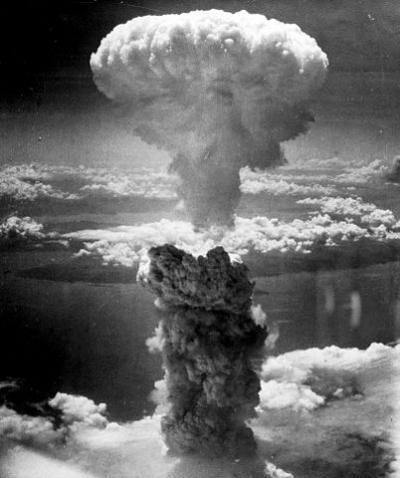
North Korea’s nuclear and missile tests raise afresh the most troubling and urgent issues of nuclear proliferation. The Obama Administration had hoped the Iran deal would give a 10-year respite from the problem, but it is already back, and even a respite is only a delay within an underlying worsening situation. Here is a fresh look at the problem, based on the question of what would be necessary in order to reverse the trend and start moving toward a gradually improving situation.
The System of Multiple Sovereignties: The Motor for Proliferation
Let’s start with a seeming tautology: the more sovereign independent states, each with its own military, the greater the chances of more countries building nuclear weapons. That tends to get taken for granted by everyone: obvious, but somehow irrelevant. It needs to be brought to full consciousness, for it is the foundation of nuclear proliferation.
Under a world government, there would not be nuclear proliferation among governments. What would remain would be problems of nuclear safety.
The proliferation of sovereignties in the world that began at Westphalia in 1648 was compounded by new independencies from 1776 to 1823, and compounded further by independencies after 1945. The proliferation of states still continues. It is what has made nuclear proliferation inevitable, and creates a good chance that it will be multiplied onto a much larger scale than yet seen.
Each sovereign state with a serious nuclear arsenal has a veto power over the future of humanity, and a veto against establishment of a world government over and above itself. The more of them there are, the more vetoes against our survival, raising the odds against survival.
In addition, sovereign states have an ideological impulsion to go nuclear. Sovereignty is an ideology, not just of independence, but of control of one’s destiny, a kind of absolute security achieved by one’s own devices. Only an absolute weapon, one that held the rest of humanity hostage to secure the survival of one’s state, can provide a sense of having satisfactorily secured sovereignty by one’s own devices. Nuclear weapons were, and still are, the closest thing to such an absolute weapon — in fact, the original theorists of nuclear deterrence called it just that.
A Degenerative Overall Balance, But with Some Regenerative Elements in the System
These systemic pressures, endemic to the international states system, make for proliferation. Against them, that same international system has gradually evolved a non-proliferation regime.
The non-proliferation regime has greatly slowed proliferation. But it has not stopped it. It has been defensive, constantly retreating.
The non-proliferation regime works on two levels, sub-global and global.
Sub-global alliance systems, led by nuclear superpowers (mainly the U.S. alliance system), use extended nuclear deterrence and a set of reassurances and incentives and pressures to keep most allies from going nuclear. This has worked in most cases, although it failed in the case of Gaullist France. Charles De Gaulle argued from various particular doubts about U.S. reliability, but at root was arguing from the ideology of sovereignty and separate control of destiny. This shows that, even in the case of the strongest alliance system with the most organic connection between the allies, the regime has been only partly successful in preventing proliferation. Still, it has kept Germany and Japan from going nuclear — and even with the European nuclear powers, Britain and France, the alliance has kept their and America’s nuclear arsenals coordinated, so they do not function very much as independent operators. (The NATO Nuclear Planning Group has served this function.)
Of course, the U.S. alliances never covered the whole world. What about what lies outside of them?
The Soviet alliance system included China, and helped to set China on the scientific and technical course to its own nuclear capability; too late, the Soviets changed their mind and turned against the idea of a Chinese nuke. Eastern Europeans never wanted nuclear weapons for protection against the West; they might have against Russia, but since the 1990s have accepted the NATO umbrella instead. In the first post-Soviet years, Ukraine held a painful debate over whether or not to give up its nuclear weapons; in 1994 it did give them up, under pressure from both Russia and the West, and with reassurances from both sides. Twenty years later, many Ukrainians felt they had made a tragically wrong choice, as Russia invaded and trashed its reassurances, and the West failed to enforce its own reassurances in any serious way. This reminds us of the severity of the dilemma for countries that don’t have the benefit of the alliance.
Since 1991, the Western alliance system became the only world-spanning one left, and has grown in its global reach and importance. Its role in stopping proliferation to South Korea and Japan has remained indispensable, vis-a-vis both China and North Korea.
However, the arguments of the Western alliance for restraining those two countries from having their own nuclear weapons are wearing thin in the face of North Korea. They are not as thin as in Ukraine, which was not a member of the alliance; but still, less robust than in the past, in light of the difficulty in believing fully in America’s extended deterrence when it is facing a deliberately irrationalist gambling regime in North Korea that is step by step building a capability to incinerate American cities with nuclear weapons. To adequately reassure South Korea and Japan, the alliance may have to take further steps along the lines of NATO’s nuclear policy in Europe during the cold war, or still further steps with dual key systems. This might be along the lines that had been proposed for a NATO MLF, Multilateral Nuclear Force, but rejected by France as an alternative to France’s independent nuclear force. A related version would be a loan of nuclear weapons to Japan and South Korea, so they will have their own deterrent not dependent on American approval for their use and not subject to being withheld if North Korea blackmails America (thereby answering De Gaulle’s objection that an MLF wouldn’t be reliable enough to answer his fears that America wouldn’t sacrifice New York for Paris), but restricted technically to hitting only targets agreed in advance with America, and loaned for a limited time period while the danger persists, so there is not a separate proliferatory national ownership of the weapons.
The global IAEA and NPT regimes exist alongside the sub-global alliance system. They have restrained and slowed nuclear proliferation among the many countries that are not in an alliance that has extended deterrence. And within alliance ranks, they have supplemented and reinforced the alliance in its work of preventing proliferation.
All this is a lot of restraint with a lot of success.
But after all this is said and done, proliferation has continued, slowly, but cumulatively. And each instance of it provides an example and incentive for the others to follow suit. It is a degenerative system.
How Can We Shift the Balance to the Regenerative Side? Read more.
by Chuck Woolery | Mar 14, 2016 | Global Justice, World Federation
There is only one number you need to know to determine why encrypted devices and those who want them will win this legal battle between the FBI and Apple. And it doesn’t matter what that number is as long as it’s more than “one.”
The fact is that even if the FBI, CIA and NSA win every Supreme Court case to open encrypted devices in their quest to detect terrorist cells before they strike, there are over 500 devices and programs offering encryption by foreign companies–where US courts have no jurisdiction.
And the Apple phone can easily use a foreign encryption app over which our Supreme Court has no authority.
It appears computer encryption will always be ahead of those who want to break encryption, even if there were a world law forcing companies to do so. Why? Because an app can be created and distributed in someone’s car using a cell phone, with virtually no possibility of being caught in the act.
Unless someone creates a “truth machine,” a scenario explored in a late 1990s science fiction novel by the same name, there is only one effective means of preventing future terrorist attacks: stop making terrorists! Not just religious extremists, but extremists of any kind (environmental, racial, political, economic, etc.)
Given the exponential growth of potential WMD capability of any nation, group, or highly motivated individual–combined with the large number of human vulnerabilities and the increasing complexity of our world (which makes it increasingly vulnerable to disruption)–we must finally accept what we have been told repeatedly by our religious prophets, genius scientists, moral lawyers, political philosophers, prized generals, and wisest souls:
Love your enemy. We are all interconnected. Pledge life, liberty and justice for all; combine love with power; chose the rule of law instead the law of force; and advance education for all. United we stand, divided we all fall.
These are not just national, spiritual or global ideals. They are profoundly selfish rules to follow. Without them, no level of armaments or grandiose efforts at disarmament will keep us safe from mass murderers who have revenge burning in their hearts or warped ideologies polluting their minds.
Maximizing humanity’s freedoms and security will never be a function of armaments, disarmament, or computer encryption. It is a function of ensuring global justice for everyone. But only if justice is defined as the global enforcement of an obvious set of inalienable human rights, such as the Universal Declaration of Human Rights. Only then will humanity experience real peace for the first time instead of intermittent periods of economic suffering while nations reload.
And there will always be threats to our security besides violent people or nations. Some of these threats are even more deadly than war, like pandemics, natural disasters, or unearthly events. But a global government–created of, for and by “We the People” with the primary function of protecting our inalienable human rights–will also yield our best chance of preventing these, as well as recovering from those we cannot prevent.
With this global justice system, we have hope that our species “shall not perish from the earth,” or even the solar system.
I believe artificial intelligence will figure this out soon. I’m just hoping it will be before super human denial does us in.
by Rene Wadlow | Jan 22, 2016 | Global Cooperation, World Federation
Much of our current work for a more just and peaceful world builds on the thinking and efforts of earlier foundations. The work of Robert M. Hutchins, long-time president of the University of Chicago, played a leading role.
In 1929, at age 30, Hutchins–already the dean of the Yale Law School–was tapped by the University of Chicago to become the youngest university president in the United States. But it was his creation and leadership of the Committee to Frame a World Constitution in 1945 that made him one of the intellectual founders of the movement for world federation and world citizenship.
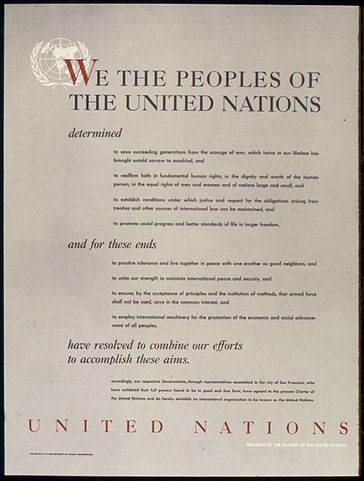
The University of Chicago had been one of the centers of research for atomic weaponry in the U.S., and while Hutchins was not directly involved, he saw that the world would never return to a pre-atomic condition and that new forms of world organization were needed. On August 12, 1945, less than a week after the U.S. detonated two atomic weapons over Japan, Hutchins made a radio address called “Atomic Force: Its Meaning for Mankind.” He said that the recently adopted United Nations Charter was not strong enough for a world where such destructive power had been unleashed.
Within three months, a 12-person Committee to Frame a World Constitution was created under Hutchins’s chairmanship. The committee included University of Chicago luminaries such as law school dean Wilber Katz and political scientist Rexford Tugwell, who had been President Franklin Roosevelt’s key idea man. Harvard’s Charles McIlwain, a specialist on constitutions, and Stanford’s Albert Guerard, a French refugee who was concerned about the structure of post-war Europe, were other key committee members.
From 1947 to 1951, the Committee published a monthly journal, Common Cause. Many of the publication’s articles on such fundamental questions as the philosophical basis of government, human rights, distribution of power, and the role of regions are still relevant today. The committee’s Preliminary Draft of a World Constitution was published in 1948 and reprinted in The Saturday Review of Literature and in The Bulletin of the Atomic Scientists.
Two ideas from The Preliminary Draft are still part of intellectual and political life for those concerned with a stronger UN. The first is the strong role of regional organizations. When The Preliminary Draft was written, the European Union was still just an idea, and most of the future members of the African Union had yet to achieve independence. The Preliminary Draft saw that regional groups were institutions of the future and should be integrated as such in the world institution. While today, the representatives of EU and AU member states work together at the UN in search of common positions, such regional groups are not yet part of the official UN structure.
The other lasting aspect of The Preliminary Draft is the crucial role that non-governmental organizations (NGOs) should play. The then-recently drafted UN Charter had created a “consultative status” for NGOs, but most of its drafters did not see the important role that NGOs would play as the UN developed. The Preliminary Draft had envisaged a “Syndical Senate” to represent occupational associations on the lines of the International Labour Organization where trade unions and employer associations have equal standing with government delegates. Such a formal body never came to be, but NGOs now represent an important part of the UN process.
Hutchins retired from the University of Chicago in 1951 to create the Center for the Study of Democratic Institutions at the Ford Foundation. But it was the effort Hutchins led to envisage the structures and processes among the different structures that was his innovative contribution to global institution building, and many of the debates he started are still crucial for today.
by CGS Blog Archive | Jan 20, 2016 | Global Cooperation, World Federation
The following is the introduction to an updated paper by Dr. Maja Brauer and Mr. Andreas Bummel with the German-based Committee for a Democratic UN (KDUN). The full paper is available on KDUN’s website here.
On June 18, 2015, Pope Francis published his second encyclical titled Laudato Si (Praise be to you). On behalf of Christianity, the Pope urged responsibility in dealing with humanity’s “common home,” the earth.
The statement elaborates in detail on critical economic, social, and ecological grievances in the world. In view of these, the Pope calls on all human beings–Christians as well as followers of other religions and disbelievers–to “bring the whole human family together to seek a sustainable and integral development.” This is supposed to lead to a more humane world society that ensures a dignified existence not only of all alive today, but also of future generations, as well as of “Sister Earth” itself.
In addition to discussing ethical norms and possible political measures, the Pope also addresses the underlying conditions of the global political system. Referencing his predecessor Benedict XVI, he calls for the creation of a “true political world authority” that is able to cope with global challenges. To explain this more fully, Francis quotes a passage from Benedict XVI’s 2009 encyclical Caritas in Veritate (Charity in Truth):
To manage the global economy; to revive economies hit by the crisis; to avoid any deterioration of the present crisis and the greater imbalances that would result; to bring about integral and timely disarmament, food security and peace; to guarantee the protection of the environment and to regulate migration: for all this, there is urgent need of a true world political authority, as my predecessor Blessed John XXIII indicated some years ago.
Since the Second World War, this perspective of political unification was continuously endorsed and developed in the tradition of papal teaching. It is more than merely a conclusion that the globalized and interdependent hazards of the technological age require common world institutions that ensure peace and implement supra-nationally coordinated actions and strategies.
Rather, this aspiration is deeply rooted in the societal model of Catholic social doctrine itself, which is cosmopolitan in principle. In a systematic context, it can be used to derive the decisive normative guidelines on which a future political world order would have to be based on from the perspective of the Catholic Church.
In the full version of the paper, a closer look at this notion of world political order will show that its general outline is identical with the model of a world federation based on the rule of law and subsidiarity that has long been advocated by the world federalist movement.
In this context we will also look into the question of how the goal of democratic global structures–and the possible creation of a world parliament in particular–would have to be judged from the perspective of papal teaching.
Read the full publication here.
by CGS Blog Archive | Dec 11, 2015 | Global Cooperation, World Federation
Greetings from Washington, DC!
As the new Executive Director of Citizens for Global Solutions, I am very excited to be able to tell you about the opportunities opening up for us to advance our organization’s goals. With 22 years of affiliation with CGS, first as Executive Director of the Pittsburgh Chapter, then a stint as the national office Development Director followed by many years as a board member and chair, I felt it was time for me to make the commitment to help guide us into a very new environment for developing stronger institutions of global governance.
Now, follow along with me on this journey as we pass through the wilderness of our chaotic globe, come to new clearings in the forest where the light shines brightly and we renew our energies:
In the first clearing, we find two sparkling jewels nestled in the flowers and grasses, pick them up and discover Citizens for Global Solutions’ new vision and mission statements:
Vision: A democratically governed world. (How cool would that be?)
Mission: To build political will in the United States for international cooperation and democratic global institutions that establish peace, justice and sustainability under the rule of law. (We can do this! You have the power. We will help you.)
Feeling elated, we charge back into the forest, but then hear the footsteps of dark mega-forces heading our way and we wonder “Are we alone in this quest?” Just then another clearing appears and we leap forward to escape the dark forces and on a tree stump find a book entitled: “Confronting the Crisis of Global Governance.”
We regain hope that there are allies afoot when we see it is a report of the Commission on Global Security, Justice and Governance. We are not alone after all!
Indeed, Citizens for Global Solutions has forged a relationship with this Commission* in order to pursue some of our long-held goals, such as making the UN a more democratically-governed institution, strengthening UN Peacekeeping capabilities and many others. More details on our programmatic path forward will be coming out soon.
To see how the story of working our way through the wilderness ends, you’ll have join us on this exciting journey, as it is a work-in-progress and you are an essential part of our organization.
Will you help us create a global coalition in support of a 2020 World Conference on Global Institutions where these UN reform recommendations can gain formal acceptance and go into effect?
Will you help us build political will in the US to support establishment of a UN Parliamentary Network?
We can do this. Together.
Earl James
*Co-Chairs: Madeleine Albright (former US Secretary of State) and Ibrahim Gambari (former Nigerian Foreign Minister and UN Under-Secretary for General Political Affairs).