by Shirley Davis | Nov 10, 2015 | Global Cooperation, World Federation
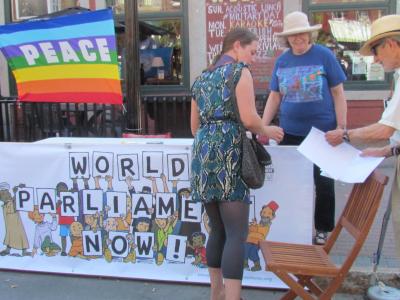
The United Nations is an organization of states, not of persons—even though that’s what the UN Charter promises. The UN is far from democratic. Yet it makes decisions that greatly affect citizens of the 193 member nations. Our representatives at the UN are sent there by the ruling party in each country. They do not represent all of the people. Many believe that there should be more opportunity for the world’s people to have a say in the decisions being made.
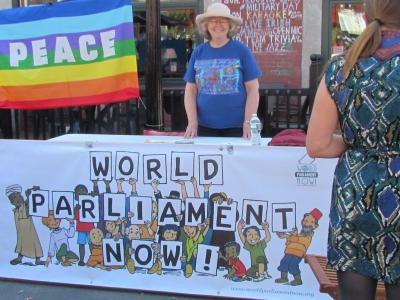
One method that has been proposed as a step in the direction of more democratic global governance is a World Parliamentary Assembly (WPA) or UN Parliamentary Assembly (UNPA). Former Secretary-General Boutros Boutros-Ghali is among the supporters of this idea. Creating a UNPA will be difficult, of course. Many problems would need to be overcome, but the barriers are not insurmountable.
According to Joseph Schwartzberg’s Transforming the United Nations System: Designs for a Workable World, this development could occur through three stages of evolution:
- A WPA with only advisory power and representatives appointed or elected by their respective governments;
- A popularly elected body with gradually increasing legislative competence (exercised in conjunction with the General Assembly);
- Well into the future, a maximally democratic system in which national borders are often ignored and the number of constituents per representative is relatively similar everywhere.
I highly recommend this book to anyone interested in Foreign Affairs.
In June, the United Nations Association of Sweden (UNA-Sweden) decided to “express support for the proposal that a democratic UN Parliament should be established and gradually developed.”
The Campaign for the Establishment of a United Nations Parliamentary Assembly (UNPA) is a global network of parliamentarians and non-governmental organizations advocating citizen representation at the UN. The Campaign’s statements are supported by individuals from 156 countries, among them 755 members of parliament, and 394 NGOs from all around the world.
by Citizens for Global Solutions | Nov 1, 2015 | Global Cooperation, News, World Federation
The Boards of Citzens for Global Solutions, Inc. and the CGS Education Fund have announced the appointment of Earl James as Executive Director. He will take up the role effective immediately and will be responsible for implementing the organization’s new five-year strategic plan.
The Board is pleased to appoint Earl James as our Executive Director! As a long time board member, advocate, and staffer, Earl brings experience and passion to our organization. We look forward to working with him to build a strong constituency for world peace and effective global governance.
–Victor Lang, Chairman of the Board (CGS Education Fund)
Earl James has worked for social change in the nonprofit sector for over 40 years, including a previous stint as Development Director for CGS (1994-95), where he was instrumental in establishing and funding a staff position to build a US-based coalition for an International Criminal Court, and in increasing membership in CGS by 40%.
He has also served as an International Election Supervisor in post-war Bosnia-Herzegovina, as Executive Director of CGS’s Pittsburgh Chapter, for the Rachel Carson Homestead Association (PA), and for the National Trust for Historic Preservation.
As Director of Preservation Services for the Pittsburgh History and Landmarks Foundation, he launched Rivers of Steel, a National Industrial Heritage Area, and as Director of Programs and Development for the New Mexico Environmental Law Center he organized statewide coalitions working on environmental health issues, and on cleanup and prevention of mining pollution.
He has conducted grassroots political organizing for Citizens for Global Solutions’ electioneering arm in Eastern Kentucky, Long Island and Washington State, and has helped numerous grassroots advocacy organizations become more effective by offering organizational development support. An award-winning novelist and screenwriter, he lives in Santa Fe, New Mexico with his wife Karen.
As the new Executive Director, Earl writes,
I believe we are taking a path forward that is ripe with more potential to advance our goal of achieving a democratically governed world than ever before. The convergence of two powerful developments has established these new opportunities:
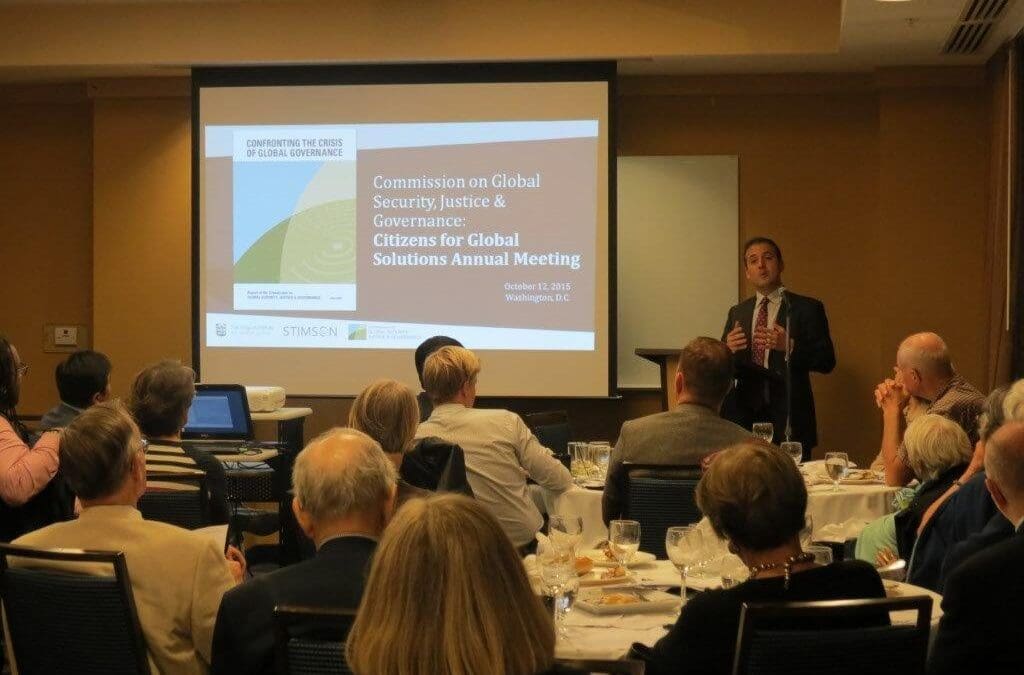
First, in June of 2015, The Hague Institute’s Commission on Global Security, Justice and Governance issued a report titled Confronting the Crisis of Global Governance that clearly delineates deficiencies in the structure and resources of the UN that could be corrected within five years with adequate global grassroots support. Among these are establishment of a rapid response emergency peacekeeping force and a UN Parliamentary Network.
Secondly, CGS staff and boards have devoted a great deal of attention and energy in the last few months to assessing our own strengths. We have greatly refocused our programming to include helping the Commission plan a 2020 World Conference on Global Institutions that will provide a platform and opportunity for many of UN reform recommendations to be enacted. This is an opportunity not to be missed!
More about all of this is to come, so stay tuned! Thank you for your interest in a democratically governed world and in Citizens for Global Solutions.
by Josh Spesaison | Oct 28, 2015 | Human Rights, News, World Federation
It’s not uncommon to hear issue advocates claim that different organizations are “siloed”—focused on their approach to the issues that concern their organization. Working every day on any one issue can create tunnel vision and prevent sharing best practices. It’s for that reason that Citizens for Global Solutions is committed to working across a number of issue groups that bring together like-minded organizations working broadly on related issues, but in different ways. It’s this work that makes CGS a prime example of an interdependent and collaborative organization.
Citizens for Global Solutions is currently active in seven coalitions or working groups. Personally, my favorite is WICC, the Washington Working Group on the International Criminal Court, but since I’m WICC’s Advocacy Chair, maybe I’m biased. CGS co-founded WICC, which is why as Advocacy Chair, I’ve been happy to keep CGS at the forefront of ICC advocacy on Capitol Hill and continue to bring the CGS brand to many congressional offices. WICC regularly meets with congressional staffers and sponsors briefings and other events to raise awareness of the Court’s important work in international justice and human rights.
The newest working group CGS has joined is the Civil Society Working Group on Women, Peace and Security (CSWG). We are supporting this group’s cutting edge work on promoting the implementation of the National Action Plan (NAP) on Women, Peace and Security. Recently, CGS took action to call for the passing of the Women, Peace, and Security Act, which would codify and ensure the implementation of the NAP. Through networking and organizational relationship building, CGS is also in the loop on Cities for CEDAW, a “grass-tops” effort to adopt CEDAW, the Women’s Rights Treaty, as local law. We have a long history of advocating for CEDAW; we even co-founded a DC-based working group dedicated to its ratification.
The Campaign for US Ratification of the Convention on the Rights of the Child (CRC) is another network of activists CGS is proud to be part of. CRC has continued to carry the torch on ratifying the children’s rights treaty in the US, which is now the only nation that hasn’t ratified. CGS will continue to support the volunteers of CRC in their efforts to restore US leadership in human rights and improving conditions for children everywhere.
Citizens for Global Solutions also cooperates with a large coalition of over 80 organizations on nuclear security issues. The Fissile Materials Working Group (FMWG) has built consensus among these organizations through its consensus recommendations and 5 Priorities for the 2016 Nuclear Security Summit. CGS and all other member organizations have endorsed these policies. Message consistency is a powerful asset in the global effort to secure the world’s deadliest weapons.
On the issue of climate change, CGS has been active with the US Climate Action Network (USCAN). This dynamic global network offers a place to share policies, actions, and build relationships between its members. CGS recently has signed on to several letters, including one asking President Obama to include $500 million for the Green Climate Fund in his 2016 budget proposal.
CGS also remains up to date in our fields of interest through the Human Rights Working Group and the Partnership for Effective Peacekeeping (PEP), another coalition CGS co-founded. Both of these groups are excellent ways to promote CGS’s own activities and expand our reach. From small clicktivism actions to large events and policy forums, these two groups help us stay in the know on what many other like-minded organizations are up to.
The benefits of working collaboratively are immeasurable, not only for the expanded reach of one organization’s grassroots efforts, but also for the collective power directed at policy makers to change how we govern our nation and our world. This kind of group collaboration can be highly effective, and CGS will continue to work with valued colleague organizations.
by CGS Blog Archive | Oct 27, 2015 | Global Cooperation, World Federation
Let’s take a look at some of the major political and economic crises the world has gone through as of late: Russian and Ukrainian violence, the creation of ISIS, Greece’s economic turmoil, and the refugee crisis across the globe. While the United States has made significant efforts to fight the injustices, it has been quiet compared to its roaring attitude to replace Saddam Hussein’s Government in 2003 as well as to engage in a war for more than a decade.
A country is solely responsible for maintaining its sovereignty and should not be viewed as weak should it choose to not involve itself in international chaos. Moreover, it is the United Nations that must be in charge of international policy in regards to the political and economic stability of each country on a global level.
One of the important reasons the UN was created in 1945 was to prevent wars and conflict in the first place, but should they happen, then to eliminate human suffering and avoid the economic costs. There have been several news posts and reports lately saying that Obama is weak, that Putin is going to take over the Middle East, and that America needs to do something.
Neither Vladimir Putin nor President Obama should feel that Russia and America are in charge of establishing and maintaining peace. Because Obama and Putin have strongly different ideologies about creating strategy to establish peace in the Middle East, neither has agreed to compromise effectively.
This is when it would be nice to have a third party negotiator, perhaps international officials and representatives from the UN. Russia is strong and there is absolutely no doubt that America is strong, but there are so many doubts about who should take charge of the international chaos and injustice occurring throughout the world. In midst of this disagreement and lack of cooperation and involvement, it is the innocent men, women, and children that are dying daily as the victims of ISIS and other perpetrators of violence.
Because its sole focus is to maintain international cooperation and respond to nations on a global level, the UN should be the one in charge of appointing and designating countries to get involved with the Middle East and also be the leader for initiating strategies with the help of all nations. Individual states must primarily be focused on protecting themselves. The US should keep its weapons and strong military to itself and work to develop a strong, safe, and secure nation for the people living in it. And if help is needed to solve any international crisis, then designated US officials for the UN should decide whether it’s appropriate for America to enter the conflict or not.
The campaign for a United Nations Parliamentary Assembly (UNPA) has gained significant support, as it has been designed to give “citizens a chance to have their voices represented in global debates,” as well as be able to effectively understand and address global concerns as a whole. A UNPA would handle issues like Russia’s entrance in the Middle East and the lack of other nations’ involvement in world crises.
The UN should be the only organization in charge of holding each nation accountable for peace, harmony, justice, and chaos. Special Envoys, international officials, defense secretaries, strategists, and economists of multiple countries should come together and view the conflict as a whole versus leaving it up to Russia and America, for example.
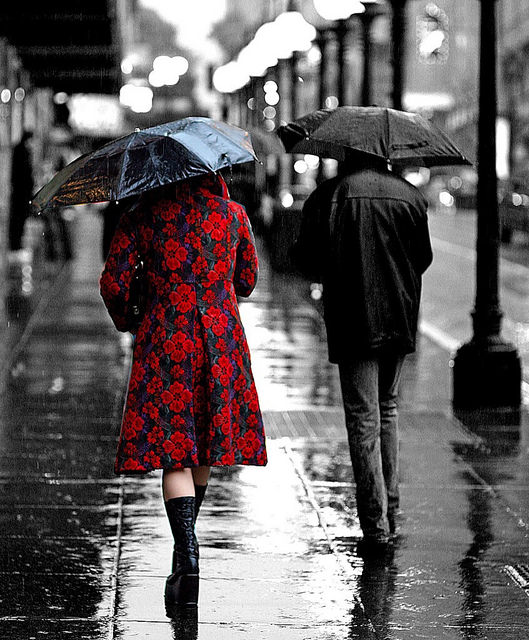
You can protect yourself from the cold rain yet enjoy it at the same time only with the help of an umbrella. Perhaps it’s time for the UN to be that umbrella and to put Putin on hold!
Do you think the US is not as strong as before and that’s why it is withholding involvement? Do you think Russia and the US can come up with an agreement? What are your thoughts about the UN having its own parliament to promote and maintain peace strategies across the globe? Comment and let me know!
by CGS Blog Archive | Aug 26, 2015 | United Nations, World Federation
The United Nations suffers from a severe democratic deficit. Despite the opening words of its Charter, “We the peoples,” ordinary people–the citizens of planet Earth and the proper holders of sovereignty–are subsequently ignored in that document.
To this day, 70 years after the UN’s founding, people other than politicians and diplomats have been denied a voice in planetary governance. Realpolitik, old-fashioned power politics, remains the dominant paradigm. Is it any wonder, then, that decisions of the undemocratic United Nations are increasingly regarded as illegitimate?
Conventional wisdom in the diplomatic community, as well as in mass media and academia, is that the system cannot be fundamentally changed. This is mainly because of the political oligopoly built into the UN Charter, which grants veto power to the five permanent members of the Security Council. None of these unfairly privileged states, supposedly, will ever consent to changes that would infringe on this power. But once you say you can’t, you can’t. It becomes a self-fulfilling prophecy.
The so-called “experts” sooner or later will be proven incorrect. Roughly half the world’s people already live in countries that are more or less democratically ruled. The hallmark of all such countries is a parliamentary system. Even though the leaders of these countries find it necessary go along with the present undemocratic UN system at the global level, that doesn’t mean they can remain oblivious to the democratic demands of their own people. To attempt to do so runs the risk of their being voted out of power.
Admittedly, the number of politically engaged citizens now clamoring for global democracy is small. However, we live in a world increasingly interconnected by the Internet. It is now possible for powerful ideas to spread rapidly throughout the planet. Democracy is one such powerful idea. It is catchy. Even in autocratically ruled nations, it finds an underground following. And ultimately it will burst its authoritarian bonds.
In fact, while not yet popular in this country, the demand for global democracy is taking root among steadily increasing numbers of political activists. This is especially true in Europe, where the successful implementation of the 28-nation European Parliament has yielded a wide range of continental benefits. While there have also been issues to work out, that is to be expected in any parliamentary system.
Fortunately, the establishment of a UN Parliamentary Assembly (UNPA) would not require Charter amendment, as Article 22 of the present Charter states: “The General Assembly may establish such subsidiary organs as it deems necessary for the performance of its functions.” A UN Parliament could rightfully be considered such a “subsidiary organ.”
Initially, emulating the development of the European Parliament, its powers would be advisory only and its members would be appointed (mainly from the membership of existing national parliaments) rather than directly elected. But, with the accumulation of experience, the UNPA gradually could be granted increasing legislative authority in respect to a set of truly global problems that cannot be adequately addressed by nations acting on their own. Periodic popular elections could be instituted.
From its very inception, however, the UNPA could project the voices of world citizens, not just of governments acting in their own narrow self-interest. While those voices might, at the outset, lack legal authority,they could project the “soft power” of morality. And, in the fullness of time, they could become the irresistible drivers of reform throughout the UN system and, ultimately, of a comprehensive Charter review conference as envisaged in Article 109 of the original UN Charter.
The literature on a UNPA is growing rapidly. My own recent discussion of how it might evolve and how it might function at various stages in its evolution can be found in Transforming the United Nations System: Designs for a Workable World (Chapter 3, “A World Parliamentary Assembly.”)
by Donna Park | Aug 17, 2015 | Climate Justice, World Federation
Letters to Jake Series, Letter #8
Dear Jake,
I am writing this letter in the car as Papa and I drive home after a visit with you and the twins. I liked going to the Museum of Natural History in Washington, DC as well as going to the county fair in the countryside near your home. At the museum I especially enjoyed seeing the dinosaurs and other animals that are now extinct. My favorite parts of the fair were riding on the Ferris wheel with you, where we could see the beautiful countryside all around us, and watching the 4H children care for their farm animals.
Our two trips in one week were a good reminder of how wonderful and how precious life is on planet Earth. We need to take care of the earth’s resources like air and water that are important for human life as well as the life of all animals, trees, and other plants that share our planet with us.
Pope Francis just wrote a very long letter entitled “On Care for Our Common Home.” In this letter he reminds all people that we are responsible for taking care of Earth.
Pope Francis is concerned about the growing threat of climate change. Scientists believe that Earth is getting warmer and that clean water is getting scarce in some places.
Humans need to do all they can not to add to the warming and to protect the water so there is enough for everyone. Children like you and the 4H children we saw at the fair can help their parents by reminding them to reduce their use of the earth’s resources, reuse items instead of throwing them away, and recycle whenever possible. Wealthy countries like the U.S. need to help make sure everyone in poor countries has access to healthy drinking water.
The U.S. can play an important leadership role to help prevent climate change when many nations meet in Paris in December to negotiate a new binding international agreement. This will take place at the 21st session of the Conference of the Parties to the UN Framework Convention on Climate Change (COP21). We all need to show support for the US to reduce our greenhouse emissions as soon as possible.
Pope Francis also suggests that the global community needs better structures in place to care for our world. He quotes Pope Benedict XVI: “There is urgent need of a true world political authority, as my predecessor [Pope] John XXIII indicated some years ago.” The reference here is to Pope John XXIII’s letter called “Peace on Earth.” In that letter, John XXIII called for a transformation of the United Nations into a public authority for the world community to prevent wars and nuclear destruction. Francis sees the same need in his concern for the environment.
My friends and I promote the idea that transforming the United Nations into a United Federation of Nations would be the best way to meet this urgent need. I am writing letters to Pope Francis, explaining this idea to him.
Take good care of yourself…and your portion of planet Earth!
Love,
Gram