by Tony Fleming | Feb 25, 2014 | Global Justice, World Federation
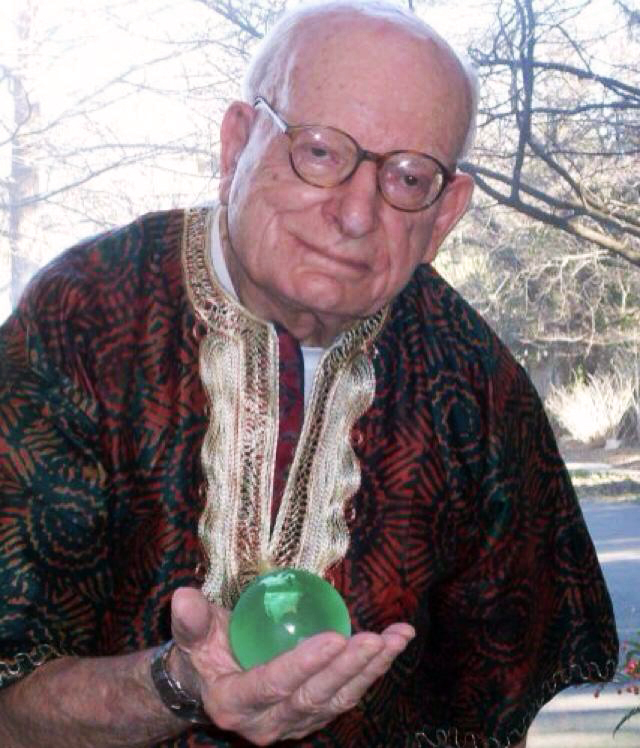
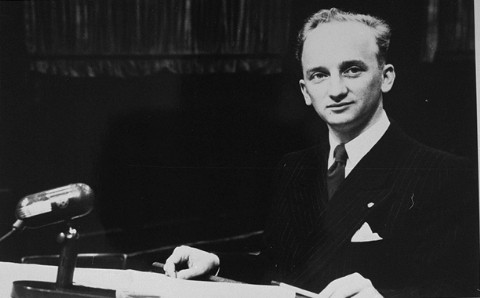
Ben Ferencz is an inspiration to many members and supporters of GlobalSolutions.org, world federalists and human rights advocates worldwide. For those unfamiliar with Ben, he was the youngest member of the Nuremberg legal team in 1945 which prosecuted the Nazi leadership.
Like many young men and women in the U.S. armed forces today, he had enlisted as a soldier and served in Europe where he witnessed terrible atrocities being carried out as part of the Holocaust. As the Allies realized the scope of the horrors being committed, a war crimes team was set up. With his law studies background, Ben was assigned to this team, visiting the concentration camps afte their liberation, interviewing witnesses and collecting evidence of war crimes. Following his discharge from the U.S. Army, he was recruited to join the team at Nuremberg and was assigned as the chief prosecutor for the Einsatzgruppen trial, the ninth of the twelve Nuremberg cases carried out by the Allies.
Sixty-nine years later, at the age of 94, he remains a agile and vocal advocate for the robust prosecution of war criminals and a strong proponent for the International Criminal Court. In September 2013, he spoke with NPR’s Rachel Martin on the possibility of the United States referring Syrian President Assad to the International Criminal Court through the UN Security Council.
“[T]he United States has been opposed, unfortunately … to using that court because we value our sovereignty and we want to decide for ourselves when we go to war and when we don’t. A very, very dangerous practice, as we’re now discovering.”
Ben’s passion for justice and law has motivated generations of activists, lawyers and human rights supporters. His commitment to replacing the “law of force” with the “force of law” has contributed to profound changes and new institutions to protect our lives, liberties and sense of security. In a new short video released this weekend, Ben shares his thoughts on three fundamental requirements for creating a more humane and peaceful world.
(The video in this post is no longer available.)
On Ben’s website, www.benferencz.org, he shares a wealth of materials — documents and photos from Nuremberg, lectures from his time at Pace University, and many other videos, articles and media — free for human rights and justice advocates to use at will. He also shares his views on internationa justice developments and world affairs regularly via Twitter at @BenFerencz.
Ben continues to inspire many. As we begin to recognize we are part of one small planet and one small community, we have much to still do if we are at realize the vision and tools that Ben describes.
I joined GlobalSolutions.org’s predecessor organization because of practical visionaries like Ben after reading his short, friendly (and very non-legalistic) book Planethood. I have heard many others since cite the same work as their inspiration for joining Globalsolutions.org and becoming active in human rights or global goverance advocacy. If you’d like to join also, here’s how to do so.
by CGS Blog Archive | Jan 12, 2014 | Global Cooperation, World Federation
Cleo P. Michelsen, long-time world federalist, died on September 15, 2013, at the age of 104. Cleo took a leading role in establishing the Washington, DC chapter immediately after the United World Federalists founding assembly in 1947. Upon moving to Los Angeles in 1965, where she was a teacher (and co-author of a popular book “Enjoying English”), she provided the major stimulus in making the Southern California Region a center for national leadership. In 1987, Cleo returned to the DC area and founded the Virginia Chapter, while compiling historical material for WFA’s 40th anniversary. In 1995, she received the “WFA Presidential Award” from John Anderson for her strong leadership over the years. Upon news of her passing, encomiums flowed in from all over the country.
- “More than anyone I have known, she not only knew what we need to do to create a world in which human beings can survive, but worked hard at doing it.” – Felix Rosenthal
- “Cleo was one of the most committed to our cause.” – Ed Rawson
- “She was a great motivator, and a great conciliator for a person of such strong views.” – Ira Struass
- “Thanks for your life as a tour de force, Cleo!” – Deb Metke
- “She was a fount of information and ideas….She gave a very high percentage of her income [to WFA]….She quite literally was a force that inspired and moved people to action.” – Tom Camarella
- “She was always ready to help others.” – Ron Glossop
On a final note, Cleo’s husband, Vince Della Penna passed away on December 7, 2013. Although not a world federalist himself, he was a globalist who shared Cleo’s long-term goals. He was also an active member of the Philadelphia and Virginia Global Solutions chapters. Vince and Cleo had a productive and loving dialogue focused upon how to make the world a better place, with a special emphasis on education at all levels. As Ed Rawson noted, “Vince was definitely devoted to her and it would be safe to give him credit for her reaching 104.”
by Don Kraus | Jan 6, 2014 | Human Rights, World Federation
For those who would like to celebrate the life of Edward Rawson, the detailed arrangements are below. The family has requested that in lieu of flowers, a contribution in his memory may be made to GlobalSolutions.org in support of the Edward Rawson Fellowship Program to allow recent college graduates an opportunity to promote active citizen engagement in global institutions and governance while developing leadership skills in government relations, communications, and grassroots outreach. Click here to learn more about Ed’s life and to leave a personal comment that will be shared with the family.
Visitation:
Friday January 10th, 2014
6-8:00pm
Joseph Gawler’s Sons
5130 Wisconsin Ave, NW
Washington DC 20016
Memorial Service:
Saturday January 11th, 2014
2:00pm
St Johns Episcopal Church
6715 Georgetown Pike
McLean, VA 22101
Reception:
Following funeral service
Kazan Restaurant
6813 Redmond Drive
McLean, VA 22101
Information, death notice and obituary to be posted on Gawlers website under Edward Rawson
An obituary has also been published in the Washington Post.
by Don Kraus | Jan 2, 2014 | Global Cooperation, World Federation
With the passing of the old year, we lost a beloved friend, benefactor and leader, Edward Rawson. He passed away quietly at his home in McLean, Virginia surrounded by his family. He would have been 100 this February. We knew him as Ed, Mr. Rawson and Grandpa. For so many of us he was “my friend” and “my teacher.”
Ed has been part of Global Solutions movement from the beginning. He attended the 1947 founding of the United World Federalists in Asheville, North Carolina. Ed was the World Federalist Association’s (WFA) Treasurer for 20 years, retiring in 1996. He served for several years as Executive Vice President of the Campaign for UN Reform, and served until his passing as a Trustee of the World Federalist Endowment Fund, which he helped to establish. He was a past president of the WFA DC Metro Chapter, past chair of the WFA Executive Committee, and a recipient of the WFA “Presidential Award”. Received a B.A. from Harvard University and a J.D. from Yale Law School, he served abroad with the State Department and Agency for International Development, and eventually as AID coordinator for relations with other federal agencies.
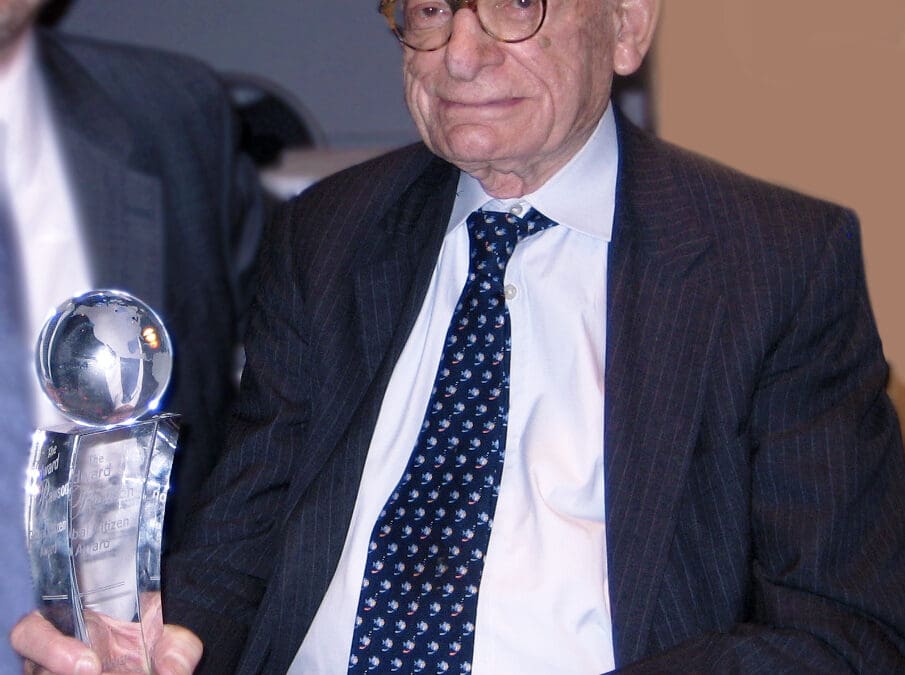
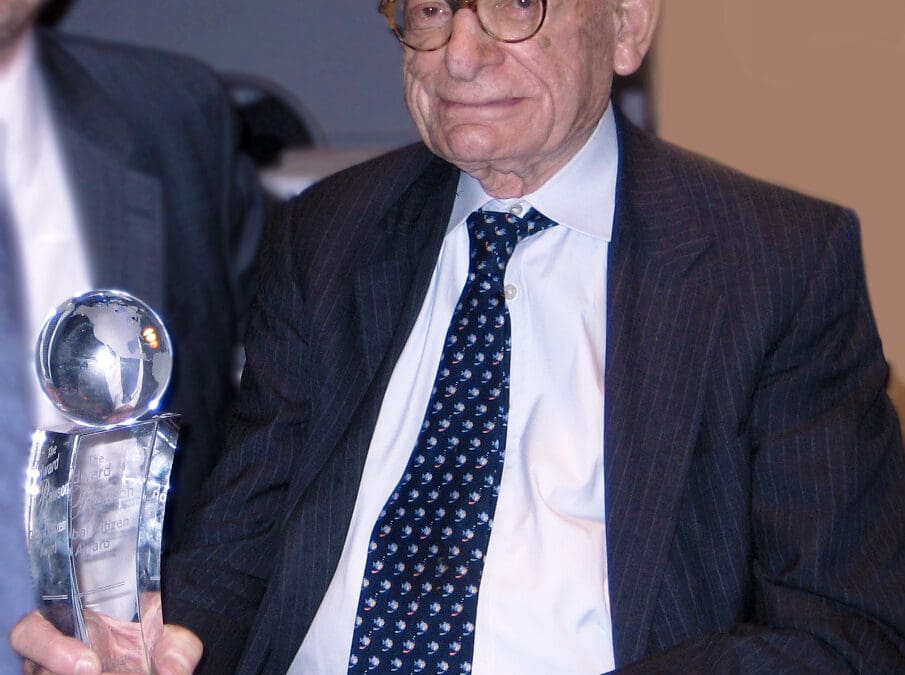
Ed’s legacy includes the Edward Rawson Fellowship, which allows recent graduates to gain hands-on experience working on global issues. He also was the inspiration and first recipient in 2010 of the Edward Rawson Global Citizen Award, which “recognizes an individual who has made an outstanding lifetime contribution … to education and advocacy for a world in which nations work together to abolish war, protect our rights and freedoms, and solve the problems facing humanity that no nation can solve alone.” In his acceptance speech, he recalled his role in the founding conference and remarked if he knew then that he would be the first to receive such an award, “I would never have believed it.” Ed then stated, “I am today privileged to accept this award on behalf of thousands who have labored with me since the founding of our movement for a peaceful and just world governed by law.”
Watch Ed’s Global Citizen Award speech
Ed was my dear friend and role model. I will always be thankful for his generosity, which laid the foundation for so much that our organization has accomplished. Our lunch conversations covered the world. His emails always grabbed my attention. Anyone who lives as full a life as he did, and remains as sharp and passionate as he was, is truly blessed.
There has been an outpouring of sentiments for Ed worth sharing. The following is an excerpt from a longer memorial written by Ira Straus:
“Born to a family that goes back to the Mayflower, Edward Rawson made his entry into the world in the fateful year of 1914 — together with the first of the series of global wars and conflicts that were to rock the world for the better part of the next century, until 1989. He bore a propitious ancestry for this difficult era: an earlier Edward Rawson, 1615-1693, had been Colonial Secretary of the Massachusetts Bay Colony.
The political experience of his youth was a tormenting one — world war, failed peace, trade wars, currency wars, great depression, rising totalitarianisms of Left and Right, a helpless slide toward a new world war… The experience of the generation was summed up for him, and for many others, in a book, Union Now, by [Clarence Streit] the New York Times correspondent at the League of Nations. It proposed a federation of the world’s leading democracies as a solution both to these urgent specific problems and to the general problem of how to form a nucleus for a governed world, one that would naturally tend to evolve into a full-fledged, yet free and democratic, world government. He read the book when it came out in 1939, and immediately joined the movement it inspired — the Inter-Democracy Federalist Unionists (a name simplified in 1940 to Federal Union, in 1984 changed to Association to Unite the Democracies, AUD).
It was the beginning of the main public commitment of his life.
In 1947 he made the hard trek, through rough weather and roads to the Asheville, NC conference where UWF, the United World Federalists, was founded (a name later simplified to WFA, World Federalist Association, changed in 2003 to CGS, Citizens for Global Solutions).…
World federalism was central to Ed’s identity. So central that he put it into the one name he truly chose for himself — his email address: WorldFedEd (he later changed it to WorldGovernance, avoiding any conflict with WFA’s name change). He was a supporter from the moment of the initial meeting that founded Federal Union in New York in 1939. He served as Treasurer-Administrative Director of the World Federalist Association from 1976 to 1997. He remained active in both organizations to the end on December 30, 2013, 74 years later.
Ed also had a government career, which he chronicled as follows: He joined the State Department as Director for the Yugoslavia Relief Program in 1949 and subsequently served as Economic Attaché in the Embassy in Belgrade. During the mid-1950s, he was Program Operations Officer for Korea and Philippines with the International Cooperation Administration (ICA), the predecessor to the US Agency for International Development (USAID). In 1958, he returned to Washington as Special Assistant to the Deputy of Administration of the ICA, and in accordance with a presidential request, served as the liaison officer between the US government and Project Hope. Following a tour with ICA’s office for International Relations, he was administrative coordinator for AID’s program outsourced to other government agencies until his retirement in 1976.
Ed also had a tenure as President of the Capital Investment Association, a club that mischievously bore the acronym of the Federal security agency a mile from his home. And was President of the Rawson Family Enterprises.”
Many others have also voice their love, respect and admiration for Ed. (You can add your thoughts in the comments below.):
“An intellectual giant and an inspiration for World Federalists until the end. He will certainly be missed. He was very lovable. He was really something, right up until the end. A wonderful world citizen. I corresponded with Ed up until about a month ago. He was always interested in what was going on in the world and eager to offer thoughts to fix things. He was totally interested and involved with life. I’m glad he went peacefully, with loved ones around him all through last week. It sounds like his staff adored him.” – Deb Metke
“It was Ed’s generosity in funding the Rawson fellowship that gave me my start at CGS. What a great man and an amazing life he lived.” – Melissa Kaplan
“What a great encouragement he was to us all.” – Elisabeth Garrett
“Ed was a friend and mentor for me since I became involved with the international affairs work which has been my entire professional life. He was always a kind and patient guide, always encouraging and always happy to learn what we younger members of the staff and board were working on to make this a better world. He will be missed by so many people, so many generations whom he inspired.” – Tony Fleming
“Ed was my mentor. He will be missed.” – Matt McDonough
“My friend Ed was always full of stories, always up on the latest world news, and always excited to talk about a hopeful future over some good food with friends. I’m sorry he passed before his 100th birthday in a little over a month…he was very much looking forward to a big centennial party. So tonight I toast a new year and the passing of a beautiful friend. Cheers, Ed!” Valerie Schrock
“Oh, Ed, what an amazing human being. May his beautiful intelligence and passion live on.” – Jessica Brown
“Ed was one Good Dude. Unassuming, tremendously helpful, approachable, just a very fine person who will be missed.” – James T. Ranney
“Ed was a wonderful guy, a class act, and perhaps most importantly, a real imp. I will miss him.” – Charlie Brown
“Ed was the best! I loved that man.” – Kathleen Umrein
“He was a very generous and kind soul I will miss his sunny disposition.” – Keith Stabler
“I had the opportunity of meeting him at one of the council meetings, I think it was Geneva in 2007 when he spoke at length on WFMs growth and progress. May his soul rest in peace.” – Vijayam Raghu
“He was a sweet, dedicated, and thoughtful man. A true Gentleman.” – Adam Ortiz
“I have had the opportunity to meet with him periodically over a long period, and admire immensely his conviction and his spirit in support of a governed world. Ed was a one of a kind and irreplaceable leader of our movement, a leader whom we shall remember for a very long time.” – Felix Rosenthal
“Ed was a great and exceptionally devoted World Federalist. Age did not deter his activism. He will be greatly missed.” – Joe Schwartzburg
“I’m saddened by this news. I have fond memories of Ed, what a wonderful guy.” – Meredith Dixon
“He was a very generous person and was a great leader in the world federalist movement.” – Robert Lincoln Barnett
“He will be sorely missed. He was a wonderful man.” – Staci Alziebler
“Beloved, excellent Edward Rawson peacefully became a real angel today. He was by far the finest man I’ve ever known. I will miss him until the day I die. I was blessed to be witness to his incredible humanity. What a massive loss. RIP and well done sir.” – Blonnie Thomas
Edward Rawson is survived by his son and daughter-in-law, Rick and Marshall Rawson and four grand-daughters. Click here for informaton about his memorial service. The family has requested that in lieu of flowers, a contribution in his memory may be made to GlobalSolutions.org in support of the Edward Rawson Fellowship Program to allow recent college graduates an opportunity to promote active citizen engagement in global institutions and governance while developing leadership skills in government relations, communications, and grassroots outreach.
by CGS Blog Archive | Dec 4, 2013 | Climate Justice, World Federation
Two days before the close of the COP19 climate conference in Warsaw, hundreds of climate activists left the conference prematurely to protest the lack of progress. This walk-out and the otherwise dismal effort in negotiating a new comprehensive treaty beg the question of how the process could be fundamentally improved.
The UN’s framework convention on climate change, adopted in 1992, declares that change in the Earth’s climate and its adverse effects are “a common concern of humankind.” Yet this overarching perspective is barely represented in the formal UN process. The mission and primary concern of most country negotiators is to pursue vested governmental interests, some of which might not have to do with climate policy at all.
Another flaw in the process is the requirement of consensus agreements rather than majority voting, which places a heavy strain on negotiators to satisfy all involved parties. The Copenhagen Accord of 2009 couldn’t be formally adopted because of the opposition of five small countries. That this minority was able to embarrass the main negotiators sparked suggestions that an agreement might be sought outside the UN framework.
A forum of elected representatives could put the process onto a new footing. This new forum could be set up according to article 7.2 (i) of the UNFCCC which allows the conference of state parties to establish subsidiary bodies “as are deemed necessary for the implementation of the convention.”
Such a body was already suggested and outlined after the failure of the Copenhagen conference. A world parliament on climate change could be composed of members of parliament delegated by the legislative bodies of framework member states. Their mandate would be to represent their constituents in the negotiations. The delegates would be free from government instructions or diplomatic constraints, free to vote individually and independently according to their personal judgment. The work of the assembly would be characterized by open discussion and majority votes. The number of seats per country could be distributed according to criteria such as population size or economic output in order to reflect the actual weight of countries realistically.
This subsidiary parliamentary assembly of the UNFCCC would develop its own suggestions and proposals, operating on an equal footing with diplomatic officials in the COP process. The formal involvement of legislators could build pressure on governments to reach an agreement and speed up the process of ratification once it is achieved. If the diplomatic process alone still cannot reach a consensus, it could be provided that a certain qualified majority of both the conference of state parties and the parliamentary assembly would be sufficient to adopt outcomes.
Last month, the UN Human Rights Council’s Independent Expert on Democratization recommended that the world body should convene a conference to study how a parliamentary assembly could represent world public opinion in global decision-making processes. At the Commonwealth Summit in Sri Lanka, the foreign minister of Malta supported the proposal of a UN Parliamentary Assembly. A parliamentary assembly dealing specifically with climate change could be the first step. It would strengthen the democratic character of the climate negotiations and could help secure constructive cooperation and compliance on a continuing basis.
In the end, any agreement that would emerge with the approval by such a proposed assembly would no doubt have incomparably stronger legitimacy than the Kyoto protocol ever had.
by Don Kraus | Nov 11, 2013 | Peace & Disarmament, World Federation
Today we honor veterans. My grandfather Charlie ran away and joined the army as a 16-year-old bugle boy in World War I. My uncle Buddy’s bomber was shot down over Yugoslavia in World War II. Fortunately, he was smuggled across enemy lines by resistance fighters. Perhaps you also have family stories of heroism, hardship and patriotism.
However, Veterans Day is not just about honoring those who loved their country and served. It is also a day to honor those who had the courage to serve; return home from Europe, Asia, Iraq or Afghanistan; and dedicate their lives to ending war.
Brave men and women who came home after World War II built the foundation of our movement. They shared a vision of “world peace through world law.” They believed that preventing World War III was essential to humankind’s survival.
Today, we continue to honor the courage of these veterans. We have a new name, use new language, communicate with new technologies and face new challenges. Nevertheless, we still seek a future where nations work together to abolish war, protect our rights and freedoms, and solve problems facing humanity that no nation can solve alone.
Ninety-five years ago “the war to end all wars” ended. Today, we still have our work cut out for us:
- Violence is rampant in Syria, and Security Council action is still blocked by the veto
- Nuclear diplomacy continues with Iran
- A new genocide rages in the Central African Republic
- Climate change is still rampant even as the UN’s global climate meeting begins today in Warsaw, Poland
We have yet to replace the law of force with the force of law. This year, as we honor veterans around the world who served their nations, let us pool our resources to work for a world where we beat swords into plowshares. Then we will keep on beating and turn plowshares into musical instruments, so that whoever wants to make war will have to turn them back to plowshares first. This is how we can best honor veterans for their service in wartime and for their commitment to ending war for all time.
So here’s a chance to put your money where your vision is and join me in supporting the work of GlobalSolutions.org.

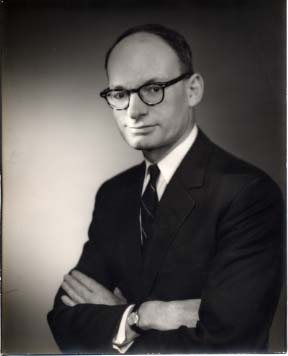 Ed has been part of Global Solutions movement from the beginning. He attended the 1947 founding of the United World Federalists in Asheville, North Carolina. Ed was the World Federalist Association’s (WFA) Treasurer for 20 years, retiring in 1996. He served for several years as Executive Vice President of the Campaign for UN Reform, and served until his passing as a Trustee of the World Federalist Endowment Fund, which he helped to establish. He was a past president of the WFA DC Metro Chapter, past chair of the WFA Executive Committee, and a recipient of the WFA “Presidential Award”. Received a B.A. from Harvard University and a J.D. from Yale Law School, he served abroad with the State Department and Agency for International Development, and eventually as AID coordinator for relations with other federal agencies.
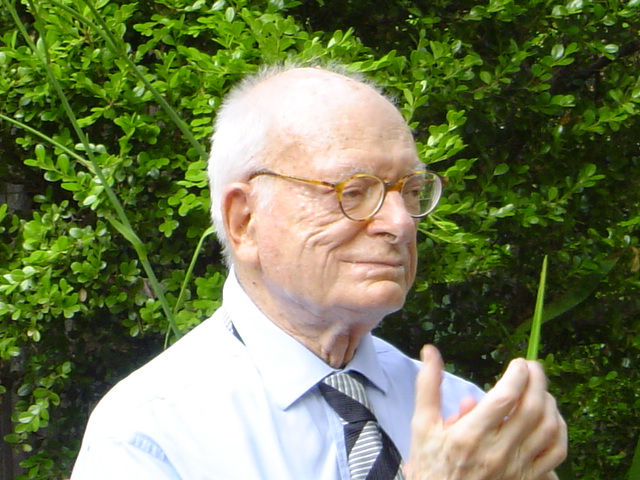 Ed’s legacy includes the Edward Rawson Fellowship, which allows recent graduates to gain hands-on experience working on global issues. He also was the inspiration and first recipient in 2010 of the Edward Rawson Global Citizen Award, which “recognizes an individual who has made an outstanding lifetime contribution … to education and advocacy for a world in which nations work together to abolish war, protect our rights and freedoms, and solve the problems facing humanity that no nation can solve alone.” In his acceptance speech, he recalled his role in the founding conference and remarked if he knew then that he would be the first to receive such an award, “I would never have believed it.” Ed then stated, “I am today privileged to accept this award on behalf of thousands who have labored with me since the founding of our movement for a peaceful and just world governed by law.”
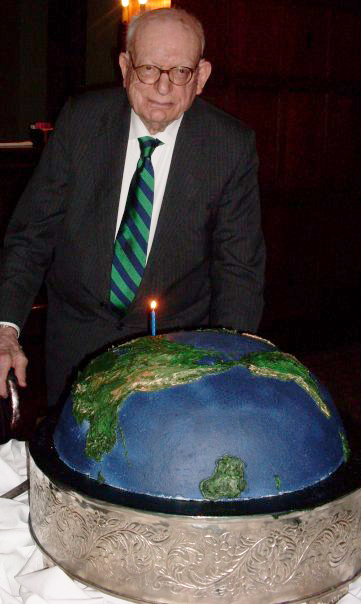 World federalism was central to Ed’s identity. So central that he put it into the one name he truly chose for himself — his email address: WorldFedEd (he later changed it to WorldGovernance, avoiding any conflict with WFA’s name change). He was a supporter from the moment of the initial meeting that founded Federal Union in New York in 1939. He served as Treasurer-Administrative Director of the World Federalist Association from 1976 to 1997. He remained active in both organizations to the end on December 30, 2013, 74 years later.