by Rene Wadlow | Jun 22, 2015 | Global Cooperation, World Citizen
Visions of beauty for mankind to see
The Present’s place in the Eternal scheme,
And point which way to turn Life’s undeciding stream.
—”Holyrood,” a 1908 poem by Julian Huxley
Julian Huxley (June 22, 1887 – Feb. 14, 1975) was the founding Director General of the United Nations Educational, Scientific and Cultural Organization (UNESCO). Although he was elected for reasons of geographic balance for only a two-year term (1946-1948), he set in motion a broad intellectual and cultural framework that allowed for future development.
As he wrote,
The fabric of the peaceful co-operative world towards which we are working must be woven of many strands, or it will unravel under strain.
Planning for the creation of UNESCO began in Oxford in 1941 at the initiative of the Council for Education in World Citizenship. The Axis occupation of much of Europe had brought educators, scholars and scientists to England, as well as civil servants who had served in educational ministries. Governments-in-exile were formed, and a Conference of Allied Ministers of Education (CAME) was created at the end of 1942. A leading member of CAME was René Cassin, then serving as National Commissioner for Justice and Education of the Free French Government. Cassin, after the end of the war, became a key participant in writing the Universal Declaration of Human Rights. Many of the educators saw the benefit of war-time cooperation and hoped that such cooperation could be continued for post-war reconstruction.
Among those active in London was Henri Bonnet, who had been the League of Nations Secretariat Director of the International Committee of Intellectual Cooperation. Bonnet was in the US in 1939 and helped to create one of the first global citizen groups—the World Citizens Association. Bonnet brought his League of Nations experience of cooperation among leading intellectuals and served as one of the important founders of UNESCO. Bonnet, as well as the British members of the Council for Education in World Citizenship, insisted on the importance of NGO participation. NGOs have gone on to play an important role in UNESCO’s work.
Julian Huxley was not directly involved in this war-time planning for UNESCO, but as a frequent speaker on science, education and post-war planning on the BBC, his views were well known. Huxley’s essays on post-war reconstruction and the need for cooperation among scientists were collected and published as On Living in a Revolution. Huxley wrote,
We now live in a quite different world. There has been a revolution of thought, both reinforcing and reinforced by the revolution of economic and social fact…From now on we need to think in terms of change. This applies to all the main aspects of life, from central planning to education. Man must become consciously evolutionary, in his individual thinking, in his collective outlook, and in his social machinery.
While Julian Huxley’s writings do not have the spark of his younger brother, the novelist Aldous Huxley, the essays are well written He proposed a vision of a world society as an organic whole within which rights and duties would be balanced deliberately, as they are among the cells of the body.
He had been asked by the government to evaluate education policy and practice in the British African colonies. He had undertaken official field trips to British East Africa in 1929 and again to British West Africa in 1944. Thus in 1945 when plans for UNESCO were largely set, discussions among the government representatives in London turned to the location of the UNESCO headquarters (Paris) and who would be the first Director General (Huxley).
With his wide range of intellectual interests and his vision as a world citizen, Julian Huxley set the groundwork for the many undertakings that have been characteristic of UNESCO, with its emphasis on cooperation in education, science and culture. On leaving UNESCO, Huxley played an important role in the creation of the World Wildlife Fund. He was also a founding member of the International Humanist and Ethical Union, as he felt strongly that the world society had to have some common ethical standards as guidelines.
As his grandfather had been a leading champion of Charles Darwin, Julian Huxley became a champion of the writings of Pierre Teilhard de Chardin. The Jesuit Order of which Teilhard de Chardin was a member had banned the publication of his philosophical writings, which were circulated among a small group of non-Catholic scientists until being published after his death in 1955. Huxley saw in Teilhard a fellow world citizen and one whose philosophy was based on the evolution of both matter and spirit.

by Jennifer Welden | Feb 4, 2015 | Global Cooperation, World Citizen
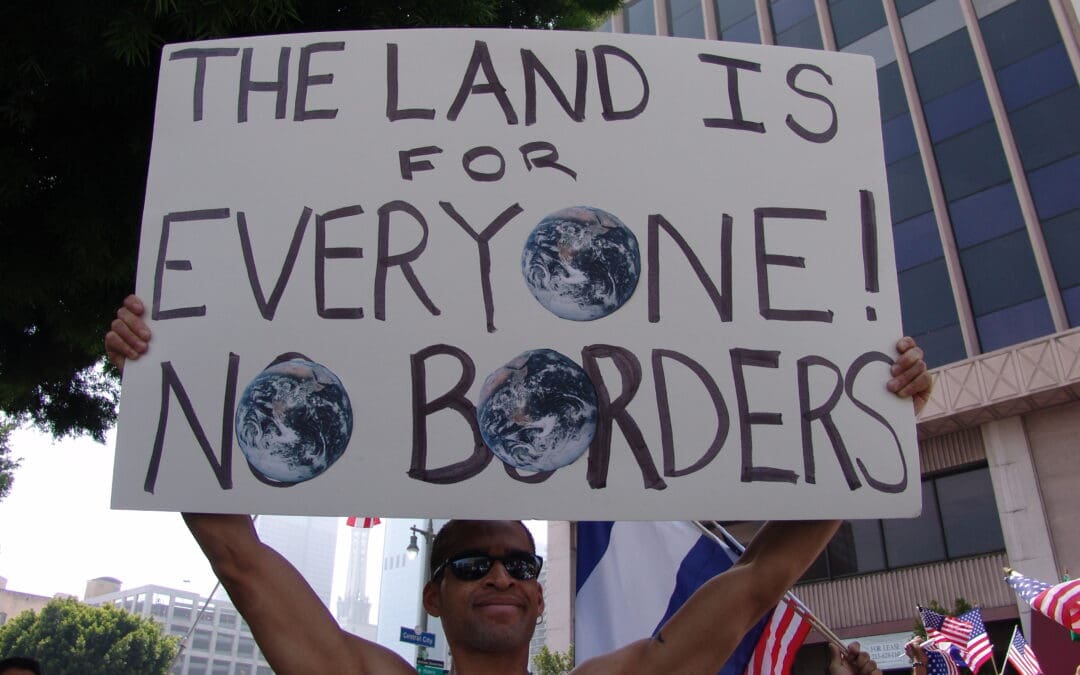
A few weeks ago, House Republicans passed a bill that, along with providing more funding for the Department of Homeland Security, could reverse Obama’s recent executive order providing amnesty for millions and lead to the deportation of many undocumented immigrants. Regardless of which side of the constitution you are on, this seems more like immigration refusal than reform. But do we even know what real immigration reform would look like?
To be honest, I don’t know much about immigration. While I live in California, which has more immigrants than any other state, I am not am immigrant. My parents are not immigrants. Sure, I know the rhetoric (from both sides of the political spectrum) about the problem of illegal immigration, but I never knew enough to feel comfortable talking about the issue, let alone analyzing policy. Recently, however, I’ve begun taking a class on immigration, and while (spoiler alert) I still don’t know much—we’ve only had three lectures—I wanted to write something applying what I’ve learned so far.
One more spoiler alert: there is too much to be said about immigration for any one blog post to do it justice. The point of this one is to give some quick facts, leave some food for thought, and call it a day. If you think I missed something, you’re probably right, but please don’t mistake my brevity for bias; I just want to get everyone thinking about an important issue, no matter which side you are on.
For a quick “immigration-for-dummies” version of Obama’s executive action last year, along with some other facts about immigration, I found this Washington Post article to be quite helpful. The main thing to remember is that the order gives amnesty to “undocumented parents of U.S. citizens and permanent residents who’ve resided in the country for at least five years,” while also expanding the qualifications for who can apply for a deportation deferral.
While for many this is a much better step forward than what the Republicans are offering, it isn’t reform either. “Reform” literally means “the improvement or amendment of what is wrong, corrupt, unsatisfactory, etc.” Though this temporary solution might be the right (and only) option right now, it doesn’t make any changes to the structural problems within the current system.
In fact, as Tina Griego argues, the current system actually encourages illegal immigration by setting up levels upon levels of bureaucracy that extend the “line” for coming into the country and give people more reasons than not to skip the process entirely.
Ours is a system of many legal detours, cul-de-sacs and dead-ends. A straight path is hard to come by.
Reform is important, then. But what are the right reforms to make?
Some say we should close our borders. Ignoring how hard this policy is in practice, let alone the moral arguments against it, let’s just focus on the economics. These close-border advocates often paint immigration as a drain on our resources – taking away jobs from citizens, using welfare and public assistance, etc. And yet, much research shows the benefit of immigration, legal or illegal: they take the jobs we don’t want, and sometimes even drive wage growth. As capitalist theory predicts, moreover, the market will adapt to this increase in labor and firms can grow. In fact, where crackdowns on immigration have been particularly tough, many employers have been struggling to find workers. For once, capitalism seems to be on the side of the proletariat.
Others say we should open our borders completely, simply on the grounds of morality. If we believe everyone to be equal and have the same rights, how can we restrict something like migration? How can we separate families? And if there are jobs to be filled, who’s to say which of us can take them? There is also the issue of refugees, which hasn’t been addressed in this post at all, but falls completely under this moral ground as well.
Within this vein of the argument, there are those who argue that borders are irrelevant – we are all global citizens, are we not? I can’t disagree with this point. So many of the world’s problems become everyone’s problems – climate change, terrorism, trade – regardless of territorial lines. Why is human movement thought to be immune to these trends?
I still don’t know what “immigration reform” is exactly. My economic side sees the benefit to a more efficient bureaucratic process that has some restrictions but still enables movement; my moral side sees the lack of humanity in blocking someone from a better life for any reason.
I still don’t know what “immigration reform” is, but I’ll let you know when I find out. (Hopefully, Congress beats me to it.)
by Jennifer Welden | Sep 3, 2014 | Global Justice, World Citizen
The Ice Bucket Challenge – a fundraising and awareness campaign for Amyotrophic Lateral Sclerosis (ALS) or “Lou Gehrig’s Disease” – has gained widespread popularity in the last month, with everyone from celebrities to fugitives posting videos of their participation. This campaign has not come without its controversies, however, with many all over the world criticizing the challenge. In my home state of California, which is in a state of emergency because of the current drought, the ice bucket challenge has left many conflicted as we struggle to save water. Residents of the drought-stricken Henan province in China have reacted similarly, staging a protest urging, “Henan, please say no to the Ice Bucket Challenge.”
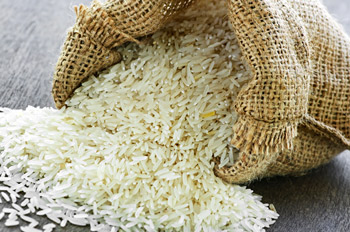
In India, where more than 100 million people lack access to clean drinking water, an alternative was created: the Rice Bucket Challenge. Started by 38-year-old journalist Manju Kalanidhi, this challenge asks people to donate a bucket of rice to a person in need. Then, just like the Ice Bucket Challenge, the participant snaps a photo, puts it on social media, and nominates friends to do the same.
Today, a third of India’s 1.2 billion people live on less than $1.25 USD a day; a kilogram of rice, or 2 pounds, costs between 80 cents and a dollar. A family of four goes through about 45 pounds of rice a month, according to Kalanidhi.
The Rice Bucket Challenge has blown up on social media, and Manju estimates “that at least 200 people have taken part and more than 4,000 pounds of rice have been donated.” The movement has also grown beyond India’s borders, with people all over the world beginning to take part in what is universally viewed as a more sustainable form of charity.
But what does the success of the Ice Bucket Challenge (which arguably has become more of a publicity stunt than an act of altruism), and now the Rice Bucket Challenge, say about us as a society? Is this just another example of people wanting to follow a trend, or is it a sign of a more charitable generation? Will future campaigns for charity only be successful if they give people the opportunity to document their good deeds?
Does an instagrammed bucket of rice taste better than a benevolent one?
by Jennifer Welden | Jul 23, 2014 | Climate Justice, World Citizen
Selfies, hashtags, and Priuses (or is it Prii?). What do these 3 things have in common? They all have been or still are trends.
Growing up in the Bay Area, I’ve seen first hand how going green – biking, composting, recycling, etc. – can be just as trendy as crop tops and iPhones. Now as a student at UC Berkeley, I’ve also seen the growing demand for organic food and fair-traded products, among other things; many people flock to buy these products though they remain relatively expensive. But are these products trendy because they are expensive or are they expensive because they are trendy?
It should be noted that the main reason these products remain so expensive is their quality. Organic food costs more to produce and fairly traded products pay local farmers a higher fee, which is then passed on to the consumer. That being said, there are also examples of inflation, such as when Whole Foods artificially inflated prices for a wide variety of items.
While many people choose to buy organic, fair trade, and other green products for the obvious environmental, health, and social reasons, the less stated truth is that many people also do it to look good. Social justice is itself a trend – just look at the rise of “sadvertising.” A study by Iman Naderi and David Stratton of Fairfield University in Connecticut found that narcissists tend to buy green products when they see it as beneficial to their image. For example, narcissists were more likely to buy a green laptop than a green desktop because the green laptop is “visible to their audience.” Moreover, they found that narcissists were also more likely to invest in a green product if it was more expensive than the regular alternative:
And the more expensive the backpack, the stronger the signal you can send that they’re doing something socially desirable. So there are three rules if you want to sell pro-green stuff to [a] narcissist. Sell the products in public. Make sure the products can be used in public. And make sure you mark up the price.
It seems the answer to the question, then, is that it’s probably a little bit of both. Sustainable products are initially more expensive because of the cost of production, but prices may be artificially inflated to capitalize on hype.
Though this trend of sustainability is a good thing, it’s plausible that high prices could keep many Americans from taking part. Is it possible to live sustainably without necessarily buying organic, fair trade, and/or other green products? It is, and in fact many of the necessary changes can take place without changing where you shop or how much you spend.
Affordable sustainability is possible in our favorite fast food restaurants. Dunkin’ Donuts recently announced its goal to use only 100% sustainable palm oil in making its donuts. Harvested mainly in Asia, palm oil production is a source of serious deforestation in Malaysia and Indonesia, threatening wildlife and leading to the release of carbon into the atmosphere. While it will be hard to lessen the use of palm oil – which appears in many things, from Oreos to laundry detergent – trying to find sustainable alternatives is a way to start. Moreover, making sustainable changes like this in products that are more financially accessible to a wide array of people will garner the biggest impact.
For those interested in fair trade, Starbucks has committed itself to selling fair-trade coffee; while this may not save many people money, it is saving socially conscious consumers from a change in routine.
The most important change, however, has nothing to do with which products we buy–whether fast food, organic, or fair trade–but how we utilize them. Food waste not only has an effect on climate change, but also on hunger. With the US, China and India collectively throwing out enough food each year to feed over 400 million people, about a third of all food grown around the world never getting eaten, and Americans alone wasting up to about 1,200 calories per person each day, many are pushing for more efficient consumption and disposal around the world.
In France, the grocery chain Intermarché started a campaign called “les fruits et legumes moches,” or “the inglorious fruits and vegetables.” Food waste is partly caused by discarding of “ugly” produce (pretty fruit is trendy too); the campaign, which marks produce down 30 percent along with some advertising, works to reverse this. If something similar were introduced in the US, the impact could be significant.
But it’s not just about what foods we buy; it’s also which ones we choose to dispose of. A study recently published in the journal Science found that not all calories are created equal, particularly when you take into account how each affects the global food chain. Discarding a pound of boneless beef, for example, effectively wastes 24 times more calories than discarding a pound of wheat because the beef also contains the calories in the corn that fed the cow. When it comes to addressing hunger, ecologist Paul West concludes:
At least in terms of calories per person, cutting food waste is more of an immediate opportunity to feed more people than increasing crop yields around the world.
Sometimes the most sustainable actions can be the most affordable. It’s up to us to make them trendy, too.
by CGS Blog Archive | Jul 17, 2014 | Global Cooperation, World Citizen
I never would have imagined that my 2010 summer in Egypt would change the trajectory of my life. However, my time there gave me critical exposure to social inequities in “Pre-Arab Spring” Cairo. It was there that I discovered my passion for social justice and the strength of global cooperation.
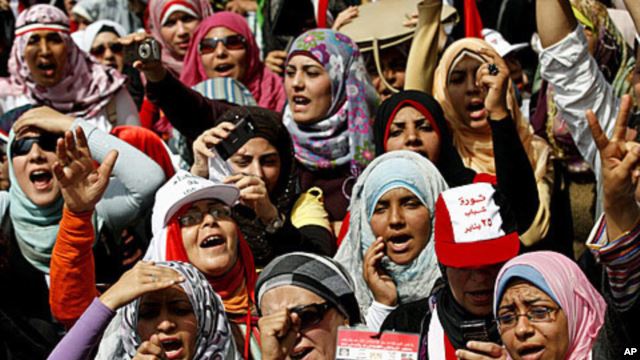
Six months later, it was at that same Tahrir Square that I passed every day in which thousands mobilized to demand change in what began the 25 January 2011 Revolution and Arab Spring of Egypt.
The truth is that young people around the world are becoming larger players in their societies. When we speak about global issues that we urge our international communities to address– such as poverty alleviation, women’s empowerment, access to education, and health equity–we cannot deny the role of young people in seeking change.
One of the biggest root issues that plague our global community is the lack of outlets that young people have to make their voice heard and create those changes. Local governments are not always doing the best job and aren’t holding themselves accountable.
As a country and government, we can help create outlets for young people to raise their voices globally. We must invest in local NGOs and help develop civic society so that young people have channels to properly voice their concerns and demand systemic reforms from their local institutions.
The Arab Spring is a prime example of how active our youth is; oftentimes youth will take to the streets if they feel that they are not being heard. Young people are interconnected, multilingual, and globalized. Before our global community can tackle any issue on a larger level, we must look at ourselves and ensure that we are investing in local, youth-driven initiatives for change towards issues related to health, education, and economic opportunity. Young people have answers, and they can be part of the solution.
I believe that the United States government can serve as an institution that supports the aspirations of people around the world who recognize the rights to a government and freedom of speech. This is one of the most sustainable ways to maximize prosperity and opportunity for people in the future. Creating partnerships with multilateral organizations will establish a new norm when combating issues on a global scale. Local initiatives that are already doing effective grassroots work must continue to invest in it.
History shows that political participation does exist, whether positive or negative, and youth are acting. If we can maximize their potential in a positive way by investing in local NGOs and civil society, then we are establishing channels for young people to be heard.
As a Pakistani Muslim woman, I am extremely passionate about girls’ education and access to reproductive and sexual health. However, I think that the most sustainable way to address these issues is to invest in locally driven initiatives to create systemic change.
As US citizens, we can act foremost by informing ourselves. We must strive to be religiously and culturally competent before we can advocate for any cause or change.
We, as an international community, must create a global ethic in which we all hold ourselves accountable to a standard. The world is suffering from injustices related to war; famine; genocide; and inequities in health, education, and the economy. We must invest in local communities and work alongside individuals to cultivate our shared values.
Building off of those shared values is the only sustainable way to create a peaceful and just global community. Only when we rise together in solidarity will our advocacy efforts take effect. Something as simple as a phone call to a legislator, signing an online petition, attending a Lobby Day on the Hill, or organizing a social justice initiative in our community can make a world of a difference.
by Kevin Burke | Mar 4, 2014 | Human Rights, World Citizen
What does it mean to be a global citizen?
A citizen of the world, or cosmopolitan, is someone who values the equality of all people regardless of where they’re born. Where the modern civil rights project has worked to provide for the civil, legal, and social equality of people regardless of race, sex, class, religion, sexual preference, disability, and more, a cosmopolitan wants to say that there’s another group of people who are just as equal as everyone else: all the people who live or were born outside the borders of their state. People aren’t morally responsible for the place in which they’re born any more than they’re responsible for their race, how tall they are, or whether they can jump up and down on one foot while singing “Row Your Boat.” We all belong to one vast community of humans in addition to each of the smaller communities we belong to, and that most populated community matters just as much as our families, neighborhoods, cities, provinces, and nations.
The central tension here, though, is between cosmopolitanism and nationalism, or in a multi-national state like the United States, as a tension between cosmopolitanism and patriotism. Rather than owing special respect to our fellow citizens in the nation-state, the cosmopolitan believes that moral worth belongs equally to all, regardless of nation, state, or ethnicity of origin. In global politics since the 17th century, the main unit of concern has been the nation-state, so saying that you care about individuals at the global level is somewhat radical.
Cosmopolitanism doesn’t require that you reject emotional ties to loved ones, to neighbors, or even to reject patriotism altogether. It just means that when it comes to considering the moral questions of public policy, you take into account the effect your actions and policies have on both the human beings inside your state and those outside it. If war is on the line, the life of a compatriot and the life of a foreigner are just as valuable. If considering a policy that will improve the lot of people within your own borders but impoverish those outside it, the policy will need to be rejected. If you’re building a factory that’s going to produce pollution that goes downwind into another country, the lives affected are just as valuable as if the pollution affected citizens of your own state instead.
What makes you a citizen of the world? Is it the way you act as a consumer, or the way you allocate your charitable giving? It’s those things, but it may also involve electing leaders in your political institutions who value humanity and who will work toward a just global order, who fight human rights abuses, or, even in local institutions like city and county offices, work for environmental sustainability and remember that your community is one of many in a vast, interconnected world.
And the government of the United States (or your country/state if you’re reading this from abroad) can also help you be a cosmopolitan, or it can at least act in cosmopolitan ways.
When states value cosmopolitanism, they respect the human rights of people at home and abroad. They avoid war and when they do engage in military action, it is limited and minimizes casualties to the full extent possible, both civilian and military, for both sides of the conflict, such that strategic aims are achieved with minimal loss of life. States and leaders who are acting like cosmopolitans seek to reduce global poverty, eliminate threats to global security, and seek equal representation in global forums for people of all national, ethnic, and regional backgrounds. States acting in a cosmopolitan way will be more likely to invest in and work with international and especially global institutions as these will provide opportunities for people to provide input into global problems and to seek redress regardless of their place of origin or the power of their state.
Whether international institutions can live up to being truly cosmopolitan is another matter entirely. Some institutions may serve just the interests of global elite despite allegedly having a global scope; some may have membership limited to states rather than actual people, thus preventing anything like a genuine global citizenship in which people can participate. Or they might be so hung up in international politics that it is difficult for them to provide justice where it is desperately needed. But for international institutions to be cosmopolitan, and to be worthy of your support as an individual and through the leverage of your state, they at least need to allow the participation of people from all over the world with a fair process for deciding who is included and who is excluded (it is possible and desirable, after all, that a person convicted of violating human rights would be excluded from an institution tasked with the preservation of human rights). If these institutions meet some guidelines, including more than this minimum perhaps, we can start to think of them as being worthy outlets for the cosmopolitan moral acts we want to undertake at either the personal or state level, and we can act collectively as a global polis, perhaps.
This, of course, is just a sketch of what it means to be a cosmopolitan or to use cosmopolitanism as a guideline in your moral outlook. I anticipate dealing with this more fully in future posts, with reference to current events.
But the main question for this post is: are you a global citizen? Do you think people in North Korea are worth just as much morally as people from Kansas? If they are, then how do you justify the great disparity in outcomes between someone born in Boston and someone born in Mogadishu? And what can we do to make it better?
The answers aren’t easy but the questions are worth asking.