by Anders Bakkethun | Aug 23, 2013 | Climate Justice, World Citizen
Climate change is scary right? Well it’s about to get scarier. The Intergovernmental Panel on Climate Change leaked a report that has five terrifying statements about how bad climate change really is. There is a silver lining though. NBC covered the report for 2 minutes and 59 seconds.
A draft copy of the Intergovernmental Panel on Climate Change’s 2013 Summary for Policymakers Report was leaked earlier this week and revealed the true extent of the changes to our environment. Of course the report is only a draft and subject to change, but here are some shocking facts it includes, as highlighted by Mother Jones:
- Ocean acidity is “virtually certain” to increase. Acidity threatens the survival of entire ecosystems, from Antarctic systems to many human food webs dependent on everything from oysters to salmon.
- We are on course to change the planet in a way unprecedented for hundreds or thousands of years. For such a conservative, nonpartisan, and well respected body as the IPCC to use such language is shocking and reflects how seriously they see the problem.
- The sea level could increase from 5 to 10 meters. The report says with “very high confidence” that if we exceed two degrees increase in temperature, we could seeradically higher oceans, submerged coastal cities – all in as little as a century.
- Rising sea levels implies a substantial melting of the Greenland ice sheet.
- Perhaps the worst news is that greenhouse gases already emitted will stay in the atmosphere for a millennia.
The panel, which consists of several hundred scientists, won the Nobel Peace prize in 2007 along with Al Gore. Summaries of its findings are published every five or six years and are largely considered the definitive voice on the risks of climate change. Hundreds of billions of dollars are spent to reduce greenhouse gases based on the group’s findings. Dr. Christopher B. Field of the Carnegie Institution for Science and on the panel (but not involved in the draft) posits, “I think that the I.P.C.C. has a tradition of being very conservative. They really want the story to be right.” Since they are so conservative and tend to only report the most substantiated findings on climate change every 5 years, they are well respected among governments and scientists alike.
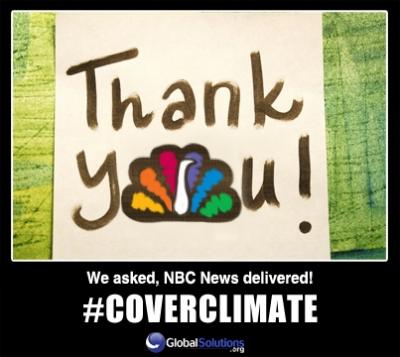
Following our #CoverClimate campaign, NBC produced a 3 minute segment on the leaked report. Network news listened and is covering climate and its effects on our environment and lives. Let’s keep the pressure up and let the media know what our priorities are – #CoverClimate
by Zoey Krulick | Jul 19, 2013 | Global Cooperation, World Citizen
What is citizenship? While Merriam Webster states that citizenship signifies the “status of being a citizen” or “membership in a community,” those definitions say little about what exactly citizenship connotes. As someone who has never traveled outside of the United States, my citizenship situation is unambiguous: I was born in the United States, I have lived here my entire life, and therefore I am a U.S. citizen. However, I have friends with dual citizenship, tri-citizenship, recent citizenship, or living in the U.S. without U.S. citizenship, so I know the situation is much more complicated in reality.
While I want to avoid making a judgment on the Edward Snowden situation in its entirety, I do think it suggests some interesting points about the nature of citizenship in today’s increasingly globalized world. Modern globalization sees the state and its sovereignty challenged by multiple factors: an increased role of multilateral institutions, intensified movements of people, the growth of international civil society, and the emergence of global cities.
Most of these changes stem from our ever-improving technology. For example, whereas in the past, an American businessman would conduct business over phone, perhaps making a trip every few months or so, it is now feasible for him to spend his weeks in Tokyo and his weekends with his family in Phoenix. This man could be a U.S. citizen, but actually spend more time in Japan. Part of the implications of reduced state sovereignty is that each individual state has less power over its members and the relationship of those members to other states. Because of this, the nature of citizenship itself is evolving.
Snowden’s position is an example of the problems of defining citizenship in this new global era. As professor and political writer Richard Falk explains, citizenship becomes salient when you don’t have one. This is the case with many refugees, including Snowden. While Snowden is technically still a U.S. citizen, he has had his passport revoked, effectively barring him from returning to the United States. Originally staked out in Hong Kong, he has since moved to Russia and is applying for temporary asylum there. He has also been offered political asylum in Venezuela, Bolivia and Ecuador, but has been unable to travel to those locations. Snowden, a U.S. citizen, is not allowed to live in the United States, yet could theoretically live in any of the four other countries.
So, I posit again, what is citizenship? If we use the definition of “membership in a community,” Snowden would clearly not have U.S. citizenship. He is no longer welcome in the American community. Technically, he is a “citizen” of Venezuela, Bolivia, and Ecuador because they have all welcomed him into their respective communities. Understandably, Snowden’s is a uniquely high profile case, but I think the uncertainties it brings up will only continue to expand. In an era when hopping on a plane to travel overseas is part of a daily routine for some, and the number of people living or traveling in many different countries continues to increase, I think we might need a new definition of citizenship that can keep up with globalization.
Perhaps the day is not too distant when everyone, not just members of GlobalSolutions.org, will simply consider themselves citizens of the world.
by Sean Langberg | Jul 17, 2012 | Human Rights, World Citizen
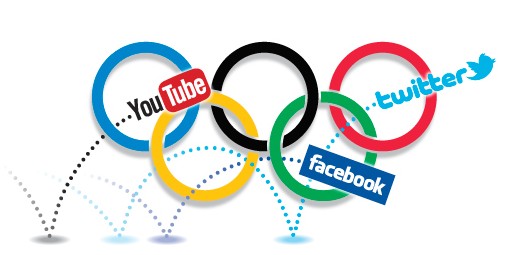
Social media is now a part of everyday life for millions of people across the world and even more so for young people. Organizers behind the 2012 Olympic Games in London aim to capture this momentum by integrating services like Facebook and Twitter into this summer’s games. There are already four official Twitter accounts associated with the event, a Youtube channel, Facebook page, Flickr slideshow, iPhone app, the list goes on and on. This led many new media experts to dub this year’s games the first “social Olympics.” In addition to the growth of social media accounts, including a 29,900% increase in Twitter profiles, the way people access the internet and social media sites in particular has also changed since the 2008 Beijing Games. Non-traditional computing devices such as smartphones now also permeate throughout technology markets. If you listen closely, you can probably hear the trademark iPhone text message noise in your office right now. Check out this infographic from iProspect about changing social media habits since 2008:
Social media is also taking on a larger role in the human rights advocacy community. From facilitating policy discussions to organizing “tweetups,” organizations are more fully utilizing the growing internet population. The idea of online activism received tremendous attention and criticism when San Diego-based Invisible Children released a short film called KONY 2012. The video primarily relied on IC’s extensive online network of activists to sign an online petition and buy “action kits” with posters, stickers, and other apparel. While garnering an unprecedented amount of views, a follow-up event dubbed “Cover the Night” was less successful because IC lacked a sufficient grassroots constituency. There are many lessons to be learned from the KONY2012 experiment, but most importantly it demonstrated the necessity of a robust offline community.
Recent protests in Sudan against Omar al-Bashir’s regime are effectively using social media to amplify their voices. The #SudanRevolts hashtag on Twitter, used by protest organizers and conflict analysts, successfully made the jump from an online phenomenon to an offline rallying cry. Now, many people outside of Sudan are aware of their efforts and are able to get instant updates about extrajudicial arrests and other injustices. Other uses of social media such as crowd-sourced conflict updates, civil society amplification, and inclusive policy discussions can be (and are currently) effective uses of social media used by organizations of all sizes. If used smartly and coupled with effective advocacy, the power of social media moving forward is #virtuallylimitless.
Join GlobalSolutions.org on our Twitter and Facebook for updates about the Olympics and other human rights issues.
by Julia Strasser | Jan 25, 2012 | Global Cooperation, World Citizen
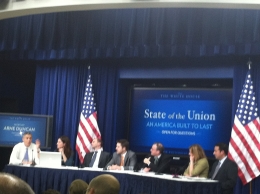
Just six months ago I was not a huge social media user, and never dreamed that Twitter would turn out to be my ticket to the White House. My coworker Julia Bunting and I were invited to watch the State of the Union address at the White House in a room full of advocacy tweeters, and then participated in a live discussion with senior Administration officials afterwards. The live “Tweet-Up” was an amazing experience and I wanted to give you a glimpse of the action.
We had to arrive at White House at 7:45 to allow for enough time to go through security checkpoints. It was an exciting feeling, to be inside a place that is so instrumental in history and current events. We received a mini-tour on the way to the South Court Auditorium, where the Tweet-Up was held. We got to see (from afar) the Vice President’s office, the Situation Room, and the garage that usually holds the motorcade. There was some construction going on inside, which made the whole place feel a bit more normal – even the President has to deal with the hassle of renovations apparently!
We were ushered into the Tweet-Up room, where all the social media reporting was taking place. Check out the pictures of us tweeting and the room set-up. During President Obama’s address, the “enhanced version” of the speech was playing on a large screen, which had statistics and funny graphics to supplement his speech. My favorite visual aid was the Pac-Man styled “maze of job training programs,” that President Obama pledged to get rid of. If you didn’t get a chance to see the enhanced version you can watch it here.
The energy in the room was very high during the address and tweeters were furiously typing away their comments and questions. Immediately after President Obama finished speaking, the lights came on and our room was live on the webcast! If you didn’t get a chance to tune in last night you can watch that webcast here – and look for Julia and me! You can also look back at our tweets from the evening using #SOTU and #WHchat, and let us know what you thought about the speech and Tweet-Up event.
Even though the State of the Union is over, the White House still is engaging with the public on the president’s priorities for this year. The White House will be taking questions via Twitter, Facebook and Goggle+ all week and has a number of live Q&As set up with their staff – check out the full schedule here. Ben Rhodes, Deputy National Security Advisor for Strategic Communications and Speechwriting will be answering your questions on Foreign Policy this Friday at 11 am, so make sure you send in some good ones (@CGS_DC @Whitehouse @WHLive #WHchat). Thank you Twitter for scoring me an invite to an amazing night at the White House!
Look for some more analysis of the State of the Union and the Tweet-Up on Julia B.’s blog.
by CGS Blog Archive | Dec 13, 2011 | Human Rights, World Citizen
By Tiffany Irene- GlobalSolutions.org- Field Organizer of TN
Last week, Nashville residents commemorated International Human Rights Day, celebrating the anniversary of the United Nation’s ratification of the Universal Declaration of Human Rights by honoring community members who dedicate their lives to humanitarian causes and reflecting on engagement activities of local human rights groups in the past year.
Fifteen of Nashville’s international advocacy organizations, including the My Global Voice program spearheaded by GlobalSolutions.org, provided educational materials to the over 150 attendees at the Downtown Nashville’s Library Auditorium, which included prominent community members and elected officials from all over Tennessee.
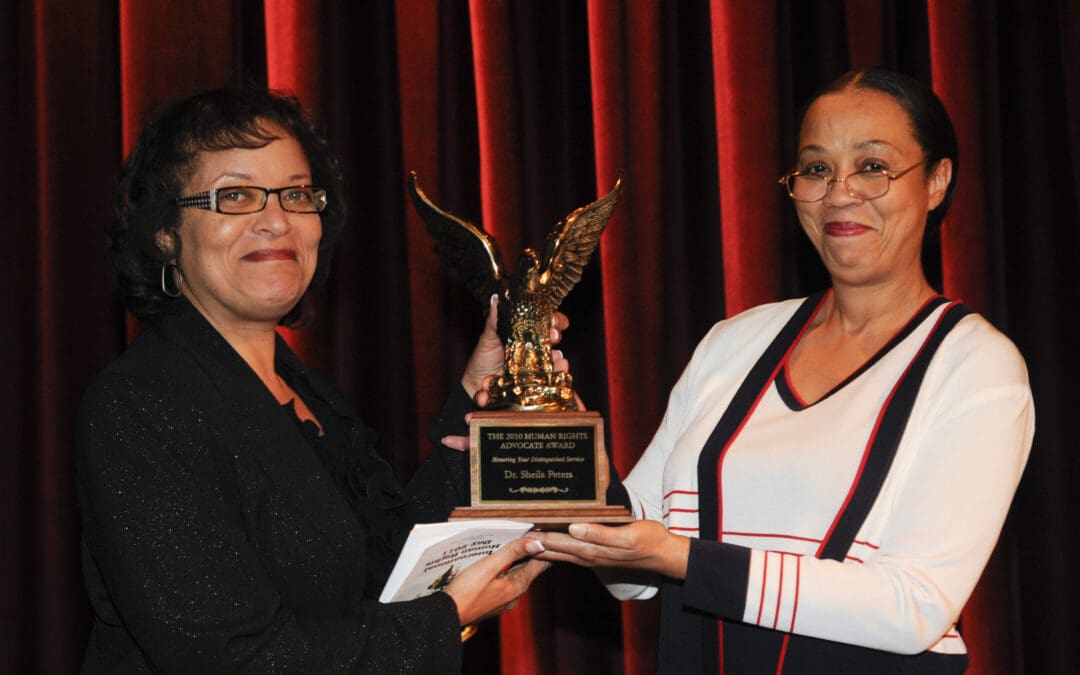
The celebration of Human Rights Day was built around an awards ceremony, which acknowledged the work of long-time human rights advocates in Nashville. Some of those recognized included Dr. Sheila Peters, a Fisk University professor who has spent decades in human rights advocacy and Mr. Jerry Lee, one of the original planners of Human Rights Day in Tennessee and a former AFL-CIO president. The event also honored “Rising Advocates,” recognizing influential young adults in the community for their efforts in raising awareness of humanitarian issues. Attendees were also treated to a lively performance from the Fisk Jubilee Singers.
But by far the most exciting part of the event was when Nashville Mayor Karl Dean declared a proclamation, making December 7 Human Rights Day in Nashville and Davidson County. GlobalSolutions.org was included prominently in the list of organizations displayed in the proclamation.
Human Rights Day is recognized worldwide as a day of unity, peace, and awareness of the importance of equality for all. But it’s important to remember that supporting human rights isn’t just an abstract concept, but in fact begins in your own backyard. Nashville’s celebration of Human Rights Day illustrated that there are members in my community that fight for peace and justice every day, and assures me that we aren’t alone in the struggle for unity.
For more information on Nashville’s Human Rights Day or information regarding next year’s Human Rights Day celebration, visit; http://nashvillehumanrights.org or email: tirene@myglobalvoice.org.
by Lauren Phelps | Jul 7, 2011 | Global Cooperation, World Citizen
President Wallace Loh of the University of Maryland is the latest of many university presidents with the prescience to see the future of higher education: global engagement. In his recent op-ed in the Baltimore Sun, he heralded the importance of students’ international exposure, not only so that these future leaders would be able to survive in an increasingly global economy, but because they would be the leaders addressing the worldwide challenges of energy, pandemics, and climate change.
“At the beginning of the 21st century, we can say that every person sent out from a university should be a person of the world as well as a person of his or her time.” -Wallace Loh, President of the University of Maryland
Loh’s new priorities for the university include programs that cross borders, fostering the spirit of global partnership and creating internationally aware students. However, even with the expansion of these programs, some students believe the expansion is only one tiny step in the right direction. Rob Riker, UMD student and son of CGS board member Jim Riker, knows that for Loh to achieve his dream of an “internationally networked knowledge center,” international engagement must not only be prioiritized but drastically expanded. Instead of simply focusing on international business or technology, Riker believes that “to be truly global…the scope of our global initiatives must include the social sciences, the arts, the humanities, public policy, journalism and so many other subjects…we cannot hope to become a global university unless the undertaking is expanded to include all of our disciplines, students and faculty.”
While Riker is correct, President Loh’s acknowledgement of the need for international engagement is certainly a step in the right direction, and it is a step being echoed at universities across the nation. While Loh emphasizes the importance of creating global citizens, presidents at institutions such as Brown, Harvard, and Columbia are doing the same, increasing funding for international partnerships and study programs. It’s not just the big dogs either; schools such as Butler, University of Iowa, and Georgia Tech are also putting dollars in the international coffer, investing in the futures of their students.
We can only hope that the actions of these university presidents will inspire other students and faculty across the nation to push for expanded global engagement. Hopefully these programs will even branch out beyond the typical realms of international study, so that one day all disciplines may be linked internationally. Until then, we applaud Loh for his efforts to create global citizens, and in turn, global solutions.
See Riker’s op-ed here
See Loh’s op-ed here