by Komal Hiranandani | Aug 13, 2009 | Peace & Disarmament, United Nations
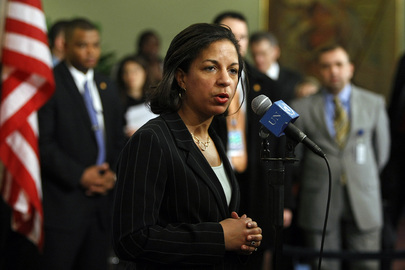
Yesterday the U.S. Permanent Representative to the United Nations, Susan Rice, delivered a strong and promising speech on the U.S.’s position towards the United Nations and global cooperation. Many of her statements reflected progress on issues that we at Citizens for Global Solutions have been working hard to further.
Rice commended U.N. operations that have helped to rebuild shattered societies, including missions in Haiti where deadly gangs have been defeated and local police have been trained, and missions in Congo that have allowed the first democratic elections in the country to be held. Promising to improve U.S. support to U.N. peacekeeping, Rice pledged more U.S. military staff officers, military observers, civilian police, and other civilian personnel.
Working towards nuclear non-proliferation, Rice recalled U.S. work to have the Security Council condemn North Korea’s nuclear weapons tests, and ongoing efforts to constructively engage Iran in the non-proliferation process. She also said that the U.S. is aiming to achieve a successful NPT [Non-Proliferation Treaty] Review Conference next year.
Referring to the U.S.’s new seat on the Human Rights Council- another action we have championed- Rice acknowledged the need for the U.S. to be involved with such institutions to increase their effectiveness and scope, and to help address their shortcomings.
Elaborating on other causes that we support, Rice said, “We no longer oppose mentions of
by Citizens for Global Solutions | Jul 27, 2009 | Global Justice, United Nations
The United Nations General Assembly’s debate on the Responsibility to Protect [R2P], held on July 23, showed conflicting beliefs about the role of nations intervening in cases of genocide, war crimes, and mass atrocities.
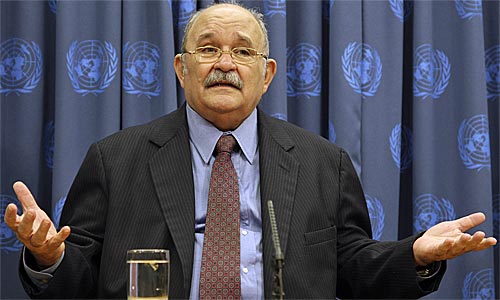
A week before the debate, Nicaraguan Reverend Miguel D’Escoto Brockmann, who is president of the UN General Assembly as well as a Catholic priest, issued a panel discussion and presented a position paper suggesting that R2P was essentially colonialism in disguise. “Recent and painful memories related to the legacy of colonialism give developing countries strong reasons to fear that laudable motives can end up being misused, once more, to justify arbitrary and selective interventions against weak states,” he said. “We must take into account the prevailing lack of trust from most of the developing countries when it comes to the use of force for humanitarian reasons.” Panelist Noam Chomsky reiterated this, saying that “virtually every use of force in international affairs has been justified in humanitarian terms, even the worst monsters.”
According to Reverend D’Escoto, the true means to end genocide and mass atrocities involve world finanical reform, Security Council reform, and following a lesson from Jesus – he said in his note that “Jesus’ emphasis on the redistribution of wealth to the poor and on nonviolence reinforces the right perspective on responsibility to protect.”
While Revered D’Escoto’s remarks elicited both support and shock from the Assembly, Secretary General Ban Ki-moon and his special adviser on R2P, Edward Luck, addressed the issues raised during his panel discussion. “The responsbility to protect does not alter the legal obligation of member states to refrain from the use of force except in conformity with the Charter. Rather it reinforces this obligation,” Luck quoted Ban as saying. Furthermore, in a speech he delivered on Tuesday before the debate, Ban urged member states to “resist those who try to change the subject or turn our common effort to curb the worst atrocities in human history into a struggle over ideology, geography, and economics.”
by Citizens for Global Solutions | Jul 24, 2009 | Global Justice, United Nations
On Thursday, July 23, the United Nations General Assembly gathered to debate the responsibility to protect, or R2P, which states that nations have an obligation to protect citizens from mass atrocities if their own government is unable or unwilling to do so. Although R2P was unanimously supported at the 2005 World Summit and the Security Council affirmed their agreement with R2P in 2006 by signing U.N. Security Council Resolution 1674, it remains a disputed issue.
Secretary General Ban Ki-moon presented a report on R2P before the 192 General Assembly members, which he said was based on three principles: state responsbility; international assistance and capacity-building; and timely and decisive response. While some nations express concerns about sovereignty and many developing countries show suspicions that R2P could be used to justify interventionism, Ban Ki-moon stressed the need “to situate the responsibility to protect squarely under the UN roof and within our Charter, where it belongs.” Gareth Evans, former Australian foreign minister and president emeritus of the International Crisis Group, added that R2P “is not the right of big states to anything, including throwing their weight around militarily, but the responsibility of all states to protect their own people from atrocity crimes, and to assist others to do so by all appropriate means.”
To read the remarks made at the debate by Ambassador Rosemary DiCarlo, U.S. Alternate Representative for Special Political Affairs, click here.
by Citizens for Global Solutions | Jul 23, 2009 | United Nations, World Federation
This month, Pope Benedict XVI released an encyclical letter, Caritas in Veritate, to bring Catholic social teaching up to date on ethical responsibilities. Among the gamut of issues he covered, he talked about the United Nations and the need for reform within it. Calling on the UN to pursue disarmament, food security and environmental conservation, the Pope expressed the need for a true world authority. He said:
“There is a strongly felt need… for a reform of the United Nations Organisation… so that the concept of the family of nations can acquire real teeth.”
Many have been caught up by this declaration, construing it to be a call for a single world government. In fact, the Pope clarifies that he promotes “dispersed political authority,” and wants development activities to be rooted Christian principles. Yet, his framework for such a global body reflects many noteworthy principles.
“Such an authority would need to… observe consistently the principles of… solidarity, to seek to establish the common good, and to make a commitment to securing authentic integral human development inspired by the values of charity in truth. Furthermore, such an authority would need to be… vested with the effective power to ensure security for all, regard for justice, and respect for rights… Without this, despite the great progress accomplished in various sectors, international law would risk being conditioned by the balance of power among the strongest nations.”
The message to give a voice to the smaller, suppressed people and nations of the world resounds strongly in his letter- a message we would all do good to learn from.
by Citizens for Global Solutions | Jul 10, 2009 | News, Peace & Disarmament, United Nations
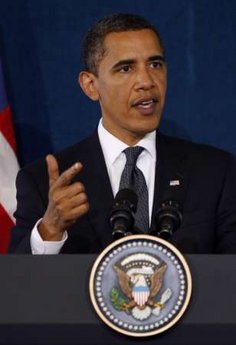
President Obama held a news conference on the morning of July 10, 2009, to wrap the three-day G-8 summit, held in the Italian city of L’Aquila. He began by discussing the importance of the summit, saying that “the challenges of our time threaten the peace and prosperity of every single nation, and no one nation can meet these challenges alone.” He went on to say that “we can let the stale debates and old disagreements of the past divide us, or we can recognize our shared interests and shared aspirations and work together to create a safer and cleaner and more prosperous world for future generations.”
Obama also summarized the outcome of the G-8 talks, saying that G-8 nations agreed to continue financial institutional reform and stimulus programs. He also said that the other G-8 members agreed to his strategy for nuclear non-proliferation, as outlined in his speech in Prague, which includes efforts to strengthen the Nuclear Non-Proliferation Treaty [NPT] and hold countries accountable to their commitments to arms control and disarmament. He also said that the G-8 nations agreed to reduce global emissions by 80% by 2050 and committed $20 billion to fund agricultural programs to help fight world hunger.
In response to questions, Obama spoke of the need to “reform and revitalize” the United Nations, as well as make international forums such as the G-8 open to other major powers like China, India, and Brazil. He said that “we’re trying to find the right shape that combines the efficiency and capacity for action with inclusiveness,” and that “the United States…is an absolutely committed partner to concerted international action, but we need to…make sure that they’re as productive as possible.”
Obama was also asked about his thoughts on the Responsibility to Protect. He noted that there are “circumstances in which…the need for international intervention becomes a moral imperative, the most obvious example being in a situation like Rwanda where genocide has occured.” He added that “my administration wants to…build up international norms, [and] put pressure – economic, diplomatic, et cetera – on nations that are not acting in accordance with universal values towards their citizens.”
To read the full transcript, click here.
by Lydia Dennett | Jun 30, 2009 | Global Cooperation, United Nations
Dr. John T. Oliver has published a new paper describing the history and benifits of the United Nations Convention on the Law of the Sea. He goes into great detail regarding why now is the time for the U.S. to ratify this law.
Oliver begins by presenting the history of the Law of the Sea, beginning with it’s first negotiations from 1973-1982. He also lays out the basic things that the convention covers such as rights and obligations of coastal states, scientific research, and protection of the marine environment. 157 states have signed the convention yet the US has not. At one point in 1994 the US came close to ratifying the Law of the Sea after President Reagan identified many provisions that needed to be changed. However the Senate has never had a full vote on the convention.
Oliver then goes on to discuss the many ways that the Law of Sea benefits the U.S. One of the biggest is National Security. This law would provide resources necessary for fighting the global war on terrorism and protecting our military power overseas. As this is one of the most important issues for the United States it is surprising that this law has not been ratified. Oliver also discusses environmental and economic advantages as well as the war on drugs. The Law of the Sea would give the US territorial claims to the 200 nautical miles on its coast which would help the control of drug trafficking.
While Oliver goes into great detail about the benefits of this law he also debunks some misconceptions about it. For instance the idea that this law would restrict our sea based military operations, yet this law would actually make available more space for the Coast Guard to run drills and operations
The UNCLOS ensures safe international trade, and keeps the peace between many countries. As a political leader, the US needs to ratify this law in order to enhance their leadership in maritime affairs. The US cannot afford to be left out of important talks and decisions any longer.
Take Action to support this Issue!


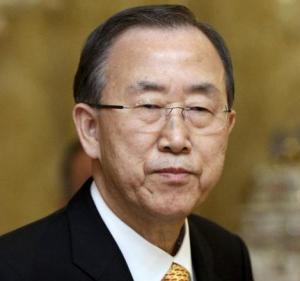 Secretary General Ban Ki-moon presented a report on R2P before the 192 General Assembly members, which he said was based on three principles: state responsbility; international assistance and capacity-building; and timely and decisive response. While some nations express concerns about sovereignty and many developing countries show suspicions that R2P could be used to justify interventionism, Ban Ki-moon stressed the need “to situate the responsibility to protect squarely under the UN roof and within our Charter, where it belongs.” Gareth Evans, former Australian foreign minister and president emeritus of the International Crisis Group, added that R2P “is not the right of big states to anything, including throwing their weight around militarily, but the responsibility of all states to protect their own people from atrocity crimes, and to assist others to do so by all appropriate means.”
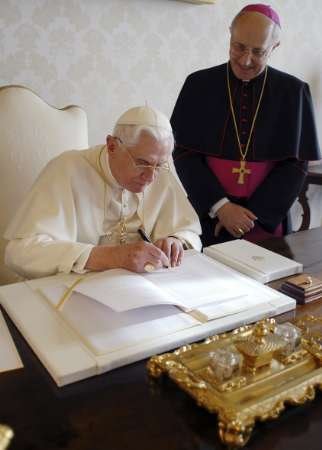 sue disarmament, food security and environmental conservation, the Pope expressed the need for a true world authority. He said: