by Vinay Orekondy | Sep 16, 2009 | Human Rights, News, United Nations
The United Nations General Assembly has voted to create a new women’s agency. Supporters say it is a breakthrough for women’s equality and rights, as four existing U.N. offices dealing with women’s affairs will be blended into a single body, and the agency will be headed by an undersecretary general, higher than any existing position dealing with women’s affairs. The unanimous vote followed three years of negotiations.
The resolution requested Secretary-General Ban Ki-moon to put together a comprehensive proposal that would outline the mission statement, organizational arrangements, funding and executive board of the new agency.
One of the leading offices dealing with gender issues, UNIFEM, put out a statement supporting the move, calling it “an important step towards addressing the gaps and challenges in the existing UN gender architecture.”
However advocacy group Oxfam, while saying the creation of the new agency was “potentially exciting”, said that it was “deplorable” that the Assembly had failed to give the new agency a clear mission.
by Citizens for Global Solutions | Sep 14, 2009 | News, Peace & Disarmament, United Nations
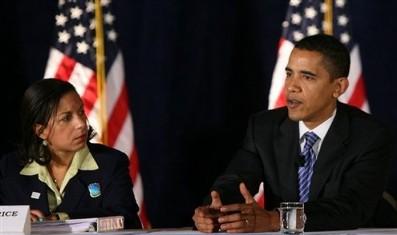
Following statements calling for nuclear non-proliferation by President Obama and U.S. Ambassador to the United Nations, Susan Rice, the Obama administration seems to be keeping its word by putting non-proliferation on the U.N.’s agenda. On September 11, the United States circulated a draft resolution aimed to prevent the spread of nuclear weapons, which it hopes will be adopted by the U.N. Security Council’s special session that will be presided by Obama on September 24.
Among other measures, the draft resolution calls for signatories of the Non-Proliferation Treaty (NPT) to negotiate nuclear arms reduction, deplores aggressive proliferation that threatens international security (implying North Korea and Iran), encourages other countries to join the NPT, welcomes steps taken to create nuclear-weapon-free zones as those championed by some Arab states (which would require Israel to dispose of all the nuclear weapons they may possess- Israel neither confirms nor denies having a nuclear stockpile), urges countries to join the Comprehensive Test Ban Treaty (CTBT), and supports the International Atomic Energy Agency (IAEA)- the nuclear watchdog in Vienna.
The democratic platform for the 2008 presidential election comprised a strong agenda for nuclear arms control including U.S. ratification of the CTBT, strengthening the IAEA, and adhering to the NPT. It is encouraging that the Obama adminstration is acting on these promises. The onus is now on U.N. Security Council members to adopt this resolution, thereby taking concrete steps to make our world peaceful and more secure.
Read more here
Act NOW to support nuclear non-proliferation treaties
by Citizens for Global Solutions | Sep 3, 2009 | Global Cooperation, United Nations
Chuck Hagel, a former Republican Senator, published an op-ed in the Washington Post that reflects many of the ideals that GlobalSolutions.org is working towards. He stresses the need for the United States to take a collaborative role in the global community, working together with other states to solve critical issues:
“We need a clearly defined strategy that accounts for the interconnectedness and the shared interests of all nations. Every great threat to the United States — whether economic, terrorism, proliferation of weapons of mass destruction, health pandemics, environmental degradation, energy, or water and food shortages — also threatens our global partners and rivals.”
The best way for the United States to combat these problems is to work alongside other nations, specifically through the United Nations. The U.N. provides a forum in which countries can build “coalitions of common interests”, so that they can work collectively to solve issues facing every nation in the world. These issues require such collaboration because they have such a wide reach, like climate change or the global food crisis, for example.
The United States cannot work as a lone force in the globalized world. Nations are interconnected in ways that were never imaginable years ago, and this requires a change in actions. The U.S. needs to use the U.N. as a tool to help solve the critical problems it is facing, along with the rest of the world.
by Vinay Orekondy | Sep 2, 2009 | News, Peace & Disarmament, United Nations
To aid the cause of nuclear disarmament, U.S. President Barack Obama will chair a United Nations Security Council meeting on September 24th. This comes after President Obama’s April speech in Prague, where he promised greater U.S. leadership on nuclear disarmament. Peter Weiss, president of the Lawyers’ Committee on Nuclear Policy (LCNP) said what he thought Obama will do at the meeting:
“announce the U.S. support of the renewal of the Strategic Arms Reduction Treaty (START); ratification of the Comprehensive Test Ban Treaty (CTBT); and negotiation of the Fissile Material Cut-off Treaty (FMCT). And here’s what I think he should do, in addition: Announce that, at the Nuclear Non-Proliferation Treaty (NPT) Review Conference in May next year, the U.S. will propose an international conference for the purpose of beginning serious work on a convention outlawing the possession of nuclear weapons and criminalizing their use.”
Without this second step, Weiss said, the first series of steps will not bring about the nuclear weapons free world which Obama spoke about in Prague.
The special session of the United Nations Security Council will also be attended by political leaders from the 14 other members states – including the other four permanent members of the Council, namely China, Britain, France and Russia.
The 10 non-permanent members in the United Nations Security Council, whose heads of state have been invited to participate, include Burkina Faso, Costa Rica, Croatia, Libya, Vietnam, Austria, Mexico, Japan, Turkey and Uganda.
by Citizens for Global Solutions | Aug 26, 2009 | Global Cooperation, News, United Nations
Recent negotiations on U.N. Security Council reform were filled with difficulty. The discussions revolve around three questions:
- Composition of the Security Council, including key issues of size, categories of membership and regional representation
- Relationship of the Security Council with the General Assembly
- The veto
On the first point – virtually all agree to the need to increase non-permanent membership; the disagreement is over whether the number of permanent members should be increased.
On the second point, there was difference between the Permanent 5 members and non-permanent members. The Permanent 5 emphasized the importance of staying true to the division of power outlined in the U.N. charter, while the non-permanent members emphasized the need to increase the powers of the General Assembly relative to the Security Council.
The third point is the most controversial. The veto is a power given to the five permanent members of the Security Council (Russia, France, U.K., U.S. and China) by the U.N. Charter to block any decision of the Security Council. So, even if 14 members of the Council supported a Resolution, one of the five would be able to vote against it and block the Resolution.
Some countries support the complete removal of the veto, a point not supported by the permanent five and other countries. Others propose expanding the number of permanent members and giving them a veto. Others still say that further expansion of the veto will only intensify the gridlock at the Security Council, and that any new permanent members should not be given veto powers.
The negotiations will undoubtedly continue for years to come, but ‘progress’ is being made in that less popular proposals are being eliminated from consideration.
The matter will be addressed at the upcoming 64th General Assembly session, where the “Question of equitable representation on and increase in the membership of the Security Council and related matters” is on their agenda.
by Citizens for Global Solutions | Aug 26, 2009 | Global Justice, United Nations
Led by the recently formed International NGO Coalition for the Responsibility to Protect of which GlobalSolutions.org is a part, efforts are underway at the United Nations to introduce a new legal mechanism to help prevent crimes against humanity.
Under international law, no country may intervene in another country’s internal matters. Also, the U.N. Security Council, the only U.N. body allowed to exercise military force, is not permitted to take actions for purely internal matters – its responsibility is solely for the restoration of international peace and security. Unfortunately, most genocides and crimes against humanity are internal matters, usually taking place in the context of a civil war between rival ethnic groups. The result is that any international intervention efforts to prevent the genocide are illegal under international law.
Past efforts at intervention, such as the NATO intervention in Kosovo in the late 90s, are widely considered illegal even if morally justified. This obviously discourages many countries from intervening.
The concept of ‘Responsibility to Protect’ places responsibility on states with regards to how they treat their citizens. If the concept is successfully introduced into international law, it would mean that countries no longer have free rein to treat their citizens as they like. It would mean they have a responsibility to protect their citizens against genocide, war crimes, crimes against humanity and ethnic cleansing. Should they fail in this responsibility (by being unwilling or unable to stop genocide, or perhaps even participating), then that responsibility would fall to the international community to protect the citizens of that country. This would make the legal case for intervention much stronger, and allow countries to make the choice to intervene more quickly.