by Veronica Glick | Feb 17, 2010 | Global Justice, News, United Nations
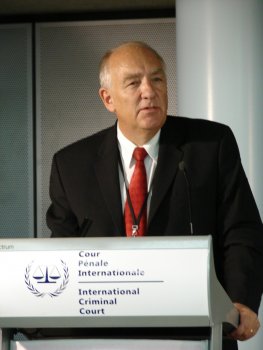
On February 11, 2010 U.S. Ambassador-at-Large for War Crimes Issues, Stephen Rapp, stated that the United States would assist in protecting witnesses that testify in International Criminal Court (ICC) proceedings. The ICC is carrying out preliminary examinations into the 2007-2008 post-election violence in Kenya. ICC judges are currently in the process of deciding whether Prosecutor Luis Moreno-Ocampo can proceed with an investigation into the violence that killed more than 1,000 people and left over 300,000 people displaced. As an ICC State Party, Kenya would be obliged to arrest any citizen indicted by the Court.
According to the Kenya National Commission on Human Rights more than 20 witnesses who testified during the 2008 government-led investigation into the violence went into hiding or exile after receiving death threats. Ambassador Rapp underlined a holistic approach to protecting witnesses: “The reform agenda, in particular in regard to police and the judiciary, [is] critical. Without that, you won’t have the confidence of witnesses to come forward.”
A further criminal justice issue in Kenya surrounds Felicien Kabuga. Kabuga is a fugitive who owned a Rwandan radio station which urged ethnic Hutu to kill ethnic Tutsi during the Rwandan genocide. The prosecutors at the International Criminal Tribunal on Rwanda have said that Kenyan officials have not done enough to assist in capturing him. Ambassador Rapp told reporters in Nairobi: “I’m here to convey the message that the level of cooperation has to dramatically improve . There is no question that Felicien Kabuga has been in Kenya.”
Ambassador Rapp emphasized the importance of bringing perpetrators of grave violence to justice: “If there is not accountability for the violence of 2007, 2008, when the election cycle returns in 2012 it could happen again, and it could be worse.The blood of Kenyans would be spilled, the hopes for the future would be dashed, and it would affect the entire region.”
Act Now in Support of the International Criminal Court
See Citizens for Global Solution’s interactive ICC flash module
by Anu Joshi | Jan 14, 2010 | Global Justice, United Nations
Thursday January 14th, 2010 – A message from Executive Vice President, Bob Enholm
Support the UN Central Emergency Response Fund:
Support the People of Haiti
The world is watching anxiously and with a heavy heart as the residents of Haiti struggle to cope in the aftermath of the 7.0 magnitude earthquake that rocked the island nation two days ago. At Citizens for Global Solutions our thoughts are with the people of Haiti including the citizens of Haiti, the families of Haitians across the world, and UN peacekeepers and other international staff who have suffered tremendous losses on the ground.
The Central Emergency Response Fund (CERF) is a program of the United Nations that allows for coordinated, immediate and intelligent relief services provided by agencies of the United Nations. The money given to the CERF, both by countries and individual donors, is available immediately for life-saving activities, and right now the people of Haiti need your support. Please click here to make a tax-deductible donation to the UN Central Emergency Response Fund to immediately support the United Nation’s humanitarian efforts.
When I joined Citizens for Global Solutions, it was with an unshakable faith in the ability of an empowered, supported United Nations to help create the world in which I want my daughters to grow up. I have no doubt that Citizens for Global Solutions is bringing us closer to that goal, as they did by supporting the CERF during the Reform the UN Campaign. If you believe, as I do, that Citizens for Global Solutions is a vital force for a more empowered UN please consider joining our movement toward global solutions.
Before joining Citizens for Global Solutions, I helped establish the CERF and served at the United Nations in New York as the first Chief of the CERF Secretariat in 2006. I saw first hand the value of the CERF in jump-starting life-saving humanitarian relief and in filling gaps in emergency humantarian response. In addressing the world’s most urgent crises, the CERF enables response that is fast, fair and cost-effective.
I am reaching out to you today to ask that you continue this important work and join me in helping the people of Haiti by making a tax-deductible contribution to the CERF today.
Sincerely,
Robert A. Enholm
Executive Vice President
P.S. We are working with our colleage organization, The UN Foundation, to raise these needed funds for the UN emergency efforts through the CERF. So please use this link to make a tax-deductible donation today.
Read More about the CERF
by Samantha Taylor | Nov 9, 2009 | Global Justice, United Nations
Next Tuesday, November 17th, marks the 8th annual meeting of the Assembly of States Parties for the ICC. Agenda items include planning for the 2010 Review Conference, electing judges and preparing the budget. It would be great if the United States would be able to attend as an observer the Assembly of States Parties and the 2010 Review Conference.
As a signatory of the Rome Statue, the United States had the right to send a representative to the Assembly of States Parties and it’s important that we do so. Our attendance wouldn’t imply that we plan on ratifying the Rome Statute, instead it would just indicate our willingness to be a good neighbor to the Court. Attendance at the Assembly will be the first step towards a cooperative future.
Furthermore, a United States representative at the Assembly would have the ability to propose items to the agenda for the 2010 Review Conference. This is a great opportunity to have our concerns addressed. A cooperative future will be even more difficult to achieve if we do not attend.
Yet, the administration is not required to notify the States Parties or the American public of its decision. That means that we will not know if we have representation, and are thus encouraging future cooperation with the ICC, until the Assembly of States Parties meeting begins and there is someone sitting behind the United States placard. Until then, it is just a waiting game.
by Citizens for Global Solutions | Oct 2, 2009 | Global Cooperation, United Nations
Last night, I attended a book launch hosted by the World Affairs Council. The book is entitled “Five to Rule Them All”, and is a historical narrative of the Security Council and in particular the relationship of the five permanent members (United Kingdom, France, Russia, United States and China).
He told us about the role that the Security Council has played over the years, in particular its role as a place for public diplomacy. In the early years of the Council, there had been significant media attention, and it would be a place for Cold War nations to shape world public opinion through public fights. In more recent years, the Security Council has taken on a more “behind closed doors” feel, with less media attention and with most agreements taking place before the public session.
Professor Bosco argued that while the Security Council has, and will probably continue to fail as a governance body to solve world problems, it has played an important role in bringing the major powers closer together. There were periods in world history where the major powers simply did not communicate at all. However for those seeking a solution to the world’s problems, Professor Bosco argued that the Security Council is not the place to look for answers, and that we should look to regional arrangements instead.
by Laura Meditz | Sep 21, 2009 | News, Peace & Disarmament, United Nations
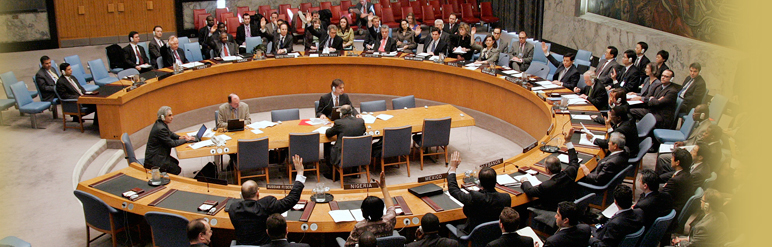
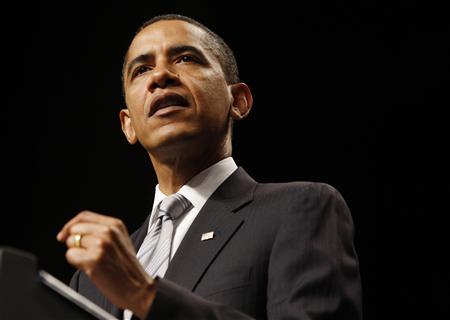
President Barack Obama will chair a Security Council meeting on September 24, 2009 regarding two of the United Nations’ most sensitive issues: nuclear nonproliferation and nuclear disarmament. This meeting will emphasize the threats posed by proliferation of nuclear weapons and steps to reduce these dangers. The Council is expected to adopt a draft resolution that deals with these issues on a broad scope. Steps that need to be taken include putting in to practice a test ban, strengthening verification of nuclear cuts, and making them irreversible so that low numbers are reached in order to assure that their only purpose is to prevent their use. The proposed resolution will not target any countries specifically; however, it will refer to past Security Council resolutions that imposed sanctions on Iran and North Korea for their nuclear activities.
This will be a test of leadership for President Obama on the world stage. It will be an important meeting to build momentum behind a very critical issue to not only the United States, but the rest of the world. Thursday’s meeting will underscore the importance of strengthening the Nuclear Nonproliferation Treaty at next year’s review conference. Since the Council has been split in the past on how to handle the nuclear activities of Iran and North Korea, it will be useful to keep the focus broad in order to build a unified message throughout the Security Council members.
You can watch the nuclear disarmament meeting live at the United Nations Webcast.
Act now to support nuclear nonproliferation.
by Citizens for Global Solutions | Sep 17, 2009 | Global Cooperation, United Nations
Today the House Subcommittee on International Organizations, Human Rights and Oversight held a hearing concerning U.N. Chapter VII Mandates and Resolutions on Iraq.
A Chapter VII mandate-created by the passage of a binding resolution-is a reference to Chapter VII of the U.N. Charter; this chapter gives the Security Council the power to create resolutions “with respect to threats to the peace, breaches of the peace, and acts of aggression.” These actions can involve anything, except the use of armed force. A Chapter VII mandate is a Council-imposed resolution on a country to carry-out and/or stop a certain action(s). A country under a Security Council resolution is required to obey under international law.
During the rule of Saddam Hussein, the U.N. Security Council had imposed a large number of mandates on Iraq. These included nuclear verification and control, controlling Iraqi oil revenues, and compensation to Kuwait for Iraq’s invasion in 1991. With Saddam’s regime now out of power, the hearing was concerned with the possibility of removing these mandates and the United States’ obligations under the Status of Forces Agreement (SOFA) to help Iraq transition from under these resolutions.
One of the central issues of the hearing was the Chapter VII mandate on Iraq to pay compensation to Kuwait for the damage incurred. The current government of Iraq would like the debt forgiven, on the grounds that this money can be used for economic development, and that the people of Iraq should not suffer for the actions of Saddam. Kuwait, however, has stood firm on insisting that the compensation be paid back in full. According to some reports, President Obama has agreed with the Iraqi position. The Ranking Republican Member of the Committee, Mr. Rohrabacher (R-CA), emphasized the massive damage done to Kuwait during the Gulf War and the importance of recognizing the legitimacy of the debt. One of the panelists, Professor Matheson from GW Law Faculty, suggested that a middle-ground solution be found, e.g. the compensation be paid as an investment into Kuwaiti infrastructure, so that Iraq could in fact profit from the arrangement.
This situation presents a complicated situation for Iraq and the United States collectively. Both must spend critical international political capital to get all P5 members of the Security Council to agree on new resolutions while there are still questions about the current Iraqi leadership.