by Rene Wadlow | Jun 24, 2015 | Global Justice
In what was almost a “Pinochet moment” in South Africa, the NGO Southern African Litigation Centre requested a South African court to serve two International Criminal Court (ICC) arrest warrants against President Omar al-Bashir of Sudan.
The South African Supreme Court issued an order that Bashir not leave the country until the court decided on the validity of the request. The president had been in Johannesburg, South Africa, to participate in the yearly Summit of the African Union (AU). He left on his governmental jet on June 13 before the Supreme Court was able to meet.
The ICC arrest warrants of 2009 contain seven charges, including crimes against humanity, murder, extermination, forcible transfer, torture, rape, attacks against civilian populations, and pillaging. The thorough examinations of the evidence presented by the then Chief Prosecutor of the ICC confirmed the statements, which NGOs, including the Association of World Citizens, had been making to the UN human rights bodies in Geneva since early 2004.
The charges against Bashir concern the conflict in Darfur which began in 2003, not the 1982-2005 civil war that led to the separation of South Sudan in 2011. This civil war was the second half of a conflict from 1954-1972, which ended with a ceasefire largely organized by the World Council of Churches.
Unfortunately, the 10 years of “non-war” were not used to deal with basic issues of state structure and the need for regional autonomy in light of cultural-ethnic differences. Thus in 1982, the civil war started up again, during which there were many violations of the laws of war (now usually called humanitarian law). The north-south civil war violations are not part of the ICC charges, which concern only the Darfur conflict.
It was only in 1916 during the First World War the English annexed Darfur to Sudan without asking either party if this union was desirable. When Sudan was granted independence in 1956, Darfur became politically as well as economically marginal. Darfur’s people have received less education, less health care, less development assistance and fewer government posts than any other region.
In 2000, Darfur’s political leadership and intellectuals met to draw up a “Black Book,” which detailed the region’s systematic under-representation in the national government. The ‘Black Book’ marked the start of a rapprochement between the Islamists and the secular radicals of Darfur, which took form three years later with the rise of the more secular Sudan Liberation Army (SLA) and the Islamist-leaning Justice and Equality Movement (JEM).
However, the “Black Book” led to no steps by the central government to increase the political and economic position of Darfur. This convinced some in Darfur that only violent action would bring about recognition and compromise as the war with the South had done.
After gathering weapons and soldiers, the SLA and JEM attacked and destroyed many of Sudan’s military planes based at El Fasher one night in 2003. The Sudan military lost in one night more planes than it has lost in 20 years of war against the South.
However, the central government’s “security elite” decided to use against Darfur techniques that had been used with some success against the South: to arm and to give free reign to militias and other irregular forces, including the Janjaweed—a collection of bandits, Chadian refugees, and remains of Libya’s Islamic Forces.
The Sudanese government gave these groups guns, uniforms, equipment and attack locations, but no regular pay. Thus the Janjaweed militias paid themselves by looting houses, crops, and livestock; taking slaves; and raping women and girls. Village after village was destroyed on the pretext that some of the villagers supported either the SLA or the JEM; crops were burned, water wells filled with sand. Anyone who could fled to Chad or to areas thought safer in Darfur. The current situation in Darfur remains complex and will be described in a later article.
The crimes the ICC investigated and issued the arrest warrants for concern the earlier 2004-2005 period. Although the SLA and the JEM have now divided into numerous armed groups, the violations of humanitarian law continue. There is a certain irony that the crimes cited by the ICC were less the work of the Sudanese Army—which is more or less under the command of Bashir—than the Janjaweed. However, as President, Bashir is responsible for all activities in Sudan.
For now, the ICC has dropped active involvement in the Bashir case due to the impossibility of an arrest and trial. This is not, as Bashir claimed, the same as being declared innocent. He had no doubt checked with the South African government what its policy would be in practice if he went there for the AU Summit. He must have been told that the police in South Africa would look the other way. The government did not expect NGO action or the Supreme Court order. But the South African police did turn a blind eye, and, like a thief in the night, Bashir returned to Sudan.

by Rene Wadlow | Jun 12, 2015 | Global Justice, Human Rights
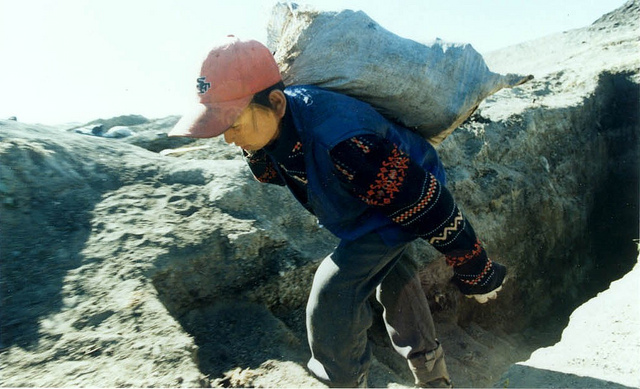
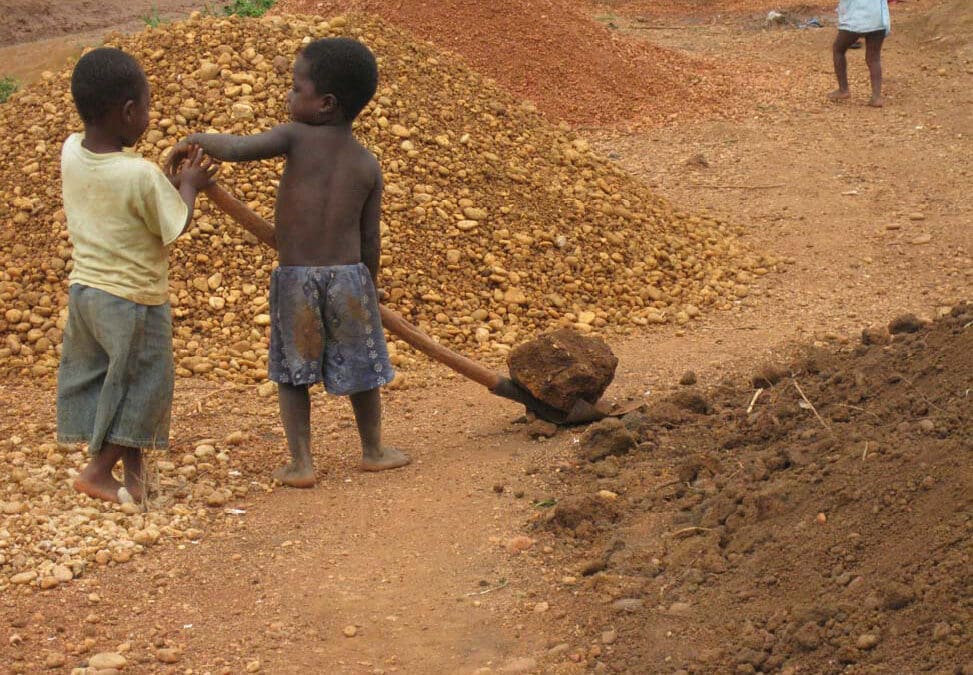
June 12 is a red-letter day on the UN agenda of events as the World Day Against Child Labor. It marks the June arrival in 1998 of hundreds of children in Geneva, part of the Global March against Child Labour that had crossed 100 countries to present their plight to the International Labour Organization (ILO).
“We are hurting, and you can help us,” was their message to the assembled International Labour Conference, which meets each June in Geneva. One year later, the ILO had drafted ILO Convention No. 182 on child labor, which 165 States have now ratified — the fastest ratification rate in the ILO’s history.
ILO Convention No.182 sets out in article 3 the worst forms of child labor to be banned:
-
all forms of slavery or practices similar to slavery, such as the sale and trafficking of children, debt bondage and serfdom and forced or compulsory labor, including forced or compulsory recruitment of children for use in armed conflict;
-
the use, procuring or offering of a child for prostitution, for the production of pornography or for pornographic performances;
-
the use, procuring or offering of a child for illicit activities, in particular for the production and trafficking of drugs as defined in the relevant international treaties;
-
work which, by its nature or the circumstances in which it is carried out, is likely to harm the health, safety or morals of children.
NGOs within the UN system as a whole played an important role in highlighting children working in circumstances that put their physical, mental and social development at risk, where they are exploited, mistreated and denied basic human rights. Today, millions of children, especially those living in extreme poverty, have no choice but to accept exploitive employment to ensure their own and their family’s survival. However, the ILO has often been an avenue for “unheard voices” to be heard, usually through the trade union representatives; less often, employer representatives have played a progressive role.
Child labor did not have a high profile on the long agenda of pressing labour issues until the end of the 1990s. At the start of the decade, there was only one full-time ILO staff member assigned to child labor issues; now there are 450, 90 percent of whom are in the field.
Child labor was often hidden behind the non-exploitive help children bring to family farms. However, such help often keeps children out of school and thus limits their opportunities to join the modern sector of the economy. The ILO estimates that of the 200 million child laborers in the world, some 70 percent are in agriculture, 10 percent in industry/mines, and the others in trade and services—often as domestics or street vendors in urban areas.
Globally, Asia accounts for the largest number of child workers—122 million; Sub-Saharan Africa, 50 million; and Latin America and the Caribbean, 6 million. Young people under 18 make up almost half of humanity, a half which is virtually powerless relative to the other half. To ensure the well-being of children and adolescents in light of this imbalance of power, we must identify attitudes and practices that cause invisibility.
Statistics are only one aspect of the story. It is important to look at what type of work is done and for whom. The image of the child helping his parents on the farm can hide widespread bonded labour in Asia. Children may be “farmed out” to others for repayment of a debt with interest. As the interest rates are too high, the debt is never paid off and “bonded labor” is another term for a form of slavery.
In Africa, children can live at great distances from their home, working for others with no family ties and thus no restraints on the demands for work. Girls are particularly disadvantaged, as they often undertake household chores following work in the fields. Schooling for such children can be non-existent or uneven at best. There is often a lack of rural schools and teachers. Rural school attendance is erratic even where children are not forced to work. Thus, there is a need for better coordination between resources and initiatives for rural education and the elimination of exploitive child labor.
There is still a long way to go to eliminate exploitive child labor. Much of it takes place in the non-formal sector of the economy, where there are no trade unions. Child labor is often related to conditions of extreme poverty and marginalization, including many tribal societies in Asia, the Roma in Europe, or migrant workers in general.
The task of both governments and NGOs is to understand better the scope of exploitive child labor, its causes, the possibility of short-term protections for children, and the longer-term efforts to overcome exclusion and poverty.
by Jaira Burke | Jun 3, 2015 | Global Justice, Human Rights
Do you know where the coffee used in your Venti Iced Caramel Macchiato you drink religiously comes from? How about the chocolate used in your favorite candy bar? While these products come to us fresh, well packaged, nutritional facts intact, what often treads behind these seemingly harmless treats is a silent trail of perpetual poverty, economic injustice, and slave labor.
It is estimated that there are approximately 21 million people enslaved throughout the world today. According to The United Nations Children’s Fund (UNICEF), an estimated 218 million children are engaged in labor globally, with 70% of child laborers working in agriculture.
In the Ivory Coast, which supplies more than 70 percent of the world’s cocoa, farmers earn less than $2 a day–well below poverty line. Despite the country’s natural resources and constant exportation of the good, Ivorian communities remain extremely poor, causing children to enter the workforce at dangerously young ages (working with hazardous tools such as Machetes) and leaving them especially vulnerable to becoming slave laborers.
Along Lake Volta in Ghana, children are sold into a life of forced labor and abuse. Forced to fish for 19-hour shifts with unequipped boats and one meal a day, children suffer harsh working conditions, and many drown from getting tangled underwater in nets cast out for fish.
Fair trade is a system of international trade that reinforces ethical standards and practices in the global marketplace for agricultural goods produced in developing communities. These practices include the maintenance of fair labor conditions and wages, the eradication of child labor, sustainable approaches to agriculture, and most importantly, promoting investment into the communities of the farmers that produce these goods. In short, the goal of fair trade is to “challenge conventional trading systems that condemn millions to poverty and hardship.” Fair Trade goods are certified to be produced ethically and responsibly, and benefit over 1.2 million families in 70 developing countries across Africa, Asia, and Latin America.
As consumers, it is paramount that we take the time to inform ourselves of the corporate negligence and essential apathy that make way for forced child and slave labor. Last week I talked about the adverse effects the TPP can have on already diminishing workers’ rights globally. As we’re beginning to see very clearly, free trade isn’t necessarily free, and it sure as hell isn’t fair!
With supply-chain slavery playing a huge role in many of the commodities we consume daily, here are a few steps you can take to support fair trade and encourage compassionate labor rights.
Be informed.
Know The Chain is a great resource that fosters transparency by allowing users to search supply chains and see if a specific company has a statement posted addressing SB-657 requirements and provides the direct link to the statement.
Shop Fair Trade.
Check out the links below for certified Free Trade retailers and brands!
http://fairtradeusa.org/products-partners
http://www.fairtrade.org.uk/en/buying-fairtrade
http://globalgoodspartners.org/
Spread the Word!
Although widespread, many people are unaware of the child and slave labor that drives many of our goods to our kitchen tables. You can help eradicate supply-chain slavery by simply telling a friend, coworker, or family member about this growing stigma and connect them to resources so they too may buy Fair Trade goods.
It’s time that we as a society turn away from the archaic notion that poverty is an inevitable by-product of capitalism. In this farmer-corporation dichotomy, the majority of the wealth is ripped from the exhausted hands of those suffering to create it. We observe low quality of life and ineffective schools concentrated in these communities, drastically limiting access to educational opportunities.
Unfair wages and working conditions perpetuate poverty, making way for cyclical oppression and leaving millions vulnerable to an array of social injustices, such as sex trafficking and other forms of slave labor. Economic justice is the foundation for developing a humane and sustainable global community. It’s time these communities reap the rewards of economic empowerment. By supporting Fair Trade certified goods, you can help loosen the grip of corporate power that seems to be strangling humanity.
by Jaira Burke | May 27, 2015 | Global Justice, Human Rights
On May 21, 2015, the urban streets of Chicago were engulfed in the cries of thousands, as workers, community supporters, and other stakeholders stood in solidarity at the headquarters of McDonald’s. Tears filled my eyes as I heard the overwhelming accounts of hundreds of workers, oppressed by income inequality, struggling for survival.
A young African American McDonald’s worker shared her emotionally driven story of struggling to make ends meet to support her Autistic son and pay for his medical expenses after the death of her husband. Another man, a Spanish immigrant who came to America with the idea of the “American Dream” and being able to support his family, shared his account of working for the mega corporation for over 20 years and never receiving a raise—not even once.
This was a follow up to #FightFor15 protests, which demanded an increase in wages and union representation, and took place in over 200 cities nationwide and 40 countries globally on April 15.
This scene is not an isolated occurrence, but represents an ongoing international effort to improve conditions for workers globally. Although #FightFor15 protests have moved the worker rights’ battle onto the front of the radar on American soil, the battle has a deep-rooted history in decades of labor violations at the profit-driven hands of multinational corporations.
In 2010, after continued pressure, multinational giant Nike paid approximately $2.5 million in legally owed severance to 1,800 Honduran workers. The brand also came under fire in the 1990s for alleged sweatshop conditions in Vietnam.
More recently, in 2013 United Students Against Sweatshops (USAS) got sporting apparel brand Adidas to settle after its refusal to pay $1.8 million in severance for 2,700 former Indonesian garment workers who also complained of inhumane working conditions.
The Institute for Global Labour and Human Rights conducted a 2013 study on conditions in Gap and Old Navy factories overseas and found:
- phony pay stubs
- make-believe 10-hour shifts
- pregnant women cheated of maternity benefits
- workers cheated of 15 percent of their overtime wages
Many workers who spoke up for their rights were threatened and forced to resign without pay.
Perhaps more unsettling than the initial shock of these occurrences is the fact that for many, this may be your first time ever hearing about them. One cannot deny that corporate power has grown prevalent domestically and abroad. This has prompted relentless work on the part of unions and organizations, increasing political will to address workers’ rights.
In Europe, union workers are accusing McDonalds of skipping out on European taxes, causing a PR nightmare; in August, the Brazilian Senate will hold a hearing on global labor abuses committed by McDonald’s against its workers. Earlier this year, unions in Brazil filed two lawsuits against McDonald’s for continued systemic abuses, including wage theft, time card fraud, denying employees regular schedules, and using underage workers.
But with the controversial Trans-Pacific Partnership (TPP) at hand, it appears that all of this work could be set back substantially. The TPP will increase trade and remove many hindrances deterring businesses from expanding and connecting with markets internationally. While this is a great opportunity for businesses, the TPP threatens workers’ rights across the globe. We observe time and time again the systemic marginalization of small communities and workers who are left vulnerable, with little to no representation in the name of “trade” and “economic opportunity.”
But not to worry: the Office of the United States Trade Representative website states, “The TPP will level the playing field for American workers and businesses by building strong and enforceable labor standards.” America to the rescue!
While that sounds nice, one cannot disregard the blatant correlation between outsourcing and labor abuse. Furthermore, the site includes no information on how exactly these “enforceable labor standards” are actually to be enforced. Principle four of the United Nations Global Compact labor principles states, “Businesses should uphold the elimination of all forms of forced and compulsory labour.” Yet harmful corporate practices continue to run rampant domestically and overseas.
Poverty wages, harsh work conditions, and forced overtime with no pay are all practices that corporations use to minimize the rights of workers and maximize their own profits. Human rights should take priority over fast-tracking the TPP. With workers still fighting for justice domestically, I have very little confidence that decision-makers will enforce labor standards and ensure justice overseas.
America has arguably some of the most comprehensive labor standards in the world. Yet still we observe rich and powerful corporations paying their workers poverty wages. It’s time big corporations stop profiting from exploitation, and more importantly, it’s time that key players stop avoiding the elephant in the room. Labor violations have gone unreported and unpunished for too long, and pretending they don’t exist will no longer be accepted as the status quo. If decision-makers don’t put workers’ rights on the agenda, the workers themselves will.
by Corrie Hulse | May 9, 2015 | Global Justice, Peace & Disarmament
Every year the second Saturday in May is recognized as World Fair Trade Day. This day highlights the importance of Fair Trade as we as a global community work together to address issues such as poverty, workers’ rights, human rights, and economic and environmental issues in the midst of international trade. Such issues have the most impact on those who have no seat at the table, no voice in international negotiations—our most vulnerable communities.
As many around the world celebrate today, twelve countries (Australia, Brunai, Canada, Chile, Japan, Malaysia, Mexico, New Zealand, Peru, Singapore, the United States and Vietnam) are in the process of trying to finalize the Trans-Pacific Partnership (TPP). The TPP is an international trade deal that will potentially impact 40 percent of the world’s GDP. That’s 26 percent of the world’s trade. It is aimed at broadening opportunity for trade throughout the Asia Pacific region. For Americans, this means enabling US businesses to expand abroad and international companies to bring their business to the US.
This deal has been in negotiations since 2005, having stalled multiple times throughout the years. There is now a push in Congress to pass legislation on Trade Promotion Authority (TPA)—what has come to be known as Fast-Track. Passing the Fast-Track legislation would give President Obama the legal authority to push the TPP through Congress, allowing members only a yes or no vote without the opportunity to add amendments to the deal.
Many in government are rightfully apprehensive about this agreement, specifically the Fast-Track legislation. Those such as Elizabeth Warren (D-Massachusetts) and Sherrod Brown (D-Ohio) are lambasting the deal for its secrecy, and for the effect it is bound to have on citizens and small businesses alike. Concern has been raised over the treatment of workers globally—such as in the case of Nike workers in Thailand—as well as the ability of international corporations to sue within international tribunals rather than US courts. This concern crosses party lines, with the majority of Democrats opposed to the deal.
These sort of concerns center on the ability of signatory nations to protect their workers, uphold standards of human rights and maintain control over the environmental impact of businesses. With such secrecy surrounding the TPP, it is no wonder many are worried these considerations are not being taken seriously.
Just this week Senator Warren sent out an email detailing the potential fallout from the Investor-State Dispute Settlement (ISDS), the policy within the TPP which would open the door to such lawsuits. She gave examples where global corporations took their cases to international courts in order to bypass regulations they felt interfered in their businesses practices. Among the examples given were a mining company that was denied permits to mine in Nova Scotia and a French company suing the Egyptian government after a raise in the country’s minimum wage.
Yet, as Katrina Vanden Heuvel explains,
the president’s foes aren’t arguing against globalization or trade; they are arguing that the rules that govern our trade and investment strategies have been rigged by global companies and banks to benefit themselves, not American workers.
International trade deals in and of themselves are not necessarily bad. In fact, there are many great things about international trade, including the ability of small businesses to find markets in far away countries and trade agreements that allow them to conduct successful business there. The problem arises when the impact on civilians and workers is overlooked as a result of the money to be made by big business.
This is not just a problem for American workers, though. This is a problem for workers in each of the twelve countries potentially signing on to this deal. Hannah Brennen and Burcu Kilic recently published an article detailing how the intellectual property stipulations in the TPP will very likely impact agriculture and food security, particularly in the poorer regions.
According to Brennan and Kilic,
new TPP language will prohibit farmers from saving and exchanging many varieties of seeds—a practice vital to the livelihood and welfare of traditional farming communities—and most likely increase multinational control of the farming industry in TPP nations.
In short, the real trouble for small farmers lies in patented plants formulas. This will open the door for major corporations to control the seed market, and thus what local farmers are able to grow, impacting food security and welfare for many. We have already had a taste of this in the US with corn and soybeans, as was highlighted in Michael Pollan’s The Omnivore’s Dilemma.
Additionally, there are also questions as to what happens to those living in the unincorporated territories of signatory governments. A prime example would be Rapa Nui, A territory of Chile known to most of the world as Easter Island. Should the TPP go through, the island would be subject to its regulations but have no legal recourse to fight for its own interests. A statement was issued to the United Nations in February 2014 highlighting the impact such a trade deal would have on the island. Easter Island is a major tourist destination, and as such is a lucrative site for global business.
According to the statement,
The TPP creates conditions for investors to build ports, expand the already large airport, and privatize our land and resources using Chilean military forces and kangaroo courts to protect their investments. The TPP and other State-driven investment agreements continue to alienate us from our indigenous lands by binding us to transnational corporations through agreements signed by the state of Chile, and not by the Rapa Nui people who are the proper rights-holders.
Imagine the fallout for local business and citizen welfare if an entire region was taken over by global corporations.
The concerns highlighted above are merely the tip of the iceberg. There is so much at stake in this deal, and so little is known by those with the most to lose. Thanks in part to Ron Wyden (D-Oregon), this is the first time in history human rights are being included in such a trade deal. Unfortunately, due to the secrecy surrounding the particulars of the deal, it is unclear what, if anything, that means.
The reality is that when deals involving this much money are pushed through with this much secrecy, it’s not the businesses who will pay the price. It’s the citizens who were not even given a chance to learn about the deal before it went through. It’s the small businesses that must now compete with global enterprise. It’s the small farmers who must now find new ways to farm. It’s the low-wage workers who will find themselves at the mercy of those who very likely do not have their best interests at heart.
As we recognize World Fair Trade Day, let’s take a moment to consider whether or not the TPP is in line with the spirit of Fair Trade. If it’s not, what’s our next step?
by Hiram Helfman | May 8, 2015 | Global Justice, Human Rights
After the official end of apartheid in the early 1990s, South Africa has been suffering from xenophobia. The root cause is a lack of economic opportunities and stifling poverty.
There have been quite a few xenophobic attacks against foreigners over the past few years in South Africa, including several cases in the last few months. South Africa currently has an official 25% unemployment rate (the same as in the United States at the height of the Great Depression), although the actual rate may be higher.
Many foreigners happen to be refugees fleeing conflict from other African countries and seeking to improve their livelihoods in South Africa.
Most of the perpetrators behind the xenophobic attacks reportedly live in shantytowns where unemployment rates soar around 40 percent. Residents often feel that the government is ignoring their needs.
Some of the worst of the worst violence occurred in the year 2008, particularly toward foreign nationals from the countries of Mozambique, Malawi, Somalia, and Zimbabwe, where nearly 60 people lost their lives and several more were injured.
This particular article written during the 2008 attacks shows the grossly misinformed, bigoted and hateful views that some South Africans hold toward foreigners from other African countries, especially the idea that foreigners want to take jobs and are responsible for most violent crimes toward South Africans.
Politicians in South Africa have used this xenophobic sentiment to rise to power. Michael Neocosmos says that even during the 1990s in the post-apartheid state, many South African politicians have used politics of fear toward immigrants to attain power, making xenophobic statements during their campaigns. And sadly, many political figures continue to do so today.
Despite the xenophobic violence, some South Africans living in shantytowns try to understand and realize that they are in the same predicament as most foreign nationals from other African countries. They also know that just kicking immigrants out of South Africa is not going to improve their lives.
In an interview with The Christian Science Monitor, Elvis Pretorius, a construction worker who lives in a rundown suburb called Actonville situated around some factories in Johannesburg said, “There are too many foreigners working here, but we can’t just throw them out. They’re only looking for money like we are.”
Some people living in shantyvilles have formed groups against violence and xenophobia. One of them is called Abahlali baseMjondolo, established by residents from the Kennedy Road Informal Settlement in Durban. This group has sought to promote understanding toward migrants and the need to work together to improve overall welfare and prosperity for all, both within South Africa and abroad.
Just like Nelson Mandela worked with people of Dutch descent to end apartheid and create a budding democratic South Africa, the people of South Africa (both nationals and residents from other countries) must work together to improve quality of life and standard of living. This is what all South African politicians should be doing instead of stoking hate and bigotry to gain power and influence. Hate and bigotry will not make poverty go away—they may even exacerbate it.
Many foreign nationals, especially those from other African countries, employ South Africans in their businesses, improving each other’s quality of life. Africans have to help out fellow Africans.
The case of South Africa shows what can happen when dire economic circumstances and bigotry stoked by politicians combine. Around the world, people need to continue working at defeating hate and improving economic prospects for their communities. When basic needs are met, it becomes easier for people to get along with each other both locally and abroad.