by Jennifer Welden | May 4, 2015 | Global Justice, Human Rights
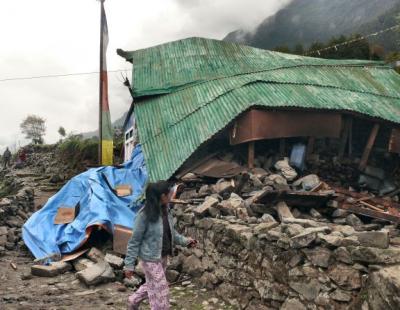
On April 25th, a devastating earthquake hit Kathmandu, Nepal, killing over 4,000 people. As many around the world respond to the immediate aftermath, others look toward the future: how will Nepal rebuild? Financial aid is obviously needed; India is leading a massive aid effort along with other countries, while the US has already pledged $10 million. But the country will also need physical support. Who should provide it?
In the aftermath of the earthquake that hit Haiti in 2010, the country was flooded with untrained volunteers working with various NGOs. But while their hearts were in the right place, many of these good Samaritans did more harm than good. As Claire Bennett notes:
Ragtag brigades of well-intentioned do-gooders flooded the country…all clambering over one another looking for a way to make their mark and do good, but lacking either the skills or coordination to have an impact…. There were even reports of teams of doctors who arrived to help but were unable to feed themselves. This wave of unsolicited and poorly planned shipments of untrained people and donated goods was dubbed by some humanitarians “the second disaster.”
With this in mind, many are urging those looking to support Nepal not to fly to Kathmandu and repeat the mistakes of Haiti. Nepal does not need waves of untrained aid workers taking jobs from locals who desperately need them and further clogging the “one international airport for the entire country, which has itself sustained damage.” While there are definitely valid arguments against the efficiency of only sending financial support in the long term, it may be the most needed and effective form of aid in the short term.
But this issue gets at a larger debate about the merits of “voluntourism,” the growing trend of traveling to volunteer abroad, rather than simply being a tourist or volunteering at home. While it shows the growing compassion of many in the first world, others question who really benefits from these trips. Do locals benefit from untrained workers who leave as quickly as they appear? Do students benefit by getting an extra bullet point for their resumes? Do other participants get the satisfaction of thinking they’ve done good without really doing anything? Or is it really the various NGOs and other organizations that profit financially by facilitating these excursions? After all, the industry is thought to generate around $2 billion every year.
Among those who feel voluntourism has negative consequences are the minds behind the “End Humanitarian Douchery campaign,” which seeks to “crack down on irresponsible voluntourism by spreading the word about what separates a good placement from a bad placement,” while also encouraging debate via social media using #endhumanitariandouchery. Overall, it prompts many young potential volunteers to really research the organization they are working with and question what impact their trip would have; the campaign suggests that a “good way of thinking about this is asking yourself: am I qualified to perform these tasks at home? If not, then you probably should not be doing them abroad.”
And yet there are those that would argue voluntourism shouldn’t be demonized. Isn’t some service better than none? Isn’t exposure to different cultures and living standards important for those privileged enough to be born in the West?
Arguably, both these things are true. But the more critical issue is the long-term impact that these interactions have on the communities being helped. While I won’t doubt the motives of “voluntourists,” I do doubt the merits of this industry as a mode of sustainable development. I’d like to think that there are other ways to actively support a place – especially in this era of globalization and technology – that don’t involve a plane ride.
My thoughts and prayers go out to all affected by this tragic disaster. If you would like to donate to the relief effort, here is a list of various organizations, as well as some tips for making sure your donation is really effective.
by Hiram Helfman | Apr 17, 2015 | Global Justice, Human Rights
Citizens’ voicing dissent through social media as well as the Communist Party’s efforts to quell speech it deems a threat to its rule is nothing new in China.
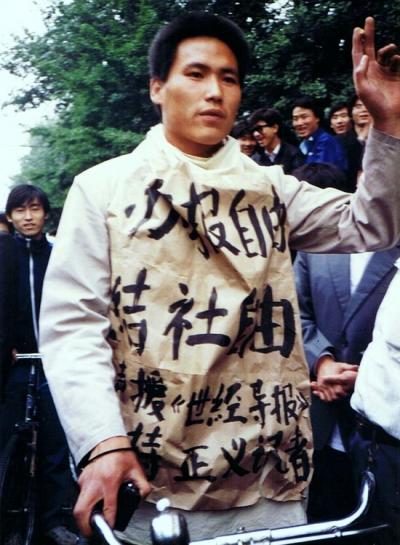
In the late 1970s, at a wall near Tiananmen Square in Beijing—which would become known as the Xidan Democracy Wall or simply Democracy Wall—people would voice their grievances and yearnings for change (See Deng Xiaoping and the Transformation of China).
It was used like a bulletin board where people posted banners, essays, poems, and other writings on various subjects, including but not limited to issues on economics and politics.
Deng Xiaoping even tolerated it for a while, as he didn’t want to become as rigid as Mao Zedong was and let innovative thinking and economic growth stagnate as it did during the Cultural Revolution (1965-1968). He also believed that people had the right to vent. But as the messages posted on the Wall became more and more anti-Party, especially after Wei Jingshing posted an essay calling for democracy as the Fifth Modernization,* Deng and the Party started clamping down. The postings were moved elsewhere, and people had to pay or get permission from their employer to post something on the wall.
To prevent the Communist Party from losing its monopoly on political power and to prevent the chaos that occurred during the Cultural Revolution, Deng set forth Four Cardinal Principles in March 1979 that established limits on speech and expression. These four principles called for Chinese citizens to uphold: 1) the socialist road; 2) the dictatorship of the proletariat (workers); 3) the Communist Party’s leadership; and 4) Marxism-Leninism and Mao Zedong Thought.
It would be a decade before the violence against protesters at Tiananmen Square occurred, quashing the hopes that many people inside and outside of China had about the formation of a more liberal form of governance.
When Xi Jinping became President in 2013, many of China’s politically liberal citizens were hoping that he’d allow greater freedom of speech and expression, continuing in the vein of his late father, Xi Zhongxun. Instead, Xi began his tenure with crackdowns on speech and expression, not only in the University setting, but also over the internet.
With advances and diversification of websites and applications on the World Wide Web come advances in methods used to censor content. The Chinese Communist Party is able to crack down on, delete, or block access to internet content deemed subversive. Chinese authorities regularly block searches and access to websites with blacklisted keywords, and it’s often difficult to search for material from foreign governments and news sources.
Authorities also monitor social media websites such as Weibos (microblogs equivalent to Twitter) for subversive content. In the name of preventing the spread of false information, China has also required bloggers and other social media users to register on sites using their real names. The obvious purpose is to keep an iron grip on political speech.
China also has been shutting down Virtual Private Networks (VPNs) that have allowed Chinese people and expatriates from other countries living in China to get around most of the firewalls set up by authorities to block access to internet information the Party and Government don’t want people to see. People have also used these VPNs to access sites such as Facebook.
In the name of preserving national stability and to maintain its hold on power, the world can expect China’s Communist Party to adapt to changes in technology to suppress dissent for years to come. But at the same time, many people in China will still yearn for progressive change.
*For more information about the Four Modernizations, go to: http://w3.pku.edu.cn/academic/dxp/pdf/ljk.pdf
by Jennifer Welden | Apr 13, 2015 | Global Justice, Human Rights
A few weeks ago, my professor did something I’m not used to witnessing in liberal Berkeley, California: he made a sexist comment. Discussing Chinese military expansion at length, and feeling the lack of energy in the room, he tried (and failed) to lighten the mood with a joke: “I’m sure the women are bored by this, they’d rather I go back to talking about Hello Kitty.”
My jaw dropped only slightly further than yours.
It’s that not that I am so naïve as to think sexism is dead, I had just never witnessed it so blatantly and so close to home (my very progressive, liberal home). Growing up, I was blessed to be surrounded by the image of equality: all my class rooms were more or less 50% girls, I’ve always had female state senators representing me, and both my parents have the same graduate degree. In my eyes, my corner of the world appeared to be equal.
But numbers can be deceiving. After all, the room to which my professor made his “joke” was over 50% women; and yet, sexism was still 100% there.
This is exactly the point being made by Andrea Cornwall, a professor of anthropology and development at the University of Sussex: a focus on improving the numbers often overlooks and inhibits reducing the stereotypes and institutional standards that created gender inequality in the first place. As she eloquently argues:
…while the push to fulfill the numerical targets set by the MDGs gets billions of dollars, the transformational work of women’s organisations is often absent from decision-making tables and starved of funds…the development industry has entrenched tired and limiting stereotypes and left untouched the deep structures of privilege and power.
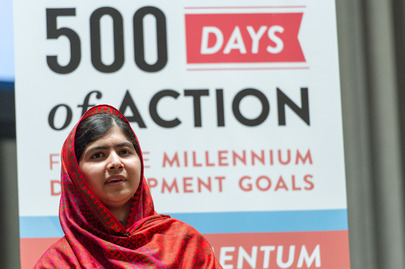
And for the most part, achieving “numerical targets” is all the World Bank’s Millennial Development Goals have sought to do. Millennium Development Goal #3 (MDG3) “has one target: the elimination of gender disparity in primary, secondary and tertiary education by 2015…progress on the goal is tracked by the ratio of girls to boys in class, the share of women in paid employment in sectors other than agriculture, and the proportion of female MPs in national parliaments.” While increasing numbers is undoubtedly a necessary step toward gender equality, this goal failed to address about every other issue needed to reach true gender equality, namely eliminating violence against women, increasing access to assets and resources (such as land), and ending discriminatory laws and constitutions, among many others.
Moving forward, the Sustainable Development Goals have the opportunity to build on the numerical successes of the MDGs. Some of these goals’ “proposed targets include ending violence, eliminating harmful practices, recognising the value of unpaid care, ensuring that women have full participation – and equal opportunities – in decision-making, and calling for reforms to give women equal access to economic resources.”
Yet, changing these embedded structures of female inferiority is not easy; even in the progressive halls of UC Berkeley, remnants of gender inequality still remain. Part of the issue is time – many of these ideas are ingrained in our cultures, religions, and societies. But removing these ideas is also a matter of effort. What “effort” looks like exactly, however, may differ in certain countries. As I noted in a past blog post, one form of “effort” is through education and economic improvements, in which case numerical targets make sense. But yet another form of “effort” is more localized and social: creating networks of support for women that give them the tools to succeed, in spite of structural barriers.
Take Guliaim Aiylchy, a native of Kyrgyzstan who only employs women at her café and bar. Bemoaning the seeming reversal of womens’ status with the resurgence of the hijab (though it should be noted the hijab is not always a symbol of male dominance), Aiylchy seeks “to support women and fight from the inside.” Maybe the first step then is individual: personally supporting gender equality even if all you can do is speak out against those stereotypes that inhibit it. In the aftermath of the “joke”, I was pleased by the passionate and allied responses from both female and male classmates; if only it was this way everywhere else.
On the Guardian’s list of 15 achievements by MDG3, only 4 were regarding changes in laws that effect gender equality. While the other numerical achievements are significant, I hope to live in the world where our successes are measured not only by a number on a page, but also by the quality of our experiences.
by Hiram Helfman | Mar 27, 2015 | Global Justice, Human Rights
In my previous blog, I mentioned examples of interfaith and intercultural dialogue going on in Europe and emphasized the need for expansion of such efforts and the need for the world public to be more informed about them. In this blog, I will focus on intervention for youth considered to be greatly at risk of going to the religious extreme.
Bishop Michel Dubost (Head of French Bishops Council for Interfaith Relations), says that lots of immigrants, especially teenagers, don’t feel connected with society in France. This is partly because they don’t have roots in French society and don’t have an elder to talk to about their heritage, and this makes them easily influenced by extremists. This is true in Germany as well, where many people (both Muslim and non-Muslim alike) believe that one can’t be German and Muslim at the same time. Environments like these create the conditions for extremist yearning among youth to fester in a cycle of hostility between those who perceive other groups as being different.
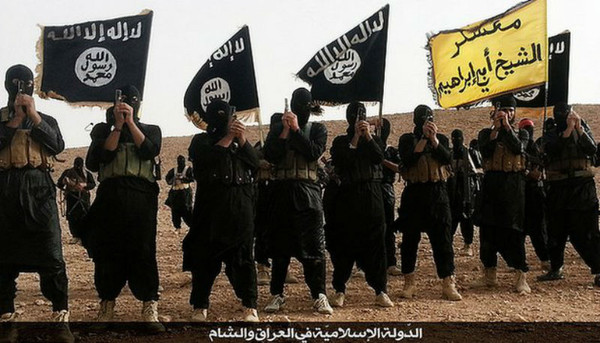
The place where disaffected youth tend to become influenced by extremists is usually over the internet via social media sites, not in a mosque. In Europe, certain nongovernmental organizations (NGOs) seek to intervene when they notice young people accessing extremist websites.
Some groups like Against Violent Extremism (AVE), based in London and run by Ross Frenett, tracks people who search for and click on links for extremist websites and seeks to intervene with internet ad space to send messages and turn people away from extremism. In Germany, a group called the Violence Prevention Network (VPN), which has worked in the past and still works to turn young Neo-Nazi’s away from the fascist movement, particularly after the reunification of East and West Germany, also works with Muslim youth considered at risk of joining extremist movements.
(The video in this post is no longer available.)
(Courtesy of RTQuestionMore (UK) [April 29, 2013] Interview with Ross Frenett of Against Violent Extremism (AVE))
In France, some social behavioral experts look for strained or broken family and friend relationships, spending lots of time on the internet (particularly looking at extremist websites), a change to a halal diet (after previously eating non-halal foods), and a change in dress style as precursors to extremism.
If parents, friends, and teachers are concerned, perhaps youth who are becoming more religious could be taught that becoming more religious is okay and that they should seek to maintain positive relationships with their families and friends. At the same time, these youth also need to learn that joining or supporting extremist movements or engaging in extremist behavior and action is not all right.
Change of diet and dress should not in and of themselves be considered definitive signs of extremist influence, as many people around the world who devote themselves more to their religion tend to adhere to the dietary and modesty codes without engaging in or supporting violence in the name of their faith.
Europe is becoming more multicultural and multi-religious. Some Europeans want to maintain a sense of cultural homogeny, which never really existed in the first place. Many European countries have had different cultural groups living in them such as Jewish people, albeit these people were marginalized throughout most of Europe’s history.
People need to learn how to get along with each other, to respect each other’s innocuous religious or nonreligious cultural expression (like diet and clothing style), and to learn how to differentiate between this and extremism. In Europe, Muslims and non-Muslims, religious and nonreligious people, need to learn to live in peace and not feel threatened by one another. They must learn to appreciate the contributions to society that everyone, regardless of identity, can give. And all this begins at a young age.
by Kevin Burke | Mar 23, 2015 | Global Justice, Human Rights
This March marks four years since the beginning of the Syrian civil war.
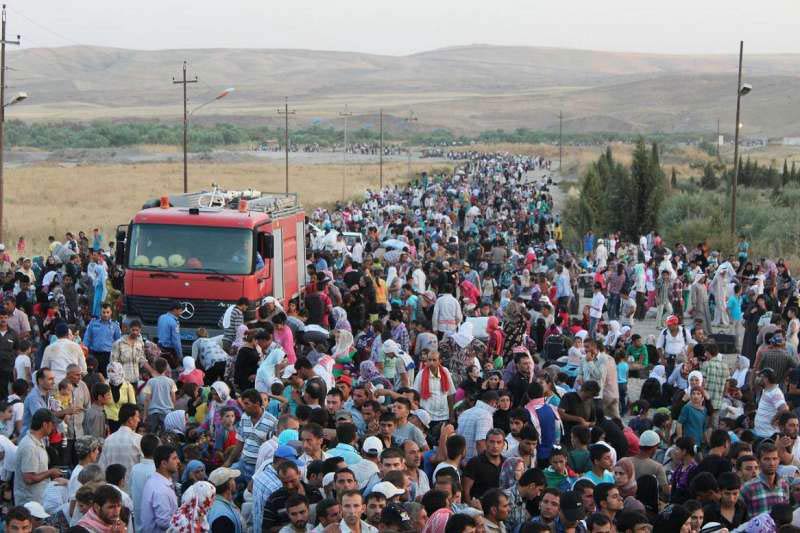
In these four years, over 210,000 human beings have lost their lives. The UN High Commissioner for Refugees is aware of over 3.9 million people who have fled Syria for other countries. Most of those refugees have ended up in neighboring countries, putting massive strain on already weak economies. At least 7.6 million people are internally displaced within Syria; that is, they’ve fled their homes but stayed within the nominal borders of Syria. 2.6 million children are out of school, and 5.6 million children are at high risk for violence, poverty, trauma, and exploitation. Children born to Syrian mothers outside of Syria may well end up stateless: with no documentation of their birth or no citizenship in their host countries, they have little or no access to basic services and schooling.
Tuned out yet?
Apparently that’s a problem, too. Most Americans think Syria isn’t as bad as other recent humanitarian crises like the Indian Ocean tsunami or the earthquake in Haiti. However, this is the worst humanitarian crisis since World War II and will affect the global economy for decades to come. And there’s no end in sight. In fact, it’s probably going to get worse.
We all have a stake in what’s going on there through our participation in the global economy and global institutions. Our responsibility as global citizens demands we recognize this problem, call for an end to the crisis, and construct durable institutions that will assure stability for the Syrian refugee population. Each one of them deserves a healthy, fulfilling life, and that’s being taken away from them in startling ways.
How do we help? This list isn’t comprehensive, but a few important ways include:
- Utilize lots of money: Through national governments, through charities and the UN, we have to mobilize the funding for a modern Marshall Plan to help refugees get food, shelter, job skills, and education.
- Establish dedicated resources at the UN: We need to create a specific commission to deal with the Syria crisis, to help coordinate responses across the UNHCR, UNICEF, the World Food Programme, civil society, and take the lead more generally.
- Help Syrians resettle: Lebanon, Jordan, Turkey, and Egypt, simply can’t handle a flood of people rushing across their borders indefinitely. Several of them are closing their borders. We need programs to move as many refugees as possible to countries with space and relatively healthy economies: Europe, North America, parts of the Pacific region. Some of this is already underway but we need more ambitious plans as soon as possible.
- Run a global tolerance campaign: Just as we need to find new homes for these refugees, anti-Muslim sentiment has taken root in Europe, the United States, and elsewhere. This crisis is not the refugees’ fault, and they have a right to lead healthy, happy lives.
- Keep refugees engaged: All our efforts will be improved if we give as much agency as possible to the refugees themselves.
- Keep pressuring governments: How we manage this crisis will affect trust in institutions and can show how the United States and other global leaders value lives and livelihoods. Making a difference for the helpless is how you show global leadership.
Go tell your congressperson, your friends, your family, your coworkers, pressure the UN or give money to a cause that’s working to help Syrians. The stakes are too high to wait for someone else to fix this problem. They won’t unless we make them, so let’s do everything we can to help every Syrian, everywhere, lead the life s/he deserves.
by Kevin Burke | Mar 16, 2015 | Global Justice, Human Rights
Programs seeking to improve girls’ education around the world have a laundry list of critical justifications supporting them. In particular, girls’ education is seen as an important development tool. This World Bank report shows how uneducated women directly affect countries’ Gross Domestic Product; this infographic from USAID makes explicit how more girls in school improves GDP, increases agricultural output, and creates an investment in future generations because women are more likely to spend their money on their families than men are.
Simply put, educating girls is awesome for pretty much everybody.
But here’s what’s barely mentioned in too many of these reports: these education programs are educating girls. Their chief importance isn’t in economic benefits or the return on investment donors see in financial reports or improvements in the global economy. Educating girls matters because women matter.
Women matter because they are independent human beings capable of thinking for themselves and developing their own life plans. They are full of potential and can self-direct careers, families, and every kind of personal goal. Their lives can run the full range of the human experience. They are similar to men in important ways and different from men in important ways. In short, each woman is a unique and independent person who deserves equal treatment, respect, and dignity under international and domestic law. We even have an international treaty to that effect.
When societies deprive women of education, they do more than just damage their own society in the aggregate: they prevent individual women from reaching their own potential. Without an education, a woman may never read that one book, hear that certain piece of music, or encounter mathematics in a way that truly inspires her, whether as a member of the workforce, as a wife or mother, or as whatever she imagines.
Even more importantly, an education helps women – and everyone – establish a much firmer foothold in social institutions. By learning about how local laws and government work, a woman can be a better voter and a better participant in the political process. Even if a woman lives in a country without women’s suffrage, education helps women understand political issues and participate in the decision-making process, whether directly or through proxies.
That’s what we mean when we call something a human right – without it, people, in this case women, are in some important way deprived of the basic features of a healthy human life. Without an education, women lose their status as equal human beings because they aren’t able to fully develop their capacities to self-direct their lives personally, professionally, socially, or politically.
And as we have learned too well, it’s not merely a matter of girls having too little access to education, or living in societies that under-value women and their development. Instead, we also have to work to overcome groups that are harming and even killing girls because they are educating themselves.
Some of that work is already underway. New initiatives from the United Nations and civil society are focusing on girls’ education and building on recent progress. A new initiative from the Obama administration will seek to work at the community level not only to help get girls educated, but to help ensure communities value those girls and their educations. But we have to keep pressing our leaders, especially those working on the UN Sustainable Development Goals, to ensure that girls fulfill their potential as the women they aspire to be. Girls’ education is the human right they – and we – deserve.