by CGS Blog Archive | Jan 26, 2016 | Climate Justice, Global Justice
It was a Thursday night. I was overwhelmed by midterm papers and exhausted from the afternoon’s track workout. But rather than spending my evening studying, I was waiting in line in the bitter cold, filing slowly into a packed auditorium in downtown Spokane. Why? Because my environmental studies professor had “strongly encouraged” me and my classmates to attend that night’s NEPA hearing.
A NEPA (National Environmental Protection Act) hearing is an event where each citizen gets a small window of time to voice their support or opposition to a government project. The government is required to consider what every person says… but they don’t necessarily have to act according to majority opinion. This particular hearing concerned plans to build a railway to transport cheap coal (deemed to be of too low quality to burn in the US) from the Powder River Basin to Vancouver, WA, where it would then be exported to China.
Once we settled into our seats, the novelty of the event disappeared. My brain became so inundated with numbers that citizens were rattling off–statistics about noise pollution and air pollution, rates of asthma, claims about the number of jobs that would be lost or created, etc—that it began to switch off….
Then, thankfully, it was jolted awake by an impassioned voice. A Cheyenne elder from the Powder River Basin was speaking about how tearing up the land for coal mining was not only contaminating the Tribe’s air and water, but was literally tearing up their culture—a culture engrained in the land. Ten other Cheyenne tribe members followed the woman’s speech, echoing her sentiments. [Click here to read more on the Northern Cheyenne Tribe’s relationship with coal].
That hearing was three years ago. The movement to ban coal since has progressed at a snail’s pace. Until last Friday, that is. On January 15th, Obama issued a temporary ban on new coal leases on federal lands (which account for 40% of coal produced in the US), including the Powder River Basin.
Today, as I muse about the ban’s significance, I recall that Cheyenne elder’s speech. I think not only the land and people whose health might be spared thanks to Obama’s act, but I also think of a culture that might be spared.
Today, I want to urge readers to join me in looking beyond the numbers. Think of those whose lives will benefit from the ban. Perhaps reflect on this quote by reporters Matthew Gannon and John Sutter:
The Northern Cheyenne’s war against coal isn’t a local story.
It’s one of global importance.
We have to decide to recognize that.
And after you reflect, speak up. Banning access to 40% of the US’s coal is good, but it is not enough. In a letter published in the journal Nature last year, Christophe McGlade and Paul Ekins concluded that, in order to stay within the carbon budget as declared by the Paris Agreement, the US needs to keep 95% of all coal reserves in the ground. Tell Congress to keep more fossil fuels underground by signing 350.org’s petition.
by CGS Blog Archive | Jan 19, 2016 | Global Justice
On December 31st the UN Library announced via Twitter that its most popular book of 2015 was Immunity of Heads of State and State Officials for International Crimes by Ramona Pedretti. When this tweet appeared in my newsfeed, I had a flashback to a Scandal episode in which a murderer gets off scot-free because of his diplomatic immunity. But, as I’ve learned, things are often more complex in the real world than they appear in ShondaLand (except maybe relationships). Diplomatic immunity is no exception.
What is diplomatic immunity?
It is widely believed that diplomatic immunity originated during the 12th Century Crusades and stems from an agreement between Saladin (of the Ayyubid dynasty) and Richard the Lionheart; the two agreed that delegates delivering messages for the enemy would not be harmed.
The current rules concerning diplomatic immunity are set forth in the 1961 Vienna Convention on Diplomatic Relations. The treaty basically states that, for example, country A’s diplomat cannot be arrested for breaking country B’s laws while she is conducting business in country B.
Diplomatic immunity has given rise to dramatic incidents in recent years. Just last September, Majed Hassan Ashoor, a Saudi First Secretary working in Delhi, was accused of holding captive and raping two Nepali women whom he had hired as domestic workers. Saudi Arabia refused to revoke Ashoor’s immunity, preventing India from trying and punishing him.
Why does it matter?
When I hear of stories like Ashoor’s, I find myself asking “Why not just get rid of diplomatic immunity altogether?” Well, this isn’t Shondaland so the answer isn’t that simple. The reality is that without diplomatic immunity and the assurance that diplomats won’t be at risk of prosecution while they’re abroad, countries would likely be less willing to engage in diplomacy and other engagements with their fellow countries and the international community generally. For instance, Richard the Lionheart probably wouldn’t have continued trying to broker an end to war with Saladin if his consuls were killed every time they set out to deliver a message.
What is the extent of diplomatic immunity?
Now, Pedretti’s book is specifically about immunity from atrocity crimes (genocide, crimes against humanity, and war crimes). Developments over the past half century have eliminated diplomatic immunity from prosecution for atrocity crimes. However, Heads of State who commit genocide can–and do–still get away with it. Take, for example, Sudanese president Omar al-Bashir, a man accused of atrocity crimes by the International Criminal Court (ICC). Last June, when al-Bashir traveled to South Africa to attend a diplomatic summit for African Union (AU) leaders, several international groups pressured South Africa to arrest the President and hand him over to the ICC to stand trial (particularly because South Africa owed a duty to the ICC as a State Party to it). However, South Africa stalled–torn between its desire to honor diplomatic immunity to Sudan and its desire to maintain good standing in the international community–allowing al-Bashir to escape back to Sudan and avoid arrest.This is just one illustration of how international standards are difficult to enforce.
Should we be worried about UN members’ interest in immunity?
When the UN announced that a book on immunity for war crimes was its most popular, many commentators gasped in horror, assuming that UN members had checked the book out to see what they could get away with under diplomatic immunity. But the popularity of this book could also signal a positive: countries and diplomats are interested in international criminal law and want to know where and when diplomatic immunity does not apply.
Admittedly, the issue is more complicated than can be covered in a short blog post. So, if you’re interested in learning more, check out these articles:
Can you get away with any crime if you have diplomatic immunity? Joshua E. Keating
Review of Diplomatic Immunity by Wikipedia
Public Support for International Arrest Warrants for Heads of State, Regardless of Immunity Laws, ABA-ICC Project
And, if you’ve got $200 laying around, you can buy the book itself on Amazon.
by Jaira Burke | Jan 18, 2016 | Global Justice, Peace & Disarmament
We can’t have it both ways. We can’t be both the world’s leading champion of peace and the world’s leading supplier of arms.
–Former President Jimmy Carter, 1976
As ISIS’s threat to international peace and security grows, Syria continues to funnel billions of dollars to the United States for bombs and other forms of weapons. As a result of United Nations Resolution 2249, Syria has all of the autonomy in the world to partake in whatever vague, “necessary measures” it sees fit to combat ISIL. Despite the deaths of thousands of civilians attributed to indiscriminate airstrikes lead by the Syrian government, and most recently by Russia, the war against terrorism has led to an all-out arms extravaganza in the Middle East. In fact, on November 13, 2015, the same evening of the terrorist attacks in Paris, the United States began its first steps in selling $1.29 billion of bombs to the Saudi Arabian government.
There’s a lot to be said for the inherent conflict of interest in the United States being the poster child for the war against terrorism while remaining the world’s top arms dealer behind not-so-closed doors. In December 2014, a global Arms Trade Treaty (ATT) became international law and is one of the surest attempts to address arms control in the 21st century. That said, the intent of the Arms Trade Treaty (for weapons exporters to be conscientious of not only to whom they’re selling weapons, but for what purposes) remains higly elusive and arguably intangible when the world’s leading arms exporters–the U.S., China, and Russia–fail to ratify it.
The United States cannot continue playing on both sides of the fence. As the U.S. continues to funnel thousands of bombs to Syria, it creates more unrest in the Middle East and displaces thousands of innocent civilians, yet publicly refuses to accept refugees. ISIS and the Syrian government aren’t the only ones with blood on their hands; the silent, perpetual trail of innocent blood ultimately leads back to the source, the weapon distributors. Every minute, one person dies from armed violence. The economic growth of the United States, or any other country for that matter, should not be derived from the blood of thousands. In a global socio-political climate as turbulent as today’s, countries simply cannot continue to sell weapons to whomever may solicit them. For the sake of global peace and sustainability, human lives and the environment cannot be up for sale.
When considering the correlation between arms control and global terrorism, we may find ourselves at a philosophical question of “Which came first, the chicken or the egg?” However, although the flooding of weapons into the Middle East may not be the direct cause of regional terrorism and armed conflict, throwing more weapons at the issue certainly isn’t going to help. But are there nonviolent alternatives to combatting terrorism globally?
In the carefully compiled rhetoric surrounding terrorism, somehow the notion of peaceful conflict resolution has been omitted altogether. Physicians for Social Responsibility, Physicians for Global Survival, and the Nobel Prize-winning International Physicians for the Prevention of Nuclear War concluded that the “war on terror” has led to 1.3 million deaths in Iraq, Afghanistan, and Pakistan since September 11, 2001. Yet this fact remains blissfully unobserved as some of the world’s leading economies continue to profit off the war against terrorism that has led to more civilian deaths than actual advances in ending global terrorism.
Now more than ever, the time has come to shift the dialogue from arbitrarily pushing blame from one party to the next and endlessly calling for military intervention to collectively working as a global community and seeking realistic and sustainable plans for eliminating terrorism.
by Chuck Woolery | Jan 13, 2016 | Global Justice, Peace & Disarmament
Hunger and starvation are in the news again, this time in Syria. They shouldn’t be. For decades, the world has produced more than enough food to feed every man, woman, and child. Yet today, 16 years past the due date for ending hunger, we still have to read about it on the front page.
Even on a day when hunger is not on the front page, or any page, 17,000 children will die from easily preventable malnutrition and related infectious diseases. And for each child that dies, 10 more will live on with permanent mental and/or physical disabilities.
While some in the world suffer from threats posed by groups like ISIS, experts argue about the definition of “terrorism” and politicians debate how to defeat it. But there should be no debate about the ultimate terror–a parent’s loss of a child or fear of losing a child from a lack of food, one of the most basic of human needs. Nutritious food is one of the most basic of all inalienable human rights.
Sadder still is our failure to learn–after decades of presidential commissions, scientific studies, intelligence reports, and righteous scriptures–that when people are hungry and their children die, all humanity pays a monstrous price in the form of war, disease, revolution, terrorism, and economic instability fueled by hunger. This cost in lives and dollars is always preventable. Given the unbelievably low cost in preventing it, this policy failure should be criminal.
President Jimmy Carter has been chastised for his perceived ineptness at foreign policy, but in hindsight, his administration was the wisest and most insightful. Congress just didn’t listen.
In 1980, Carter’s Presidential Commission on World Hunger concluded that unless we ended the worst aspects of hunger by the Year 2000, we would not be able to avoid its lethal, debilitating, humiliating, and destabilizing forces. The reports and recommendations of the Commission noted the phrase “national security” 17 times, with all but three in the context of our need to expand the definition of the term to include the links to hunger, poverty, and the insecurity and instability that inevitably follows.
Everyone on that bipartisan Commission was “firmly convinced that a major worldwide effort to conquer hunger and poverty, far from being a gesture of charity to be offered or withheld according to temporary political whims, holds the key to both global and national security,” and that “military force is ultimately useless in the absence of the global security that only coordinated international progress toward social justice can bring.”
The Commission went on to state,
The most potentially explosive force in the world today is the frustrated desire of poor people to attain a decent standard of living. The anger, despair and often hatred that result represent real and persistent threats to international order…environmental hazards, pollution of the seas, and international terrorism. Calculable or not, however, this combination of problems now threatens the national security of all countries just as surely as advancing armies or nuclear arsenals.
Carter’s Commission offered the foundation for a more peaceful, healthy, and prosperous future, and Congress ignored it. Welcome to the world we have today! Later commissions on national security offered similar wisdom. But the most recent is also the most insightful and specific.
In June 2015, the Commission on Global Security, Justice and Governance released a report titled Confronting the Crisis of Global Governance. The Commission, co-chaired by former U.S. Secretary of State Madeline Albright and former UN Under-Secretary General for Political Affairs Ibrahim Gambari, offered a two-word conclusion: “just security.” From the Commission’s perspective, without global justice we will have no security. It should be obvious to all that the systems and structures should have been strengthened decades ago. Instead, they remain incapable of managing the growing array of the threats we see today.
No winner of this year’s U.S. presidential election will be able to change things, even with a House and Senate on her or his side, without urgent and substantial transformation of existing global systems and structures. If this new Commission’s recommendations are not taken seriously by the next U.S. president, by Congress, and by other leaders around the world, the craziness we see in the world today will only get worse.
“Urgency” is too lax a word in calling for action given the three simple but profoundly related factors:
-
the exponential growth of technology with unprecedented power;
-
the tendency of U.S. voters and candidates to think only of short-term national interests; and
-
the absence of any global police force, enforceable human rights, or adequate living standards.
Imagine what Syria would look like today if its leadership had been held accountable for the hunger of those farmers who migrated to the capital because of the destabilizing impact of a three-year drought.
Wars, terrorism, climate change, and pandemics are all related to hunger, as both cause and consequence. We are immune to none of these threats, regardless of income level, race, nationality, or political party. Until we understand this basic reality as did those who drafted and unanimously approved the Universal Declaration of Human Rights after the horrors of World War II, we will never achieve peace, security, or prosperity for ourselves or our children.
by Rene Wadlow | Jan 11, 2016 | Global Justice, Human Rights
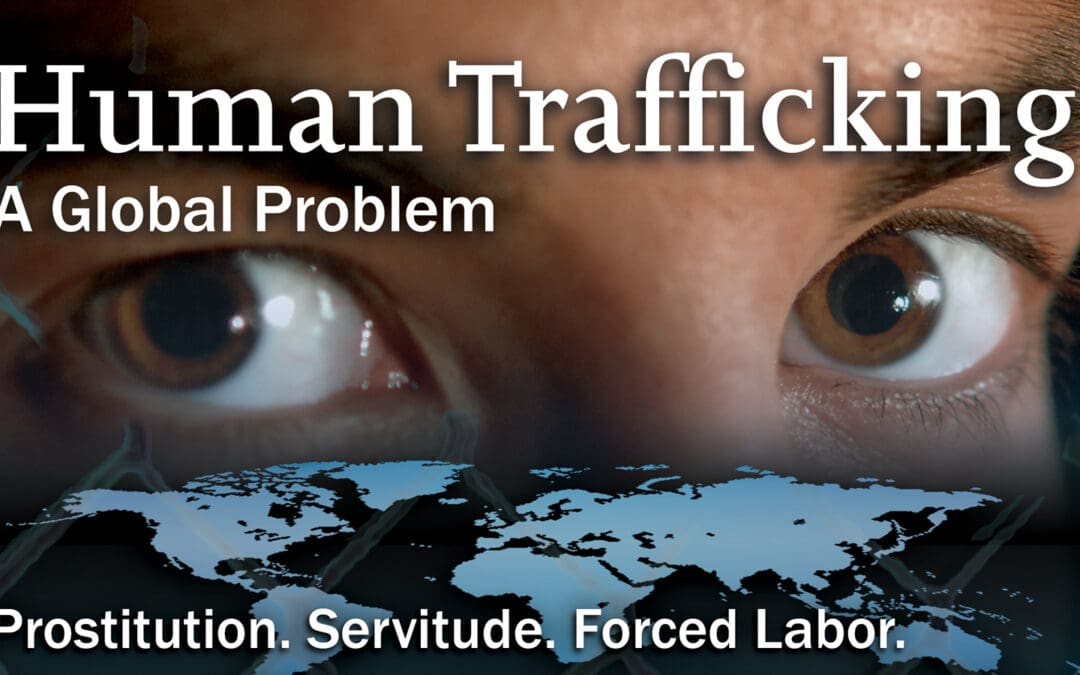
It is truly frightening to think that there are more slaves in the world today than ever before in history. Exploiting human beings for sex or labor is a highly profitable and thriving enterprise in almost every country in the world, including the United States.
What’s being done to combat this global problem?
January 11 has been designated by the UN General Assembly as a day to develop awareness of human trafficking. Awareness has been growing, but remedies are slow and uncoordinated. Effective solutions often are not accessible to victims of trafficking owing to gaps between setting international standards, enacting national laws, and implementing these laws in a humane way.
The international standards have been set out in the United Nations Convention against Transnational Organized Crimeand its Protocol to Prevent, Suppress and Punish Trafficking in Persons, Especially Women and Children. The Convention and the Protocol standards are strengthened by the International Convention on the Protection of the Rights of All Migrant Workers and Members of their Families. The world-wide standards have been reaffirmed by regional legal frameworks such as the Council of Europe Convention on Action against Trafficking in Human Beings.
Despite clear international and regional standards, many countries have poor implementation due to limited government resources and infrastructure, a tendency to criminalize victims, and restrictive immigration policies.
Trafficking in persons is often linked to trafficking in drugs and arms. Some gangs are involved in all three; in other cases agreements are made to specialize and not expand into the specialty of other criminal networks. These networks often act with a high degree of impunity from government services.
There are three main sources of trafficking in persons. The first are refugees from armed conflicts. Refugees are covered by the Refugee Conventions supervised by the UN High Commissioner for Refugees (UNHCR) in the country of first asylum. Thus Syrian refugees are protected and helped by the UNHCR in Lebanon, but not if they leave Lebanon. As a quarter of the population of Lebanon now consists of Syrian refugees, the Lebanese government is increasingly restricting Syrians’ ability to work in Lebanon and to receive schooling, medical services, proper housing, etc. Many Syrians therefore try to leave Lebanon to find a better life in Western Europe. Refugees from Iraq, Afghanistan, and Sudan follow the same pattern.
The second category are people leaving their country for economic reasons, sometimes called “economic refugees.” Migration for better jobs and a higher standard of living has a long history. Poverty, ethnic and racial oppression, and gender-based discrimination are all factors in people seeking to change countries. With ever-tightening immigration policies and a popular backlash against migrants in some countries, would-be migrants turn to “passers”—individuals or groups that try to take migrants into a country, avoiding legal controls.
A third category—or a subcategory of economic migration—is the sex trade, usually of women but also children. A Human Rights Watch study notes, there are an estimated 150,000 non-Japanese women employed in the Japanese sex industry, primarily from other Asian countries such as Thailand and the Philippines. These women are typically employed in the lower rungs of the industry either in “dating” snack bars or in low-end brothels, in which customers pay for short periods of eight or fifteen minutes. According to the study,
Abuses are common as job brokers and employers take advantage of foreign women’s vulnerability as undocumented migrants: they cannot seek recourse from the police or other law enforcement authorities without risking deportation and potential prosecution, and they are isolated by language barriers, a lack of community, and a lack of familiarity with their surroundings.
We find similar patterns in many countries.
The scourge of trafficking in persons will continue to grow unless strong counter measures are taken. Basically, police and governments worldwide do not place a high enough priority on the fight against trafficking unless illegal migration becomes a media issue.
Real progress therefore needs to be made through non-governmental organizations (NGOs). There are four aspects to this anti-trafficking effort. The first is to help build political will by giving accurate information to political leaders and the press. The other three aspects depend on the efforts of the NGOs themselves. Such efforts call for increased cooperation among NGOs and capacity building.
The second aspect is research into the areas from which children and women are trafficked. These are usually the poorest parts of the country and among marginalized populations. Socio-economic and educational development projects must be directed to these areas so that there are realistic avenues for advancement.
The third aspect is the development of housing and of women’s shelters to ensure that persons who have been able to leave exploitive situations have temporary housing and other necessary services.
The fourth aspect is psychological healing. Very often women and children who have been trafficked into the sex trades have a disrupted or violent family and have a poor idea of self-worth. This is also often true of refugees for armed conflict. Thus, it is important to create opportunities for individual and group healing, such as teaching meditation and yoga. There is also a need for adult education services so that victims may continue their broken education cycles.
There are NGOs who are already working along these lines. Their efforts need to be encouraged and expanded.
by Sarah Del Vecchio | Jan 6, 2016 | Global Justice, Human Rights
When most people think of human trafficking, they think of sexual slavery. This is understandable, given the public awareness campaigns, films, and documentaries that highlight the sex trade. Sex trafficking is a valid concern, especially considering issues like child pornography.
However, the vast majority of human trafficking occurs in forced labor situations, as reported by the International Labour Organization. Labor trafficking occurs in nearly every sector, from fishing boats in Thailand to cocoa plantations in Côte d’Ivoire. Slavery taints every kind of product, whether food, clothes, or electronics.
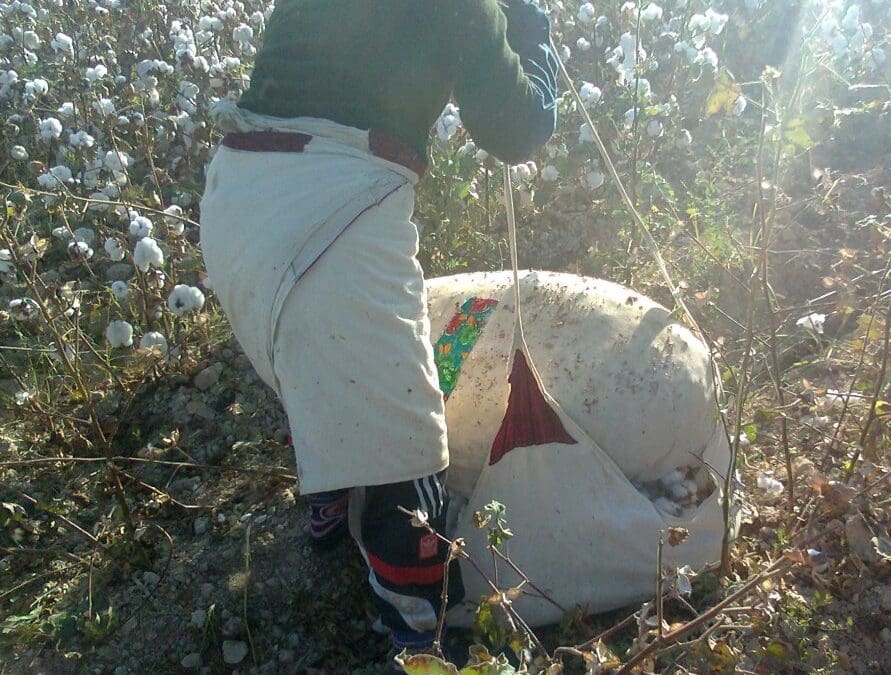
One of the most pressing labor trafficking issues in the world takes place in Uzbekistan’s cotton industry. Uzbekistan ranked as a Tier 2 Watch List country on last year’s Trafficking in Persons Report from the U.S. State Department. The report found:
In 2014, despite a central government-decree banning all participation of those under age 18 in the cotton harvest, local officials mobilized children in some districts. In addition, across much of the country, third-year college and lyceum students continued to be mobilized, an unknown number of whom were not yet 18 years old. Some independent observers alleged that the decreased use of child labor was counterbalanced by an increase in the government’s mobilization of adult forced labor to harvest cotton in 2014.
The State Department’s ranking was not without controversy, as labor activists protested that the country had not done enough to improve the situation. Human rights organizations have monitored abuses within Uzbekistan’s cotton fields for years. In 2010, Human Rights Watch submitted a memorandum expressing serious concern about the prevalence of child labor in the cotton fields. In addition to child labor, there have also been reports of intimidation and harassment towards adult workers.
With such a well-documented problem, why has forced labor persisted in Uzbekistan? First, the country remains the fourth largest supplier of cotton in the world. Uzbekistan’s national economy relies heavily on the cotton industry, and cotton is used in countless products around the world. Though strides have been made in the last several years for corporations to be more transparent in their supply chains, Anti-Slavery International points out that, “no brand can say with certainty that Uzbek cotton isn’t used at some point in their supply chain.” Without economic pressure, there is little incentive to reform the industry.
Second, political pressure has been light on the Uzbek government as well. Reuters reported last month that
U.S. policymakers have struggled for two decades to balance concern about Uzbekistan’s human rights record with the need to maintain relations with hard-line President Islam Karimov…[Secretary of State] Kerry spoke of ‘shared interests,’ especially combating Islamic extremism, but his references to human rights were oblique.
With counterterrorism efforts dominating international dialogue, it is difficult to ascertain how foreign governments may press for improved enforcement within Uzbekistan.