by Emily Ervin | Feb 18, 2016 | Global Justice, Peace & Disarmament
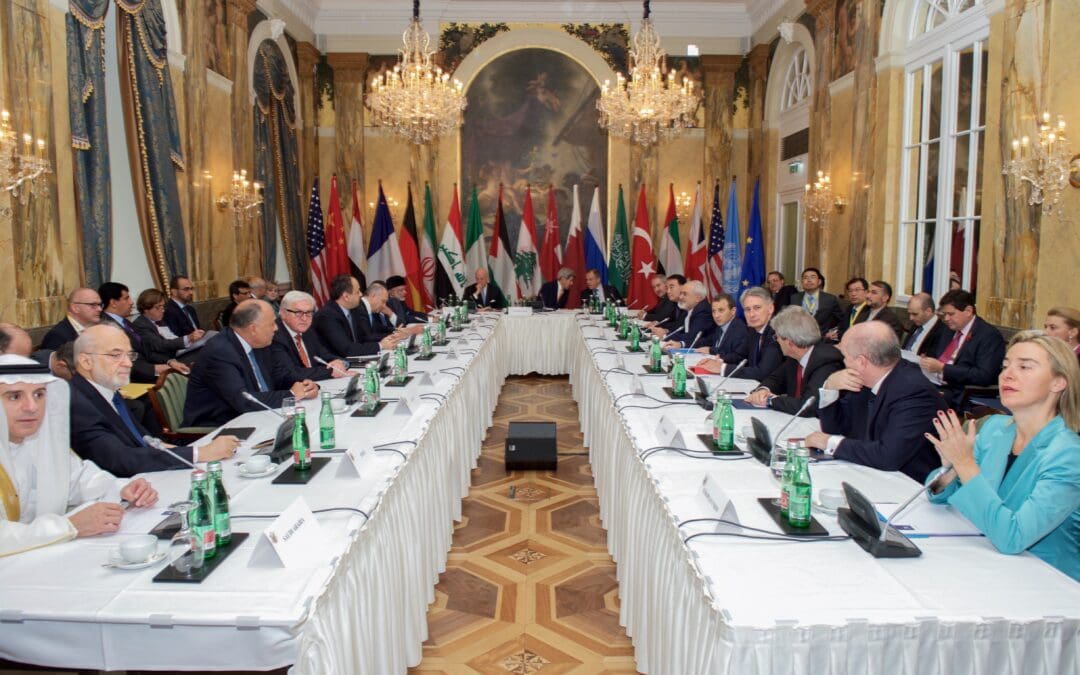
As the international community attempts to revive negotiations for the ongoing conflict in Syria, it is important to notice who is invited to the peacemaking table. Too often women, despite their participation in the war-torn society, are sidelined in the post-conflict conversation.
The United Nations’ roadmap for a peace process in Syria is trying to overcome this pattern by “encouraging the meaningful participation of women in the UN-facilitated political process for Syria.” The creation of a Women’s Advisory Board is an attempt to include women through the scope of civil society. Any incorporation of women in peacemaking talks is a step in the right direction. However, the Women’s Advisory Board is not an official stakeholder in the negotiations, which drastically undervalues the contribution of women.
Syrian women have taken a large responsibility in community leadership positions since the beginning of the conflict. Their hands-on experience in communities across Syria speaks volumes to their dedication to creating a long-lasting peace. It is women who begin campaigns such as “I Am She” to end the siege of Zabadani, who volunteer at hospitals, become leaders in refugee camps, and re-open schools in areas where doing so was considered a nearly impossible task. Women often work on the ground to bring together different religious and ethnic groups, stand up to armed groups, and negotiate local ceasefires. Women are playing their part in holding Syrian society together through the conflict, and they deserve to have a strong voice in rebuilding their country once the violence is resolved.
If every foreign country who has staked a geopolitical interest in backing armed groups throughout the conflict has a seat at the negotiation table, then the women who endure the ongoing violence–while still promoting peace in their community–deserve a seat as well.
Currently the United Nations is calling for a temporary ceasefire in order to stop warfare long enough for the international community to reach Syrians with sufficient food and medicine. The rebuilding process in Syria starts at this point of temporary ceasefire; if women are not represented from the beginning, their advocacy and concerns will be forgotten down the line in processes of Disarmament, Demobilization, and Reintegration (DDR) and Security Sector Reform (SSR).
Women belong at the peacemaking table, for they “enlarge the scope of peace agreements to include a broader set of critical societal priorities and needs required for lasting and just peace.” Women in refugee camps throughout Syria become leaders and advocates for the needs of their communities, whether those needs are access to healthcare and education or a safe space to overcome any gender-based violence. This local perspective is what is missing at the United Nations peace talks.
Former Secretary-General Kofi Annan has promoted the importance of a woman’s role in rebuilding society, stating,
Women, who know the price of conflict so well, are also better equipped than men to prevent or resolve it. For generations, women have served as peace educators, both in their families and in their societies.”
Delegating the responsibility of rebuilding a fragile state primarily to men is doing a great disservice to any prospects of long-lasting security, for it will inevitably create a rule of law that excludes women’s concerns.
by Jaira Burke | Feb 15, 2016 | Global Justice, Human Rights
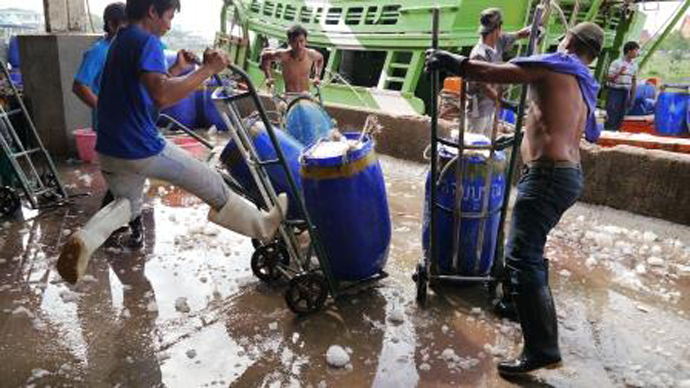
Nestlé’s report on harmful labor practices in Thailand’s seafood industry has recently gained public attention. While many may admire the company’s transparency regarding this, it’s worth noting that Nestle is also fighting a U.S. Supreme Court lawsuit for its alleged use of child slaves in the Ivory Coast. This is all taking place as the European Union drafts legislation requiring multinationals to disclose profits and taxes paid in member countries as an attempt to combat corporate tax avoidance.
Representing a large portion of global trade and an even larger portion of the world’s GDP, multinational corporations (MNCs) are the ideal depiction of globalization and free trade. And while we may all agree these things are great, supply-chain slavery, aggressive tax planning, and other harmful corporate practices continue to be a despicable reality in the global economy.
The capitalist economic model is built on the notion of free markets unregulated by states. Often idolized as the vehicle for economic fluidity, capitalism is so geared toward business retention and expansion that it avoids market regulation at all costs. The essential permanence of labor and human rights abuses at the hands of multinationals, as well as practices such as profit shifting and transfer pricing, desperately call for intervention. While it is understandable that too much regulation may hurt business growth, the total lack of market regulation leaves millions vulnerable to the often arbitrary and destructive corporate practices that have become a venomous norm.
The time has come to establish a fair global financial system, not just a functioning one
The International Criminal Court addresses individuals, and the International Court of Justice addresses states; yet multinational corporations seemingly run rampant in the global market, free from regulation and accountability. MNCs aren’t just harming individuals in vulnerable communities, but the governments and economies of states as well. A 2013 Congressional Research Service report found that the annual revenue loss for the United States alone as a result of aggressive tax planning ranged from $30 to $90 million. One can only imagine the damage tax avoidance can cause for smaller, developing economies, reinforcing inequality as multinationals run off toward the sunset with billions in tote.
There is a blatant lack of authority and accountability surrounding MNCs. Yet the endless worship of economic growth and free trade deter state actors from addressing the evident need for structural reform in the global market.
Multinationals must not only operate within the law, but with a sense of accountability regarding the critical role they play in the face of labor and human rights and developing economies globally. With the Trans-Pacific Partnership currently securing itself into reality despite inherent inequities built into the agreement such as the death clause, which threatens to worsen the already soaring prices of pharmaceuticals, and the overall avoidance of prioritizing climate change and improving labor conditions globally–it is evident that economic gain continues to take priority over basic human rights and economic justice.
As a global community we can no longer turn a blind eye to the obvious need for conceptual, practical, and sustainable approaches to addressing corporate lawlessness. This is something that requires a collaborative approach on behalf of states, intergovernmental organizations, and nongovernmental organizations for the sake of humanity, the environment, and developing economies globally. We can no longer allow the autonomy of multinationals to shape the terms of engagement in international trade. From both a human rights and an economic perspective, structural reform can no longer be avoided.
by Emily Ervin | Feb 4, 2016 | Global Justice, Human Rights
Syria has quickly become the leading producer of refugees in the world, with 4 million people fleeing the country–half of them children. Due to the increase in violence throughout the country, Syria has grown to be one of the most unsafe places for children in the world.
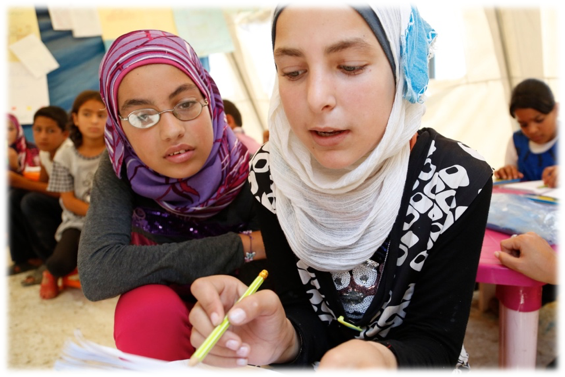
However, the conversation surrounding the refugees has stopped short of addressing the millions of children who are now in need of humanitarian aid, including the ability to gain an education. With so many Syrians missing key years of primary education, it is a concern that there will be a generational gap of educated people in Syria.
Syria is currently in desperate need of an investment in education, as access to primary school has been rapidly declining for Syrians since the beginning of the civil war. With a high attendance record and a 90% literacy rate, Syria’s education system used to be envied by various countries in the region. However, in the past five years, 2.8 million children of primary school-age have been removed from their schools due to conflict in their neighborhoods. Many Syrian parents have safety concerns and are reluctant to send their children to school in the middle of conflict. This is not surprising, since over 4,000 schools in Syria have been destroyed by bombings or turned into shelters and storage facilities over the past few years. Syrians who flee their homes often end up in refugee camps which are overcrowded and underfinanced, leading to education being neglected.
As the United Nations pushes the Sustainable Development Goals (SDGs), including the goal to ensure every child has the opportunity for primary and secondary education by 2030, there are resources provided for children in conflict zones such as regions in Syria and Iraq. The United Nations Children’s Rights and Emergency Relief Organization (UNICEF) has been at the forefront of ensuring that Syrian children are provided with a safe and uninterrupted learning environment amid the crisis. The organization recently released the Humanitarian Action for Children 2016, which dedicated the largest amount of humanitarian aid to displaced Syrians.
Throughout 2016, UNICEF expects to use $2.8 billion towards children in emergencies worldwide. This will hopefully lead to what they estimate as 8.2 million children in conflict zones gaining a formal education. More than half of this projection is aimed towards children inside of Syria or Syrians who have fled to neighboring countries during the crisis.
The Humanitarian Action for Children 2016 is a stepping stone to success for school-age children in Syria. Access to education can benefit children in various ways by allowing them to obtain the basic skills needed in their daily lives or to use their education for social mobility later on. Without education, the children of Syria are being robbed of their chance to reach these goals. When children are unable to learn skills such as reading and writing, they are losing the opportunity to become well-educated citizens who are able to contribute to society. This gap of educated citizens will hurt the next generations of Syrians, as they hope to rebuild their state following the conflict. In addressing the ongoing violence in Syria, it is crucial to include children’s right to education in the conversation.
by Jaira Burke | Feb 2, 2016 | Global Justice, Human Rights
East Asia neighbors South Korea and Japan have recently made international headlines in light of their brash resolution for “comfort women.” Heard of it before? Chances are more than likely you haven’t.
In arguably the most brutal crime against women in history, “comfort women” refers to the massive sexual slavery of thousands of Korean women at the hands of the Japanese government. Up until news of the recent “resolution” between South Korea and Japan regarding just this, the subject of comfort women has remained notably absent from the international conversation. But why all of the silence regarding such a pivotal part of history?
The answer is simple: the lives of women and the violence they too often suffer simply do not matter.
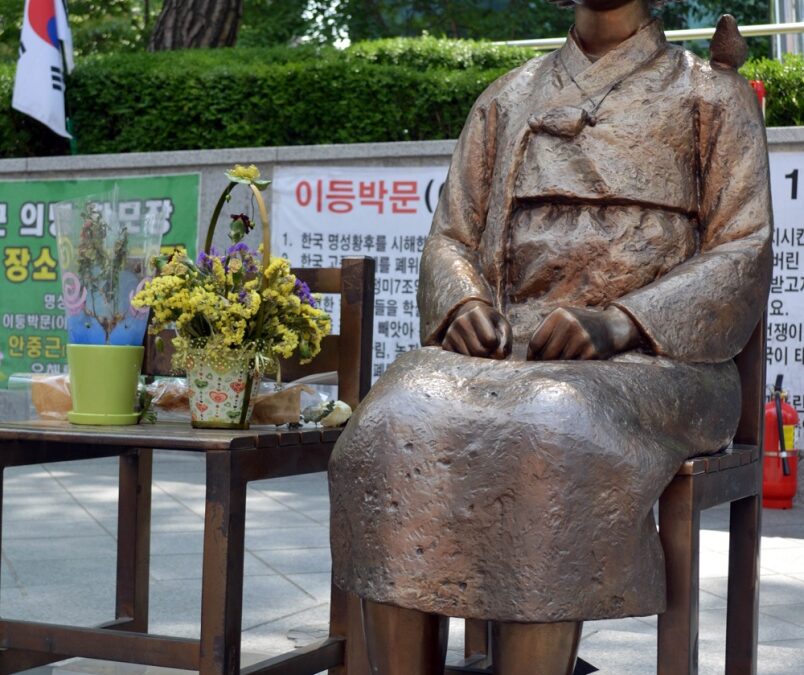
This is made alarmingly clear by the lackadaisical manner in which Japan and South Korea have “resolved” the comfort women debacle. Vacuous at best, the so-called comfort women resolution is a slap in the face to the very women who endured the unthinkable, the un-survivable. And despite the very public disapproval of Japan’s proposed resolution by surviving comfort women, the Korean government has accepted Japan’s settlement, which includes the removal of a statue honoring the legacy of the ever-resilient “comfort women.”
The passivity, and some may argue continued lack of acknowledgment, by the Japanese government trivializes this historic venom and shows us all just how undervalued the lives of women truly are.
Japan’s longstanding and blatant unresponsiveness to this historical obstruction of human rights parallels the global community’s tendency to pacify, trivialize, and/or ignore altogether human rights abuses against women.
The Center of Immigration Studies estimates that 10,000 mail-order brides enter the United States annually and mail-order bride websites garner over 2.5 million visits monthly. Although there is no empirical data on the number of deaths associated with this international trafficking and transactional treatment of women, a number of murders at the hands of men purchasing these young brides have surfaced. And as a result of being an expat in a foreign country, mail-order brides have little to no help or protection in their new home countries and often face deportation when seeking help.
Every year 15 million girls are married as child brides, some as young as six and seven years old. Yet the international community has done little to eradicate this distasteful practice. If present trends continue, it is estimated that 1.2 billion underage girls will be married by 2050.
Somehow, the international community fails to address these issues and other injustices affecting women as they continue to spread exponentially.
The global community is seemingly saying to women, “Chill, don’t be dramatic. It’s not that big of a deal.” Women should not take the back burner in the conversation surrounding human rights. The world can no longer turn a blind eye to the marginalization of women in the name of profit and the sexual pleasure of men.
Mail-order and child brides are both examples of systemically supported attacks on women globally. The time has come for governments and the global community as a whole to finally prioritize these injustices as 21st century threats to human rights. However, Korea and Japan’s dismissive resolution sets the bar alarmingly low for future advancements.
by Shelby Hettenbach | Jan 29, 2016 | Global Justice, Human Rights
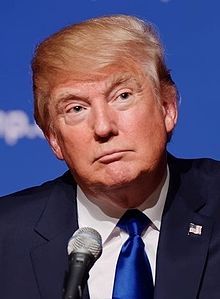
The United Kingdom has been one of America’s closest allies for over 200 years. Yet the British Parliament recently engaged in a debate on banning a possible U.S. presidential candidate.
On Monday, January 18th, in response to a grassroots petition signed by over 574,000 British citizens, members of Parliament discussed whether Donald Trump should be permitted entry into the United Kingdom due to his consistent use of hate speech and possible influence on preexisting radical groups in the country.
The debate even touched on whether Trump’s message could be considered terrorism itself. Tulip Siddiq of the Labour party stated,
His words are not comical, his words are not funny. His words are poisonous.
She along with other Muslim members of Parliament spoke on personal experiences of bigotry due to the rhetoric spurred by Trump’s speeches.
Those against the ban questioned whether it would cause more harm than good; banning Trump could possibly increase his popularity among his supporters both in the UK and the U.S. They also argued, somewhat ironically, that the debate itself is fueling Trump’s publicity. Other arguments included the difficulties that could arise if Trump is indeed elected President. Imposing a ban could make foreign policy conversations between each country very difficult.
Despite the differences in opinion among the members of Parliament, throughout the debate Trump’s policies were consistently condemned as “bigoted,” “hateful,” and “repugnant,” among other criticism. It is clear that the British government has little respect for Trump, as evidenced by Conservative MP Alex Chalk’s comment,
This is about bufoonery. And buffoonery must not be met with the blunt instrument of a ban. It must be met with the classic British response of ridicule.
What will it mean for the world if Donald Trump is banned from the UK? Is the European Union next? How can a world leader lead if he is banned from entering countries that have stood as allies to the American people for centuries?
If Trump wins the presidency yet is banned from the United Kingdom, international cooperation on the big issues will be far more diffcult to achieve. In order to reduce greenhouse gas emissions, curb nuclear proliferation by rogue states, and prevent mass atrocities, leaders must be able to work together and support cross-cultural understanding. Donald Trump appears to have no interest in promoting cooperation and engagement with the Muslim world, as evidenced by his comments concerning policies he would like to implement as President. Rather, one proposal he offered would mandate Muslim American citizens and residents to register with a government database or even that they carry special cards that identify them as members of the Muslim faith. The last time a policy like this was mandated, it spurred the beginning of one of the most massive atrocities in world history.
To truly “make American great again,” Trump would need to adjust his perception of other cultures and realize the benefits of international cooperation. Otherwise, he may find himself and others in his administration banned from visiting other U.S. allies. This would make it far more difficult for America to become a force for world peace and justice, let alone a force for universal human rights.
by Rene Wadlow | Jan 27, 2016 | Global Justice, Human Rights
Last month I suggested that a UN-led conference would be necessary to confront the growing refugee and migrant crisis. Now I am pleased to report that the UN has called for a high level Summit on “Addressing Large Movements of Refugees and Migrants.”
The forum is scheduled for September 19, 2016 at UN Headquarters in New York, one day before the opening of the UN General Assembly. A report of the Secretary-General will be published in May to structure the discussions and to facilitate research and the collection of up-to-date information at the national and regional levels.
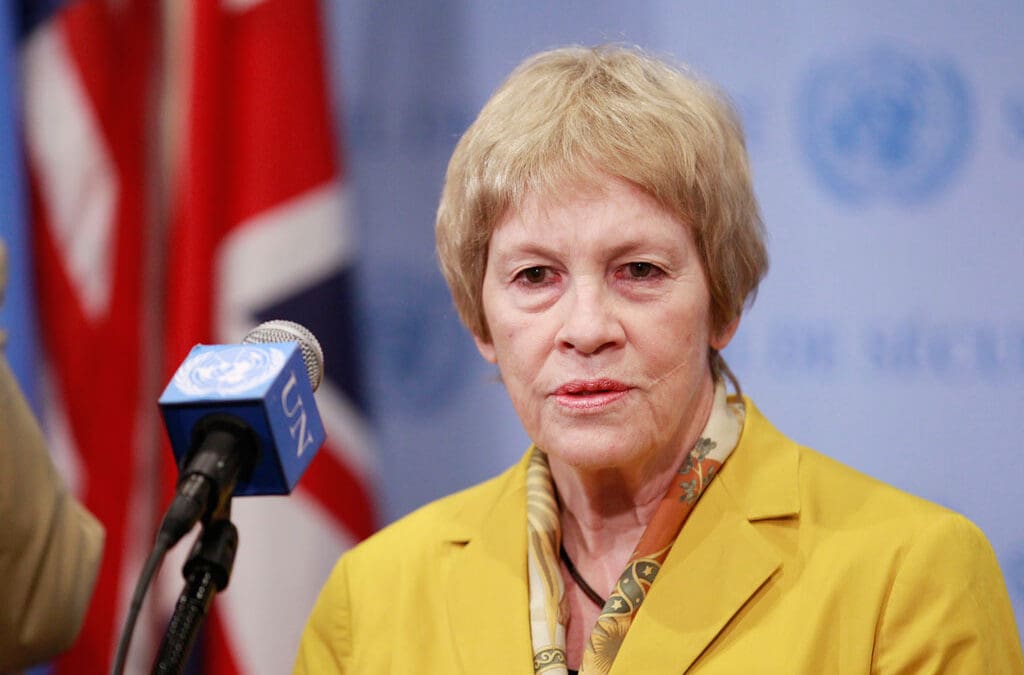
Ms. Karen AbuZayd of the U.S. has been appointed as the Special Adviser–effectively the organizer–for the Summit. From 2005 to 2010, she was Commissioner-General of the UN Relief and Works Agency for Palestine Refugees in the Near East (UNRWA). Previously she held high posts in the Office of the UN High Commissioner for Refugees. She is an academic specialist on the Middle East.
The UN Department of Economic and Social Affairs (DESA) recently published a report on international migration indicating that there are some 244 million migrants; some 76 million live in Europe, 75 million in Asia, 54 million in North America, and others in the Middle East, Latin America, and the Pacific, especially Australia and New Zealand. In addition, there are about 20 million refugees who have crossed State borders fleeing armed conflict and repression, as well as some 40 million internally displaced persons.
The flow of refugees and migrants toward Europe during 2015 has made the issue of migration and refugees headline news. The disorganized and very uneven response of European governments to this flow has indicated that governments are unprepared to deal with such massive movements of people. Non-governmental organizations (NGOs) have not been able to deal adequately with this large number of persons despite many good-will efforts. Certain political movements and political parties have used the refugee issue to promote narrow nationalist and sometimes racist policies. A much smaller flow of refugees to the U.S. has also provoked very mixed reactions, few of them welcoming.
December’s climate conference (COP21) was an opportunity to highlight the issue of “ecological refugees”–people who move due to changes in the climate and the environment. The persistent drought in the Sahel States of Sub-Saharan Africa has led to large-scale movements and very difficult socioeconomic conditions.
The September 2016 UN Summit provides an opportunity for coordinated NGO action. UN conferences or summit forums serve as a magnet, pulling governments to agree to higher ideals and standards collectively than they would individually. This is not only hypocrisy–though there is certainly an element of hypocrisy, as governments may have no plans to put these aims into practice. Rather, it is a sort of “collective unconscious” of government representatives who have a vision of an emerging world society based on justice and peace.
The role of non-governmental organizations is to remind government representatives of the seriousness of the issues and of the need for collective action. National NGOs can highlight local conditions and provide information to the international NGOs in consultative status with the UN that will be at the Summit in New York. NGOs close to the people can provide a realistic view of the needs of individual families and of the type of community responses required. Between now and the end of August gives us time to assemble the research, to analyze both short and longer-term consequences, and to make policy proposals to governments. However, there is no time to lose, and efforts must be made now.