by Chuck Woolery | Mar 14, 2016 | Global Justice, World Federation
There is only one number you need to know to determine why encrypted devices and those who want them will win this legal battle between the FBI and Apple. And it doesn’t matter what that number is as long as it’s more than “one.”
The fact is that even if the FBI, CIA and NSA win every Supreme Court case to open encrypted devices in their quest to detect terrorist cells before they strike, there are over 500 devices and programs offering encryption by foreign companies–where US courts have no jurisdiction.
And the Apple phone can easily use a foreign encryption app over which our Supreme Court has no authority.
It appears computer encryption will always be ahead of those who want to break encryption, even if there were a world law forcing companies to do so. Why? Because an app can be created and distributed in someone’s car using a cell phone, with virtually no possibility of being caught in the act.
Unless someone creates a “truth machine,” a scenario explored in a late 1990s science fiction novel by the same name, there is only one effective means of preventing future terrorist attacks: stop making terrorists! Not just religious extremists, but extremists of any kind (environmental, racial, political, economic, etc.)
Given the exponential growth of potential WMD capability of any nation, group, or highly motivated individual–combined with the large number of human vulnerabilities and the increasing complexity of our world (which makes it increasingly vulnerable to disruption)–we must finally accept what we have been told repeatedly by our religious prophets, genius scientists, moral lawyers, political philosophers, prized generals, and wisest souls:
Love your enemy. We are all interconnected. Pledge life, liberty and justice for all; combine love with power; chose the rule of law instead the law of force; and advance education for all. United we stand, divided we all fall.
These are not just national, spiritual or global ideals. They are profoundly selfish rules to follow. Without them, no level of armaments or grandiose efforts at disarmament will keep us safe from mass murderers who have revenge burning in their hearts or warped ideologies polluting their minds.
Maximizing humanity’s freedoms and security will never be a function of armaments, disarmament, or computer encryption. It is a function of ensuring global justice for everyone. But only if justice is defined as the global enforcement of an obvious set of inalienable human rights, such as the Universal Declaration of Human Rights. Only then will humanity experience real peace for the first time instead of intermittent periods of economic suffering while nations reload.
And there will always be threats to our security besides violent people or nations. Some of these threats are even more deadly than war, like pandemics, natural disasters, or unearthly events. But a global government–created of, for and by “We the People” with the primary function of protecting our inalienable human rights–will also yield our best chance of preventing these, as well as recovering from those we cannot prevent.
With this global justice system, we have hope that our species “shall not perish from the earth,” or even the solar system.
I believe artificial intelligence will figure this out soon. I’m just hoping it will be before super human denial does us in.
by Rene Wadlow | Mar 11, 2016 | Global Justice, World Citizen
“The time has come for the implementation of a spiritual vision of the world’s affairs. The entire planet must elevate itself into the spiritual, cosmic throbbing of the universe.”— Robert Muller
Robert Muller, whose birth anniversary we mark on 11 March, was the former Assistant Secretary-General for Economic and Social Service of the United Nations, and, after his retirement, he served as Honorary President of the Association of World Citizens. He was brought up in Alsace-Lorraine still marked by the results of the First World War. As a young man, he joined the French Resistance movement during the Second World War when Alsace-Lorraine had been re-annexed by Germany. At the end of the War, he earned a Doctorate in Law and Economics at the University of Strasbourg. Strasbourg was to become the city symbolic of French-German reconciliation and is today home of the European Parliament.
Determined to work for peace having seen the destructive impact of war, he joined the United Nations Secretariat in 1948 where he worked primarily on economic and social issues. For many years, he was the Secretary of the United Nations Economic and Social Council. His work with ECOSOC brought him into close contact with NGOs whose work he always encouraged
In 1970, he joined the cabinet of the then Secretary-General U Thant, who was Secretary-General from 1961 to 1971. U Thant had a deep impact on the thinking of Robert Muller. U Thant’s inner motivations were inspired by a holistic philosophy drawn from his understanding of Buddhism, by an intensive personal discipline and by a sense of compassions for humans. U Thant had been promoted to his UN post by the military leaders of Burma who feared that had he stayed in the country, he would have opposed their repressive measures and economic incompetence. Although U Thant was reserved in expressing his spiritual views in public speeches, he was much more willing to discuss ideas and values with his inner circle of colleagues. U Thant held that “the trouble of our times is that scientific and technological progress has been so rapid that moral and spiritual development has not been able to keep up with it.”
Muller agreed with U Thant’s analysis. As Muller was a good public speaker, he often expressed these views both in UN meetings and in addresses to NGOs and other public meetings. Muller became increasingly interested in the views of the French Jesuit philosopher Pierrre Teihard de Chardin who had lived his last years of his life in New York City. For Teihard, as he wrote in Phenomenon of Man, “No longer will man be able to see himself unrelated to mankind neither will he be able to see mankind unrelated to life, nor life unrelated to the universe.”
Muller saw the UN as a prime instrument for developing a sense of humanity as all members of one human family and for relating humans to the broader community of life and Nature. As Muller wrote “We are entering one of the most fascinating and challenging areas of human evolution. In order to win this new battle for civilization, we must be able to rely upon a vastly increased number of people with a world view. We need world managers and servers in many fields.”
I had the pleasure of knowing Robert Muller well as he was often in Geneva for his UN economic and social work and, at that time, had a home in France near Geneva, where he did much of his writing. Muller was also deeply influenced by the thinking of another Alsatian, Albert Schweitzer who had also spent most of his life outside France. I had known Albert Schweitzer when I was working for the Ministry of Education of Gabon in the early 1960s. Both Schweitzer and I, influenced by Norman Cousins, had been active against A-Bomb tests in the atmosphere, and so I had been welcomed for discussions at the hospital in Lambaste. For Muller, Schweitzer with his philosophy of reverence for life and the need for a spiritual – cultural renewal was a fellow world citizen and a model of linking thought and action.
For Muller, the UN was the bridge that helped to cross frontiers and hopefully to develop reconciliation through a common vision of needs and potential for action.
Notes:
For two autobiographic books, see Robert Muller. What War Taught Me About Peace (New York: Doubleday ) and Robert Muller. Most of All, They Taught Me Happiness (New York: Doubleday, 1978)
by Shelby Hettenbach | Mar 8, 2016 | Global Justice, Human Rights
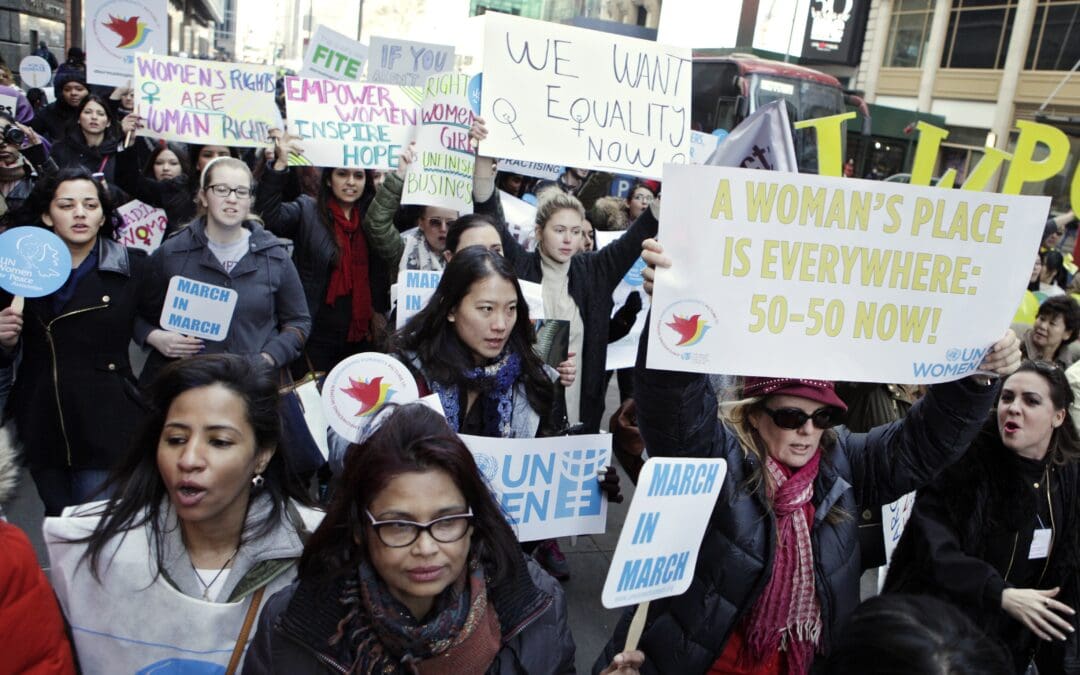
Today is International Women’s Day (IWD), the day to celebrate the social, economic, cultural, and political achievements of women around the world. In honor of the day I think it is important not only to recognize the historical influence of women, but to also look forward and promote a gender equal future.
International Women’s Day was first organized by the German socialist and theorist Clara Zetkin along with 100 delegates from 17 countries in March 1911. It was instituted in response to the numerous movements worldwide advocating for women’s right to vote, hold office and be given equal employment rights as men. It began as a massive protest by strong, brave, independent women when it was not “progressive” or “cool” to be a strong, brave, independent woman.
Since then, the holiday has evolved into a day of awareness on women’s progress in the ongoing fight for gender equality and a day to address issues across the globe that directly affect women. It has also expanded from one day to encompass the entire month of March, recognized as Women’s History month by President Obama in 2011. It has gained support in the media and across the internet; every year Google posts a doodle on its homepage in support for women around the world.
Each year carries with it a different theme typically focused on the progression of women’s rights through a specific action; this year’s theme is #PledgeforParity. Very similar to the #HeforShe campaign, #PledgeforParity encourages everyone, both men and women, to pledge to take a concrete step to help achieve gender parity more quickly. International Women’s day encourages people worldwide to take the pledge for gender equality and to act to become a leader for gender equality within our own communities.
We have come a long way since the inception of IWD, but we still have a long way to go in our journey for a gender equal world. Women are predicted to face another 118-year wait for the gender pay gap to close; currently only 55 of the 500 richest people in the world are women. Still only half of the world’s working-age women are in the labor force, compared to 77 percent of working-age men. 4 out of 5 victims of human trafficking are girls. According to the UN Foundation, “At least 250,000 maternal deaths and as many as 1.7 million newborn deaths would be averted if the need for both family planning and maternal and newborn health services were met.”
We still need International Women’s Day. As UN Secretary-General Ban Ki-moon said,
“We have shattered so many glass ceilings we created a carpet of shards. Now we are sweeping away the assumptions and bias of the past so women can advance across new frontiers.”
by Shelby Hettenbach | Mar 4, 2016 | Global Justice, Human Rights
#ThankYouMexico for finally joining the #HeforShe campaign fighting for gender equality!
#HeforShe was created by UN Women,whichwas established to accelerate progress on meeting the needs of women and girls worldwide. The campaign has been famously supported by Emma Watson, who made an extraordinary speech at the UN in support of this global movement. The goal is not only to discuss positive change, but to make it happen with real action.
The campaign’s main focus has been on encouraging men and boys to take action against inequalities faced by women and girls. Unlike most social media movements, the #HeforShe campaign has existed for a few years, but its momentum has not come to a halt. The campaign continues to grow, reaching hundreds of thousands of men and women worldwide. Currently the countries leading in participation and support include the United States, the United Kingdom, Ecuador, Mexico and Canada. In Iceland, 1 in 18 men have made the #HeForShe commitment, the highest percentage in the world.
And finally, Mexico has officially joined the campaign. At the launch event, Mexican Interior Minister Miguel Angel Osorio Chong said, “Women’s cause should always be our cause–the cause of men, this initiative calls us to deepen our reflection on our roles, attitudes and beliefs, and take down those practices that, without realizing it, distance us from our ideal of equality.” Perhaps the most influential part of Mexico’s campaign launch was the release of the video showing both men and women in their daily lives reversing conventional gender roles and performances:
Nos unimos a la campaña internacional Nosotros por Ellas #HeForShe de ONU Mujeres, la cual tiene como objetivo impulsar la igualdad de género y promocionar los DerechosHumanos de las #Mujeres.
Posted by gobmx on Tuesday, February 23, 2016
For all of their progress, Mexico still has a long way to go when it comes to gender equality and women’s rights. According to a Thompson Reuters Foundation survey, Mexico was ranked as one of the worst countries among industrialized nations in which to be a woman. Two-thirds of women in Mexico are victims of domestic violence. This number is unfathomable and unacceptable.
The UN Women Representative for Mexico, Ana Güezmes, said,
Despite the progress achieved in the last century, the hopes for real equality, substantive equality, in fact, are far from being realized.”
The campaign has not come close to achieving worldwide gender equality. However, with growing support, country by country, there may be hope for a gender equal world in the future.
by Jennifer Keck | Mar 2, 2016 | Global Justice, Human Rights
Apple’s refusal to help the FBI unlock the iPhone of one of the San Bernardino shooters has reignited the debate over how much privacy we can expect in the information age. This week, the company is facing a U.S. House of Representatives committee to defend its decision to seemingly put personal privacy above national security. But the final outcome may put more on line for many—by threatening their personal security. Around the world, human rights activists, journalists, and even victims of domestic violence rely on encryption to protect them from harm.
Security experts have been warning about the dangers of giving governments the keys to back doors of electronic devices. Not only could security breaches result in sensitive information falling into the hands of hackers and criminals, but China and governments in other foreign markets will likely demand a similar workaround.
While you may not be thrilled that the NSA is reading your texts, the threat of surveillance tends to be far more pervasive in the developing world. Technologies in the global south are often “more sophisticated, pervasive and abusive than those revealed by Edward Snowden in Western countries,” Human Rights lawyer Renata Avila told The Bertha Foundation.
Human Rights Activists and Lawyers
From Argentina to South Africa, governments are ramping up their efforts to track and identify dissenters in real-time, anywhere. Encryption and anonymity offer a zone of privacy to allow activists to exercise their right to free expression online. As UN Special Rapporteur David Kaye highlighted in his Report on encryption, anonymity, and the human rights framework, freedom of opinion in the digital space is the most relevant freedom for lawyers and human rights activists.
Journalists and Sources
Journalists—and their sources—also depend on encryption to ensure their security. When the French government wanted to restrict the use of encryption in 2002, Reporters without Borders countered their request, writing,
In some countries such as China, Vietnam and Tunisia, using encryption is the only option for dissidents and journalists who want to protect the content of their emails and above all to protect their lives.”
Today, the Committee to Protect Journalists recommends reporters in Syria use PGP encryption to keep their sources safe.
Victims of Domestic Violence
But personal security issues aren’t limited to journalist, activists, and their attorneys. Those seeking to escape domestic violence are often threatened by cyberstalking and phone-tracking malware. To protect victims’ privacy, Tech Safety offers a range of resources for domestic violence programs, sexual assault crisis centers, and victim service agencies. Weakening encryption could allow perpetrators to further exploit digital security flaws.
A Dangerous Precedent
If Apple is forced to design an encryption backdoor, it could set a dangerous precedent in which governments around the world can demand that other tech firms do the same. The final decision could jeopardize the personal security of millions in the name of national—or global—security.
by Shelby Hettenbach | Feb 19, 2016 | Global Justice, Human Rights
Last week, I attended the Tom Lantos Human Rights Commission briefing titled, “Seeking Justice for Atrocities: How the International Criminal Court Could Advance Accountability in Iraq and Syria.” The panel was made up of four highly qualified people in the field of international justice. I personally was very happy to see that three out of the four were women.
The panel included Minerva Mirabal, President of Parliamentarians for Global Action; Jane Stromseth, Professor of Law at Georgetown University; and James Stewart, Deputy Prosecutor of the International Criminal Court. Susana SaCouto, the Professorial Lecturer in Residence at American University, acted as mediator.
The event began, as most do, with each panelist giving an introductory speech. I was fully prepared for boredom to set in as I leaned back with my notepad in hand. However, I was quickley shocked back into full attention when Mirabal began to speak; her voice was filled with such intense passion, it was difficult to ignore.
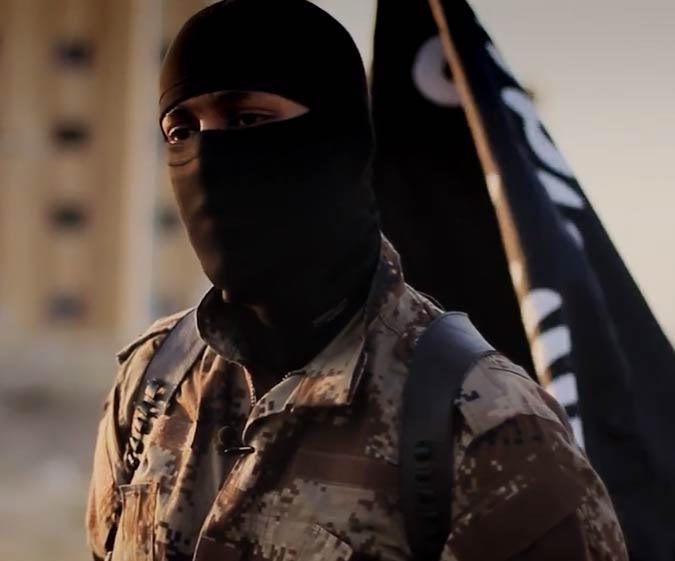
She began by stating very clearly that “it is a mistake to classify ISIS as terrorism,” explaining that ISIS is not only terrorising groups of people; they are also conquering territory and creating “systematic enslavement.” This makes them a far greater threat than a simple terrorist group. After her speech, I saw myself thinking about ISIS as more closely related to the Nazi regime than I ever had before. She ended her speech saying,
ISIS is the scourge of the 21st century.”
By this point, I was completely ready for the very intense hour ahead of me, and I was not disappointed as Stromseth took the floor. She took a very different approach than Mirabal: rather than passion, she captured me with logic. She began by asking and answering the “Why?” “What?” and “How?” questions in pursuing justice:
Why is it important to pursue justice and accountability now?
She answered this very simply, saying, “To stand in solidarity with the victims” of crimes committed by ISIS, as they deserve justice. On a larger scale she recognized that it is of the utmost importance to begin to build a strong system of international justice and to make it clear that mass atrocities will not be tolerated by the global community.
What realistic options exist today?
Stromseth began by recognizing that it is important first to allow domestic and national governments to take the lead. However, she further went on discuss the importance of an international system of support that is there to lend a hand when domestic and national governments fail. “So what can be done?” she asked. Perhaps the only currently available option is the potential for the ICC to prosecute ISIS criminals.
How can the US government in the face of the current constraints help lay the groundwork for justice and accountability now?
Evidentiary documentation, she stated, is key; there is a great need to gather evidence to document crimes committed by ISIS if there is any hope of pursuing justice. The other key point made by Stromseth was the importance of giving direct support to the survivors of atrocities–something that currently the United States is severely lacking.
Finally the panel came to Deputy Prosecutor Stewart, the only panelist directly serving the ICC. Stewart chose to speak less about ISIS specifically and more about the general powers and efforts of the ICC, saying,
We are the court of last resort. We are not the first responders.”
What stood out to me most about Stewart’s speech were his statements asking for help from the United States. He spoke about the difficulties the ICC has faced due to funding shortages; if the US were there to help, the ICC would be able to focus more clearly, as the lack of funding is a “huge distraction.”
It was very clear to me after this event that the world needs the United States to support the International Criminal Court. It is no longer up for debate. We must step into the world of global justice and provide both financial and governmental support to those attempting to bring justice to victims of mass atrocities.