by Michael Curtin | Sep 16, 2015 | Global Cooperation, United Nations
In the last few weeks, the world’s attention has been riveted on the crises in China and the upheaval in the emerging markets. We have all felt the consequences of the global economic turmoil. The moral of this story: What happens abroad has significant ramifications here at home. It would behoove the American public to take note of this fact.
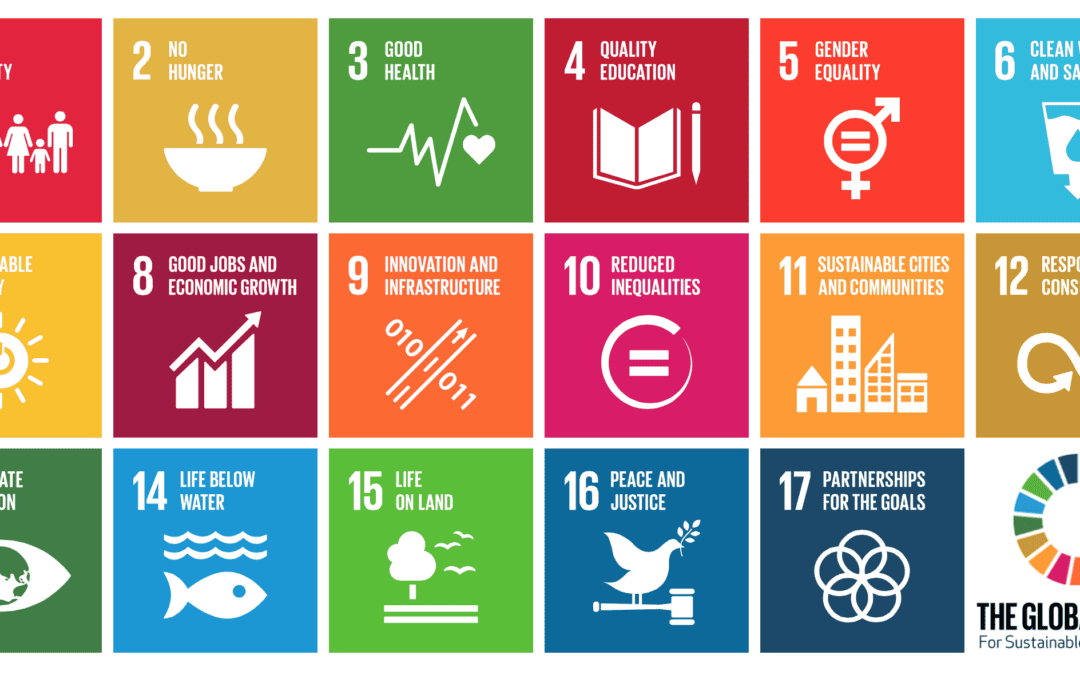
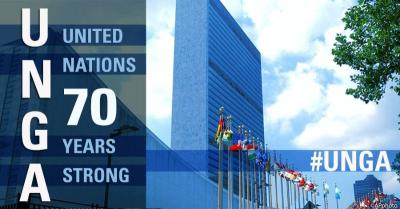
This story is no different than the one that will soon play out at the United Nations at the end of September. Heads of State and other well-known dignitaries will descend upon New York City for the 70th UN General Assembly. This is no ordinary meeting of the General Assembly; this year it will pay tribute to the global institution’s 70th anniversary of its founding. The post-2015 development agenda will take center stage as leaders will mark the transition from the Millennium Development Goals (MDGs) to the Sustainable Development Goals (SDGs) that will lead the way forward for the next 15 years.
How do they work? Why should I care?
As with the global economic turbulence we continue to witness on a daily basis leaving none of us unscathed, the SDGs will play a similar role in that all sectors of global society will be touched in some way. From ending poverty and hunger to ensuring the health and well-being of all; to providing education and access to clean water and energy; to growing economies in a sustainably responsible manner to galvanizing the world to act on climate change; to preventing conflicts and promoting peace and ensuring post-conflict peacebuilding, everyone is affected in some way by these goals.
The interconnected and interdependent world in which we all live and work requires each of us to contribute as global citizens and to be good stewards of the environment and the world around us. We are dependent upon one another to make it work; apathy can play no role moving forward if these goals are to succeed.
These goals are guidelines for the world to follow. The criticism of the MDGs was that they were too narrow in scope; the SDGs have expanded upon them to include areas such as human rights and economic development.
In addition, it is now incumbent upon every State to follow and achieve these goals, not only developing or poor nations. The focus now is upon getting to the root causes of global poverty, something the MDGs did not adequately do.
Data shows the arrow is pointing up as a result of UN efforts
There has been a great deal of criticism levied against the UN regarding the MDGs. The SDGs has its share of critics as well. The criticisms have been levied at the number of goals—17—and the number targets—169. However, a closer look at the numbers reveals there has been some remarkable success achieved due to their efforts.
To compare, 50 years ago 20 million children under the age of five died. In 2011, according to the founder of the Copenhagen Consensus Center, Bjorn Lomborg, the world saw a 33% decrease to 6.9 million—still far too high, but a significant drop nonetheless.
In 1970, only 5% of infants were vaccinated against diseases such as measles, tetanus, whooping cough, diphtheria, and polio. When the MDGs began in 2000, this rate increased to 85%, which had the positive effect of saving three million children. Vaccines have proven to work and be effective against a multitude of illnesses.
In the area of education, the rate of children not attending school is estimated to be below 10%; over 50 years ago, it was more than 30%. With respect to global poverty, there has also been a dramatic decrease in people below the poverty line. Based on figures from the World Bank, “…in 2011, 17 percent of people in the developing world lived at or below $1.25 a day. That’s down from 43 percent in 1990 and 52 percent in 1981.”
Where do we go from here?
What these statistics show us is that the UN plays a vital role in transforming the lives of people around the world. It is now incumbent upon the global community to build upon the successes the UN achieved through the MDGs. The SDGs are the next set of ambitious goals the global body has laid out for the next 15 years. It is vital that the world takes heed of what can be accomplished if we all work together for a common purpose.
This article was originally published for The Northern New Jersey Chapter of UNA-USA. It has been cross-posted with the author’s permission.
by Don Kraus | Sep 9, 2015 | Climate Justice, Global Cooperation
In December of this year, 196 nations will meet in Paris to close a global deal to address climate change. With less than three months and five official negotiating days left before the Paris UN conference, diplomats are working out the key remaining disagreements.
The major concerns revolve around money: how much responsibility rich nations will take for climate change compared to the developing countries that need to power their growing economies and populations; and how developed nations will fulfill their agreement of $100 billion per year of climate finance to begin in 2020.
It’s no surprise that cold hard cash is at the center of these disputes. At its core, climate change is an economic problem. Cheap and subsidized coal, oil, and gas fueled the industrial revolution and high quality of life in the West. We didn’t realize until the 1960s and 1970s that there was also a huge expense we failed to foresee—pollution and climate change.
Here’s an analogy to consider: the 2008 financial crisis was created by insatiable banks and mortgage brokers who offered loans with “easy” terms to under-qualified customers that didn’t reflect the true risks involved and created a housing market bubble. When the bubble finally popped, homeowners who couldn’t afford increased mortgage interest rates and small investors took the brunt of the loss.
Fossil fuels are being sold at a price that doesn’t reflect the true cost of their impact on the environment. Businesses, governments and even consumers are creating a “carbon bubble” that when it pops may have both severe financial repercussions and, if not addressed soon enough, will trigger uncontrollable climate damage. And, like the housing bubble, those who will pay the most severe costs are the poor, elderly and children.
Unfortunately, the 83-page draft climate agreement under negotiation does nothing to prioritize putting a price on carbon pollutants. To avoid severe climate change, it’s essential that the final Paris agreement makes carbon pricing a central element of the solution. It will take an economic response to address what is essentially an economic problem. Doing so will put the brunt of liability on those industries that are most responsible for climate crises and have the greatest means of limiting damage. Rather than trying to regulate emissions reduction, a carbon price will incentivize polluters to change their ways or be forced to pay for it. A carbon price will also motivate clean technologies and new low-carbon economic growth. Currently about 40 countries and over 20 cities, states and provinces use carbon pricing mechanisms or have plans to implement them.
There are basically two types of carbon pricing:
- Emissions trade systems (ETS)
Also known as a cap-and-trade system , an ETS limits the amount of greenhouse gas emissions and lowers the cap over time. Carbon polluting industries receive emissions permits that can be sold by lower emitters to larger emitters, creating a market price for greenhouse gas emissions. Lowering the cap reduces overall emissions and pushes the market to increase the price of carbon, which discourages the use of fossil fuels.
A carbon tax or fee directly sets a price on carbon at the source (mine, well, or port of entry) with a set and rising rate. It can be revenue-neutral with consumers reimbursed for higher energy costs. Nations can also impose border adjustments for goods imported from non-participating countries in order to maintain the competitiveness of domestic industries.
The climate agreements under consideration only mention emission trading, and do so in a peripheral manner. Carbon fees should also be included as an alternative means of pricing carbon. Joe Robertson, Citizens’ Climate Lobby’s global strategy director, says,
Carbon pricing is about economic fairness and reliable prosperity. Right now, everything we do in the economy carries hidden costs, because we are not accounting for the true cost of how we get energy. Getting principled language to guide national policies toward more efficient low-carbon development, through effective, efficient, transparent carbon pricing, means more reliable innovation, investment, hiring and climate action, for everyone.
An impressive group of leaders from across the government, the private sector and civil society have formed the Carbon Pricing Leadership Coalition to ensure smart, effective carbon pricing policies are adopted. But much more needs to be done in the next few months to get carbon pricing right.
A global climate change agreement without a clear economic solution to this looming problem could be too little, too late—but there’s still time to craft an efficient, effective and equitable correction to the most pressing problem of our times.
This article originally appeared in The Huffington Post and is cross-posted with the author’s permission.
by Father Ben Urmston | Aug 28, 2015 | Global Cooperation, Peace & Disarmament
There are those who think the U.S. suffers from prejudice against Obama, competition between political parties, bullies who have the ability to exert power, and vast financial inequality with only limited democracy left.
In my humble opinion, the human family hasn’t acted rationally since the beginning of World War I. Thus it comes as no surprise that an agreement with Iran approved by so many experts and groups looks like it will fail.
The Iran agreement makes war or some form of coercion less likely. The agreement will improve our relations with Iran, Israel, and other nations.
Voting against the agreement makes us look foolish and irrational. Without the deal, nuclear militarization and international strife will be more likely. The human family will have more needless conflict and differences.
I hope this take on evil and prejudice is incorrect. I hope reason and humanity prevail over deep-seated emotion and unacknowledged evil.
Some may feel that this hope will take a miracle, but I believe in miracles. To be honest, I think it’s a miracle that the human family hasn’t blown itself up yet.
by Jack Pearce | Aug 14, 2015 | Global Cooperation, Peace & Disarmament
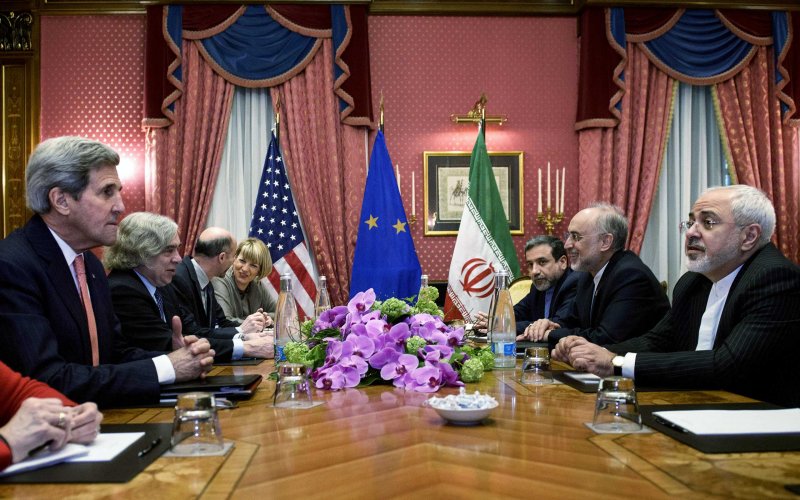
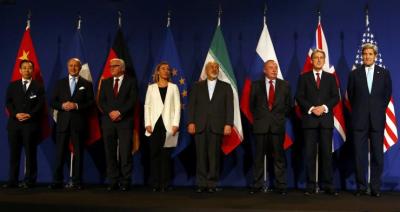
The P5+1 Iran Joint Comprehensive Plan of Action is vital for reducing the risk of nuclear militarization and for allowing Iran to operate much more freely in international commerce—to pump more oil and gas, buy more freely abroad, entertain more direct foreign investment, etc. From the world’s perspective, the deal opens up much more international commerce with Iran.
But there is a broader perspective as well. In the modern history of Iran, this deal can be a landmark affecting both the internal dynamics and the external behavior of the country.
Iran, the current embodiment of the Persian culture and heir to one of the oldest major civilizations, has had a turbulent passage through the 20th and 21st centuries. It may be fair to say that Iran has faced two major governance challenges.
One challenge has been choosing among or somehow melding the open, secular, and democratic institutions which have grown out of Europe or “the West”; the dynastic traditions of much of Iran’s past; and the cultural and sometimes theocratic traditions of Islam, imposed on Persia by Arab conquerors in the 7th-10th centuries.
Iran nominally became a constitutional monarchy as early as 1906, but the roles of monarch and parliament have shifted from time to time. Monarchs have become highly autocratic for long stretches, including, according to some records, the period between 1953 and the revolution of 1979. That 1979 revolution ousted a Shah strongly identified with the West, and particularly the United States, who instituted economic and social changes deeply disturbing to Iran’s clerical establishment, to some of the land-owning elites, and to more traditional elements of its population.
Iran’s government now incorporates elections, a parliament, and a president, but ultimate authority is attributed to a cleric. Conceptually the State operates under a form of “guardianship” by an Islamic clerical establishment. The governmental, social, and commercial structures are complex and somewhat opaque, but show considerable tensions between elements of the population much attracted by “Western” norms and a repressive theocracy.
The second challenge is the struggle to maintain effective national sovereignty in an intrusive world. An Anglo-Russian Convention of 1907 divided Persia into spheres of influence, regardless of national sovereignty. World War II saw an Anglo-Soviet invasion of Iran. After that Iran regained sovereignty, and an elected Prime Minister attempted to nationalize the oil industry, which the British had effectively controlled for over a century up to that time. The result was a British blockade of the country, and a British-American overthrow of the Iranian government in 1953.
When the government installed at the behest of Britain and the United States was itself overthrown in 1979, the ascendant Islamic leaders exerted control of Iran’s extensive petrochemical assets and attempted a massive restructuring of the economy and society along centralized, authoritarian and theocratic lines.
In this latest embodiment, Iran’s attempts to exert influence in the Middle East, including support for groups hostile to Israel, led to extensive sanctions by the United States. Such sanctions were strengthened by involving Europe and the United Nations on the basis of fears that Iran was nearing nuclear weapon capability. The net effect has been an extensive physical and financial blockade, substantially restricting the performance of the Iranian economy.
All this history has been evident in the process of negotiating the agreements now before our Congress. Though Supreme Leader Khamenei authorized negotiations with the West, the tensions of Iran’s past have been evident. Khamenei has articulated the suspicions and insular tendencies of the clerical establishment and other hardliners, while Iran’s President and its negotiators have indicated the desire of much of Iran for some accommodation with the remainder of the world economy and society.
In this context, the agreement has been framed as a limited one: a trade of new restraints on nuclear weaponization for relief from the current chokehold on Iran’s economy. Our diplomats have, quite honestly, made clear that there is no one option that would certainly and quickly bring all our “Western” goals in the Middle East into harmony with those of present-day Iran.
But if the agreement is enacted and respected by the parties, it will mark a historic re-opening of trade and social interchange between Iran and the West. If this re-opening does in fact raise the economic and social horizons of the Iranian population, the relative positions of the modernizers and the current insular elites are likely to change over time.
I learned long ago in India that any major civilization experiences cultural momentum, or inertia, if you will. This is certainly true of Iran. Thus our representatives have been wise in counseling us not to expect sudden affection from Iran or broad emulation of us in its government.
But the Iran deal opens pathways to peaceful accommodations among the nations involved, greater nuclear security for our allies in the Middle East, and greater integration of world societies. This is worth having. If it is implemented in accord with its provisions and spirit, the deal is likely to become a new and welcome landmark both in Iran’s internal evolution and in its relationships with the global community. It offers all of us better prospects.
by Tad Daley | Jul 31, 2015 | Global Cooperation, World Federation
The new report from the Commission on Global Security, Justice, and Governance, co-chaired by former U.S. Secretary of State Madeleine Albright, suggests that the 75th anniversary year in 2020 might be the moment to reinvent the United Nations.
What kind of United Nations would we invent if we were designing it from scratch today? The UN Charter was signed by President Harry S. Truman and other world leaders in San Francisco on June 26th, 1945, and came into force three months later on October 24th. A long seven decades later, our world seems smaller, our fates more intertwined, and our challenges drastically different from those confronting the generation that emerged from the rubble of the Second World War. Is it time to begin devising architectures of global governance not “to avoid the mistakes of the 1930s,” but instead intended for our own unfolding 21st Century?
If so, we have a guide to start the journey. It’s the Commission on Global Security, Justice, and Governance, chaired by former U.S. Secretary of State and UN Ambassador Madeleine Albright and former Nigerian Foreign Minister and UN Under-Secretary-General Ibrahim Gambari. They have released a report for the UN’s upcoming 70th Anniversary Summit in September, called Confronting the Crisis of Global Governance. Their recommendations, issued at public launch events in The Hague on June 16th and again in Washington D.C. on July 9th, focus on three broad areas: climate change, the intersection between “cross-border economic shocks” and an array of possible cyber cataclysms, and intrastate violence “in fragile states.” (The Commission steers clear of the possibility of interstate military clashes–also known as wars–in places like the former Soviet Union or the South China Sea or the Indian subcontinent today, and who knows where tomorrow.)
There is much to applaud in this report. In the climate realm, the Commission’s suggestions include forming an “International Carbon Monitoring Entity” and a “Climate Engineering Advisory Board,” and it devotes welcome attention to atmospheric modification and climate adaptation rather than concentrating exclusively on emissions reduction. In the realm of a “hyperconnected global economy,” it declares that vastly increasing Internet access and cybersecurity in the Global South will both help to prevent cybercrime worldwide, and promote a renewed focus on the UN’s Sustainable Development Goals. And in the intrastate violence realm, its suggestions include “peacebuilding audits” focused on atrocity prevention, investments in early-warning capabilities and rapid-response UN mediation teams, and “particular attention to inclusion of women in peace processes.” Most of these proposals, one might say, focus less on addressing these transnational challenges in the short term than on creating new tools of global governance to surmount them over the long term.
On three particular points, the Commission offered strong and stirring recommendations, but unfortunately failed to take the next step, to spell out the logical conclusion, and to openly state the eventual historical goal.
VETO THE VETO
First, with regard to the UN Security Council, the Commission calls for increasing its “representative legitimacy” by adding new members, creating a new kind of “dissenting vote … (that would) not block passage of a resolution,” and “restraint in the use of the veto.” But if the United Nations is ever to become both democratic and consistently effective, the veto doesn’t need to be “restrained.” The veto needs to be eliminated.
Under Article 27 of the 1945 UN Charter, the representatives of Britain, France, America, Russia, and China can “veto” Security Council action. On an issue before the Council, the government of one single country can prevent all other countries from any kind of collective action at all. One of the most blatant examples came in 1996, when the vote to retain Boutros Boutros-Ghali as Secretary-General was 14-1 … but the one won. (It was the United States, and soon thereafter Mr. Boutros-Ghali was gone.) Even when the veto is not overtly wielded, it dominates Council decision-making. The only initiatives that even get discussed are ones which could conceivably pass muster with all five of the permanent members. It’s the most extreme possible case of what the eminent political scientist Walter Dean Burnham calls “the politics of excluded alternatives.”
Imagine if any action by the U.S. Congress could be blocked by the governor of, oh, California, Texas, New York, Wisconsin or Florida. To make the analogy even more apt, there would be no direct election to the US Congress–all representatives would simply be appointed and instructed by those same governors. Would that be democratic? Would that be effective? Could the U.S. government could get anything done at all if that was its design?
But that is the UN’s design, and it has prevailed and prevented collaborative action for 70 long years. No wonder people consider the UN to be ineffectual or irrelevant. The problem with the UN is not “Council deadlock” or “absence of political will.” The problem with the UN is the design of the UN.
THE GENERAL ASSEMBLY – ONE NATION, ONE VOTE, NO POWER
Second, with regard to the UN General Assembly, the Commission recommends the creation of a “UN Parliamentary Network,” which it describes as an “advisory body … to raise greater awareness and participation in UN governance.” That’s an idea that has gained much steam in recent years, perhaps most notably through the work of the Campaign for a UN Parliamentary Assembly. The core concept is that individuals already elected to national legislatures–the Japanese Diet, the Kenyan Parliament, the U.S. Congress – could be somehow selected to serve in such an international body, and then indeed both advise the General Assembly and generate for the UN much greater public attention and involvement.
But the hope of many is that this new forum could someday evolve into a body directly elected by voters. That’s not so far-fetched. An American woman living in Los Angeles elects particular individuals to represent her in the LA City Council, the California state legislature, and the U.S. Congress. Why shouldn’t she be able to directly choose someone–at the ballot box — to serve as her voice at the global level as well?
The Commission did not make that point. Nor did it recommend many other hypothetical forms of more democratic global decision-making. Today’s General Assembly has three fundamental flaws. First, it represents only states, not people. Second, its basic operating principle of one nation one vote — Bhutan and Gambia wielding the same authority as India and Brazil — could hardly be more undemocratic (or absurd). Third, its decisions serve only as entreaties, supplications, pleas — it has no power to make actual laws. While a “UN Parliamentary Network” would be a small step toward mitigating the first, it would do nothing about the second and third.
The obvious solution to those defects in the UN’s design, proposed many times over since 1945, is the establishment of some kind of weighted voting system — to provide each member state with a voting power that reflects its actual influence in today’s world. One, invented in the 1970s by the late founder of the Center for War/Peace Studies Richard Hudson and known as the “Binding Triad,” would enable resolutions to gain the force of international law if the vote represented a majority of the states, a majority of the people, and a majority of the financial contributions to the UN. Another more elaborate system was put forth by Professor Joseph Schwartzberg of the University of Minnesota in his superb 2013 book Transforming the United Nations System: Designs for a Workable World. “One nation one vote” (and no power) is surely not the one and only concept we can ever envisage to legislate for and govern one world.
AN ARMY OF HUMANITY TO FIGHT CRIMES AGAINST HUMANITY
Finally, with regard to the intersection of justice and security, the Commission chose not to put forth arguably the single most promising idea to prevent genocide and crimes against humanity – a permanent all-volunteer UN rapid deployment force (UNRDF). To bring an end to eruptions of violence when national governments are unwilling to deploy their own national militaries because the fight in question does not engage their own national interests, the world needs a UN army.
This idea was first put forward in 1948, when the first UN Secretary-General, Trygve Lie, called in a speech at Harvard for establishing a “United Nations Legion.” More than half a century later, his successor Kofi Annan observed with some exasperation that the UN is the only fire brigade in the world that cannot obtain a fire engine until after the fire has broken out.
Rwanda stands as the quintessential prototype. The genocide there erupted almost overnight in the spring of 1994. The UN Secretary General, Mr. Boutros-Ghali, implored developed states to send just a few thousand troops – which most experts believe could have quickly established safe corridors and safe havens, and provided a safe refuge for hundreds of thousands of innocents. Most Americans were appalled and sickened by the horror in Rwanda. But no one could credibly argue that America was directly threatened by the horror in Rwanda. The same was true for virtually every other country in the world. So for ten long weeks, no outside country did send troops. (Except to evacuate their own citizens – that’s a vital national interest.)
The Srebrenica massacre, 20 years ago this week, stands as one of countless other examples. And the answer to the conundrum is a UNRDF. (Many civil society organizations call it instead a “UN Emergency Peace Service” to emphasize that it could do much more than just deal military defeat to the bad guys.) Its purpose, its raison d’être, would be to defend not the national interests of any particular state, but the common human interest we all share in creating a human future where genocide has been relegated to the dustbin of history.
Such a UNRDF could be dispatched into situations where horrifying violent infernos don’t happen to threaten to set our own houses on fire. It could bring a quick and decisive end to ghastly crimes. It could bring the perpetrators to justice. It could deter them from ever committing their crimes in the first place. And it could free the American president in particular from the excruciating dilemma of dispatching “the most powerful military in the world” to stop crimes that have little to do with us, or doing nothing while the nightmare continues to unfold.
Perhaps most importantly, such a UNRDF would give individuals all around the world an opportunity to do more than just “serve their country.” It would give them an opportunity to serve humanity. Consider Dylan, an average 25-year-old American dude, channel surfing on his couch one night in April of 2014. CNN is talking about some group called “Boko Haram.” Apparently they have kidnapped some 276 schoolgirls in Nigeria, straight out of their own government secondary school. Pretty outrageous. The Nigerian military seems unable to respond. Dylan takes a look at his phone, and sees a rapidly trending hashtag — #bringbackourgirls. He starts to get more interested, and starts wondering what he can do about it.
Then a commercial comes on. It’s a recruiting commercial for the U.S. Navy. And it ends with the tagline “a global force for good.” That’s it! Dylan can volunteer for the U.S. Navy. Maybe even become a Navy SEAL. Yes, it’s probably too late for him to get into action in time to rescue those schoolgirls. But bringing an end to that kind of atrocity, by serving in a “global force,” that’s constituted “for good” — that’s what Dylan wants to do.
Except he can’t.
Because the U.S. military is a national military force. It exists to protect our national security and national interests. Has anyone even suggested that U.S. Navy SEALS, however brave and skilled and lethal, might be dispatched to retrieve the girls kidnapped by Boko Haram or to bring an end to the long list of other atrocities the group has committed since then?
Of course not. Because the villains who comprise Boko Haram do not present a direct threat to America. And however willing Dylan might be to put his life on the line to put a stop to the ongoing barbarities of Boko Haram (their latest innovation seems to be forcing schoolgirls to become suicide bombers and cutthroat executioners), there is literally no place for him to volunteer to do so.
No vehicle for him to hear the phrase, not just from his fellow Americans but from his fellow Earthlings, “Thank you for your service.”
And no force outside Nigeria, anywhere on Earth, tasked with the mission of bringing Boko Haram to an end.
2020 VISION
Why did the Commission fail to articulate these logical next steps, these game-changing global governance inventions? Undoubtedly, because few of them can be considered “politically realistic” in the near term. To choose just one example, when talk of getting rid of the veto was very much in the air during the 50th anniversary year in 1995, The Economist magazine tossed a cold bucket of water on the enthusiasts when it reminded everyone that “the vetoers can veto a veto of the veto.”
But how will we ever get rid of the veto if no one ever even says that we ought to get rid of the veto? We profoundly constrain our ability to imagine alternative, brighter futures if we insist that every single proposal be weighed down by the heavy ball and chain of “PPP”: present political possibility. Nothing will ever become politically realistic unless someone first declares it to be politically desirable and proclaims it, however distantly, as an eventual historical goal. If politics, as every freshman knows, is the art of the possible, then political change ought to be about expanding the boundaries of future possibility.
Fortunately, however, the Commission atones for these reluctances with perhaps its single most important recommendation. It calls for five-year process culminating in 2020–the 75th anniversary of the end of WWII, the dawn of the atomic age, and the birth of the United Nations — in a formal meeting which they call a “World Conference on Global Institutions.” Such a gathering might be simply another “summit” of world leaders. Or, perhaps instead, says the Commission, “consideration could be given to UN Charter Articles 108 or 109 for pursuing specific amendments to the Charter.”
The framers in San Francisco clearly did not intend for their Charter to stand forever as the end of history. That is why they included Article 108 to enact particular Charter revisions, and also Article 109 – a provision for convening “A General Conference of the Members of the United Nations for the purpose of reviewing the present Charter.” Indeed, Article 109(3) indicates that the framers hoped that such a conference would be summoned no later than “the tenth annual session” — 1955! But more than 2/3 of a century after the UN’s founding, no such gathering to examine the basic structure of its Charter has ever been convened.
If civil society activists, on environment and human rights and women’s rights and inequality and peace and justice, start right now getting behind the Commission’s recommendation for such a World Conference, it could become a tremendous engine for international progress. In the nongovernmental realm, such a call to action could produce a broad coalition of actors who might possess many different issue priorities and global governance visions, but who could all come together behind a formal process to discern the most appropriate vision for the historical conditions of our advancing 21st Century. (The Commission to its credit urges nongovernmental participation and civil society agitation on nearly every page.) And in the intergovernmental realm – especially if a bit of a buzz begins about assembling their “World Conference” under the authority of the Charter itself–all sorts of fascinating scenarios arise when one realizes that Article 109 is one of the few things that is not, repeat not, subject to the veto. Even if Britain, France, China, Russia and America all stand opposed, if 2/3 of the General Assembly and 3/5 of the Security Council vote in favor, a “General Conference … for the purpose of reviewing the present Charter” willbe called to order.
After signing the UN Charter in San Francisco, President Truman returned to Washington D.C. by train. And when he stopped off in Kansas City, he chose to emphasize that the new United Nations was a step on a journey, rather than the end of the road. “Now when Kansas and Colorado have a quarrel over the water in the Arkansas River,” he said, “they don’t call out the National Guard and go to war over it. They bring a suit in the Supreme Court and abide by the decision … It will be just as easy for nations to get along in a republic of the world as it is for you to get along in the republic of the United States.”
Strobe Talbott, the Brookings Institution president already on everyone’s short list for Secretary of State in a Hilary Clinton administration, tells us in his 2008 book The Great Experiment: The Story of Ancient Empires, Modern States, and the Quest for a Global Nation that Mr. Truman kept in his wallet for most of his life — recopied dozens of times by his own hand — these verses from the 19th Century British poet laureate Alfred, Lord Tennyson.
“For I dipt into the future, far as human eye could see
Saw the Vision of the world, and all the wonders that would be
Till the war-drum throbbed no longer, and the battle-flags were furl’d
In the Parliament of Man, the Federation of the World.”
Surely, we could pay no greater tribute to Harry S. Truman, and Franklin D. Roosevelt, and the other architects of the 1945 UN Charter than to begin to imagine the contours–with the League of Nations the first and the United Nations the second–of what we might call our “Third Generation World Organization.” Such a repurposed and renewed body might even tackle not just bloody intrastate upheavals but interstate military confrontations–and actually find a way to save succeeding generations from the scourge of war. Perhaps in that way, we might someday bring about the next step in the political and social evolution of our human species.
by Rene Wadlow | Jul 31, 2015 | Global Cooperation, Peace & Disarmament
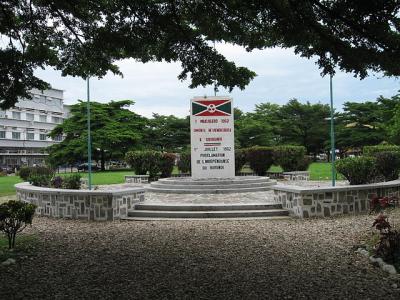
The violent presidential election in Burundi highlights the need for UN election-monitoring services. On the eve of the July 21 presidential election, Taye-Brook Zerihoun, UN Assistant Secretary-General for Political Affairs warned that,
The grave danger the country faces should not be underestimated, given the increasing polarization and the apparent choice of Burundian leaders to put personal interest before those of the country.
Since April, when President Pierre Nkurunziza announced that he was seeking a third term as president, there has been violence: street demonstrations have been met with military and police repression; high-ranking military officers led a failed coup d’état; and over 150,000 people have fled the country, fearing the growth of violent actions.
Some observers feared that the tensions could lead to ethnic divisions, which have always been an important factor in Burundi politics. Since coming to power in 2005 after a period of ethnic violence, Pierre Nkurunziza has kept relative calm in the country, but there has not been a nation-wide increase in socio-economic welfare. A few persons close to the political leaders have made money, but this has only increased social tensions.
In the July 21 election, Nkurunziza received some 70% of the votes; his long-time rival Agathon Rwasa about 19%. It was impossible to organize a nation-wide opposition. There are 17 groupings that call themselves “political parties,” but none has a national audience. There was no debate on issues, and the media is under the control of the President. The President has rivals within his own political grouping. The military officers who led the failed coup had been close to the President.
The conditions of the election highlight the need for a professional corps of election observers. It is not enough to have observers during the polling–they must be there during the election campaign itself and in the immediate post-election period during which street violence may break out. Citizens of the World have often called for international or UN supervision of elections.
The organization of elections remains a prerogative of national and local government. However, in cases where the election campaign can be tense and prone to violence or when there has been a past history of fraud, international independent monitors are important agents of fair elections and help to protect human rights, to strengthen the rule of law, and to ensure pluralistic democracy.
Election observation work is an important activity for the 56 member States of the Organization for Security and Cooperation in Europe (OSCE) and its Office for Democratic Institutions and Human Rights housed in Warsaw, Poland. The Office for Democratic Institutions, originally called the Office for Free Elections, first played an important role in the democratic transition in post-communist countries. While its observation of elections is its most visible task, the Office also conducts a number of other useful election-related activities: reviewing electoral legislation, training observers, and publishing guidelines and handbooks about electoral issues.
The Office for Democratic Institutions has a holistic approach to election monitoring, which includes the following:
-
Respect for basic fundamental freedoms such as the freedom of assembly, association, and expression;
-
Respect for the civil and political rights of the candidates and voters;
-
Compilation of accurate voter lists;
-
Equal opportunities to campaign in a free environment;
-
Equitable access to the media;
-
Impartial election administrative bodies;
-
Unhindered access for international and domestic election observers;
-
Effective representation and participation of women;
-
Effective representation of national minorities;
-
Access for disabled voters;
-
Honest and transparent counting and tabulation of the votes;
-
Effective complaints and appeals process with an independent judiciary.
Electoral fraud is rare at the counting stage. One can recount a stuffed box and come up with the same number of votes. This is why the whole electoral process needs to be monitored by independent election agents.
The United Nations has no comparable permanent election monitoring office. However, on an ad hocbasis, the UN played an important monitoring role in the first post-conflict elections in Cambodia in 1993 and the first multi-racial elections in South Africa in 1994. The Office of the High Commissioner for Human Rights has provided election aid and monitoring in countries such as Nepal, as that country was coming out of a decade of armed violence.
The current UN-based election-monitoring services need to be strengthened. The UN General Assembly should mandate a study on the means by which the UN could provide a universal election-monitoring service drawing upon the rich experience of the OSCE.