by Victoria Barrow | Oct 30, 2015 | Climate Justice, Global Cooperation, News
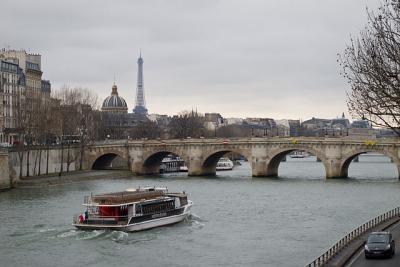
No, it doesn’t involve pastries or the Eiffel tower.
From November 30 to December 11, over 190 nations will meet up in Paris to plan a new global agreement on climate change. This agreement will replace current policies on greenhouse gas emissions, which expire in 2020.
Here’s what you need to know:
1. What is it?
This conference is formally known as COP21, or the “21st Session of the Conference of the Parties to the United Nations Framework Convention on Climate Change (UNFCCC).”
The UNFCCC was created at the Rio de Janeiro Summit in 1992 and adopted in 1994. It has been ratified by 196 countries.
These countries make up the Conference of Parties (COP): the convention’s decision-making body. Every year the COP meets up and discusses how to meet climate change goals.
This year’s convention in Paris will be the 21st, hence the name COP21.
2. Why does it matter?
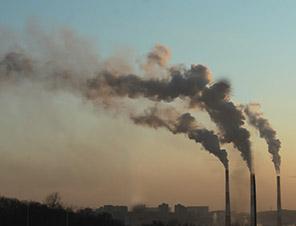
Greenhouse gas emissions cause global temperature rises. The threshold beyond which global warming becomes irreversible is 2C above pre-industrial levels.
According to the Intergovernmental Panel on Climate Change, with today’s emissions we are heading for a rise of 5C. There is still, however, time to limit climate change– just not very much time.
Need I remind you of why this temperature rise could be catastrophic?
3. What makes this conference different?
You may be thinking, “There have already been 20 other conferences. Why is this one so special?” Well, none of the prior conferences succeeded in creating a legally binding agreement accepted by all 196 countries.
In 1997, for example, the Kyoto protocol was produced, which suggested a 5% cut in emissions compared to 1990 by 2012. Because not enough countries agreed to it, however, it never became legally binding. This was largely due to the US’s decision not to ratify. Furthermore, the countries that did make commitments under Kyoto were not sanctioned if they failed to take action.
More than ten years later, at the 2009 conference held in Copenhagen, all of the world’s biggest emitters finally agreed to limit their greenhouse gas emissions. Once again, however, the conference failed to produce a legally binding agreement.
The hope for the Paris conference is that a legally binding agreement will finally be ratified by all involved countries.
Source: White House
4. What steps have already been taken?
The good news is that progress has already been made towards creating this new global agreement.
At the 2014 climate summit in Lima, countries agreed to make individual climate pledges that would be submitted to the UN prior to the Paris conference. These pledges, known as intended nationally determined contributions, or INDCs, will largely determine how countries will tackle climate change after 2020.
INDCs must contain information on how a country plans to reduce emissions. Developing countries, who have contributed less to emissions, must explain how they plan on developing in a sustainable way.
As of today, over 150 countries have submitted their INDCs, covering more than 90% of world emissions.
Even more encouraging is the fact that all of the top polluters have submitted climate pledges:
China: cut greenhouse gas emissions by 60-65% from 2005 levels and cap emissions by 2030
US: cut emissions to 28% below 2005 levels by 2025
EU: 40% domestic reduction in greenhouse gases by 2030 compared to 1990 levels
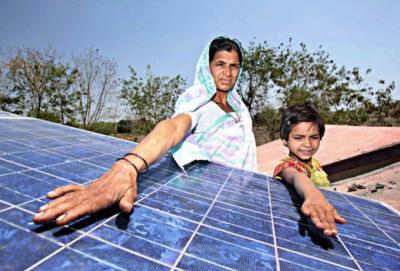
India: obtain 40% of its electricity from low carbon sources by 2030
5. What still needs to be done?
Although it is promising that so many countries have pledged to reduce emissions, the Paris agreement is far from being settled.
Many developing countries, for example, want richer countries to help finance their transition to clean technologies. Rich country governments, however, argue that funding should come from the private sector or from international development banks such as the World Bank.
Furthermore, the commitments that have been made so far will not be enough to avoid the 2C of warming temperature threshold. One suggestion that has been made is to engage “non-state actors” such as businesses, local governments, and municipalities to do more.
In other words, we cannot rely purely on the UN and the Paris conference to solve our climate problems. Every single one of us has a responsibility to reduce emissions and live in a more sustainable way.
Here at Citizens for Global Solutions, we believe that every citizen has a role to play in solving global problems.
Want to make a difference? Become a Global Citizen today!
by Jack Pearce | Oct 29, 2015 | Climate Justice, Global Cooperation
In a prior post in the International Affairs Forum, I tried to outline what Western and Eastern polities might want out of the ever-fractious Middle East, using the P5+1 deal with Iran as a focus point.
Basically, this would be peace, prosperity, citizen-centered governance, and openness to global economic and social systems. In other words, we have had enough of this area’s interminable squabbling. We need to aim for more constructive regional and global engagement.
But there is a deeper set of issues and needs. First, let us take water.
Several analyses suggest that the recent major drought in the area of Syria was a factor in Syria’s unraveling. Water shortages are of even broader scope in the area.
If the people of Syria, Iraq, Kuwait, and even Saudi Arabia are impoverished by water depletion, governance systems are likely to destabilize, refugees will multiply, and oil supplies will be prejudiced as a result of civic unrest and violence.
This would be a disappointing future for those in the area. But why should Americans, Europeans, and everyone else care? The temptation is to think or say that the Middle East was dry before we appeared on its scene, and that is not our responsibility.
Enter oil. The Persian Gulf area has roughly half the world’s oil reserves. These are the lowest cost reserves available. The Persian Gulf countries currently originate over ⅓ of global crude oil exports. At present, the Strait of Hormuz (near the opening of the Persian Gulf to the Indian Ocean) is a potential choke point for the flow of this oil.
If governments in the area become engaged in major hostilities or become dysfunctional from citizen unrest and conflict, liquid fuel prices around the globe would go up, perhaps dramatically; global economies would likely fail to grow as accustomed, financial markets would be roiled, international trade would likely suffer from global economic contraction, and general global hardship could abound.
Now enter sectarianism. The Islamic Sunni/Shia dichotomy is everyday news. One might say this is just history, not the future, and the adherents of each sect can now focus on better integration with the remainder of the world, fatten their bank balances, enjoy vacations abroad, and get on with the future. Unfortunately, not all of the clerical establishments in the area are on board. History has a lot of inertia, carrying into the future. The mixture of national, ethnic, and religious group consciousnesses present the overall picture of a continually waving red flag.
Lastly is sunshine. MENA has lots of it. Combined with low rainfall, this has made the Middle East hot, dry, and limited in population. But the total solar energy flux vastly exceeds the energy value of the oil and gas deposits there and will last for over a billion years. Solar technologies and energy storage systems present the possibility that this energy might economically be translated into water supplies (by desalination and piping water inland), electricity, and even chemical fuels. One can imagine, for example, industrial scale solar PV complexes providing a combination of electricity, desalinated water for local use, and fuels such as hydrogen for fuel cell usages.
If the Middle East effectively embraces such a future, this could provide more biological carrying capacity for the area, productive employment for its abundant youth, a geographically decentralized tax base for governing bodies, and the possibility (but not the guarantee) of more decentralized, more democratized, and less parasitized political structures. In this bargain, one also economizes on greenhouse gas emissions without lowering the prosperity potentials of the Middle East.
At present, the countries in this area lack the capacity to realize these economic possibilities within themselves. As for the technical and economic potentials, they must draw upon the more advanced industrial tools and skills of Europe, the United States, and the Far East.
This provides a powerful, mutually beneficial complementarity. In the short run, the MENA areas can provide petrochemicals and labor to the industrialized areas and markets for the products and skills of those areas. In the longer term, MENA would be a reasonably prosperous and stable part of a globally sustainable ecosystem.
When contemplating how the global system might encourage such a future, one finds that much of the commentary on the Syria situation and the Middle East in general reflects a not-quite post-colonial mindset. See for example Henry Kissinger’s recent piece in the Wall Street Journal. However cogently argued, the implicit assumption in this treatment of the issue is that the United States must set boundaries between factions and balance “great power” ambitions, arranging matters for its own national objectives.
That is to ask both too much and too little of the United States. Our generalized interest—and the interest which can get broadest international appeal—is primarily in stable societies open to international economic, cultural and social interchange, not in gerrymandering the Middle East to the primary benefit of the United States or, for example, of Russia.
Many might be inclined to say that the burden of arriving at mutual accommodations in coping with water limitations lies first on the citizens in the area and their governments. This also might be said more generally in regards to reconciling their various national and sectarian rivalries.
This is true. But Syria and ISIL require international interventions to address the crises and to avoid potentially worse outcomes. In doing so, the external powers must take great care to avoid maneuvering for advantage in MENA and sparking a wider cold or hot rivalry among themselves.
Thus the entire global population has some stake in brokering peace between the rival societies of the Middle East and in coping with pressing problems such as water supplies. It would seem wise, therefore, to use whatever set of United Nations, regional, and civil society concords feasible to bring about these goals.
As noted above, the West and East would have much to gain from recycling petrodollars into long term energy and water generation facilities in this arid area, as opposed to arms sales conducive to human misery in MENA and potentially dangerous wider confrontations.
Such an undertaking will not necessarily be easy or clearly understood at all times to all concerned. But former US President Bill Clinton reportedly said, in speaking about dealing with obstreperous and dangerous foreign entities in less than apocalyptic ways, words to the effect of “Well, you can’t just kill them all.”
This is particularly good counsel to the Shia, Sunni, Iranian, Turkish, Kurdish, Iraqi, and Arabian leaders and their citizens. The era in which eliminating or subjugating others through violence can be thought likely to solve any group’s perceived problems is past. There is no local hegemon in sight. Iran might become the “strongest” power in the area, but it could not gain or exploit that status by force of arms if the United States, Europe, and/or other international systems protect other polities in the area from overt conquest or nuclear blackmail. This, indeed, is a part of the reason for the Iran nuclear deal. (Duh.)
Thus, the polities of that area will need to find ways to coexist with each other and participate productively in a global civilization. Or they will massively sacrifice the lives and prospects of tens and hundreds of millions of people who should have rewarding existence.
Even so, the above discussion asserts, global polities and their citizens also have a stake in outcomes in the Middle East. Thus, the agents of global polities — state actors, private sector interests, and civil society all may be involved in trying to help find ways forward, involving water, oil, sunshine, and the subjugation, or sublimation, of sectarianism and belligerent nationalism.
United Nations organizations are particularly relevant (see, for example, UN-sponsored talks on the Yemen conflict). The United Nations has structural and political limitations. Often it is not sufficiently organized to play decisive roles in addressing these challenges. But the exigencies of the Middle East situation might serve as a sort of forced draft on the United Nations structure. In the extreme, the now quiescent ‘trusteeship council’ might conceivably be brought into play.
Whether by coalitions, coalitions of coalitions, and/or UN structures, the primary task is not merely to referee or handicap local rivalries to aid a few external actors. Some refereeing or peacebuilding will be entailed. But the primary objective should be the integration of the Middle Eastern polities into a global system which relies upon them for needed energy supplies, and can help supply them with the technologies and skills required for their long term peaceful sustenance.
by Rene Wadlow | Oct 16, 2015 | Climate Justice, Global Cooperation
October 16 is the UN-designated World Food Day. The date is the anniversary of the FAO’s creation in 1945 with the aim of “contributing towards an expanding world economy and ensuring humanity’s freedom from hunger.”
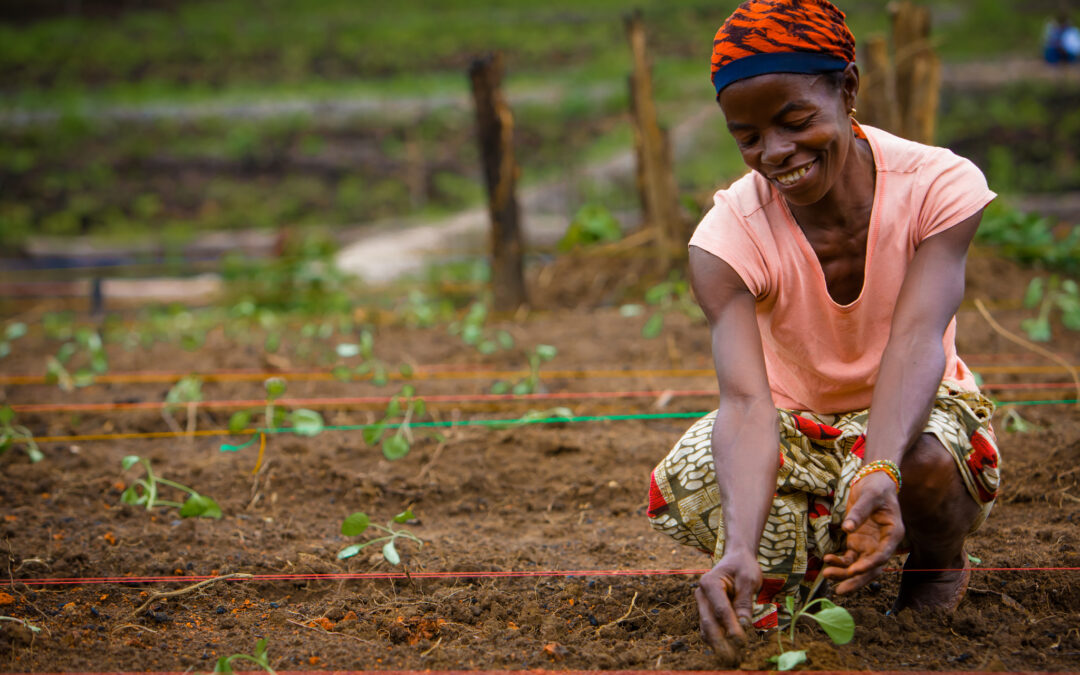
Freedom from hunger is not simply a technical matter to be solved with better seeds, fertilizers, cultivation practices and marketing. To achieve freedom from hunger, we need to eliminate poverty. This must draw upon the ideas, skills and energies of whole societies and requires the cooperation of all countries.
As Lester Brown, the American agricultural specialist says,
We are cutting trees faster than they can be regenerated, overgrazing rangelands and converting them into deserts, overpumping aquifers, and draining rivers dry. On our croplands, soil erosion exceeds new soil formation, slowly depriving the soil of its inherent fertility. We are taking fish from the ocean faster than they can reproduce.
To counter these trends, we need awareness and vision, an ethical standard which has the preservation of nature at its heart, and the political leadership to bring about the socio-economic changes needed. For the moment, awareness and vision are unequally spread. In some countries, ecological awareness has led to beneficial changes and innovative technologies. In others, the governmental and social structures are disintegrating due to disease, population pressure upon limited resources, and a lack of social leadership. Worldwide, military spending, led by the US, dwarfs spending on ecologically sound development and the necessary expansion of education and health services.
Lester Brown predicts that food will be the first sector of the economy to unravel. The convergence of soil erosion, fish depletion, water shortages, and rising temperatures are making it more difficult to expand food production fast enough to meet the global demand.
Yet there are agricultural techniques which can increase protein efficiency, raise land productivity, improve livestock use, and produce second harvests on the same land. However, unless we quickly reverse the damaging trends that we have set in motion, we will see vast numbers of environmental refugees—people abandoning depleted aquifers and exhausted soils and those fleeing advancing deserts and rising seas.
David Seckler of the International Water Management Institute writes,
Many of the most populous countries of the world — China, India, Pakistan, Mexico, and nearly all the countries of the Middle East and North Africa — have literally been having a free ride over the past two or three decades by depleting their groundwater resources. The penalty of mismanagement of this valuable resource is now coming due, and it is no exaggeration to say that the results could be catastrophic for these countries, and given their importance, for the world as a whole.
Unfortunately, the International Water Management Institute does not manage the world’s use of water, but can only study it. While there are some planners who would like to be able to tax or make people pay for water, most water use is uncontrolled. Payment for water is a way that governments or private companies have to get more revenue, but the welfare of farmers usually is not a very high priority for them.
As global citizens have stressed, ecologically sound development cannot be the result only of a plan, but rather of millions of individual actions to protect soil, conserve water, plant trees, use locally grown crops, reduce meat in our diets, protect biological diversity, and cut down on our use of cars. We need to stabilize and then reduce world population and to encourage better population distribution through planned migration and the creation of secondary cities to reduce the current growth of megacities. We need to encourage wise use of rural areas by diversifying employment in those areas. We also need to develop ecological awareness through education so that these millions of wise individual decisions can be taken.
Lester Brown underlines the necessary link between knowledge and action:
Environmentally responsible behaviour also depends to a great extent on a capacity to understand basic scientific issues, such as the greenhouse effect or the ecological role of forests. Lacking this, it is harder to grasp the link between fossil fuel burning and climate change or between tree cutting and the incidence of flooding or the loss of biological diversity. The deteriorating relationship between the global economy and the earth’s ecosystem requires an all-out effort to bring literacy to all adults in order to break the poverty cycle and stabilize population.
Education and vision require leadership, and it is ecologically sound political leadership that is badly lacking today. Citizens of the World and all of good will are called upon to provide wise leadership to work for a redirection of financial resources to protect the planet, and to encourage ecologically sound individual and collective action.
by Victoria Barrow | Oct 9, 2015 | Climate Justice, Global Cooperation, News
India has just stepped up its efforts in the global fight against climate change.
The country has now joined over 140 others in submitting a climate change plan, or Intended Nationally Determined Contribution (INDC), to the UN. India, which is expected to become the world’s most populous by 2028, has pledged to focus on clean energy and obtain 40% of its electricity from low carbon sources by 2030.
Nations are submitting INDCs in preparation for an important UN climate change summit occurring in Paris this December. Here, the UN will attempt to come up with a global agreement to determine how climate change will be tackled after 2020, when current climate targets expire.
Last November, the United States and China kicked off this process by unveiling an agreement to reduce greenhouse emissions, with the US pledging to cut its emissions to 26-28% below 2005 levels by 2025 and China agreeing to cap its emissions by 2030.
Both countries recently submitted INDCs based on this agreement, with China– the world’s largest carbon emitter– further committing to cut greenhouse gas emissions by 60-65% from 2005 levels. Since then, some 148 other countries have followed suit, submitting their plans before the informal October 1 deadline set by the UN.
Almost 90% of world emissions are currently covered by INDC pledges. Forty-eight countries have yet to submit their climate plans.
The upcoming Paris conference will be highly important, as it will attempt to establish the first legally binding multinational agreement on climate change. Today’s level of greenhouse emissions is putting the world at the risk of a 5C temperature increase. Although that may not seem like much, it will have devastating impacts on ocean levels, plant and animal life, weather patterns, health, and more.
It is important to note that even if all countries stick to their pledges, global warming will not be slowed enough to prevent catastrophic results. For this reason, we cannot rely on the Paris conference alone to solve our climate problems. Non-state actors such as municipalities, businesses, and local governments also must be engaged.
Finally, every one of us has a responsibility to cut back on our emissions and support a more sustainable world.
by Don Kraus | Sep 9, 2015 | Climate Justice, Global Cooperation
In December of this year, 196 nations will meet in Paris to close a global deal to address climate change. With less than three months and five official negotiating days left before the Paris UN conference, diplomats are working out the key remaining disagreements.
The major concerns revolve around money: how much responsibility rich nations will take for climate change compared to the developing countries that need to power their growing economies and populations; and how developed nations will fulfill their agreement of $100 billion per year of climate finance to begin in 2020.
It’s no surprise that cold hard cash is at the center of these disputes. At its core, climate change is an economic problem. Cheap and subsidized coal, oil, and gas fueled the industrial revolution and high quality of life in the West. We didn’t realize until the 1960s and 1970s that there was also a huge expense we failed to foresee—pollution and climate change.
Here’s an analogy to consider: the 2008 financial crisis was created by insatiable banks and mortgage brokers who offered loans with “easy” terms to under-qualified customers that didn’t reflect the true risks involved and created a housing market bubble. When the bubble finally popped, homeowners who couldn’t afford increased mortgage interest rates and small investors took the brunt of the loss.
Fossil fuels are being sold at a price that doesn’t reflect the true cost of their impact on the environment. Businesses, governments and even consumers are creating a “carbon bubble” that when it pops may have both severe financial repercussions and, if not addressed soon enough, will trigger uncontrollable climate damage. And, like the housing bubble, those who will pay the most severe costs are the poor, elderly and children.
Unfortunately, the 83-page draft climate agreement under negotiation does nothing to prioritize putting a price on carbon pollutants. To avoid severe climate change, it’s essential that the final Paris agreement makes carbon pricing a central element of the solution. It will take an economic response to address what is essentially an economic problem. Doing so will put the brunt of liability on those industries that are most responsible for climate crises and have the greatest means of limiting damage. Rather than trying to regulate emissions reduction, a carbon price will incentivize polluters to change their ways or be forced to pay for it. A carbon price will also motivate clean technologies and new low-carbon economic growth. Currently about 40 countries and over 20 cities, states and provinces use carbon pricing mechanisms or have plans to implement them.
There are basically two types of carbon pricing:
- Emissions trade systems (ETS)
Also known as a cap-and-trade system , an ETS limits the amount of greenhouse gas emissions and lowers the cap over time. Carbon polluting industries receive emissions permits that can be sold by lower emitters to larger emitters, creating a market price for greenhouse gas emissions. Lowering the cap reduces overall emissions and pushes the market to increase the price of carbon, which discourages the use of fossil fuels.
A carbon tax or fee directly sets a price on carbon at the source (mine, well, or port of entry) with a set and rising rate. It can be revenue-neutral with consumers reimbursed for higher energy costs. Nations can also impose border adjustments for goods imported from non-participating countries in order to maintain the competitiveness of domestic industries.
The climate agreements under consideration only mention emission trading, and do so in a peripheral manner. Carbon fees should also be included as an alternative means of pricing carbon. Joe Robertson, Citizens’ Climate Lobby’s global strategy director, says,
Carbon pricing is about economic fairness and reliable prosperity. Right now, everything we do in the economy carries hidden costs, because we are not accounting for the true cost of how we get energy. Getting principled language to guide national policies toward more efficient low-carbon development, through effective, efficient, transparent carbon pricing, means more reliable innovation, investment, hiring and climate action, for everyone.
An impressive group of leaders from across the government, the private sector and civil society have formed the Carbon Pricing Leadership Coalition to ensure smart, effective carbon pricing policies are adopted. But much more needs to be done in the next few months to get carbon pricing right.
A global climate change agreement without a clear economic solution to this looming problem could be too little, too late—but there’s still time to craft an efficient, effective and equitable correction to the most pressing problem of our times.
This article originally appeared in The Huffington Post and is cross-posted with the author’s permission.
by Donna Park | Aug 17, 2015 | Climate Justice, World Federation
Letters to Jake Series, Letter #8
Dear Jake,
I am writing this letter in the car as Papa and I drive home after a visit with you and the twins. I liked going to the Museum of Natural History in Washington, DC as well as going to the county fair in the countryside near your home. At the museum I especially enjoyed seeing the dinosaurs and other animals that are now extinct. My favorite parts of the fair were riding on the Ferris wheel with you, where we could see the beautiful countryside all around us, and watching the 4H children care for their farm animals.
Our two trips in one week were a good reminder of how wonderful and how precious life is on planet Earth. We need to take care of the earth’s resources like air and water that are important for human life as well as the life of all animals, trees, and other plants that share our planet with us.
Pope Francis just wrote a very long letter entitled “On Care for Our Common Home.” In this letter he reminds all people that we are responsible for taking care of Earth.
Pope Francis is concerned about the growing threat of climate change. Scientists believe that Earth is getting warmer and that clean water is getting scarce in some places.
Humans need to do all they can not to add to the warming and to protect the water so there is enough for everyone. Children like you and the 4H children we saw at the fair can help their parents by reminding them to reduce their use of the earth’s resources, reuse items instead of throwing them away, and recycle whenever possible. Wealthy countries like the U.S. need to help make sure everyone in poor countries has access to healthy drinking water.
The U.S. can play an important leadership role to help prevent climate change when many nations meet in Paris in December to negotiate a new binding international agreement. This will take place at the 21st session of the Conference of the Parties to the UN Framework Convention on Climate Change (COP21). We all need to show support for the US to reduce our greenhouse emissions as soon as possible.
Pope Francis also suggests that the global community needs better structures in place to care for our world. He quotes Pope Benedict XVI: “There is urgent need of a true world political authority, as my predecessor [Pope] John XXIII indicated some years ago.” The reference here is to Pope John XXIII’s letter called “Peace on Earth.” In that letter, John XXIII called for a transformation of the United Nations into a public authority for the world community to prevent wars and nuclear destruction. Francis sees the same need in his concern for the environment.
My friends and I promote the idea that transforming the United Nations into a United Federation of Nations would be the best way to meet this urgent need. I am writing letters to Pope Francis, explaining this idea to him.
Take good care of yourself…and your portion of planet Earth!
Love,
Gram