by Rene Wadlow | Dec 15, 2015 | Climate Justice, Global Cooperation
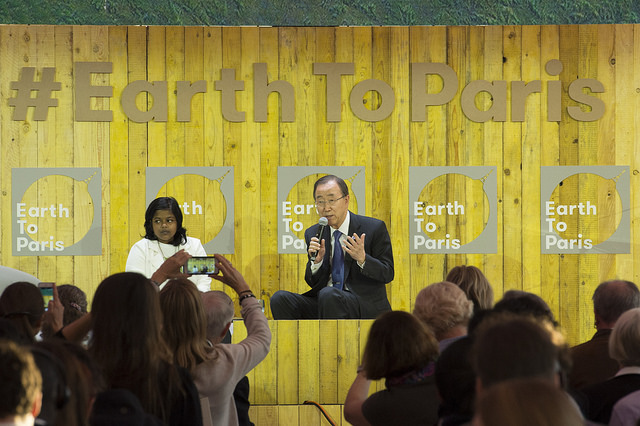
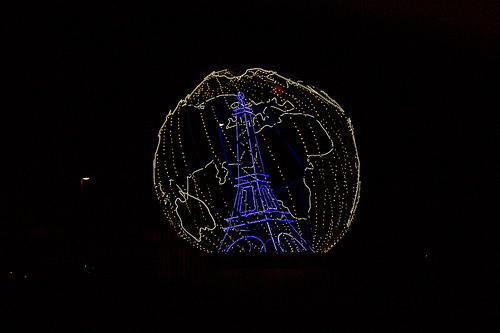
The Paris climate summit known as COP21 came to an end on Saturday afternoon, December 12, 2015. This was a day later than originally planned to allow for last-minute compromises and an agreement with a few States, mainly Saudi Arabia and Venezuela, so that they would not block a consensus agreement.
All 195 States plus the European Union had to agree. A treaty is not something that can be created by a majority vote as can be done in a UN General Assembly resolution. On April 22, 2016, there will be a high-level signature ceremony. The Treaty must be ratified by 55 States and will come into force in 2020.
The treaty arising from COP21 will replace the Kyoto Protocol. The new treaty is relatively short and clear. However, it is the “Preamble” of 140 paragraphs–not legally binding but where all the analysis and aims are set out–that caused difficulties to reach consensus among States with diverse interpretations of “national interest,” of short- and longer-term perspectives, and of differing access to national expertise.
The preamble has been under negotiations for the past two years. Although most points had been agreed upon well before the Paris conference, some crucial aspects had to be negotiated during the two-week session among heads of government and teams of negotiators, often with a Foreign Minister present.
Although it was decided that there would be no mention of migration-refugee flows–refugees of neither climate damage nor terrorism–the November terrorist shootings in Paris required very tight security from the French police outside the conference center and from UN guards inside the building.
Fear was a widespread emotion reflected in the first round of December 6 voting to the French regional assemblies. The National Front, a far-right xenophobic party, received a larger-than-usual number of votes. Fortunately, in the second round of voting on December 13, the National Front was defeated and will lead no regional assembly. Although delegates to UN meetings come with instructions from their government, all feel the atmosphere of the place in which they are meeting.
The Paris agreement can be an important step toward a sustainable world society, especially when seen in the framework of the post-2015 Sustainable Development Goals recently agreed upon by these same States. The effectiveness of the steps toward transformation will depend significantly upon non-governmental efforts at the local and national level.
As could be expected, the agreement is a framework for “country-driven strategies”–not a UN-imposed plan of action. “Common but differentiated responsibilities” is the key concept, with “differentiated” being the key word. The emphasis is on “nationally-determined contributions.” However, after 2020, this “pledge” aspect will have an international review mechanism to see to what extent the national pledges have been met and if the world situation requires new measures.
An important aspect of this review process is the emphasis on transparency so there can be adequate monitoring and verification of emission reductions. This emphasis on transparency and public access to information gives legitimacy to strong NGO monitoring of climate change processes and proposals for improvements. In addition, the Paris preamble recognizes that there are many stakeholders in climate change issues beyond governments: the corporate sector, cities, and academic institutions all have important parts to play.
More than in the past, attention was placed on ecosystems rather than on just one factor at a time, such as forests and the dangers of deforestation. An ecosystem approach requires looking at forests, soil and water protection, housing, transportation, technology and capacity-building for those working on climate and environmental issues.
COP21 has been important for building awareness and encouraging cooperation among UN agencies, national governments and NGOs. Our role as NGO representatives is to build on this positive momentum, to increase our expertise and to network more closely with groups in the most vulnerable zones. Paris was an example of dedication and foresight among all the actors. The road ahead to a sustainable world society with green technology may still be long, but the direction is set.
by Rene Wadlow | Dec 5, 2015 | Climate Justice, Global Cooperation
Founded on the values of solidarity and mutual trust, volunteerism transcends all cultural, linguistic and geographic boundaries. By giving their time and skills without expectations of material reward, volunteers themselves are uplifted by a singular sense of purpose. –UN Secretary-General Ban Ki-moon
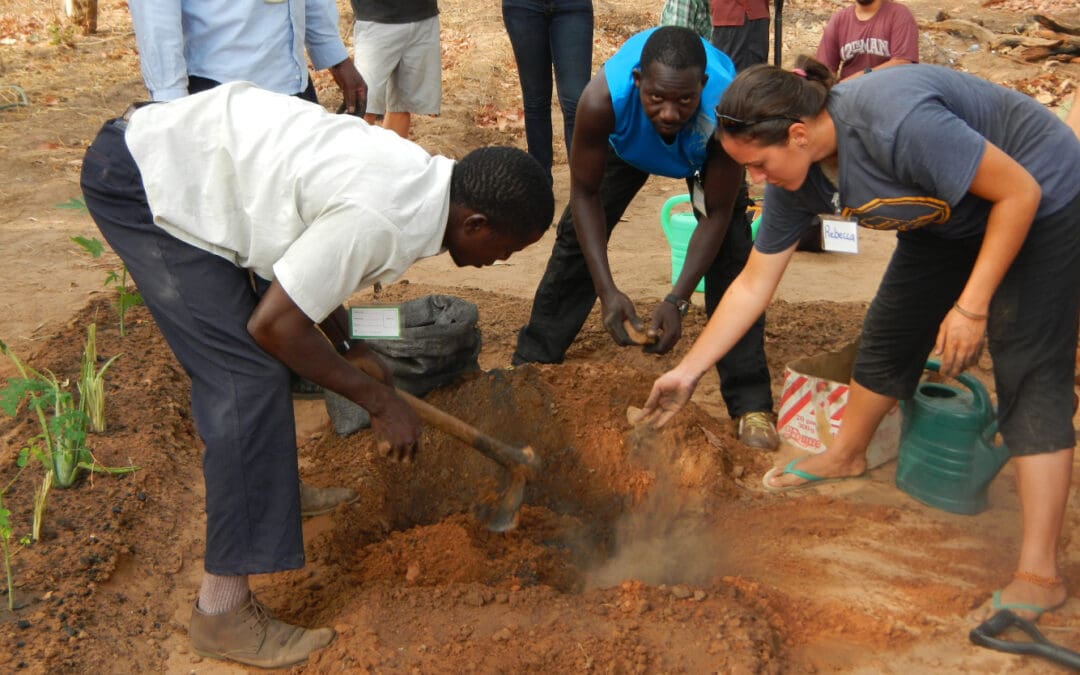
December 5 has been selected as the International Volunteer Day by a 1985 UN General Assembly resolution. This year, Volunteer Day comes as government representatives and NGO volunteers are meeting in Paris to develop a new international climate agreement at COP 21. The NGO representatives are fewer in number than originally planned due to the recent Paris attacks and consequent tightened security. However, those that are present are doubly active as world media attention focuses on the conference and its outcome.
As with all major UN conferences, negotiations among governments have been going on for two years with a good deal of input from NGO representatives. At the Paris stage, there is a preliminary “Final Document and Action Plan” of some 30 pages with a good number of square brackets around words or sentences on which there is no agreement. Negotiations concern making the document shorter so that the main ideas will stand out better and to remove square brackets. If a suitable word is not found, often the whole sentence will be dropped.
Both government representatives and NGOs are discussing post-Paris action and coalition building. There is also a concerted effort to bring the business community, especially transnational corporations, into the action. While the UN system has a structure of consultative status for NGOs through the Economic and Social Council, the world of business largely is not represented. Only the International Labour Organization with its headquarters in Geneva has a three-party membership: governments, trade unions and business associations from each of the member States. The business world is not really a “voluntary association” in the sense of NGOs. Material reward is an important element in business.
COP 21 is a prime example of the need for cooperative action at the local, national and world level. As has been often said, the climate does not recognize national borders. The relations among ecologically sound development, security, conflict resolution and respect for human rights have now assumed a more dynamic form than at any other time since the creation of the United Nations in 1945. To meet these strong challenges, NGOs, academic institutions, business and professional associations and the media must work together cooperatively. International Volunteer Day can serve as a time of reflection on capacity building and improved networking.
by Rene Wadlow | Dec 4, 2015 | Climate Justice, Global Cooperation
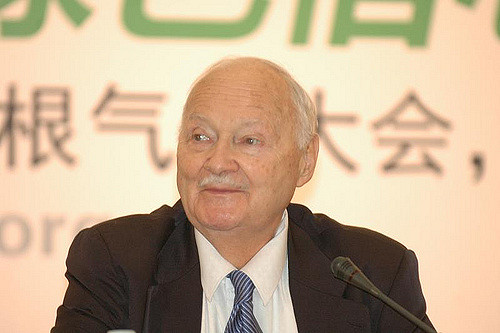
Just on the eve of the Paris Climate Conference (COP 21) and the coming discussions on climate change and a sustainable world society, Maurice Strong died (November 29, 2015).
More than any other person in the UN system, Strong had been the driving force to put environmental action on the “world agenda” for both governments and NGOs. For Strong, to protect the earth’s environment, its biodiversity and life support system was a cause for cooperative action to transform society—a cause for which government and business leaders could rise above their disagreements and act together to protect the planet.
Before a topic becomes the focus of the world agenda, there is a good deal of intellectual preparation needed, and it usually begins outside of governments. Kenneth Boulding, a Quaker, economist, and peace researcher started writing what is now called “ecological economics.” Boulding helped develop the concept of “Spaceship Earth,” stressing the need to modify education in light of ecological realities. He wrote,
…the principal task of education in this day is to convey from one generation to the next a rich image of the total earth, that is, the idea of the earth as a total system…What formal education has to do is to produce people who are fit to be inhabitants of the planet.
This has become an urgent necessity because for the first time in human history, we have reached the boundaries of our planet and found that it is a small one at that. This generation of young people has to be prepared to live in a very small and crowded spaceship. Otherwise they are going to get a terrible shock when they grow up and discover that we have taught them how to live in a world long gone.
The first step to having an impact on the UN conference was to draft a statement setting out in broad terms the challenges faced and some of the steps to be taken. The statement had to be drafted and signed by individuals who had some expertise in ecology, which was then a relatively new field.
Six environmental scientists were gathered in 1970 by Dai Dongat Menton, France, a summer resort. The Menton text is called “A Message to our 3.5 billion neighbors on Planet Earth.” Although we have now seven billion neighbors, the document is still worth reading. It was published in the UNESCO periodical Courier and co-signed by over two thousand biologists and others whose name carried weight on the issues such as Thor Heyerdahl and Margaret Mead.
Dai Dongrepresentatives met a year later with UN Secretary-General U Thant, a Burmese Buddhist sensitive to the same vision of a delicate equilibrium between humans and nature.
The UN Secretariat started its efforts for the Stockholm conference in Geneva in the Palais Wilson, the original League of Nations headquarters just across the street from my office in the Graduate Institute of Development Studies. I often talked with the UN staff who would eat in our building (since we had a cafeteria and they did not). Maurice Strong was the head of the preparatory secretariat and became the Secretary-General of the Conference itself.
Strong was a Canadian who made a great deal of money dealing with oil fields in Canada, and spent the rest of his life in lower-paid UN-related activities. Strong was an intense, self-motivated person and the people who worked with him were driven by the same energy. There are, no doubt, people who did not appreciate Strong, but they faded from the scene, and those who were left with him would not be surprised to see Strong walking across Lake Geneva.
Since Strong came from the business world and not from the regular governmental diplomatic service, he had the necessary respect for government representatives, but not much more. Rather, he had a high regard for “the people” — at least those organized in non-governmental organizations and willing to try out new ideas and methods. In Geneva, there was a group of us—UN Secretariat, university teachers and NGO representatives—united by the desire to place ecological issues at the center of the world agenda, despite a rather timid response from national governments.
It was natural for Strong and his team to reach out to Alfred Hassler and the Dai Dong effort. Thus began what has become an institution with UN conferences: a parallel conference held a few days earlier in the same city with representatives of NGOs—now called “civil society”—who write a statement of what governments should say if they had the intelligence and courage of NGOs. Now the NGOs work on their statement and alternative plan of action for many months in advance.
In 1972, however, the process had not yet been established, and Hassler and Dai Dong organized a first parallel conference of 31 people in Stockholm. Dai Donghad already prepared the statement and, as is often the case in such efforts, people unrelated to the original drafting process can object to certain paragraphs but can rarely propose new ideas. Thus at the Dai Dong–sponsored independent conference, conflicts predictably arose over population issues.
At all international meetings going back to the League of Nations debates, when population questions are mentioned, there are those who suspect family planning as being a way to limit the number of the poor (usually seen as being of a different color or ethnicity than the rest) or as a way of promoting teen sex. Ten of the 31 attending the Dai Dongconference wanted to take some distance from the short paragraph on population without presenting any alternative to unrestrained population growth.
Once the Dai Dongstatement was written, Alfred Hassler read the text to the governments assembled in the UN conference. In many ways, the Dai Dong“Independent Declaration on the Environment” is well worth the text of the governments—largely drafted by the UN Secretariat, since expertise among government representatives was generally low.
The 1972 Stockholm Conference led to the creation within many governments of a “Ministry of Ecology” or a sub-section of an existing ministry. The United Nations created the UN Environment Programme (UNEP), of which Maurice Strong was the first Director.
Basically, Dai Dong’swork finished with the 1972 Stockholm conference. Ecology with a focus on broad poverty reduction, social justice, and harmony with nature was on the world agenda.
After his retirement from UNEP, Strong continued to be a strong voice for ecological action. He was asked by the UN to be Secretary-General of the Rio Conference of 1992, often called the “Earth Summit,” which started to popularize the idea of sustainable development. Maurice Strong is in many ways the model of the world citizen, deeply rooted in his Canadian experience and open to the world, an active agent at the world level for ecologically sound development.
by Citizens for Global Solutions | Dec 1, 2015 | Climate Justice, Global Cooperation
This article was originally published for the NRDC. It has been cross-posted with the permission of author Jake Schmidt.
World leaders are meeting in Paris to finalize an international climate change agreement that will require deeper emissions reduction commitments from all countries. If all goes well, all major countries will enshrine their new climate commitments in this agreement. The agreement will contain provisions to hold countries accountable to their commitments and mobilize greater investments to assist developing countries in building low-carbon, climate-resilient economies. And encouragingly, businesses, investors, states, provinces, cities, financial institutions, and others are already pledging actions to help governments implement the agreement and even exceed their commitments.
While the Paris agreement won’t “solve” climate change, it can be a critical inflection point. It brings us much closer to a safer climate trajectory and highlights the path forward after Paris.
So what needs to be addressed in the Paris agreement if we are to build stronger international climate action that mobilizes action now and spurs even greater action in the years to come?
These key elements are outlined in the NRDC’s new “issue brief.”
New emissions reduction targets for the Post-2020 timeframe by key countries
In the lead-up to Paris, more than 170 countries responsible for over 90 percent of the world’s climate pollution have announced specific reduction plans. These include actions from all major countries, including the US, Europe, China, India, Brazil, Mexico, and South Korea. The Paris agreement will need to enshrine commitments from all major countries to reduce their emissions for the period after 2020 based upon these proposed targets by setting these as the floor and creating a requirement that countries adopt more aggressive commitments for subsequent five year periods (e.g., from 2025-2030 and then 2030-2035).
Tools to catalyze more aggressive action over time
The agreement will need to strengthen future action by creating systems for countries to upgrade their targets since the best estimates show that these targets don’t yet put us on the necessary safe climate trajectory. As a result, a critical outcome of the Paris agreement is a solid process for reassessing and deepening emissions reduction commitments every five years. This process will need to begin no later than 2020 so that countries can reevaluate their efforts and commit to do more well before 2030. We need another political moment well before 2030 so that countries can detail stepped-up efforts. After all, further clean energy cost reductions, confidence that policies are producing larger than expected emissions reductions, and other factors will inevitably prove to leaders that they can do more before 2030 than they are prepared to detail in 2015. This won’t need to be an intrusive process, but will provide countries an opportunity to show that they are prepared to be even more of a leader on climate change by strengthening their national climate targets.
Financial support to assist developing countries
Countries have already agreed to help mobilize $100 billion by 2020 through public and private financing to assist developing countries in reducing emissions and adapting to climate change. We know that more resources will need to be mobilized after 2020 since we will be headed towards even deeper emissions reductions in subsequent years and the needs for climate resilience will grow more acute. For this reason the Paris agreement will need to send a clear signal that countries will help mobilize even greater financial support to assist the poorest countries in building low-carbon and climate resilient economies. These investments can help spur an even larger clean energy economy around the world, unleash additional emission reduction efforts, and help countries address the devastating impacts of climate change that will set back the well-being of their citizens.
Strengthened transparency and accountability frameworks
The Copenhagen/Cancun agreements built essentially a three-part system for transparency and accountability by:
(1) requiring that countries regularly report their emissions, climate actions, and trajectory towards their targets;
(2) conducting an independent expert review of those country reports; and
(3) evaluating country progress through an international public review.
This system of transparency and accountability will need to be modified and strengthened to help hold governments accountable to their commitments as we build a durable agreement.
Spurring more than countries to take climate action
The Paris conference will add to the growing groundswell of climate actions in an effort to broaden the engagement of other leaders. Governors, mayors, corporations, civil society, financial institutions, and leaders of all stripes will pledge individual and collective actions that can help address climate change now. This groundswell of climate actions will form a key pillar of the Paris agreement and must be a critical part of an “all hands on deck” effort to address climate change in the coming decades. Countries will need to help ensure that these kinds of actions continue after Paris.
Creating a path to even greater action in the years to come
The Paris Agreement won’t “solve” climate change, but it puts us much closer to a safer trajectory and highlights the path forward. Before the Copenhagen Accord in 2009, we were potentially headed for an increase in global average temperatures of 5°C (9°F) above pre-industrial levels by 2100. Today, the meaningful commitments submitted in advance of the Paris climate summit show us that we are on a path to a 2.7° C (4.9°F) temperature rise by the end of the century, closer to the 2°C (3.6°F) goal. As a result, countries will need to set in motion a set of systems both in the agreement and in the accompanying outcomes to encourage even greater actions by countries, companies, cities, states/provinces, and financial institutions. This will need to include the mechanisms to strengthen ambition over time contained in the agreement and arrangements to help the groundswell deliver significant emissions cuts.
————————–
All of this has a solid foundation to build upon as countries have realized that it is in their own interest to cut their carbon pollution. They have concluded that, far from destroying the economy, domestic climate action produces real benefits for their citizens, including new jobs, reduced poverty, and lower mortality rates. And as natural disasters increase in frequency and intensity, they have seen that not addressing climate change has real and lasting consequences. Countries will have to leave Paris and roll-up their sleeves by delivering additional domestic climate actions and laying the groundwork for even more action.
If we get the right pieces in the Paris outcome, we can build a durable agreement to deliver even greater action in the years to come. After all, the first step is often the hardest. It won’t be easy, but citizens are demanding climate action so leaders must rise to the challenge.
by Victoria Barrow | Nov 20, 2015 | Climate Justice
Climate change. Terrorism. Nuclear warfare. Pandemics. Today more than ever, we are being confronted with issues that are global in nature. Gone are the days when a country’s biggest problems were confined to its own boundaries. Nations are so economically, socially, and technologically intertwined that they are forced to depend on one another.
We are all, whether we realize it or not, impacted by globalization. Globalization doesn’t just apply to migration and other large-scale situations; it is present in everyday life.
People around the world are exposed to other cultures on a daily basis without crossing any borders, via international calls, emails, satellite TV, social media, and more. Most of the material possessions we own aren’t from our own country. Even much of our food has traveled: the average American meal is transported 1500 miles before being eaten! Furthermore, people might interact with immigrants, refugees, or tourists or frequent establishments that bring other cultures in close proximity to their own. This phenomenon is described by some as “internal globalization.”
As we can see, our lives have an inescapable global dimension. For this reason, it is becoming harder and harder to ignore the living conditions of our fellow humans across the world.
The problem with thinking on such a large scale is that it is easy to feel overwhelmed by the extent of the global challenges we face. On the flip side, it is also easy to feel disconnected from the issues at hand. It is difficult for someone shopping at their favorite clothing store to realize that the shirt they buy may support child labor. The true nature of the impact of climate change as it is experienced in developing countries is also unimaginable to many first-world dwellers. This feeling of disconnect may lead many to underestimate the scope of the issues the world is facing today.
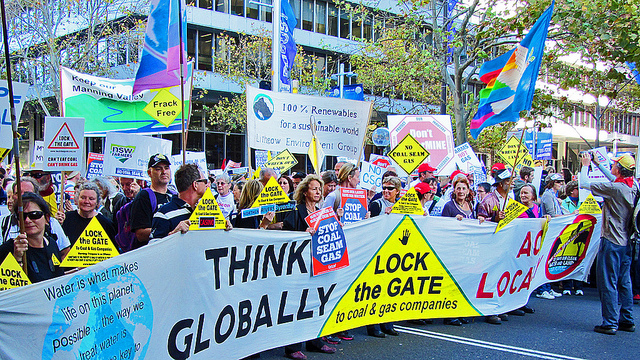
In the context of globalization, thinking and acting as global citizens has become a necessity. How can we support this role in a way that speaks to us personally? One catchphrase that has emerged in recent years may be a good place to start: think global, act local.
“Think global, act local” can take on a variety of different meanings. Large, multinational companies, for example, use it as a business strategy. In order to succeed globally, these companies must cater to local consumers. One of the most obvious examples of this is McDonald’s menu customization. In Japan, you can find the Teriyaki McBurger, in India, the Maharaja Mac. Sorry Americans, you won’t be able to find these items under our golden arches.
Business aside, “think global, act local” is widely used in the context of climate change. Although climate change is a global issue, we cannot expect a large-scale, global solution to emerge anytime soon. Binding international law takes a long time to create, and is difficult to implement. States and cities, however, have greater flexibility and are able to be more responsive.
The 2014 National Climate Assessment , for example, mentions that building and landscaping codes can be updated to improve energy efficiency, conserve water, and improve protection against extreme events. Cities can also take action by doing things such as banning plastic bags in stores, implementing urban water-use reductions, transitioning to electric buses, and designing streets for walking and biking.
The idea of thinking globally and acting locally also applies on the individual level. One of the best ways to do this is to support small businesses. Small businesses offer stability to local economies and pay a living wage to well-qualified workers rather than abusing cheap, foreign labor.
Since owners tend to live in the neighborhoods they serve, they care about the impact their business has on the surrounding environment. This means less pollution and waste, and more support to communities, families, and local economies. Supporting local businesses also allows you to know the origins of what you are buying and gives you the reassurance that your dollar isn’t backing unethical business practices such as slave labor, use of toxic chemicals, or exploitation of land and vulnerable populations.
Looking at multinational issues through a local lens is a great way to feel more personally involved with what is going on. Strengthening ties with our local community while recognizing and acting upon obligations towards others around the world will allow us to become true global citizens.
by Jennifer Welden | Nov 3, 2015 | Climate Justice, Human Rights
Last week, the Mexican west coast was hit by “the biggest storm ever recorded in the western hemisphere,” Hurricane Patricia. While Mexico’s response to the disaster has been praised and resulted in less damage than expected, the takeaway for many scientists has been that “in a warmer world…weather extremes will be happening regularly, causing havoc for vulnerable communities.”
This is a thought that is not always talked about when discussing climate change: that while this is an environmental and economic issue, it is also one of equity. Of justice. Of human rights. The effects of climate change, as well as the policies we put in place to curb these effects, have very real implications for the rights of individuals, particularly in poorer, more “vulnerable communities.”
This rings most true for the health and living standards of populations all over the globe, but particularly in the third world. As a recent report by the Center for International Environmental Law explains, the consequences of climate change can manifest itself in ways that directly threaten individuals’ and communities’ health, means of subsistence, housing, etc. For example, rising sea levels and increased frequency of extreme weather events can lead to widespread destruction of land for farming, housing, and “dislocation of populations.” These results all ultimately threaten guaranteed human rights as outlined in various international treaties, including the Universal Declaration of Human Rights.
Another relevant example of this is climate change’s effect on health. Higher temperatures can increase the spread of disease, and natural disasters pose their own risks to individuals’ physical health. Children are particularly vulnerable to these health effects; a statement recently published by the American Academy of Pediatrics (AAP) said that children “are exposed to increased risk of injury, death, loss of or separation from caregivers and mental health consequences,” including a higher chance of heat-related mortality. Unsurprisingly, “children in the world’s poorest countries, where the disease burden is disproportionately high, will be the most affected.”
Mitigating these threats ultimately lies with the international community; we will not have true change unless the largest actors come together and commit to proactive measures to reduce our impact on the earth. As I’ve argued in other posts, however, there are also ways that we as individuals can help enact change. Educating and challenging our communities to take action could be a step toward greater awareness and action later on. At the very least, it is an opportunity to demand that the rights of our families, our friends, and our neighbors (whether those on our street or a continent away) not be forgotten.