by Jennifer Keck | Feb 24, 2016 | Climate Justice, Global Cooperation, News
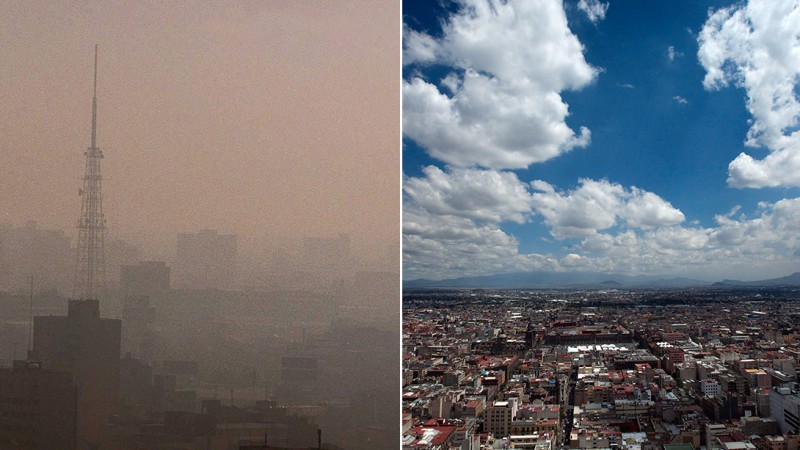
The smog-laden skyline of Mexico City may not be a poster child for air pollution much longer. Demand for clean energy is on the rise in Latin America, particularly in Mexico, Brazil, and Chile.
Clean-energy acquisitions nearly tripled in the region last year–the highest growth rate in the world, according to PricewaterhouseCoopers (PwC). An increasing demand for electricity coupled with stricter environmental policies has resulted in renewable energy deals valued at $7.6 billion, up from $2.7 billion in 2014, the consulting firm said in its annual Power & Renewables Deals report.
“There is increasing interest in the region,” Arthur Ramos, a partner at PwC’s strategic consulting unit Strategy& told BloombergBusiness. “Multinationals are taking stronger positions in Latin America where there is a perspective of lack of power supply in the long term. And many countries are offering low risk models of energy contracts for investors.”
In total, mergers and acquisitions in Latin America shot up 56 percent to $12.4 billion last year. Only the Asia Pacific region brokered more deals.
China has already jumped on the investment bandwagon. The Chinese power company Three Gorges Corp. bought the Jupia and Ilha Solteria hydropower plants in Brazil for $3.7 billion, the largest acquisition in the region. Sempra Energy, the San Diego-based natural gas company, came in second with its acquisition of the remaining stake in its Mexican joint venture Gasoductos de Chihuahua for $1.5 billion.
As energy sector reform opens the Mexican electricity sector to private investment, the country is attracting more international interest. Spain’s Iberdola has targeted Mexico as one of the four countries outside continental Europe (the others are the U.S., Brazil, and the U.K.) where it sees major growth opportunities. Mexico will also host its first long-term energy tender in March 2016, with an estimated 1.5 to 2.5 gigawatts to be awarded and further tenders to follow.
But Mexico and Brazil aren’t the only countries of interest. Chile remains a focus for companies such as Spain’s Gas Natural Fenosa, and China’s State Power Investment Corporation’s Pacific Hydro acquisition included around $1 billion worth of assets.
Steady returns from clean-energy assets make Latin America an appealing region for investment, despite its economic turmoil. “We expect this momentum to continue in 2016, despite the current challenging economic and political environment in many countries,” Ramos said.
Globally, energy deals fell 16% to $199 billion last year. However, renewable deals nearly doubled to $55.3 billion, up from $28.3 billion in 2014.
As the demand for affordable energy continues to rise in the developing world, the need for clean-energy alternatives will likely fuel investments for the foreseeable future.
by Jack Pearce | Feb 11, 2016 | Climate Justice, Global Cooperation
The declining costs of renewable energy, emerging information technology-related capacities for better management of electricity supply and use, and the need to reduce greenhouse gas emissions are combining to drive major changes in electricity supply in the United States and worldwide. But the existing industry structure and government regulatory practices are impeding progress. Citizen action is needed.
A study by the National Oceanic and Atmospheric Administration (NOAA) and researchers from the University of Colorado recently demonstrated that a national direct current high-energy transmission web drawing primarily on solar and wind energy productioncould cut greenhouse gas emissions from electric power production by up to 78 percent from 1990 levels while meeting increasing electricity demand at costs similar to–if not lower than–current costs. This change could be started using existing technologies.
Congress has therefore been considering bipartisan energy legislation (S. 2012) that would include provisions to take the first steps of establishing of such a grid, as well as a considerable body of other initiatives to foster “smart grid” development.
Another major development is the rapid rise of rooftop and community solar electricity generation. This has resulted in a backlash from the power industry, which feels that its monopoly status is threatened.
A recent public utility commission decision in Nevada epitomizes some of the worst features of this widely spread utility industry attempt to stymie competitive incursions into revenues by claiming that the industry must shift costs to customers or eliminate subsidies in order to maintain revenue. This is a customary pattern in monopoly defense of privileged position.
The Nevada commission explicitly ignored national and state policies designed to foster renewable energy supplies, brushed aside available studies indicating that such supplies could be integrated with electricity distribution without raising costs significantly, ignored the availability of “general rate case” formats for exploring rearrangement of supply and distribution accommodating rooftop energy supplies, assumed obligations to largely fictitious demand levels by such homeowners, double-charged such homeowners for distribution costs, and ordered cost escalations on such homeowners over a period of years on claimed need for revenue assurance. The net effect was to cater to the Nevada utility’s demand for protection of its existing revenue arrangements and handicap a competitive challenge.
Some industry analysts and citizen action groups have pointed out that use of “smart meters” and associated technologies, coupled with “smart rate designs” for pricing the contributions of the alternative solar energy supply, could lead to “right-sizing” and “right-shaping” of electricity distribution systems, as well as generation and transmission systems. A recent Utility Dive publication lists some key battlegrounds and key issues in this critical national battle over the future of electricity supply. Several states, notably California and New York, are wrestling with how to foster the competitive potentials of distributed generation in ways that increase the flexibility and lower the costs of total electricity supply. The stakes are high, both for citizens and the incumbent utility systems.
There are long-term risks to investor-owned utilities from their attempt to protect traditional monopoly status as undertaken in Nevada. As solar generation and storage costs decrease, as many foresee, substantial loads may migrate off-grid, leaving the traditional utilities in a severely limited, if not declining, position. This partitioning of electricity supply could be wasteful for consumers as a whole. Also, at least one major municipal system, in San Antonio, Texas, has in effect taken over local solar installations in an apparent effort to generate more, not less, distributed solar generation (though there is a mixed reaction to this). If investor-owned utilities continue attempting to block rooftop solar generation, they may see a backlash at the local distribution level.
The Nevada utility monopoly position is under attack in other ways. Legislation has been introduced to provide for retail choice among electricity suppliers for Nevada residents. In addition, major commercial firms in Nevada have been seeking permission to decouple from NV Energy. In a grotesque perversion of standard market economics, the utility has prevailed upon the regulatory commission there to charge these entities hundreds of millions of dollars for the privilege of finding and using more economical energy supply arrangements.
What do I suggest for CGS members? Make some noise with your elected representatives–local, state and federal. There are at least two major initiatives to be addressed.
First, make clear that you want federal, state, and local action to foster an electricity transmission superhighway in the United States in order to foster a low-carbon, sustainable electricity supply. This is a major evolution, just as was the federal highway system. Lots of institutional arrangements need to be changed. But Congress appears to be laying the groundwork for such an evolution and it needs to get under way soon. A start by 2020 would not be too soon.
Second, pressure your representatives to reward rooftop solar generation for the contributions it can make to reducing central generation and distribution costs, by means of local connection and pricing systems that recognize the values of integrating such systems with the electricity grid. It appears that Congress may be starting to pave the way for such a development by mandating a national study of the net metering issue to identify possible ways to do this. This needs to be vigorously pursued.
Both developments work to your advantage as consumers and citizens. And they are a part of a necessary global energy supply transition. Let’s keep the lights on. Our grandchildren need them.
by Shelby Hettenbach | Feb 5, 2016 | Climate Justice, Global Cooperation
“Later that night, I held an atlas in my lap,
Ran my fingers across the whole world,
And whispered… where does it hurt?
It answered
Everywhere
Everywhere
Everywhere.”
–Warsan Shire
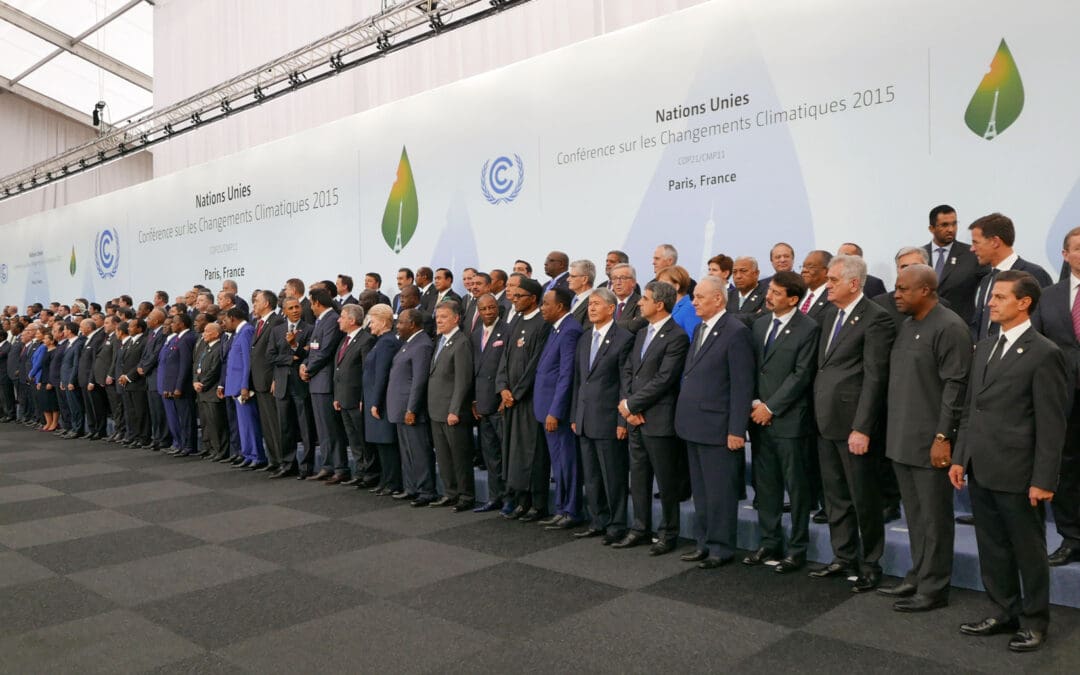
Last week I attended a United Nations Environment Programme event held in collaboration with George Washington University that invited speakers and organizations to discuss their plans to incorporate the goals set by the Paris Climate Agreement. There were two keynote speakers from the White House and three panels consisting of 10 high-ranking members of various organizations known for their efforts to curb climate change.
Christy Goldfuss of the White House Council on Environmental Equality began the event by speaking on the policies of the Obama Administration. She explained the White House plan to transition to a clean energy economy, a big step being President Obama’s recent ban on coal leasing on public lands. Most interestingly to me, Goldfuss heavily stressed the importance not only of stopping deterioration, but also of restoring already damaged areas and preventing further damage by strengthening existing ecosystems. This plan led me to realize that the world is already too deep in the effects of climate change to prevent it altogether. We are now at the stage where we simply have to adapt rather than fight.
The first panel spoke on the United States’ implementation of the Sustainable Development Goals (SDGs) laid out in the Paris Agreement in both the public and private sectors. A large topic of discussion stemmed from the idea that while the SDGs are global, they must be implemented in the context of each specific country. A third-world country cannot stop development completely, and the United States cannot turn off all of the electricity. Each country has different cultural, historical, and financial challenges to overcome. Each panelist also agreed that our free market economy will help to stimulate the participation of the private sector and allow the private sector to contribute crucial political support by translating its work into the public sector.
This topic was reiterated during the third panel more directly relating to the agricultural sector. The argument here was if the agricultural sector could be changed in order to benefit the farmers who use sustainable agricultural techniques, the politics of climate change could be altered. The same argument applied to the technology sector: if companies benefit from using sustainable techniques, they will put more pressure on politicians to enact change.
Each panel emphasized the importance of grassroots efforts to prevent the effects of climate change. Manish Bapna (Executive Vice President and Managing Director, World Resources Institute) stated that the largest positive change he has noticed over the years is the “shift from a top-down approach to a voluntary bottom-up.” He went on to say that this change is crucial in the effort to prevent climate change; if the people make it clear that they want to effect change, the politicians will be forced to follow suit. Goldfuss simply stated, “We all must work together.”
But perhaps the most impactful quote of the day came from the mouth of Norine Kennedy (VP, Strategic International Engagement, Energy and Environment, United States Council for International Business):
“We’ve been talking a lot about leadership but we must also talk about followership.”
After all, what is a leader without anyone to follow them?
by CGS Blog Archive | Jan 26, 2016 | Climate Justice, Global Justice
It was a Thursday night. I was overwhelmed by midterm papers and exhausted from the afternoon’s track workout. But rather than spending my evening studying, I was waiting in line in the bitter cold, filing slowly into a packed auditorium in downtown Spokane. Why? Because my environmental studies professor had “strongly encouraged” me and my classmates to attend that night’s NEPA hearing.
A NEPA (National Environmental Protection Act) hearing is an event where each citizen gets a small window of time to voice their support or opposition to a government project. The government is required to consider what every person says… but they don’t necessarily have to act according to majority opinion. This particular hearing concerned plans to build a railway to transport cheap coal (deemed to be of too low quality to burn in the US) from the Powder River Basin to Vancouver, WA, where it would then be exported to China.
Once we settled into our seats, the novelty of the event disappeared. My brain became so inundated with numbers that citizens were rattling off–statistics about noise pollution and air pollution, rates of asthma, claims about the number of jobs that would be lost or created, etc—that it began to switch off….
Then, thankfully, it was jolted awake by an impassioned voice. A Cheyenne elder from the Powder River Basin was speaking about how tearing up the land for coal mining was not only contaminating the Tribe’s air and water, but was literally tearing up their culture—a culture engrained in the land. Ten other Cheyenne tribe members followed the woman’s speech, echoing her sentiments. [Click here to read more on the Northern Cheyenne Tribe’s relationship with coal].
That hearing was three years ago. The movement to ban coal since has progressed at a snail’s pace. Until last Friday, that is. On January 15th, Obama issued a temporary ban on new coal leases on federal lands (which account for 40% of coal produced in the US), including the Powder River Basin.
Today, as I muse about the ban’s significance, I recall that Cheyenne elder’s speech. I think not only the land and people whose health might be spared thanks to Obama’s act, but I also think of a culture that might be spared.
Today, I want to urge readers to join me in looking beyond the numbers. Think of those whose lives will benefit from the ban. Perhaps reflect on this quote by reporters Matthew Gannon and John Sutter:
The Northern Cheyenne’s war against coal isn’t a local story.
It’s one of global importance.
We have to decide to recognize that.
And after you reflect, speak up. Banning access to 40% of the US’s coal is good, but it is not enough. In a letter published in the journal Nature last year, Christophe McGlade and Paul Ekins concluded that, in order to stay within the carbon budget as declared by the Paris Agreement, the US needs to keep 95% of all coal reserves in the ground. Tell Congress to keep more fossil fuels underground by signing 350.org’s petition.
by Jennifer Welden | Jan 4, 2016 | Climate Justice, Global Cooperation
Last month, 196 countries reached a historic agreement to address climate change. While the agreement does not address everything—such as the affect of climate change on migrants/refugees—it does seek to set strict limits on emissions and to help developing countries create the infrastructure to meet these limits as well.
While there is much to celebrate, there is also room for skepticism. Given the history of UN multilateral agreements, won’t countries just find another way to dodge their commitments? Will the terms of the agreement be enough to curb the effects of climate change? Will rich countries follow through on their promises to poor countries, and how this will affect aid that is typically used for other forms of development?
Though the United States cannot act for everyone, its individual actions can have a big influence on whether these concerns become true in the future. What can we do as citizens to ensure our government supports and builds on the work done in Paris? We must urge our representatives to enact national measures such as providing funds to states to convert dirty industries to renewables; mobilizing American businesses to open new markets for renewable industries and tools around the world; and supporting the development of local, sustainable food markets in poor countries by changing the way we regulate aid.
Let’s make this the one resolution we actually follow through on in the New Year!
by Sarah Del Vecchio | Dec 16, 2015 | Climate Justice, Human Rights
Record flooding in Chennai this month combined with the UN COP21 Conference has brought climate change once again to the forefront of international discussions. While scientists concede that we cannot link individual events directly to climate change, it is reasonable to infer that the record rainfall and flooding in Chennai is due in part to our deteriorating environment.
However, despite claiming nearly 300 lives, there are signs of hope in Chennai. As schools begin to reopen, we can assume that most citizens will eventually return to their homes. This has not always been the case with weather disasters, and it will likely become even rarer in the future if climate change worsens.
“Environmental refugees” is still a relatively new concept, and the issue was ignored at COP21. The United Nations High Commissioner for Refugees (UNHCR) has compiled materials to prepare for large-scale displacement, but there are pressing legal issues in the way of coping with environmental refugees. The Climate Institute points out:
The United Nations High Commission on Refugees (UNHCR) defines refugees as victims of persecution, war, or civil conflict who have fled their home countries. Refugee status entitles a person to a safe asylum in another country-or in the absence of this possibility, the provision of assistance and aid ‘such as financial grants, food, tools and shelter, schools and clinics.’
Achieving refugee status, particularly in the United States, is incredibly difficult, as the ongoing refugee crisis in the Middle East demonstrates. Until the HNCHR is able to recognize environmental refugees formally, there is little protection provided for these individuals. While those displaced by climate disasters wait to move to another country or region, it is important to note that refugee camps are certainly not immune from climate change.
Even in the United States, we witnessed citizens fleeing New Orleans in the midst of Hurricane Katrina. Many never returned to their hometown, as the New Orleans clean-up effort continues 10 years later amidst bureaucratic failures.
The United Nations and state leaders cannot assume that all environmental disasters will be fixable as Chennai appears to be. In addition to causing physical damage via tsunamis or torrential rains, climate change causes shifts to ecosystems and destroys food supplies. These are not problems that can be easily resolved, and they will undoubtedly cause displacement. If we have learned anything from the current refugee crisis, it is that we need to be prepared for the worst and develop sustainable procedures for coping with mass displacement.