by CGS Blog Archive | Nov 19, 2017 | Climate Justice, Global Cooperation
Deforestation is defined as “the action or process of clearing of forests” by the Merriam Webster Dictionary. Currently, 30% of the world is covered by trees, but with the current rate of deforestation across the globe, the world’s rainforests could completely vanish in just one hundred years.
Deforestation is mainly caused by humans, with most of it being caused by agriculture and logging. In order to plant more crops and create room for grazing livestock, some farmers participate in a process called slash and burn agriculture (the process of burning and cutting down trees to support agriculture). Due to the Earth’s dramatically increasing population size, more food is needed, resulting in forests being destroyed to create room for agriculture. Additionally, logging operations (some of which are illegal) are cutting trees to provide the world with paper and wood, but they are also cutting trees to create more living space for people.
What are the effects of deforestation?
- Deforestation causes habitat loss and food loss for many organisms; this leads to the extinction of many animals. It is estimated that 15 mammal, 30 bird, and 10 amphibian species will go extinct within the next few years in the Amazon Rainforest, with thousands more going extinct across the globe.
- Deforestation causes more than 1.5 billion tons of carbon dioxide to be released into the atmosphere annually, primarily due to the burning and cutting of trees. This is dangerous because the emission of carbon dioxide, a greenhouse gas, into the atmosphere causes global temperatures to rise. This also can cause weather and storms to intensify over time.
- The Amazon rainforest actually absorbs around 2.2 billion tons of carbon dioxide annually, as trees use carbon dioxide to perform photosynthesis; this means that the rainforest helps decrease the amount of carbon dioxide in the atmosphere. However, with the deforestation of the rainforest, the number of trees is quickly decreasing, resulting in less carbon dioxide being absorbed by the forest.
One of the best ways that we can help reduce deforestation is by shopping for products that are primarily made from recycled materials. By purchasing products that primarily come from recycled materials, we can decrease the number of trees cut down across the globe. Additionally, we should try to recycle as much as possible. Although most schools and offices have recycling programs, if there are no recycling programs in your area, you can always start your own! However, the best way to reduce deforestation is by consuming less paper in general.
by CGS Blog Archive | Sep 5, 2017 | Climate Justice, Global Cooperation
Scientists have projected that the Earth’s oceans could rise by between 2 and 5 feet within the next 80 years. This will prove to be detrimental for citizens of island nations, such as the people of Kiribati and especially the inhabitants of the Maldives. The Maldives is the lowest-lying nation in the world; this means that if seas were to rise just 3 feet, the whole nation would cease to exist. Without homes, the people of the Maldives (a population of over 400,000 residents) would need to relocate — something that would not be easy to accomplish.
You may be wondering how exactly this will affect Americans. First, the Maldives and the US have had diplomatic relations since 1966 and have had economic ties with one another for decades. Additionally, the Maldives has opened itself to US investment through its tourism and business sectors, meaning that American investors’ money will disappear along with the island. The scary part is that it is not just the dozens of small island nations being affected, rather it is the whole world being affected: even the US will be directly damaged by rising sea levels. Coastal communities, especially those in Florida, are highly susceptible to rising sea levels. The rising sea levels are causing chronic flooding, forcing residents to move away because of the uninhabitable conditions. With a 3 foot increase in ocean levels, more than 4 million Americans will be severely affected.
Why are rising sea levels a problem?
- When the ocean levels rise, saltwater moves inland. This is dangerous because it poisons crops, causing massive amounts of catastrophe to the economies of coastal communities. Additionally, when salt water moves inland, it begins to leak into freshwater sources. This is dangerous because people rely on wells for drinking water and will be forced to find new sources of freshwater.
- Rising sea levels cause flooding and can break the infrastructure in cities, such as buildings, roads, and houses. This endangers lives while also hurting the economy.
The sea levels are rising at an alarming rate because of the melting of the polar ice caps. When the ice caps melt, the water that used to be ice goes directly into the ocean, increasing the volume of the ocean. This means that Arctic animals are also losing their homes because of the rapidly decreasing ice mass.
In the US, roads are being raised, flood gates are being built, and seawalls are being repaired. However, this is only a temporary solution; people must work together to ensure that the ice caps stop melting. Nations like Finland are at the forefront of the fight for the Earth. Finland was given the highest Environmental Performance Index (a higher score indicates a more environmentally-friendly nation) while the US was ranked as the 26th most environmentally-friendly nation. Both nations are highly developed, but Finland’s commitment to becoming a carbon-neutral nation by 2050 is very apparent; 25% of Finland’s energy comes from renewable energy sources compared to 14% in the US.
If we are to save the polar ice caps and our own cities before it is too late, we must take action and try to reduce our carbon footprint. This may seem like a daunting task, but every action counts. Taking public transportation or walking/biking instead of driving can have great benefits for the environment. In order to save energy (and money), we can turn off lights when they are not in use. With 50% of all produce in the US being thrown away, we must find ways to waste less food; doing so will be beneficial as it will save energy and money in the long run.

by Jennifer Keck | Sep 4, 2016 | Climate Justice, Global Cooperation, News
Chile has officially debunked the argument that coal is cheaper than solar.
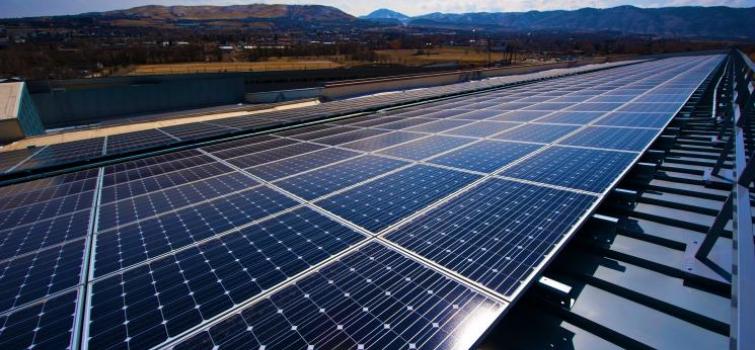
Solarpack Corp. Technologica, a Spanish developer, won contracts to sell solar power for $29.10 per megawatt-hour at an energy auction in August, the lowest price ever. Not only does this beat out the deal in Dubai from last May, it went for almost half the price of coal at the same event. Chilean solar power is now at one of the lowest rates for any kind of electricity anywhere, according to Solarpack General Director Inigo Malo de Molina.
“Solar energy technology has evolved and proved it is competitive,” Molina told Bloomberg in a telephone interview from Santiago. “Prices for electricity generation have changed drastically in the last years. Solar energy in Chile is now the cheapest in the market.”
From Energy Crisis to Energy Abundance
It’s an amazing turn-around, given the county’s recent energy woes. Just five years ago, Chile’s energy prices were among the highest in Latin America. A few monopolistic utility companies dominated the sector, and Argentina had stopped selling natural gas to its neighbor. Facing the risk of blackouts, the private sector planned to open more coal-burning power plants and build hydroelectric dams that would have flooded Patagonia.
But mass protests soon followed. In 2010, the movement became so powerful that then-president Sebastián Piñera shut down the coal project Barrancones, even though its developer, GDF Suez, was following the law. While it was a win for the environment, the decision seriously harmed Chile’s business reputation.
Today, renewable power is on the rise, with energy investment surpassing mining investment in a nation that’s the largest copper producer in the world. Chile even started exporting electricity and natural gas to Argentina earlier this year.
So what brought on such a rapid change? In a word: competition. There were 84 bids during this month’s power auction, with the winners signing 20-year power purchase agreements. And in a surprising turn, three of Chile’s four largest generators failed to win a supply contract.
The biggest win went to Granja Solar, Solarpack’s project, a near impossible feat a few years earlier. Until recently, solar power couldn’t compete without subsidies, but the falling price of solar panels has made this form of energy more appealing. The average price has declined to a record low of 44.7 cents a watt for standard polysilicon panels.
Why Chile?
The new plant will break ground in Northern Chile’s Atacama Desert, an ideal location given its position high in the Andes near the equator. It’s one of the sunniest and driest places in the world, making it a rich option when it comes to solar power.
The Chilean government is also on board. It plans to complete transmission lines that will deliver Granja Solar’s power to the entire country, which is why Solarpack bid so low, Molina told Bloomberg.
Solar power wasn’t the only success, either. Renewable-energy companies won more than half the contracts this time around. The lowest price for wind power was $31 per megawatt-hour, natural gas sold for $47, hydroelectricity for $60, and geothermal for $66, according to Bloomberg.
The triumph of renewable energy at Chile’s recent auction is a strong indicator that the energy sector is in transition. Companies looking to compete will need to adapt quickly if they want to remain competitive, which is a major win for both consumers and the environment.
by Jennifer Welden | Aug 17, 2016 | Climate Justice, Global Cooperation
The biggest impacts often come from the seemingly smallest technological advancements: food-ordering apps, instagram, Pokemon Go. They not only make something rapidly accessible, but they do so in a way that highlights its huge role in our lives (or makes it a huge role in our lives). The same can be seen all over the world, but with arguably higher stakes. You open up the paper pull up your news app and see stories of other apps that are helping prevent deforestation through geo-tag reporting, improving democracy by disseminating knowledge and creating transparency in elections, mapping violence, and bringing mobile bank to rural villages.
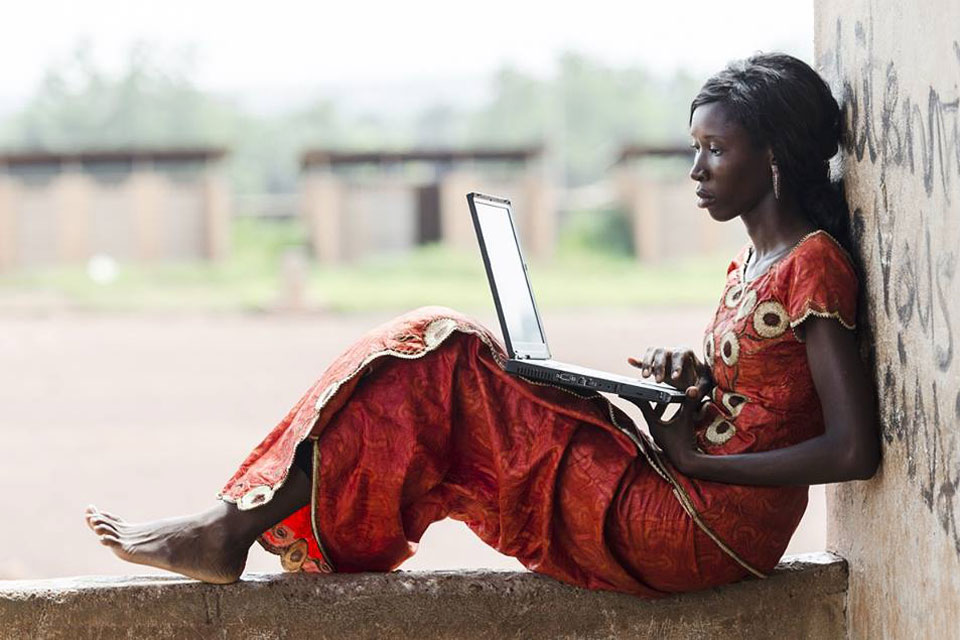
Clearly, technology can not only solve problems, but also it can empower people. One study found that by “bringing internet access to the 4.1 billion people in the world who do not have it would increase global economic output by $6.7 trillion…, raising 500 million people out of poverty.” Yet, even if the world can overcome the barrier of affordable internet access, how do we guarantee that the gains are felt equally, by everyone? Unsurprisingly, a “report said the benefits of rapid digital expansion had been skewed towards the better-off and the more highly skilled, who were better able to take advantage of the new technologies.”
If you follow this line of thinking, it leads you to further areas of inequity. In order for people to be “better-off and more highly skilled,” they must be better educated. Looking at Africa specifically, some argue “if we don’t change education we’re not going to change Africa. It’s just that simple.” However, “only 24% of people in sub-Saharan Africa have access to electricity.” How do you learn about something you can’t even plug into?
Such are the anachronisms of 21st-century Africa, where digital innovations are trumpeted daily, but where large swaths of society have not even experienced an agricultural revolution, let alone a technological one.
Ultimately, while technological development is an important piece of the puzzle, it cannot make up for plain, old, dial-up development: investment, infrastructure, ingenuity. Technology will not alleviate all our problems, but it will help to pinpoint them, and offer us a path toward a solution.
by Jennifer Keck | Jul 24, 2016 | Climate Justice, Global Cooperation, News
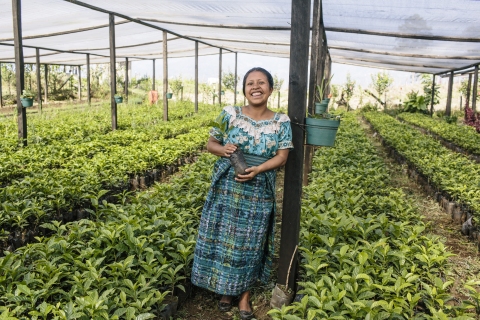
Plagued by rising temperatures, droughts, and elevated carbon dioxide levels, Central America’s agricultural sector hangs in the balance. But the Guatemalan town of San Miguel Chicaj in Baja Verapaz may have the answer to this increasingly worrisome problem. With support from the German Society for International Cooperation (GIZ), San Miguel Chicaj will soon be home to an agro-ecological center designed to serve as a model of adaption to climate change.
For the past ten years, the state of Baja Verapaz has been part of the ‘dry corridor’, making it the perfect testing ground for the agro-ecological center’s techniques. The center, located in a small forest surrounded by cornfields and nurseries, plans to teach people to adapt crop production to the changing environment.
“It will strengthen our crops…serve as a space for youth to be trained in agricultural-related activities,” the chief counselor of San Miguel Chicaj told El Periodico.
The project, which is in the second phase of the “Adapt” initiative of the GIZ, has been called “innovative” and “a new way to address climate change” by the organization’s head of cooperation Thomas Cieslik.
Under construction on municipal land, it will cost around $100,000 USD to complete. GIZ, meanwhile, is providing €10.5 million over six years (2013-2018) to invest in consulting and training. Once open, the center will fund operations by charging schools, universities, and companies for training students and employees.
It won’t be ready for about a year-and-a-half, but GIZ is already conducting workshops to teach residents of Baja Verapaz how to reduce their impact on the environment.
Like any project, San Miguel Chicaj’s agro-ecological center needs time to prove successful. However, if it does, it could become the model for agricultural innovation and food security around the world.
by CGS Blog Archive | Mar 9, 2016 | Climate Justice, Global Cooperation
What can we do to fight Zika?
Zika was first discovered in Uganda in 1947 and was seen as a mild illness. Current events, however, tell a different story. Zika is now one of the most feared diseases, potentially causing cases of microcephaly and Guillian-Barré syndrome. Microcephaly is a condition that causes a baby to be born with a small head and can lead to improper brain development, while Guillain-Barré syndrome can result in muscle weakness and breathing problems.
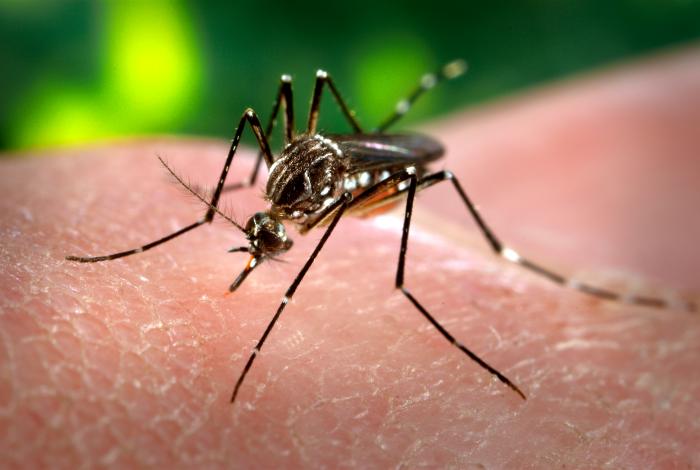
Zika started out in small areas, but now has spread to over 20 different countries. One of the reasons Zika has spread so much is climate change. Global temperatures have increased, and so has the amount of rain. This type of weather makes it easier for mosquito-borne illnesses to develop. Zika originates from a mosquito called the Aeded aegypti, which thrives in warm and wet climates. Further climate damage could play a future role in spreading the Zika virus.
Although there is no official cure for Zika, there are some ways you can protect yourself.
It is highly suggested for pregnant woman to refrain from travel at all costs. If you are planning to travel soon, it is important to wear long-sleeved shorts and long pants. Use insect repellants that contain DEET or picaridin. Keep doors and windows closed and use air conditioning. Basically, avoid getting mosquito bites as much as you can.
There are also ways of protecting yourself when at home. The researchers interviewed for this story said that people need to make their homes and neighborhoods less friendly to mosquitos. Since Zika is transmitted primarily through the bite of infected mosquitos, it is important to rid your home of any containers left with even a little standing water. Avoid letting water collect in trashcans or containers outside of your home.
However, these tips are only for short-term safety. In the long run, we need to make a global effort to address the root causes of the problem. The nations of the world must come together to curb climate change, thereby creating an environment less conducive to spreading diseases like Zika.