by Christopher Davis | Jan 31, 2014 | Climate Justice, Global Cooperation
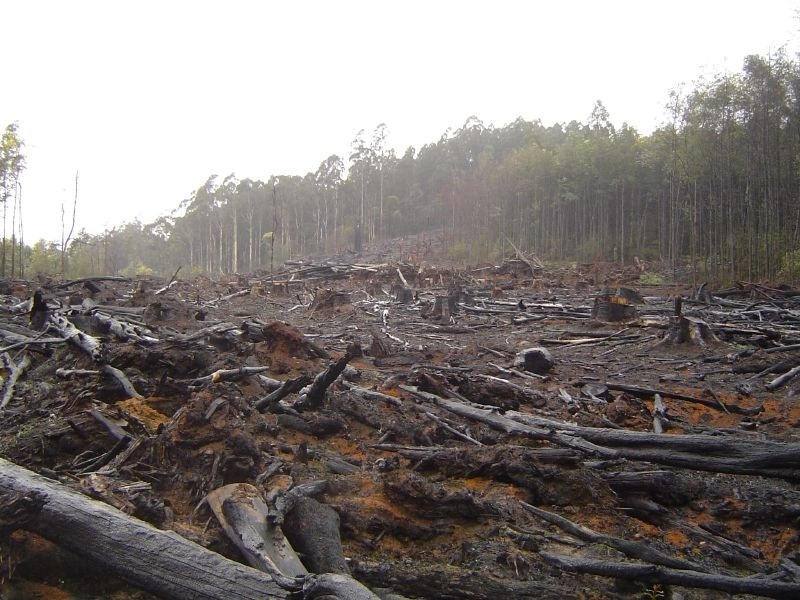
Deforestation, second to only energy consumption, is a leading contributor of greenhouse gasses. The World Wildlife Fund (WWF) estimates approximately 50 million square miles of forest are lost each year. While no region is immune to the impacts of this environmental issue; less developed and developing countries are especially susceptible to the repercussions.
In rapidly growing areas such as Bangladesh these impacts are only magnified. Periodic catastrophic flooding here can be directly linked to deforestation in the Himalayas, increasing runoff and devastating regional lowlands. Additional deforestation in the headwaters of the Ganges and Brahmaptura rivers creates a dangerous environment for the region’s populations.
Unfortunately this is not an isolated environmental concern. The world’s largest rainforest, the Amazon Rainforest, is one of the most affected regions in the world. Population booms in Central and South America have accelerated the perceived need for deforestation to create space to support human expansion. 70% of the Amazon that has been deforested has been utilized for new human habitation, livestock, agriculture, and wood exports.
Following the United Nations “Earth Summit” in Rio de Janeiro in 1992, the UN established the Intergovernmental Panel on Forests (IPF) and the Intergovernmental Forum on Forests (IFF). The IPF and IFF outlined over 270 proposals providing guidance on sustainable forest management.
In 2000, the UN Economic and Social Council (ECOSOC), with its Resolution 2000/35, created the UN Forum on Forests (UNFF). The main objective of the UNFF is to promote the management, conservation and sustainable development of all types of forests, and to strengthen long-term political commitment to this end.
The UNFF maintains universal membership of all UN member States; showing eagerness from the international community to combat deforestation globally. Additionally, in 2007, the UN General Assembly universally adopted the UNFF proposal for the Non-legally Binding Instrument on all Types of Forests (NLBI). The NLBI, a landmark agreement, is the first time that the UN has adopted an international instrument on forest management.
The UN Programme on Reducing Emissions from Deforestation and Forest Degradation (UN REDD), launched in 2008, assists developing countries prepare and implement strategies for conservation, sustainable forest management and reducing carbon emissions. The Programme currently supports 48 countries directly with financial support coming in the form of pledges from UN Member States and other organizations; currently more than $165 million has been donated.
While these efforts mark great progress, much is left to be desired. Due to the increasingly complex global economic interdependency, any future efforts must be supported in international law. Without legal incentives, a large number of developing countries will continue to exploit their resources for economic growth.
Emerging states have been hesitant to cooperate in reducing greenhouse gas emissions possibly viewing such disregard of industrial revolutions past as integral to economic growth. This hesitancy will undoubtedly prevent a global, legally binding treaty from taking shape.
A reasonable solution is to manage forest resources and halt clearcutting. The practice of most or all of the trees in an area being uniformly cut down, or clearcutting, is a popular and profitable method of logging. Currently some regional efforts are limiting the effects of clearcutting by granting long-term land leases to tend and regrow trees.
We are still far from an agreement on this environmental crisis. If we fail to ride the coattails of these efforts, and subsequently fail to ratify an international treaty on climate change, we will stumble in our battle against deforestation. If we fail to reverse the devastation created by deforestation and forest degradation, places like the Amazon will soon cease to exist.
by CGS Blog Archive | Dec 4, 2013 | Climate Justice, World Federation
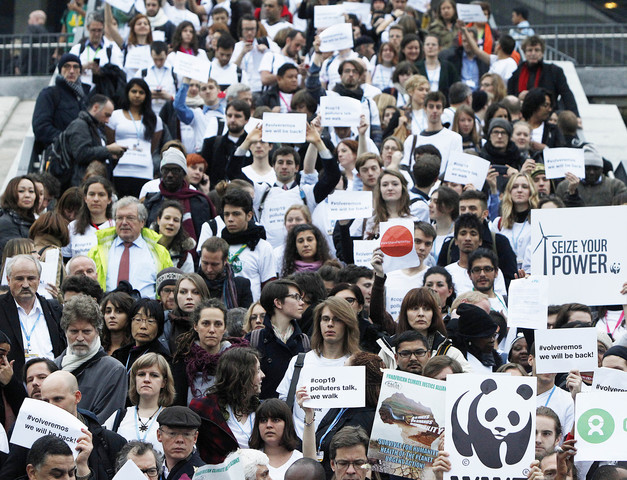
Two days before the close of the COP19 climate conference in Warsaw, hundreds of climate activists left the conference prematurely to protest the lack of progress. This walk-out and the otherwise dismal effort in negotiating a new comprehensive treaty beg the question of how the process could be fundamentally improved.
The UN’s framework convention on climate change, adopted in 1992, declares that change in the Earth’s climate and its adverse effects are “a common concern of humankind.” Yet this overarching perspective is barely represented in the formal UN process. The mission and primary concern of most country negotiators is to pursue vested governmental interests, some of which might not have to do with climate policy at all.
Another flaw in the process is the requirement of consensus agreements rather than majority voting, which places a heavy strain on negotiators to satisfy all involved parties. The Copenhagen Accord of 2009 couldn’t be formally adopted because of the opposition of five small countries. That this minority was able to embarrass the main negotiators sparked suggestions that an agreement might be sought outside the UN framework.
A forum of elected representatives could put the process onto a new footing. This new forum could be set up according to article 7.2 (i) of the UNFCCC which allows the conference of state parties to establish subsidiary bodies “as are deemed necessary for the implementation of the convention.”
Such a body was already suggested and outlined after the failure of the Copenhagen conference. A world parliament on climate change could be composed of members of parliament delegated by the legislative bodies of framework member states. Their mandate would be to represent their constituents in the negotiations. The delegates would be free from government instructions or diplomatic constraints, free to vote individually and independently according to their personal judgment. The work of the assembly would be characterized by open discussion and majority votes. The number of seats per country could be distributed according to criteria such as population size or economic output in order to reflect the actual weight of countries realistically.
This subsidiary parliamentary assembly of the UNFCCC would develop its own suggestions and proposals, operating on an equal footing with diplomatic officials in the COP process. The formal involvement of legislators could build pressure on governments to reach an agreement and speed up the process of ratification once it is achieved. If the diplomatic process alone still cannot reach a consensus, it could be provided that a certain qualified majority of both the conference of state parties and the parliamentary assembly would be sufficient to adopt outcomes.
Last month, the UN Human Rights Council’s Independent Expert on Democratization recommended that the world body should convene a conference to study how a parliamentary assembly could represent world public opinion in global decision-making processes. At the Commonwealth Summit in Sri Lanka, the foreign minister of Malta supported the proposal of a UN Parliamentary Assembly. A parliamentary assembly dealing specifically with climate change could be the first step. It would strengthen the democratic character of the climate negotiations and could help secure constructive cooperation and compliance on a continuing basis.
In the end, any agreement that would emerge with the approval by such a proposed assembly would no doubt have incomparably stronger legitimacy than the Kyoto protocol ever had.
by Don Kraus | Nov 21, 2013 | Climate Justice, Global Cooperation, News
Time is running out for countries to forge a new global agreement to address climate change. The intent of the COP19, this year’s meeting of the UN Framework Convention on Climate Change in Warsaw, Poland, was to lay the foundation of a new agreement. The hope was that then, world leaders would commit to substantial reductions in greenhouse gas emissions at a UN Climate Summit in 2014 in New York, with climate accords signed in Paris in 2015 – to come into force by 2020.
However, hundreds of activist walked out of COP19 to protest a lack of progress. The walkout was organized by groups such as Greenpeace, Oxfam, 350.org, the International Trade Union Confederation, ActionAid International, WWF and Friends of the Earth. Here’s a Democracy Now report on the walkout:
Their action followed a walk out by a group of 133 developing nations from an important negotiation. The issue at the core of this controversy is centered on how much responsibility nations that have emitted the most greenhouse gas should have to compensate developing nations that are receiving the brunt of damage from climate induced extreme weather.
In addition, emerging economies like China and Brazil are resisting a push to lay down clear commitments by 2014. The U.S. has also said its commitments would not be ready until early 2015 (my guess is to avoid controversy in the 2014 midterm elections). Japan announced that because of the Fukushima disaster, instead of a 25% greenhouse gas reduction by 2020, it would have a 3% increase. Canada, Russia and Australia are also reported to be walking away from previous commitments.
“If we go with the spirit of the lack of urgency that we see in these talks, we are headed for another disaster in Paris in 2015 and we need to avert it at all cost,” Greenpeace head Kumi Naidoo told The Associated Press. “We cannot afford to get it wrong again in 2015,” he said.
The bottom line is that climate change must be resolved. We face no greater challenge. It demands a global solution. Our immediate goal should be to focus on U.S. leadership in New York in 2014. President Obama must come armed with an agreement that can be accepted around the world and in Washington. Not an easy goal, but an essential one. More to come on this topic.
by Melanie Pino-Elliott | Oct 19, 2013 | Climate Justice, Global Cooperation
Bees are dying off. A phenomenon known as colony collapse disorder is occurring around the world, in which bees abruptly disappear from their hives en masse. This image may not be as moving as endangered tigers or abused dogs or starving children. But if bee decline continues at its current rate, we’re going to be in serious trouble.
About 90 percent of the world’s commercial plants–including fruits, vegetables, nuts, coffee, cotton, and alfalfa hay–depend on bees for pollination. But in the U.S. and in Europe, beekeepers typically report annual hive losses of 30 percent or more. Similar declines have been observed in Asia and Africa. Globally, colonies have been reduced by half since 1960.
There’s no consensus on the cause of these massive declines, but experts points to a number of influences. One is the switch from natural fertilizers to synthetic ones. Pre-World War II, U.S. farmers grew bee-friendly cover crops such as clover to fertilize soil. Now they use fungicides and herbicides, which kill many plants that bees depend on.
Insecticides also present a threat to bee populations. Some research shows that chemicals in pesticides can fog honeybees’ brains, which prevents them from finding their way back to the hive and endangers the survival of the colony. GMO farming, known to increase the use of pesticides and herbicides, is a contributing factor to this problem.
Bees appear to be suffering from poor nutrition, also due partially to GMOs. Genetically engineered crops tend to have less nutritional value, which compromises bees’ immune systems. This makes them more susceptible to pathogens, including mites, viruses, and fungi. Some experts believe climate change has exacerbated this problem as well.
This convergence of threats is a major problem. A large portion of farm output around the world depends on insect pollination, and honey bees are the most efficient pollinators. Their decline represents a major risk to food security, biodiversity, and the livelihoods of farmers and consumers alike.
What can you do about this? Entomologist Marla Spivak recommends the following: plant bee-friendly flowers, campaign to have them planted in public spaces (such as roadsides), and keep them free of pesticides.
“We need to behave more like a bee society, where each of our small actions can contribute to a grand solution,” she says. “Let planting flowers be the driver of large-scale change.”
by Kevin Burke | Oct 9, 2013 | Climate Justice, Global Cooperation
One of the key outcomes of UN Week was an important development in development: the UN General Assembly formally adopted language that makes the post-2015 agenda focus on what our Sustainable Development Goals (SDGs) should be and how we should attain them by 2030. Over the next two years, at a series of meetings and conferences, diplomats and bureaucrats will be deciding on the nuts and bolts of the successor to the Millennium Development Goals.
Why does this matter? And after endless frustration over environmental action of any kind at the UN, how can we make the SDGs make a difference?
First, it matters that the UN agreed to make the Sustainable Development Goals the focus of the post-2015 development agenda because the gains made by seeking the Millennium Development Goals are only sustainable with a long-term focus on environmental goals. Studies consistently show that the global poor are the most vulnerable to the effects of climate change, and it’s not the only environmental challenge we face: land degradation, desertification, ocean acidification, biodiversity loss, and human outcomes like food security and access to water matter as well. If Millennium Development Goals like decreasing poverty, child survival rates, or rates of HIV/AIDS are achieved only to be dashed as communities become newly stressed due to drought, or famine, or natural disasters, then what did we really achieve?
Second, the fact that the states who make up the General Assembly have agreed to integrate sustainability into traditional poverty and global health goals means we’re making progress, even if it’s tenuous, on convincing developing countries that environmental goals are in their interest. Their narrative has long held that since modern industrialized states didn’t have environmental standards as they became the economic powerhouses they are today, developing states should have few restrictions, too–this has especially been the claim of China, Brazil, and India, for instance. And these states had been trying to keep these goals separate. The fact that they joined the international consensus means, to some extent, that we’re making progress on getting political leaders in these states to recognize the potentially devastating consequences to them and to their citizens if we don’t take the environment seriously.
Third, this is an important step toward re-invigorating action on global environmental goals. Major industrialized countries like the US and Canada have opted out of the Kyoto Protocol, and developing countries’ emissions targets are non-binding. Progress has stalled on the global diplomatic front where the environment is concerned. But most importantly, perhaps, we’ve learned a lot since the original Rio Conference in 1992 and the signing of the Kyoto Protocol in 1997–while emissions are still an important part of our understanding of climate change and our legacy to the future, we now understand that fighting environmental problems is about more than just government treaties and legislation. We have to involve businesses, NGOs, and local organizations to help us plan for disasters, provide for water and food security, design urban areas, preserve native species, and much more. We know now that providing for humanity’s long-term health is about more than just government yammering–it’s about all of us working together at the local, regional, and global level to mitigate the disasters we know are coming and to prevent the problems to which we are clearly contributing. The Sustainable Development Goals and the process that creates them will provide us with a public measuring stick to work with and a new public standard to which we can hold all our leaders–public, private, and non-profit–accountable.
Finally, how will having the SDGs on the post-2015 agenda make a difference for the environment? After all, we’re just a year removed from the Rio+20 Summit on Sustainable Development and we just had a massive IPCC (Intergovernmental Panel on Climate Change) report explaining what we know about climate change and how it may affect us in the short- and long-term. Isn’t the environment getting enough attention?
Of course not.
It’s been a while, so you may have forgotten that there was a mass walkout from–and mass dissatisfaction with–the Rio+20 Summit. People were frustrated that the final result of that process was an overly bureaucratic, please-everyone document that actually committed to not-so-much. But when the General Assembly approved treating SDGs as an integral part of the post-2015 development agenda, we took the first real step toward realizing what those protestors actually hoped for: real action. The Millenium Development Goal process has used achievable, measurable goals, that member states, NGOs, UN bodies, and even lending institutions can use as policy priorities. Imagine if these kinds of goals were set for the environment and sustainable development.
Now imagine if you got input into what those environmental goals are. That, above all, is the opportunity this news affords us: the chance to get involved and make a difference on a global scale.
And while the UN is and will remain an inter-governmental body, there are plenty of organizations that inform those governments on how to make decisions–including this one! You might also want to connect with the US Mission to the UN directly to inform their participation in discussions. Or comment on this post below to let us know what you think!
by Melanie Pino-Elliott | Sep 16, 2013 | Climate Justice, Global Cooperation
New research reveals a connection between extreme weather and climate change. A report published by the American Meteorological Society found that human-caused climate change was a contributing factor in half of the 12 extreme weather events that occurred last year. We are seeing the impacts of climate change and it’s time for us to get serious about reducing carbon pollution before things get worse.
For some 2012 extreme weather events, especially those involving rainfall or drought, researchers did not find evidence of climate change. A warming climate was not responsible for Britain’s rainy summer or for the Netherlands’ cold spell. They also did not find any relationship between climate change and the droughts in the American Midwest, Kenya, and Somalia. High levels of precipitation in Britain, the United States, China and Japan were attributed to natural variability. However, researchers detected a link to climate change in the rainfalls in Australia and New Zealand.
The heat waves the US experienced last spring and summer had been attributed to normal atmospheric dynamics, but climate scientists now estimate that climate change was responsible for about one-third of the magnitude of that warmth. The study claims that such heat waves are now up to 12 times more likely to occur because of global warming. The report also blamed human-caused climate change for the warmer ocean and atmosphere accounting for the record loss of Arctic sea ice. Though climate change probably did not cause hurricane Sandy, the storm that devastated New York and New Jersey, the increase in sea level may have exacerbated its impact.
Though scientists have previously been reluctant to hold climate change responsible for weather events, advances in research and computer models are making more accurate attributions possible. They also increase the ability to predict the effects climate change will have in the future. Climate change is heating and drying some areas, making them more susceptible to wildfires in the long run. According to an article from the American Ecological Society, high-latitude areas are at risk because their peat soil is high in carbon and will burn under extreme weather conditions. Regions like the American West and parts of Australia are more likely to experience fires in coming years. These predictions already have started to come to fruition with the string of wildfires in the west, such as the Rim Fire that recently razed 134,000 acres of Yosemite National Park.
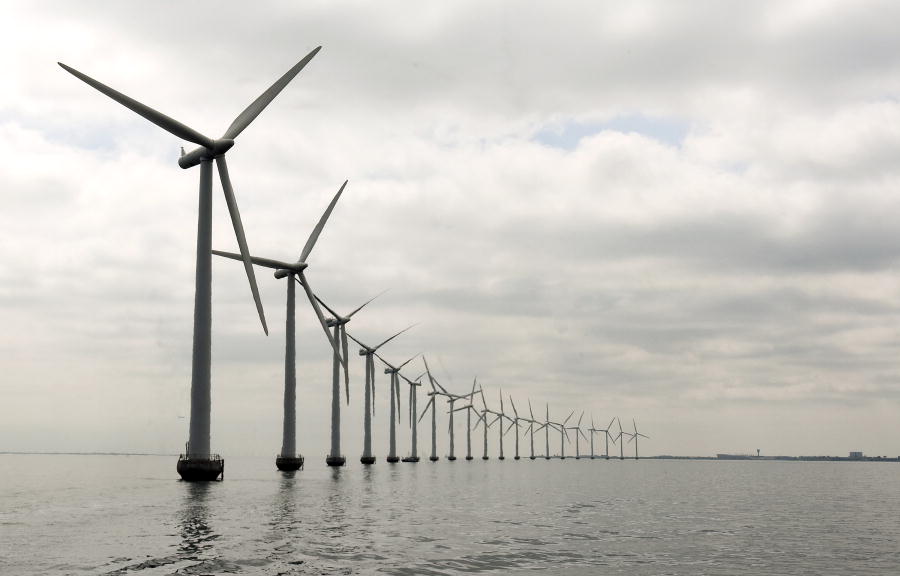
One of the major things we have to do to head off climate change and prevent more events like this is reduce carbon emissions. The fossil fuels we burn in factories, cars, and homes are a major source of carbon pollution. Clean energy alternatives, such as wind and solar energy, are needed to reduce our dependence on fossil fuels.