by Kevin Burke | Apr 8, 2014 | Climate Justice, Global Justice
With the joint World Bank and International Monetary Fund meetings coming up April 11th through April 15th, it’s worth reviewing the contribution these institutions make to global justice. We’ve already covered the IMF a bit recently, so let’s review the World Bank, particularly in light of a recent announcement that it will be substantially increasing its lending to developing countries.
Like the IMF, the World Bank was created after World War II to help stabilize the new economic order. The World Bank was originally designed to help rebuild war-torn countries following years of conflict. As those states regained stability, the Bank’s mission changed: help the worst off around the world build their societies into more stable economies that can participate on the world stage. But like the IMF, the World Bank has been criticized for forcing countries to take certain policy advice that has often stifled rather than encouraged development.
In recent years, the World Bank has made impressive efforts to reform, especially in streamlining its bureaucracy. It has also strengthened its role as a repository and developer of knowledge– it has developed a strong understanding each state’s economy, and can therefore partner with those states and investors to examine problems and leverage its economic expertise to find solutions. Most of all, the Bank’s global presence and relative independence give it the opportunity to address genuinely global needs, ranging from extreme poverty to famine to global health and climate change.
That’s why last week’s announcement from World Bank President Jim Yong Kim that the World Bank would be increasing its lending to the nations containing over 1.5 billion of the world’s poorest people is encouraging – it shows that the Bank is recognizing its role not only as a funder of smaller projects and help for developing states, but also as an institution with the ability to make widespread change with large-scale projects that affect billions.
Couple this announcement with Kim’s comment that “fights over water and food are going to be the most significant direct impacts of climate change.” As we know from the IPCC report released last week, climate change will be affecting humans directly in many ways, and that impact will fall most heavily on the global poor. A World Bank that is focused on large-scale poverty projects with an eye toward how climate change is going to affect those impoverished is one of the most critically important institutions in the world right now. Indeed, that may be the World Bank’s competitive advantage – it can focus on global problems in a way that private lenders cannot.
But is the World Bank prepared to take on this challenge, even with open eyes and in an era of reform? In addition to its record of bad advice, Kim started the reform process because the World Bank’s bureaucracy has been siloed against itself, with different divisions, regions, and projects rarely communicating. Furthermore, while Mr. Kim speaks well about poverty and climate change, reports have shown that the Bank itself has done a poor job of accounting for climate risk in many of its recent projects. This institutional baggage must be overcome for the Bank to accomplish its much-needed work.
With the risks of climate change putting even more pressure on inequality in the world, we need a World Bank focused on mitigating the risks and human impact of climate change. As its reform process goes forward, it needs to take serious account of how every project affects the long-term ability for humans to prosper in a warming world. The stakes are too high for it to fail.
by Mona Funiciello | Apr 3, 2014 | Climate Justice, Global Justice
For years now the United States and countries around the world have mostly been watching and waiting, betting that we have time to head off the worst impacts of climate change. But according to a new report from the United Nations Intergovernmental Panel on Climate Change, the climate-related disruptions we have witnessed so far are just a precursor of devastation on a much larger scale.
Crop failures top the list of concerns described in the report. Storms, droughts, and other climate-related weather events are expected to cause major food shortages and widespread starvation in all parts of the world. As rich, fertile farmland dries up and alternative food sources dwindle, societies will struggle to sustain food supplies. In a New York Times article, Mark Oppenheimer, a Princeton University climate scientist who helped write the report, boiled it down to simple economics: “when supply falls below demand, somebody doesn’t have enough food.”
However, famines are just one of many threats that will emerge in the coming decades. Countries will face a cascade of destabilizing events, such as severe water shortages, heat waves, floods, droughts, wildfires, intense storms, rising sea levels, and other catastrophes on an unprecedented scale. Civil wars and conflicts between nations are also expected to increase as people compete for scarce natural resources.
These incidents are unlikely to unfold gradually or in isolation. Most countries are not equipped to handle the impacts and the aftermath of one deadly storm, let alone the combined effect of multiple disasters happening simultaneously. Typhoon Haiyan – which struck the Philippines on November 8, 2013 – was one of the most powerful and deadliest typhoons ever recorded. More than 6,000 people were killed and four million people lost their homes. Under the scenarios put forth in the report, storms like Haiyan will increase in frequency and intensity and occur in conjunction with other climate-related disasters. That will put the lives and livelihoods of millions of people at risk and require costly outlays for emergency aid and rebuilding efforts.
Investing in adaptation is one important way to help stem the tide of the cumulative effect these events. However, as the report points out, there are limits to adaptation. We cannot simply move forward with an “emit and adapt” strategy. As the report shows, if greenhouse gas emissions continue unabated and temperatures increase by 4˚C, the impacts may exceed our capacity to adapt. Costs will surpass available funds. There simply isn’t enough money to go around. Therefore, reducing greenhouse gas emissions must remain a top priority.
Parties to the United Nations Framework Convention on Climate Change will meet for the 20th time this December in Lima, Peru. The gathering will mark twenty years of unsuccessful efforts to get all nations to sign and ratify a global climate agreement – delays that amount to repeatedly rolling the dice on climate change. The risks and consequences of inaction are now abundantly clear. There is an urgent need for nations to act collectively, and act now. The good news is that if every country commits to emissions reductions and boosts adaptation efforts, there is a good chance we can limit warming to 2˚C, protect people from the worst impacts of climate change, and ensure we have a habitable planet.
by Jake Keyel | Mar 27, 2014 | Climate Justice, Global Cooperation
Saturday, March 22nd, was World Water Day. Recognized by the United Nations since 1993, World Water Day aims to raise awareness of the issues surrounding the conservation and development of water resources as well as practical policy options to address those issues. Previous years have focused on issues such as “Water Quality” and “Water and Food Security.” The 2014 day was dedicated to the “nexus” of water and energy.
It is easy to forget just how interconnected these two issues are.
Of course it takes energy to extract, treat, and distribute water; “about 8% of the global energy generation is used for pumping, treating and transporting water to various consumers.” But it also takes great quantities of water to produce energy, particularly certain types such as hydroelectric, nuclear, and thermal. UN Water also estimates that a rising demand in biofuels could significantly increase the demand for water in energy production.
Overall, we will face an estimated 60% increase in demand for energy over the next three decades. Such a rise in demand puts extra pressure on an already strained world water system; as many as 763 million people already lack access to “improved water sources.” Clearly, the priority is to ensure that these three quarters of a billion people have access to better sources of water. And a lot of progress has been and continues to be made on this front in the last 25 years. In 2012, we reached the Millennium Development Goal of halving the number of people without access to safe water.
But there is a limited amount of water on the planet and only 3% of it is fresh water. As a result, conservation is an essential tool to address the growing need for access to clean and safe water. We in the United States can do much better in this regard; our per capita water usage is more than double that of the world average. And even in a country like the US there are those at risk of water shortages. Those of us who live in wealthy countries like the US must change our wasteful habits on a personal level as well as pressure our governments to enact policies that will conserve our limited water resources.
Conservation is also critically important to address the anticipated spike in energy demand. A huge portion of the energy produced and consumed currently is wasted. Again, the United States is the wrong kind of leader in this area. Not only is our per capita consumption well above the worldwide average, 61% of all energy produced in the United States is wasted. Lowering our current usage by reducing this wastage is critical to meeting worldwide energy needs in the decades to come. Again, this will come through personal conservation, efficiency standards such as eliminating incandescent light bulbs, and transitioning to new energy technologies.
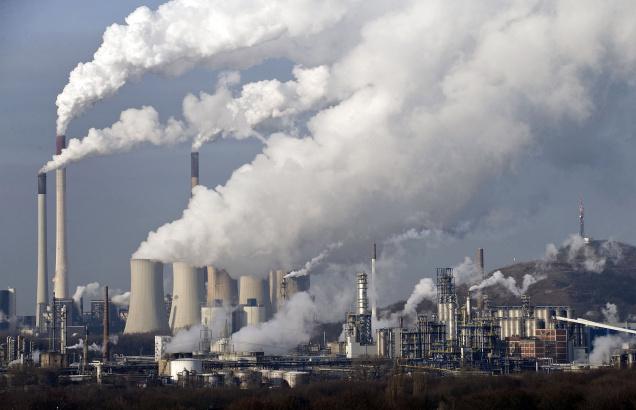
Not only are the fossil fuels that we rely on polluting and consume a lot of water, they are extremely inefficient. Renewable energy sources such as solar and wind power consume much less water while at the same time producing cleaner energy. Despite this, worldwide investment in clean energy was only $254 billion in 2013, an 11% decrease from 2012. Worldwide military spending, on the other hand, was an unbelievable $1.7 trillion in 2012.
There is no doubt that the world’s water and energy needs will continue to increase as the population grows and developing countries become wealthier. As a result, water and energy conservation are not a choice; they are an absolute necessity. It is important to remember that it is a luxury to have what seems like unlimited water in our faucets and power in our outlets. But these resources are not unlimited and we cannot wait to start doing our part.
by Ronald Glossop | Mar 8, 2014 | Climate Justice, World Federation
Books can provide us with valuable insights about our global problems and how to deal with them. A good example is Glen Martin’s The Anatomy of a Sustainable World: Our Choice between Climate Change or System Change and How You Can Make a Difference.
Martin is the Professor of Philosophy and Religious Studies at Radford University in Virginia. In this book, he asks us to recognize “the deep connections between our collapsing global ecosystem and our current world system of militarized nation-states and globalized corporate capitalism,” and examines the root causes of our current situation and argues for the specific changes which are needed to move beyond them.
Focusing on the link between ecology and sustainability, Martin notes that economic theorists can no longer continue “as if investment, production, and consumption were self-contained without thought of the immense negative external consequences that production and consumption have on society and the planetary ecosystem.” A new holism is taking place which will mean a transformation of institutions. It will mean the end of militarism and widespread use and waste of non-renewable resources. There are two prominent global institutions that will need to be transformed as we move to a holistic planetary outlook–global corporate capitalism and the system of independent “sovereign” nation-states. The existing system of voluntary treaties among nation-states and voluntary cooperation among international corporations “are all hopelessly inadequate forms of action in the face of our global climate crisis.”
Martin argues that we need to shift from the idea of negative freedom linked to the liberalism of the past to the new idea of positive freedom based on the quality of life in the community. Democratic government is then seen as an instrument to promote the “common good of the social whole,” a situation which requires “reasonable economic equality.” But few thinkers see that the global community needs “planetary democracy.“
“Our global situation today requires the vision to create a constitutionally mandated planetary community of positive freedom in which human beings are empowered to deal with the global crises that threaten our existence and future generations . . . . The ‘common good of all’ needs to be the product of a global positive freedom that is only possible under a democratic Earth Constitution. . . . [T]he creation of government alone will not suffice. However, government as the mainspring of positive freedom . . . remains the necessary prerequisite for a truly transformed world order.”
The second chapter provides the long-term historical background for the changes now taking place followed by the recent development of the Constitution for the Federation of the Earth. The third chapter gives a detailed explanation of and argumentation for the Earth Federation which incorporates specific measures to maintain the environmental sustainability of the Planet. The Earth Constitution is a totally ‘green’ constitution. In the fourth chapter Martin indicates why a revolutionary approach such as adopting the Constitution for the Federation of the Earth is required. “At the dawn of the twenty-first century, we are . . . in a position to self-consciously found a just, democratic, peaceful, and enduring planetary society.”
“Resistance and criticism to the present system, while appropriate, are not enough. We need a concrete, positive blueprint that we can envision, work for, and actualize. The Earth Constitution provides the best possible blueprint for system change-for founding a truly sustainable and democratic world civilization.”
A more complete review as well as reviews of other books related to solving global problems is available at http://GlobalSolutions.org/books.
by CGS Blog Archive | Feb 12, 2014 | Climate Justice, Global Cooperation
We welcome the following contribution to The Global Citizen by Aric Caplan, President of Caplan Communications. His fuller analysis on the intersection of climate denialism and Congressional campaign contributions can be found here.
Voters are coming to grips with our many elected officials beholden to the fossil fuel industry that finances their reelections. The Center for American Progress recently reported that 160 members of the 113th Congress have taken over $55.5 million from the industry that drives carbon pollution, which also causes climate change.
The latest climate-denying diversions peddled by lobbyists and the anti-science crowd in Congress would leave news junkies and even casual political observers skeptical or uninterested altogether in finding cleaner energy alternatives. I would argue that this response is the result of learned behavior. After all, 97% of scientists worldwide subscribe to the fact that “climate-warming trends over the past century are very likely due to human activities.” Nevertheless, most scientists are impartial considering science is independent of ideology. The only disagreement in their ranks is among scientists with financial obligations to the fossil fuel industry.
Two years ago, one of the most outspoken, polarizing and climate-denying extremists, U.S. Senator Jim Inhofe (R-OK) a ranking member of the Senate Armed Services Committee and former Chairman of the Senate Environment and Public Works Committee, published “The Greatest Hoax: How the Global Warming Conspiracy Threatens Your Future.”
In his bias against science, Inhofe brazenly claims: “With all of the hysteria, all of the fear, all of the phony science, could it be that man-made global warming is the greatest hoax ever perpetrated on the American people? It sure sounds like it.”
Inhofe relies on superficial rhetoric involving regulations that amount to higher taxes and an array of misleading talking points that play well to his supporters and con funders by hyping how “We the People” and businesses, especially, are overburdened by government. Accordingly, Inhofe maintains that “. . . for the alarmists, global warming has nothing to do with science or scientific inquiry. Science is not about the inquiry to discover truth, but a mask to achieve an ideological agenda. For some, this issue has become a secular religion, pure and simple.”
Miles Grant, a Senior Communications Manager at the National Wildlife Federation, observed at the blog TheGreenMiles that Inhofe recently slipped up and admitted the real reason why he pretends climate change doesn’t exist. By effectively manufacturing headlines for himself, Inhofe argued, “I find fewer and fewer members of the United States Senate that are sympathetic to this whole cause,” and admitted to WABC-AM’s Aaron Klein that he only denies climate science because he doesn’t like the solutions being offered. Miles astutely pointed to conservatives’ bogus academic culpability that accepting the “science” would admit that climate poses a real problem, which would lead one to discussing the need to solve it. Next, you become stuck debating the science in a seemingly “endless loop” of disinformation, opinion-as-fact and other baseless conspiracy theories.
Rallying behind a common cause would seem reasonable — and an obvious answer to solving America’s problems — but instead it appears the voters are getting what they deserved. Meanwhile, the voices of Americans besieged by climate change are drowning out the bullhorn of special interests, be it from organized labor, farmers, small and sustainable business owners, or state visitor and tourism bureaus, who have described severe drought and other burdens they’ve faced as a result of climate change, reiterating the importance in finding common sense solutions to cut carbon pollution, protect future generations from climate change, spur the economy and create jobs.
by Don Kraus | Feb 12, 2014 | Climate Justice, Global Cooperation
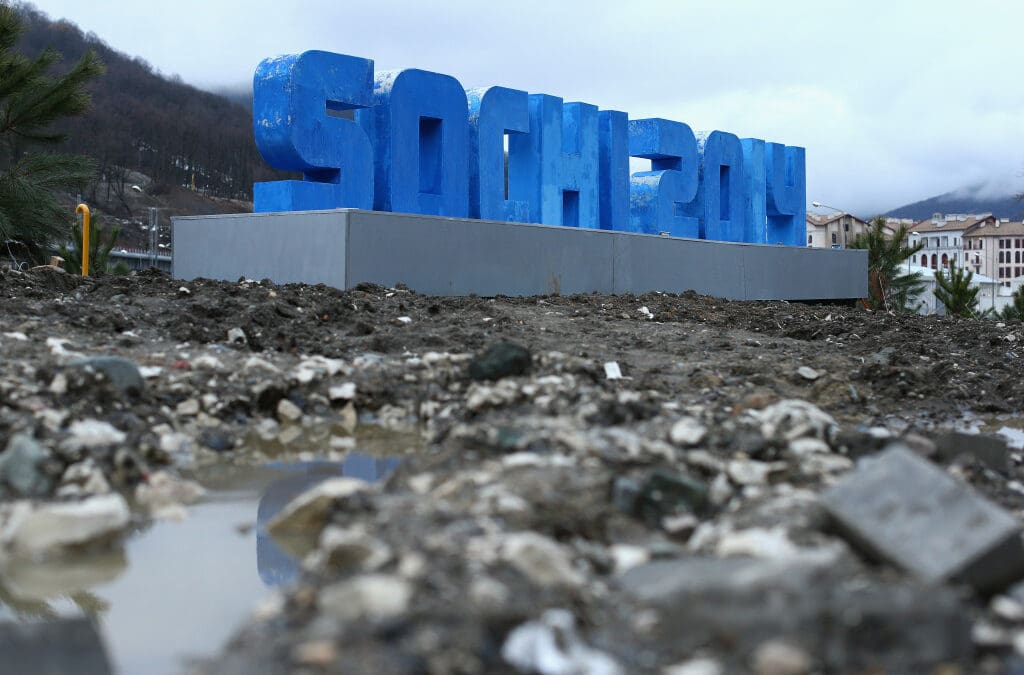
Are we witnessing the last Winter Olympics held in Sochi? The Russian games are already relying primarily on manmade snow. SMI Snowmakers, a Michigan-based company, has spent the last 4 years designing and installing a system that has blown the equivalent of 920 football fields of snow onto Sochi’s slopes.
Will other winter games sites including Squaw Valley, Vancouver and Grenoble also fall victim to climate change induced weather patterns that are literally melting down the list of available host venues? The answer, according to a recent study, is a resounding yes. In all but the lowest greenhouse gas emissions estimates, the goal of limiting global temperature increase to 2° C will not be met. And as a result warmer winters will mean less snow.
However, unless global climate solutions are rapidly agreed to and implemented, the damage done to winter sports will only be (pardon the pun) the tip of the iceberg. We’ll skip the doomsday scenarios for now, but in the words of President Obama at his State of the Union address, “the debate is settled. Climate change is a fact.”
Obama is the latest world leader to connect a changing climate to “communities struggling with drought and coastal cities dealing with floods.” He and his administration deserve a huge amount of credit for the work they have done to address this problem. However, despite his good news that since 2006 the U.S. reduced its “total carbon pollution more than any other nation on Earth,” Obama is leaving out an important fact which Americans and the world need to hear: It doesn’t matter how much the U.S. reduces its greenhouse gasses, if other nations do not also cut theirs.
Some facts: Between 2000 and 2010, China’s emissions grew by about 57% while the US was able to limit its growth to about one half of a percent (and actually showed a 2% decrease by 2011). India’s emissions grew by 33%. The European Union decreased its output by about 1%. The rest of the world’s carbon emissions grew by almost 20%, already pumping out 80% of the combined total of China, the US, the EU and India. The bottom line is that the modest reductions that the U.S. and the EU have managed are not making a significant dent in global greenhouse gas reductions.
Obama and other well-meaning U.S. policy makers continue to talk about energy independence and U.S. greenhouse gas reduction as if that is all we need to do to solve this looming problem. But it’s not! No nation can solve this problem alone. Unless the United States and its lead spokesperson get serious about leading an effort for all nations to pitch in and work together, we will all suffer the consequences together.
Current UN sponsored climate negotiations have had limited success. Developed nations like the U.S. want all nations to share in the cost of combating climate change. Developing nations believe that they should not have to pay for consequences of carbon pollution from wealthy nations. There seems to be a consensus that if a global agreement is not ready-to-go by the UN’s 2015 meeting in Paris it is likely that we will reach a tipping point and risk going beyond a point of no return. Some say we have already passed that point.
But the 2013 UN climate meeting in Warsaw, Poland determined that countries individual commitments to reducing greenhouse gas emissions will be “nationally determined.” In other words, it seems like diplomats are crafting a weak global agreement with few rules or consequences. How can this possibly save the day?
It is past time for a new, U.S. led, coordinated approach. We propose that Obama dust off and update an old idea: a greenhouse gas tax. The concept behind this is simple. Get all nations to agree to tax carbon and other greenhouse gases at a common rate. Increasing the cost of carbon pollution will push the global market to adopt less expensive and less destructive sources of energy.
In the past this has been proposed as a global carbon tax, collected by a global entity. This will never be approved in Washington. Instead, each country or state would collect its own taxes and use most of the funds as needed: to reduce other taxes, retrain workers displaced by a changing economy, update their infrastructure, fortify coastal cities threatened by rising sea levels, or any other way they wanted to.
However, a small percentage of revenue, adjusted on a sliding scale, would go into the new Green Climate Fund to support developing countries ability to limit or reduce their greenhouse gas emissions and to adapt to the impacts of climate change.
This is a simple solution where everyone pays and everyone benefits. Humanity is facing a crisis and we either pay now, or pay much more later. The cost of a carbon pollution tax is small when compared to the amount we will pay to adapt to rising sea levels, new deserts, food shortages, resource wars and the other horrors associated with out-of-control climate change. The United States is the only nation with the capacity and resources to lead this effort.
President Obama has already laid out the challenge saying “when our children’s children look us in the eye and ask if we did all we could to leave them a safer, more stable world, with new sources of energy, I want us to be able to say yes, we did.” And, we want to be able to say to them, “let the winter games begin.”
Co-authored by Mona Funiciello, an independent consultant who specializes in climate change policy and strategy