by Jake Keyel | Jul 1, 2014 | Climate Justice
I came across a BBC article last week entitled “What our descendants will deplore about us.” The article considers human beings’ trajectories in recent memory and what we are doing in our contemporary world that our children and grandchildren may find unbelievable–and in some cases downright terrible. The apartheid of South Africa and the segregation of the United States, for example, are deplorable to us now as many of the ongoing injustices around the world will look unacceptable to our children.
This article got me thinking about what I would put on a list of issues facing the world at the moment and which of them are critical to address if we want our progeny to look fondly at what we’ve done and the world we leave them. In doing so, I came up with the following as some of the most important goals for the global community to work toward:
- Reversing environmental degradation
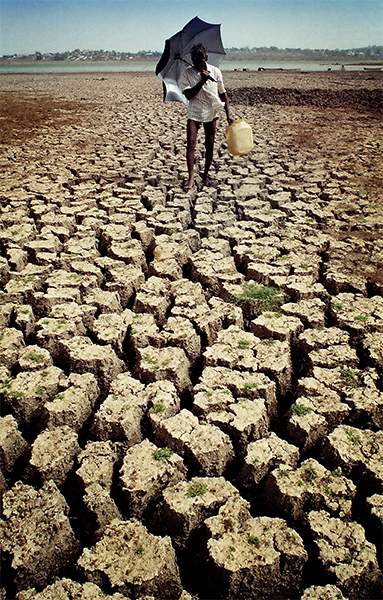
We cannot continue to use up all of the planet’s resources as if they were unlimited; they are not. Our continued reliance on fossil fuels, both in our automobiles and power plants, is detrimental to the natural environment and human health. Deforestation is an on-going problem as is desertification, both caused and exacerbated by attempts to extract too many limited resources. The only way forward is to recognize that renewable energy sources, cleaner industrial processes, and less wasteful consumption are essential for human beings to have a bright future.
- Eliminating nuclear weapons/reducing conventional weapons
In my perfect future, this would simply read, “Eliminating all weapons.” However, I recognize that practical steps in the right direction are better than utopias. Nearly 70 years after the United States used atomic bombs on Hiroshima and Nagasaki, nuclear weapons remain a serious and potentially devastating threat to human life. The existence of these weapons, let alone their use, represents one of the gravest threats to human life the world has ever seen. In addition to eliminating nuclear weapons, we must also greatly reduce the numbers of conventional weapons that spread around the globe. Most conflicts are fought with small arms, and the world’s major arms producers must recognize that the free flow of weapons causes many more problems than it solves.
- Fostering truly universal respect for human rights
This means recognizing that all people, regardless of age, gender, sexual orientation, country of origin, disability, or religion deserve to live happy and healthy lives. It is up to individuals, communities, and governments to ensure that everyone, everywhere in the world can pursue an education, find meaningful work and livelihoods, and access healthcare when they need it. And it is essential to each individual to pursue such a life while being free to express themselves and their cultures and traditions.
This list is by no means exhaustive, but it is my belief that addressing these issues now is absolutely vital for the future. It is my hope that in 50 years, my children and grandchildren (and hopefully myself) can look back at the early part of the 21st century and marvel at how much has changed for the better. I hope that all of the issues I’ve described have been relegated to history textbooks in 50 years and are studied as a source of understanding for where we’ve come from and where we will continue to go.
by Jennifer Welden | Jun 11, 2014 | Climate Justice, Human Rights
Climate change has been framed in many ways: as an environmental issue, a public health issue, an economic issue, a sustainable development issue…what is rarely acknowledged, however, is that climate change is also a women’s rights issue.
But how can climate change be misogynistic?
In poor countries around the world, a disproportionate amount of household responsibility falls on women and girls; namely the tasks of providing water, food, and resources for heating and cooking. Moreover, most small-scale farmers are, in fact, women–particularly in developing countries, where men typically leave home to find employment. In these roles, women become especially vulnerable to the effects of climate change (such as drought, soil erosion, and deforestation), as well as the effects of a lack of political power and economic independence.
A poignant example of this occurs in refugee camps in Darfur, where women walk as many as seven hours three to five times a week in order to find firewood. Leaving the camps makes women vulnerable to violence, sexual assault, and starvation, as many are forced to use the very food they hope to cook as payment for fuel. This reliance on firewood and other types of traditional fuel also affects climate change, as it leads to increased greenhouse gas emissions and deforestation. While steps have been taken to address this particular issue (most notably with the creation of a fuel efficient stove) this is only one of many issues connected both to climate change and to gender inequality.
But while women are victims of climate change, they are also at the forefront of working to combat it. All over the world, women are leading the way in developing innovative, sustainable practices that address not only climate change but also its effects on women. However, this by itself will not solve climate change or create gender equality. To accomplish these goals, the world must reach a collaborative, sustainable agreement on climate change, as well as increase the rights of women around the world.
It is only by working together – as nations and as people of all genders – that we can begin to fully address these issues.
by Josh Spesaison | Jun 6, 2014 | Climate Justice, Global Cooperation
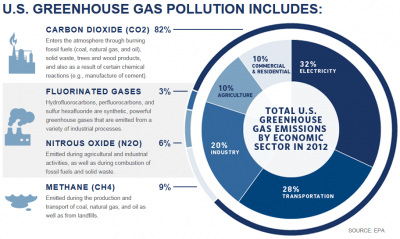
Opinions on climate change have thundered across the media since President Obama’s announcement to set a national standard for power plants and the Carbon Dioxide (CO2) they emit. Opponents of action on climate change portray the plan as a tax on Americans, while supporters praise the action as a step forward, but also warn that more is needed.
Well, Obama aims to accomplish a lot more on the global stage.
On May 28 the President gave the commencement speech at West Point that acted as a comprehensive outline of his administration’s national security policy. One key message Obama conveyed was that “American influence is always stronger when we lead by example.” He continued to criticize political leaders that deny climate change.
The EPA initiative to reduce carbon pollution from power plants by 30% of 2005 levels is a momentous step for domestic policy. The justifications for this policy should not even need to mention climate change. The amounts of CO2 power plants currently emit are known to aggravate respiratory problems, including asthma and bronchitis, and increase the likelihood of severe weather storms, which ultimately costs hundreds of millions in tax payer money.
Though setting a standard for power plant air pollution is smart for American health, this action alone is not enough to control the threat of global warming. Climate change is a global issue that demands a global solution.
“For the world to overcome the enormous threat climate change poses, we need every country to do everything within its power to pursue cleaner and healthier energy sources.” Secretary Kerry emphasized how imperative a global effort is in his Financial Times Op-Ed. “We need to pursue the UN climate negotiations with vigor and determination toward an ambitious global agreement in Paris next year.”
This is how America will lead by example. The US domestic policy tells all other countries that climate change is a dangerous issue and America, the wealthiest and most influential country, is taking it seriously.
The Executive Secretary of the UN Framework Convention on Climate Change (UNFCCC) has noted the positive effect Obama’s action will have for the 2015 UN Climate Change Conference in Paris.
What’s more is that our leadership to set standards on power plant carbon pollution has already sparked a Chinese advisor on climate change to announce that may China cap its carbon emissions in 2016. The statement captures the influence American leadership can have.
China has been the largest CO2 emitter in the world since 2006 when it over-took the US. China’s air pollution has reached levels 20x worse than what the World Health Organization suggests. Chinese citizens have demanded government action against the terrible state of carbon pollution. This led to the Chinese Premier Li Keqiang declaring a “war on pollution.”
Even if China doesn’t carry out the suggested carbon cap, it wouldn’t mean their government isn’t committed to some form of proactive action against the negative effects of climate change. The Wilson Center’s China Environemnt Forum spread the word on several of China’s smaller steps to combat pollution.
With American and Chinese leaders tackling pollution and climate change aggressively, there could be strong hope for a global agreement to curb the disastrous consequences of climate change.
by Benjamin Gross | Jun 4, 2014 | Climate Justice, Global Cooperation
Monday marked a very significant day for environmentalists, with the EPA unveiling a sweeping new set of regulations designed to reduce carbon emissions nationwide. The proposal, which has yet to be implemented, lays out a formal plan for cutting carbon emission levels by 30% by 2030. It assigns target pollution goals for each state, while giving each state a variety of options to achieve them, including but not limited to shutting down some of its power plants, installing forms of efficient alternative energy, and joining cap-and-trade programs which would create a maximum cap on pollution and a market to buy and sell pollution permits.
The new proposal has not been without its share of criticism, however. Many who live in states where coal mining is a major industry have harshly criticized the regulations, calling them “job killers” that will inevitably lead to the economy’s demise. They claim that such regulations will prove harmful to the average person, as the regulations are predicted to raise the cost of electricity, albeit by less than a single percentage point.
Furthermore, some Republicans have become increasingly defiant, stating that they will simply not enforce the new regulations if they are passed. Gov. Mike Pence of Indiana has actively denounced the bill, claiming that he would oppose the proposed rules and instead look for more practical solutions that would not entail cutting any jobs. Gov. Rick Perry of Texas is expected to follow suit, which seems logical given his track record in Texas for refusing to put into place any pollution compliance laws related to climate change.
This backlash on the newly proposed regulations is truly disheartening and disgraceful in the minds of the majority of Americans, including myself. In an era where scientific research has revealed the vast effects that climate change is having on our planet, many continue to deny its importance as a major issue that ought to be dealt with immediately. These people continue to defend the coal industry with vigor, refusing to acknowledge the fact that the entire globe has seen a rapid increase in average temperature–in some areas as much as seven degrees–or that the ice in Antarctica is melting at unprecedented levels.
Looking ahead to the future, I sincerely hope that the US continues to take a lead role in the movement to help stop climate change. It is of the utmost importance that the proposed regulations by the EPA are carried out not only on a national level, but also internationally; our efforts must blossom into a much larger collective effort with other countries that are major polluters, such as India and China. At the upcoming international Climate Summit in New York this summer, I urge the US to present an international plan to address climate change that is capable of being adhered to by the various countries of the world. For if the great superpowers of our world fail to band together to confront this growing problem, we together will be forced to face the consequences of our inaction.
by Josh Spesaison | May 16, 2014 | Climate Justice, Global Cooperation
Climate change is one of the most divisive issues in Congress today. Nearly any vote related to climate change, energy policy, or conservation is split along party lines, which is well documented by Global Solutions’ 2014 Congressional Report Card. Mitch McConnell’s floor statement on May 6th is representative of this partisanship. He belittles the entire issue by stating the President will “talk about the weather at the White House” and “lecture everybody…about low-flow toilets.”
This is the kind of talk that needs to stop. Senator McConnell is not an un-educated man. He cannot seriously equate climate change to everyday weather. He does this purposefully as a political move that panders to the extreme right: the Tea Party.
McConnell also boils down the proposed policy changes to a single punitive tax on energy. However, it’s not that simple, and he knows it. In recent years many Representatives and Senators have proposed laws that would help combat climate change without new taxes. Ending big oil tax breaks, funding renewable energy, and yes, taxing carbon pollution would all have significant impacts on reducing the speed of increasing global temperatures, but these are not the only options.
What makes the debate over climate change different now than in years past is that the effects are already happening – something the newest National Climate Assessment makes crystal clear. The report also explains just how dangerous the climate threat is to all sectors and livelihoods. The effects on agriculture have broad implications that could be felt by everyone, including McConnell.
The success and sustainability of agriculture is a national security concern for every nation. If crop yields are decreased by extreme weather, then food security for the nation’s entire population is reduced. Food prices could become much more of a burden for the average citizen.
With every passing day it becomes more important that addressing climate change finds bipartisan support. Republican leaders need to be convinced of the peril of this threat. That’s why there needs to be more focus on the economic symptoms of climate change.
Senator Marko Rubio said, “I do not believe that the laws that they propose we pass will do anything about [climate change], except it will destroy our economy.” However, allowing climate change to go unchecked will certainly destroy the economy.
The report does have several examples of climate and extreme weather events directly correlating to economic hardship. Yet, the report never talks about the economic effects specifically.
In the interest of building bipartisan support, climate change needs to be exampled as a threat to Republican interests as well. Thorough cost-benefit analyses of climate change effects should be brought to the forefront of Congress’ attention. Climate change advocates need to start speaking the language of the opposition if there is to be hope for making the needed policy changes.
by Don Kraus | Apr 14, 2014 | Climate Justice, Global Cooperation
Ben Franklin said it best—nothing is certain, “except death and taxes.”
Like most Americans, we submit our 1040s to maintain the health of our nation. However, we’d personally rather decrease our income tax and instead pay a fee that reduces carbon pollution and could preserve the planet.
The carbon-intensive oil, gas, and coal industries are stoking climate change. According to a new UN report, the threats to our civilization are enormous. Crop failures, the top concern in the UN’s report, will cause widespread starvation in all parts of the world. Countries will face a cascade of destabilizing events: severe water shortages, heat waves, floods, droughts, wildfires, intense storms, rising sea levels and other catastrophes on an unprecedented scale. Civil wars and conflicts between nations will increase as people compete for scarce natural resources.
The good news is that while it is too late to avoid climate change — it’s already happening — humanity can still temper its force. One of the simplest ways to slow the pace of climate change is by levying a fee on greenhouse gas emissions.
Putting a price on burning oil, gas, and coal that reflects the damage inflicted on the environment will make renewable energy alternatives (like solar, geothermal, and wind) and energy-reducing investments more competitive.
Our friend Alan Rushforth lives near Philadelphia and started a small solar-powered water-heating business a few years ago. Even with state and federal subsidies, it took Rushforth Solar’s customers five to seven years to break even compared with the cost of installing natural gas heaters, so it was a tough sell.
“If there were a 10 to 15 percent fee on carbon pollution, with a schedule of more increases to come, it would light a fire under all sorts of energy saving technologies and behaviors,” Alan said. “Not just hot water solar.”
Many of the biggest global corporations — including leading oil and gas companies — agree with our friend. They not only anticipate a price on carbon, but also have already alerted their shareholders about this possibility.
Carbon taxes are working in places like British Columbia. The Canadian province launched a revenue-neutral carbon tax in 2008, placing a fee on emissions generated from burning fuel. What happened?
The impact was huge. Fossil-fuel consumption dropped by almost 19 percent per capita compared with the rest of Canada. Meanwhile the province maintains strong employment and its economy is strong.
Climate change is at a tipping point, and decisions made during the next few years will determine how devastating it will really get. An upcoming UN climate summit and another global meeting in Paris in 2015 must produce a new pact on carbon pollution. Taxing carbon here in the United States would pave the way for a global agreement on the price of carbon that could cut emissions and spur all nations to adopt new ways to protect the environment.
Our leaders must do more to address climate change, but they can’t solve the problem alone. Secretary of State John Kerry drove the urgency home during a speech in Indonesia.
“Even if every single American got on a bicycle tomorrow and carpooled…used only solar panels to power their homes [and] planted a dozen trees…that still wouldn’t be enough to counter the carbon pollution coming from the rest of the world,” Kerry said. “We need a global solution.”
So while death and taxes are certain, what kind of taxes we pay and how secure they make us are not. It’s time to give carbon taxes a shot. Future generations will thank us for taking this step before it’s too late.
Coauthored by Mona Funiciello, an independent consultant who specializes in climate change policy and strategy.
Distributed via OtherWords.org