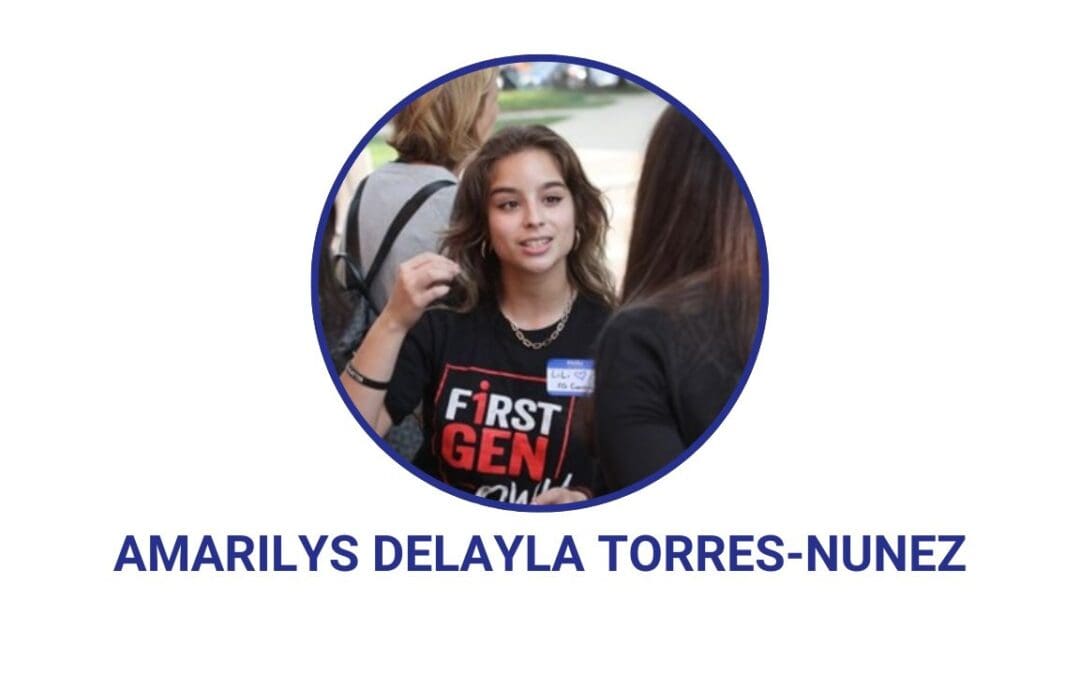
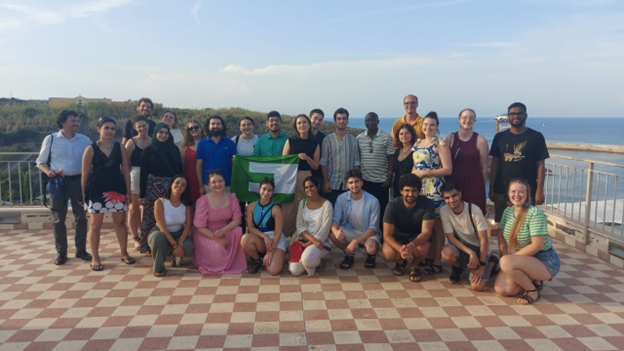
Washington, DC– Amarilys Delayla Torres-Nunez, Winner of the New Voice 4 Global Solutions Essay Contest, represents Citizens for Global Solutions (CGS) at Ventotene International Conference.
While some individuals are lucky enough to escape for Labor Day, few can boast that they spent the week on an island in the Tyrrhenian sea attending one of the most prestigious international conferences dedicated to democratic world federalism. Thanks to her scholarship and commitment to CGS’s vision, Amarilys Delayla Torres-Nunez can claim that distinction.
Torres-Nunez is the winner of the The New Voices 4 Global Solutions Essay Contest, created to offer young people (aged 18-30) across the United States the opportunity to propose and argue for ideas to strengthen the global governance system on topics such as ending war, the guarantee of human rights, or protecting the environment.
Z first-generation college student from Manatí, Puerto Rico, she currently is pursuing an interdisciplinary education at Ohio Wesleyan University, focusing on Anthropology, Zoology, and Psychology. These diverse academic interests reflect her commitment to understanding both human and animal behavior in a global context.
Submissions for the contest opened in May 2024, with one winner selected to have their essay published in CGS’s Mondial journal and attend the 2024 Ventotene International Seminar (September 1-6), on the island of Ventotene, Italy.
Torres-Nunez said she was motivated to enter the contest because it provided an opportunity for students to engage in conversations about global issues in a meaningful way. She also appreciated the accessibility of the contest.
“I appreciated how this essay contest did not have strict criteria which excluded those different cultural and socioeconomic backgrounds which provided a unique opportunity to include these perspectives into our essays,” Torres-Nunez said.
In her essay, Mobile Gender Courts: A Solution To Accountability Gaps in UN Peacekeeping and Survival Sex, Torres-Nunez presents an in-depth analysis of the persistent accountability gap afflicting UN peacekeeping missions. She also touches on the ongoing issue of sexual exploitation within peacekeeping contexts while proposing mobile gender courts as a possible solution.
“I chose this topic because I am passionate about protecting the rights of women and children and the principle of peace,” Torres-Nunez explained. “It is important to remember that during times of desperation, women and children are the most vulnerable and it is the responsibility of the UN and its peacekeepers to protect and provide.”
When asked about her time at the Ventotene International Seminar, Torres-Nunez called it a once-in-a-lifetime experience that not only introduced her to new people, but changed and challenged her perspective.
“I met many brilliant minds from different cultural backgrounds who had such unique perspectives regarding the topics of federalism, overcoming social inequality, and achieving peace,” Nunez-Torres said. “This experience not only challenged my pre-existing beliefs but encouraged me to expand my worldview.”
While at the conference, Nunez-Torres said she gained a deeper understanding of European federalism, sovereignty, and the various challenges the EU faces in maintaining competitiveness and security. She also learned about the historical evolution of European federalism and how that has shaped the current structure of the EU and its governance. The seminar also included discussions of balancing national sovereignty and the collective authority of the EU, especially in the context of economic policy, defense, and legislative proposals to the European Parliament.
Discussions carrying an emphasis on collaboration and unity across borders to tackle complex global issues also led Nunez-Torres to find many parallels between her home country of Puerto Rico and the United States.
“Despite Puerto Rico being a U.S. territory, it continues to face significant struggles in various aspects, from economic challenges to political and social inequalities,” Nunez-Torres said. “This seminar made me realize that unity between the United States and Puerto Rico is essential—not just to address immediate needs, but also to foster long-term, sustainable development.”
Nunez-Torres will be featured in the Winter 2024 edition of the Mondial journal, where her essay can be read in full.
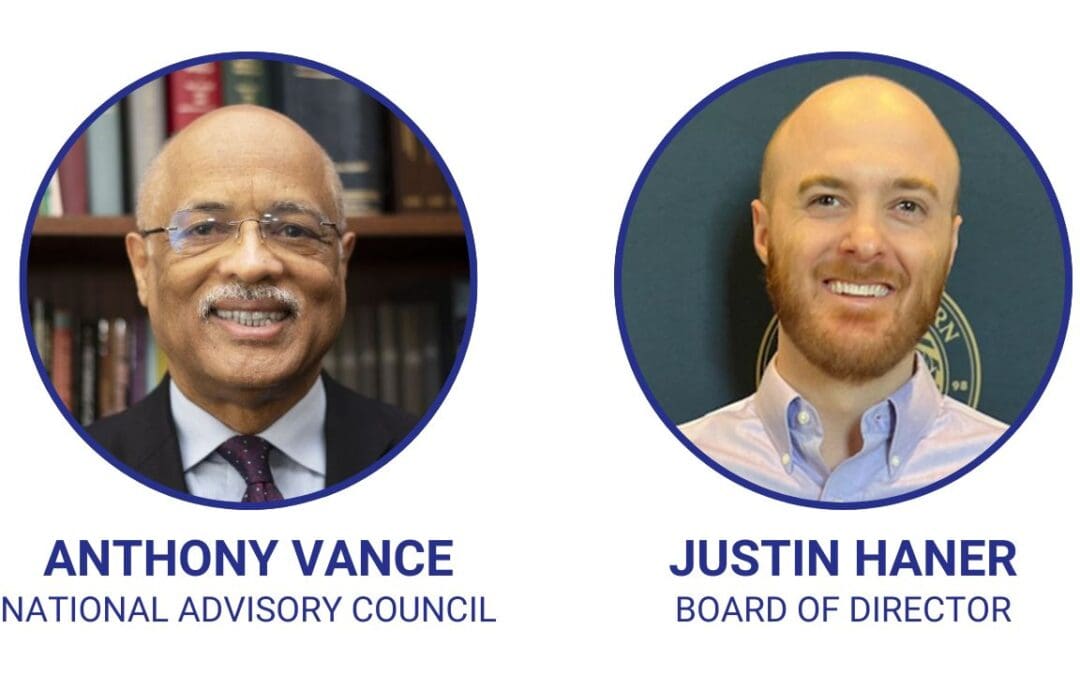
Washington, DC– Citizens for Global Solutions (CGS) is honored to announce Anthony Vance, Senior Representative, U.S. Bahá’í Office of Public Affairs joins our National Advisory Council (NAC).
Anthony oversees the development of the Bahá’ís of the United States Office of Public Affairs programs and strategic direction. He joined the office in 2010 after spending four years at the Baháʼí World Center in Haifa, Israel representing it to the diplomatic community, civil society, and parts of the host government. A lawyer by training, he spent 21 years in the U.S. Agency for International Development in legal and managerial positions in Washington, Côte d’Ivoire Kenya, Botswana, and Egypt. Mr. Vance holds a B.A. in Economics, an MBA, and a J.D. from Harvard University.
Larry David,Member, Executive Committee, CGS Education Fund Board of Directors said of Vance’s appointment, “The Baha’is and Citizens for Global Solutions have long-shared common goals relating to the need to replace an international system that allows for war with one which does not. The organizations are naturally allied. Anthony Vance’s joining the CGS Advisory Council underscores that informal alliance. CGS is fortunate to have an individual of Anthony Vance’s position and training advising its board and is strengthened by his decision.”
Dr. Justin Haner, Member of the Board of Directors
It is with great pleasure that Larry David also welcomes Justin to the Education Fund Board of Directors. Larry states, “Dr. Haner brings an academic perspective, deep preparation, and a thorough understanding of the history and scope of international law, its applications, and its shortcomings. We fellow board members are honored by Justin Haner’s choice to give volunteer service to support CGS and its focus on international peace and justice.”
Justin is a political scientist and research fellow at the Watson Institute for International and Public Affairs at Brown University. From traditional security concerns to artificial intelligence and cybersecurity, his scholarship focuses on the transformative power that international law and organizations can have on solving complex global and regional security issues. Committed to ensuring his work resonates beyond the classroom, he campaigns on the dire need to reform the United Nations, including as a co-drafter of the People’s Pact for the Summit of the Future and an active contributor to the Coalition for the UN We Need. Justin is also a committed public servant with twelve years of combined experience in the military and local government. As a former Captain in the US Army Infantry, he led a mechanized rapid reaction force just south of the Korean DMZ and was selected to serve as Executive Officer to the United Nations Command Honor Guard. He currently serves as an elected Representative for Town Meeting and appointed Capital Budget Committee board member in Walpole, MA, where he works on a variety of local issues from promoting racial and gender inclusivity, to reducing his town’s environmental impact.
About Citizens for Global Solutions
Citizens for Global Solutions is a non-governmental, non-profit, non-partisan membership-based organization that for more than 75 years has brought together a diverse collective of individuals and organizations with a common goal of a unified world predicated upon peace, human rights, and the rule of law. From championing ratification of the UN Charter upon our establishment in 1947 to supporting creation of the International Criminal Court (ICC) 25 years ago to advocating for global instruments to confront today’s enduring challenges of war and climate degradation, CGS recognizes that true progress is a generational enterprise. We invite like-minded individuals and organizations to join us in this mission.
Mobilizing Earth Governance Alliance (MEGA) is launched in Geneva on March 26, 2024 as a resounding answer to the challenges faced by Earth’s integrated ecosystems.
“We all share one planet. But today our common home and our common humanity are under existential threats from serious and inter-connected crises.” Mary Robinson, Chair of the Climate Governance Commission and Former President of Ireland, at the launch of MEGA.
The world faces a deepening planetary emergency—and is on a reckless path toward catastrophic ecosystem collapse —having already over-shot six of nine scientifically-identified Planetary Boundaries. Such profound and potentially cataclysmic challenges require new ways of thinking, collaborating, and innovating for change.
The coalition advances proposals and campaigns for concrete environmental governance mechanisms, many of which have been thoroughly researched and analyzed in the Climate Governance Commission’s landmark report Governing our Planetary Emergency.
“Stronger and more effective global governance fit for purpose is required in order to facilitate the collective action that is required by States and other stakeholders to prevent an environmental catastrophe and to ensure healthy and vibrant ecosystems for current and future generations,” reflected Maja Groff, Convenor of the Climate Governance Commission.
“If the proposals of the Climate Governance Commission report and MEGA are fully implemented, then we can comprehensively solve the environment polycrisis,” added John Vlasto, Chair of WFM-IGP.
Held in conjunction with the 148th Assembly of the Inter-Parliamentary Union, the timing and venue allowed for reflection on the importance of legislators in environmental governance due to their vital role in policymaking. “Everyone who’s been involved in parliamentary work I’m sure, will agree that it would be a mistake to underestimate what a small number of committed parliamentarians can make happen in their country,” said Nic Dunlop, Secretary-General of the Climate Parliament.
The launch event also recognized that true environmental governance solutions will require innovative cross-sectoral collaboration, including a focus on engagement of the private sector. “For global environmental governance solutions to be successful they need to provide the right incentive structure for the private sector to take decisive action,” explained Dr. Alexander Schmidt, Head of Science, Sustainability, and Climate Research at Stockholm-based carbon accounting provider Normative. “MEGA will work closely with businesses across the globe to understand their needs, capabilities, and limitations. It is through these dialogues that we can ensure a truly effective governance structure fit for purpose.”
The launch focused not only on preventing environmental catastrophe, but also on building a better future for all through enhanced stewardship of the Earth for current and future generations. ‘It is imperative that we revisit our shared values and connect its spirit to this new journey, including principles of international law, Earth trusteeship and wonderful efforts such as the Earth Charter which connects wisdom of indigenous knowledge and systems,” said Neshan Gunasekera, Member of the World Future Council and Chair of the Earth Trusteeship Initiative. “These call on all of us, present here and now, to build trust amongst each other, across generations, to ensure that we play our small part in preserving the integrity of our Earth’s systems.’
MEGA is established as a ‘big tent’, inclusive coalition of civil society organizations, legislators, academics/scientists, private sector actors and other stakeholders, working in cooperation with governments, and with a laser focus on strengthening global governance of the environment.
As CGS Executive Director Rebecca Shoot reflected: “For practically as long as there has been a global governance system as we know it, our organizations have advanced a shared vision of a better, more equitable, and inclusive world by harnessing the power of diverse coalitions. We are honored to join with allies from every region and sector now to apply this same strategic approach to perhaps the most critical challenge of all: saving our planetary home.”
Legal Alternatives to War: Increasing the universality and effectiveness of the International Court of Justice
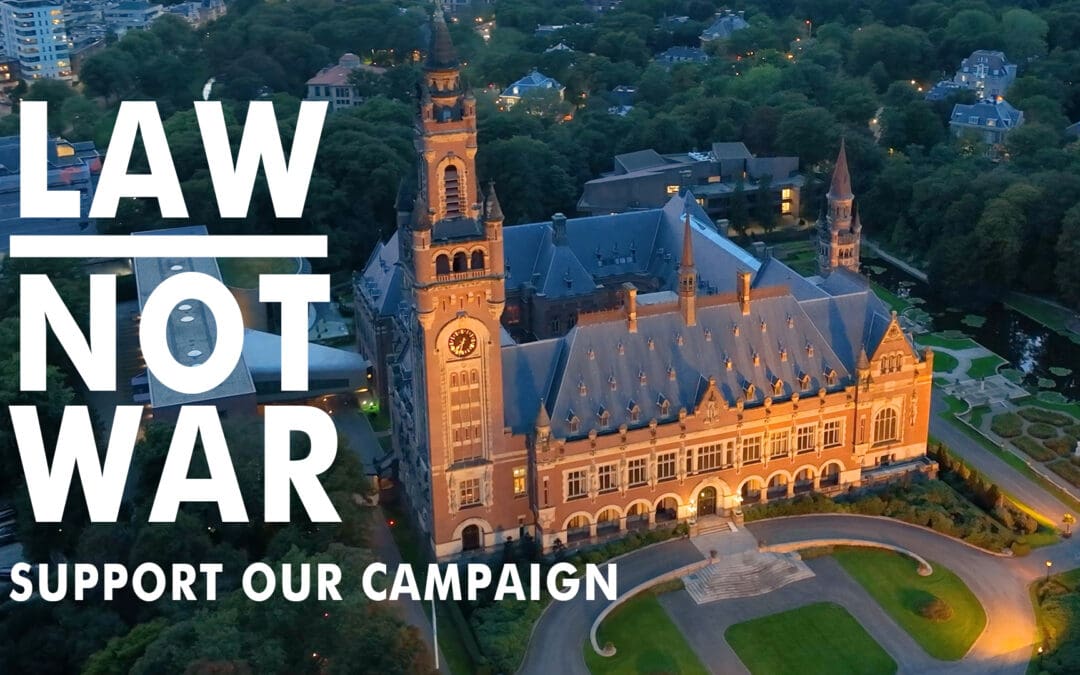
March 16, 2024. Resolve international conflicts in the courtroom, not the battlefield, the LAW not War crowdfunding campaign is live. We invite you to watch the promo video, make a donation and circulate to your networks.
“From the smallest village to the global stage, the rule of law is all that stands between peace and stability and a brutal struggle for power and resources. I note the importance of accepting the compulsory jurisdiction of the Court and call on all Member States to do so without any reservations.”Antonio Guterres, UN Secretary-General. Remarks to the UN Security Council Thematic Debate on the Rule of Law amongst Nations, January 12, 2023
“I prefer law to war under all circumstances.”Benjamin Ferencz (1920-2023), Prosecutor at the Nuremberg War Crimes Tribunals. International champion of international law who popularised the motto ‘Law not War.’
Project outline
LAW not War is a new global campaign to enhance the jurisdiction and use of the International Court of Justice (ICJ) in order to assist countries resolve international disputes peacefully rather than through recourse to the threat or use of force.
The principal objective of the campaign is to increase the number of States accepting the compulsory jurisdiction of the ICJ, with the aspiration to achieve universal acceptance of jurisdiction by 2045, the 100th anniversary of the United Nations.
In addition, the campaign works to enhance ICJ jurisdiction through:
Promoting greater use by UN bodies of the option to request Advisory Opinions from the ICJ;
Encouraging disputing States to make more frequent use of the option of taking cases to the ICJ by mutual agreement;
Encouraging more frequent use of the compulsory ICJ jurisdiction provision in a number of international treaties, and promoting the inclusion of compulsory ICJ jurisdiction in additional treaties;
Encouraging states to adopt constitutional amendments or legislative measures to affirm the UN Charter prohibition of war and the obligation to resolve international disputes peacefully including through recourse to the ICJ.
The campaign employs a mixture of education about the value and impact of ICJ jurisdiction, and advocacy to enhance such jurisdiction.
Authority, influence and impact of the ICJ
The ICJ has had considerable success at resolving international disputes, including some that involved the threat or use of force. Examples include:
Nicaragua v United States, which helped end US aggression against Nicaragua and paved the way for the Central American Peace Accords;
The Nuclear Tests case, which helped end nuclear testing in Pacific;
Chad v Libya, which resolved their territorial dispute and ended their armed conflict,
Costa Rica v Nicaragua, which resolved their territorial dispute over the Isla Portillos and ensured withdrawal of the Nicaraguan military forces.
The authority of the ICJ within the United Nations system, and the unique contribution the ICJ plays with respect to the application of the law, ensures that its decisions exert considerable influence and impact on the parties and other stakeholders in its cases.
An analysis of ICJ cases undertaken by Judge C.G. Weeramantry (former Vice-President of the ICJ), for example, indicated that approximately 90% of ICJ cases are implemented – either fully or mostly.
However, its role is limited by the fact that its jurisdiction is based on voluntary acceptance. As such, many disputes that could potentially be resolved with the help of the ICJ are not brought to the court because of refusal of one or more parties to accept its jurisdiction.
ICJ jurisdiction – general provisions
ICJ jurisdiction is conferred through a variety of processes including:
Voluntary declarations by UN Member states – under Article 36 of the ICJ Statute – by which they unilaterally accept compulsory jurisdiction for any dispute between them and other states that have also made such declarations (74 countries have made such declarations);
Mutual agreement by disputing states to take a specific legal issue to the court;
Advisory Opinions which are requested to the Court by the UN Security Council, UN General Assembly (UNGA) or other UN organs and specialized agencies which have been granted authority by the UNGA to request such opinions;
International treaties which provide for ICJ jurisdiction in disputes between States Parties relating to obligations under the treaty in question.
LAW not War is working to increase acceptance and use of ICJ jurisdiction through all four of these processes, but is placing a strong focus on enhancing the first process list above – increasing the number of voluntary declarations accepting ICJ jurisdiction for any international legal disputes.
ICJ jurisdiction – working with like-minded countries
The UN Summit of the Future, scheduled for September 2024, provides an opportunity to highlight the role of the ICJ and build support for universal acceptance of its jurisdiction.
A large number of civil society organizations, facilitated by the Coalition for the UN We Need, have been consulting and cooperating on a Peoples Pact for the Future which includes 33 recommendations to the Summit that have considerable support around the world. One of these is the recommendation that “all UN Member States should be encouraged to accede, by no later than 2035, to the compulsory jurisdiction of the International Court of Justice to ensure the peaceful settlement of disputes.“
C4UN will organise a second Global Futures Forum in May 2024 to build political traction for the recommendations in the Peoples Pact for the Future.
Cosponsoring and participating organizations
Founding/cosponsoring organizations:
LAW not War is a joint campaign established and managed (cosponsored) by:
Aotearoa Lawyers for Peace
Basel Peace Office
Citizens for Global Solutions
Peace Action, Training and Research Institute of Romania
UNFOLD ZERO
World Federalist Movement-Institute for Global Policy
World Future Council.
Participating organizations include:
Act for Change / Agir pour le Changement (Congo)
Actions Communautaires pour le Développement de la Femme (Congo)
African Centre for Human Rights Education (Senegal)
All Souls Nuclear Disarmament Task Force (USA)
Asociación Española para el Derecho Internacional de los Derechos Humanos (Spain)
Association for Promotion of Sustainable Development (India)
Association of World Citizens (France/International)
Baltimore Nonviolence Center(USA)
Blue Banner (Mongolia)
Center for Enlightenment and Development (Malawi)
Center for Peace and Global Governance (USA)
Clean Climate and Environment Campaign Initiative(Nigeria)
Centre International de Droit Comparé de l’Environnement (France)
Center for United Nations Constitutional Research (Serbia)
CGS Board Chair, Executive Director, and Board Members participated in Recommendations from the 2023 Congress of the World Federalist Movement-Institute for Global Policy
Critical issues for humanity, such as the climate/environment crisis, a global erosion in human and civil rights, lack of progress on the United Nations Sustainable Development Goals (SDGs), and the rise of armed conflicts and authoritarian regimes, require better global governance according to member organizations of the World Federalist Movement – Institute for Global Policy (WFM-IGP). The organizations reaffirmed their shared commitment to advancing effective global governance on 11 and 12 November 2023 at the 29th WFM-IGP biennial Congress, attended by 70 delegates and observers from 29 countries.
“International law and global governance mechanisms must be strengthened in order to better manage the critical problems facing humanity,” explained WFM-IGP Congress Chair Donna Park, based in Cincinnati, Ohio, USA. She further observed: “World Federalism offers an effective model for a peaceful, secure, just, democratic, equitable and sustainable world. The policies and programs advanced over the weekend would help humanity build such a world.”
To advance international law, human rights and justice, the Congress resolved to support an international treaty to codify and provide accountability for Crimes Against Humanity and strengthen its recently launched Legal Alternatives to War (LAW not War) program to enhance the universality and effectiveness of the International Court of Justice. The Congress also resolved to continue its active support of the International Criminal Court (ICC) and promote the establishment of additional judicial institutions to meet global challenges not under ICC jurisdiction, including crimes against the environment, corruption, organized crime and persistent and unchecked violations of human rights, ensuring effective remedies for victims.
“The challenges we face today require global solutions, and world federalism provides the necessary framework for effective international cooperation,” says Rebecca A. Shoot, Co-Chair of the WFM-IGP Commission on International Justice, the Rule of Law and Human Rights, working out of Washington, DC, USA. “Respect for the rule of law, support for international judicial institutions, and protection of human rights must be the bedrock of this cooperation. By adopting concrete proposals to apply these principles in practice, WFM-IGP and its member and affiliated organizations take important steps to advance the vision and promise of the UN Charter for a world governed by law not war.”
To promote peace and human security, the Congress discussed common security approaches to address and resolve armed conflicts. In addition, the Congress called on States to phase out policies of nuclear deterrence; affirm the norm and practice of non-use of nuclear weapons; adopt policies of no-first-use of nuclear weapons; slash nuclear weapons budgets and re-allocate these resources to peace, climate protection and the SDGs; and commit to achieve the global elimination of nuclear weapons no later than 2045, the 100th anniversary of the UN. The Congress also advanced governance proposals to protect outer space for peaceful purposes and to ensure effective governance of Artificial Intelligence.
To enhance environmental and economic governance, the Congress supported the work of the Climate Governance Commission to help establish effective environmental governance mechanisms. Congress also affirmed the joint initiative of WFM, Citizens for Global Solutions and the Climate Governance Commission to launch the Mobilizing an Earth Governance Alliance (MEGA) Program to implement CGC 2023 report recommendations and complementary global environmental governance proposals, including pricing carbon, elaborating the concept of Earth Trusteeship, reforming the Bretton Woods institutions, and creating an empowered Global Environment Agency and UN Parliamentary Assembly.
“At root, it is not an environmental crisis,” says John Vlasto, WFM-IGP Executive Board Chair, based in London, UK. “Humanity has created a global governance crisis – resolve this and we can unite to live in harmony with each other and with nature.”
“The concrete proposals and exciting campaigns advanced by the World Federalist Movement provide feasible approaches to managing the world better,” says Alyn Ware, WFM-IGP Program Director, based in Prague, Czech Republic. “By strengthening current global governance mechanisms, we can resolve international conflicts more justly and humanely, prevent war and facilitate global cooperation to protect the environment and ensure a sustainable world for current and future generations.”
This Congress comes at a challenging time for humanity and our planet. Action to animate these words is more necessary than ever. “We have only one world and need to preserve it. For this, we need Parliament at the UN to address the democratic deficit at the UN, disastrous global climate crisis, prevent wars, bring regulations in the use of outer space and Artificial Intelligence,” stated Dr James Arputharaj, WFM-IGP Executive Board Member based in Bangalore, India.
To move more resolutely toward a world federation of nations, Congress urged commencing a process for a UN Charter Review Conference based on Article 109(3) of the Charter to strengthen the United Nations and establish a UN parliament. This process would recognize sovereignty of planetary citizens as co-decision makers alongside States, backed with universal and enforceable rule of law; replace the war system with peaceful conflict prevention and resolution; and honor the earth’s ecological boundaries.
Contact: Donna Park, WFM-IGP Congress Chair. Phone: +1 202 546 3950 Email: [email protected]
About the World Federalist Movement- Institute for Global Policy
The World Federalist Movement/Institute for Global Policy, founded in 1947, is a non- profit, non-partisan civil society organization that promotes global governance to address peace and security, human rights, the environment and other transnational issues. The organization is governed by its Congress, comprised of 43 member organizations from across the globe that work to determine the broad policy direction of the organization. For inquiries, please contact Alyn Ware, Program Director at [email protected].