by Melissa Kaplan | Nov 22, 2011 | Human Rights, News, United Nations
The United Nations General Assembly’s committee on human rights today overwhelmingly approved a resolution condemning the violence in Syria and attacks on civilians by the government of President Bashar al-Assad.
The vote tally was 122 votes in favor, 13 against and 41 abstentions. It passed with strong support from Arab countries, including cosponsors Saudi Arabia, Bahrain, Qatar, Jordan, Morocco, and Kuwait.
The resolution strongly condemned the “continued grave and systematic human rights violations by the Syrian authorities.” Specific human rights abuses mentioned included arbitrary executions, excessive use of force and the persecution and killing of protesters and human rights defenders, torture, and ill treatment of detainees. The resolution also calls on Assad to immediately implement the Arab League’s peace plan.
The resolution will now move to the full General Assembly, where a vote is expected in mid-December.
Today’s vote came after both Russia and China, who hold veto power as permanent members of the U.N. Security Council, blocked Security Council action on a watered-down Syria resolution last month. Both countries also voted against today’s resolution; however, there are no vetos in the General Assembly.
It’s great to see the U.N., at long last, taking action to condemn the attacks on civilians in Syria. I hope that the full General Assembly will follow suit next month. Click here to read CEO Don Kraus’ latest blog on the need for an international response in Syria.

by Melissa Kaplan | Nov 21, 2011 | Human Rights, News, United Nations
The United Nations, after failing to approve a resolution condemning the violence in Syria last month, is expected to vote on another Syria resolution as early as Tuesday.
The anticipated resolution, which has been drafted by the United Kingdom, France and Germany but also reportedly has support from some Arab governments, would be voted on by the U.N. General Assembly’s human rights committee, rather than the U.N. Security Council. It would then be considered by the full General Assembly. Arab countries supporting the resolution include Saudi Arabia, Qatar, and Jordan, and possibly Morocco and Kuwait. The Arab League recently voted to suspend Syria’s membership and possibly implement sanctions against the country.
The violence unleashed in Syria by the government of Bashar al-Assad has left more than 3500 people dead. However, the U.N. has so far been unable to adequately respond to the Syrian government’s attacks on its civilians. In October, the Security Council failed to approve a watered-down resolution on Syria after Russia and China both opposed it with a rare double veto. There are no vetoes permitted in the General Assembly’s human rights committee.
It’s good news that, hopefully, the United Nations is finally taking action on Syria. It is long past time for the U.N. to speak with one voice on the violence in Syria and move to protect civilians there. Click here to read CEO Don Kraus’ latest blog on the need for an international response in Syria.
by Julia Bunting | Nov 16, 2011 | Global Cooperation, United Nations
Secretary of State Hillary Clinton made a statement earlier today calling for disputes between China and the Philippines over resources in the South China Sea to be resolved according to the U.N. Convention on the Law of the Sea (UNCLOS). The statement supports Philippine claims that they have the right to explore oil resources within 370 kilometers of their shore. Philippine officials allege Chinese naval vessels have interfered with such exploration, as Beijing asserts that they have historical rights to virtually all of the South China Sea. While the U.S. does not formally take sides in the competing claims of the two nations over the oil and mineral rich body of water, Clinton affirmed that no nation should be able to force its will through coercion or intimidation.
The administration’s position is a strong endorsement of the international treaty, despite the fact that the Senate has yet to ratify the convention. It comes at a politically opportune time, as Senate leaders are considering new efforts to ratify UNCLOS. Access to the South China Sea is one of the strongest examples of the importance of the treaty, as one-third of the world’s shipping travels through its waters, with huge oil and gas reserves under its seabed. China’s attempts to unfairly dominate the South China Sea violate UNCLOS and should push the U.S. to get serious about ratifying the treaty.
Don Kraus, CGS’s Chief Executive Officer, said, “The stakes are higher than ever for the U.S. to ratify UNCLOS.” UNCLOS sets the rules for the world’s oceans, defines maritime zones, protects the environment, preserves freedom of navigation, and establishes guidelines for businesses that depend on the sea for jobs and resources. Kraus added, “[U.S.] absence from the convention handicaps our ability to exploit (or conserve) precious marine resources and protect our investments.”
Secretary Clinton and Philippine Foreign Minister Albert Del Rosario also signed a declaration reaffirming a 60-year old mutual defense treaty between their two nations. In her remarks, Clinton stressed that the bilateral agreement is about more than just mutual defense, as it also focuses on maritime security and highlights the mutual interest in maintaining freedom of navigation across the seas. Indeed, ratifying UNCLOS would promote these security and navigation interests on a global scale.
UNCLOS came into effect in 1994, and to date, 158 countries and the European Union have ratified the treaty. The treaty protects vital environmental, economic, and security concerns of coastal states and is of vital importance to American interests. The time is now for the Senate to do what is right for our nation and for the world.
by Julia Bunting | Nov 10, 2011 | Peace & Disarmament, United Nations
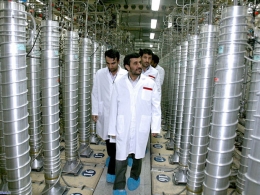
The International Atomic Energy Agency (IAEA) released a report on Tuesday that presented substantial evidence that Iran has an active secret program to become a nuclear power. The report established that Iran has taken many steps towards developing a nuclear weapon, including engaging in efforts to obtain a secure source of uranium, creating computer models of nuclear explosions, and researching nuclear triggers. Additionally, it has experimented with conventional explosives to compress metal into a dense mass able to start a chain reaction and has built a large containment vessel intended for testing the feasibility of such explosive compression. In the words of the report, this “information indicates that Iran has carried out activities relevant to the development of a nuclear device.”
Yukiyo Amano, Director General of the IAEA, stated that the information came from more than 1000 documents, from more than 10 countries with intelligence on Iran’s nuclear program, and numerous officials involved in Iran’s nuclear activities. This vast amount of evidence against Iran is undeniable. While the report does not make an estimate of when Iran will achieve nuclear capability, and actually stresses that such a date is not immediately imminent, it is clear that Iran has been lying about the fact that their research only focuses on generating nuclear energy.
The findings legitimize U.S. claims about Iran’s weapons program and promote the need for continued international cooperation on the issue of non-proliferation. The prevention of Iran’s development into a nuclear power has long been a U.S. foreign policy goal, in both Democratic and Republican administrations, and it is crucial that the United States remain engaged in working with global partners to stop Iran from developing nuclear weapon capability.
This report underscores the importance of the work done by the IAEA, an organization that reports to the United Nations Security Council. Our intelligence agencies and policy decision makers need the IAEA to supplement our own investigations and promote international cooperation to condemn and pressure Iran. There is absolutely no doubt that the work of the IAEA is crucial to our national security.
That’s why Congress must act now to ensure that nothing will ever prevent the IAEA from carrying out its crucial mission of nuclear non-proliferation. As reported on our blog recently, Palestine has begun applying to become a member-state of U.N. organizations, starting with the United Nations Educational, Scientific and Cultural Organization. The IAEA is one of the most likely organizations to which Palestine could next apply for membership. If successful, the United States would have to withdraw funding to the IAEA, as is required by law, just as the United States was forced to defund UNESCO for their decision to admit Palestine as a member. Indeed, the airtight law requires an immediate withdrawal of funds for any U.N. organization that officially recognizes Palestine as a member.
Obviously UNESCO is an important organization that promotes American interests and values. As stated in a recent blog by CGS’s CEO Don Kraus, “[UNESCO] advocates for freedom of the press and the promotion of an independent media around the globe. It manages a tsunami warning system in the Pacific…The organization assists the United States in its transitions out of Iraq and Afghanistan, by preparing communities and governments for the withdrawal of U.S. forces.” These are just a few examples of the important efforts of UNESCO that benefit the United States.
The IAEA is of equal, if not greater, importance to the United States. Should the IAEA accept Palestine as a member, U.S. withdrawal from the agency could have dire consequences to our national security. We simply cannot even entertain the thought of undermining its ability to investigate Iran and oversee the use of atomic energy worldwide. If Congress does not act now to repeal these laws or provide President Obama with the ability to authorize waivers to them, we risk losing a seat at the table from one of the most vital international organizations with which we engage and severely weakening our ability to promote multilateral action against Iran for its weapon program.
Should Iran become a nuclear power, there would be a direct threat not only to the U.S., but also to Israel, exactly the ally we claim to be protecting with our law against U.N. organizations recognizing Palestine. It is time to set politics aside and take action now to prevent any future danger to our national security. Please sign our petition to stand with us, demanding Congress to tear down the roadblocks for full funding of U.N. organizations today.
by Don Kraus | Nov 8, 2011 | Global Cooperation, United Nations
Here’s a few excerpts from my latest blog at Care 2 entitled, “United States’ UN-Wise UNESCO Policy,” which discusses two U.S. laws that halt contributions to U.N. agencies that accept Palestinian membership. These laws forced the United States to stop funding the United Nations Education, Science, and Cultural Organization last week when the organization’s members voted to accept Palestinian membership.
“The big question to answer is who benefits and loses from maintaining this policy. The biggest winners are people who use the Middle East conflict as a platform to spew anti-U.N. views and promote an isolationist agenda for the United States. The biggest loser isn’t the Palestinians or Israelis, or even the U.N. It’s the United States.”
“UNESCO promotes freedom of expression, one of America’s core values. It advocates for freedom of the press and the promotion of an independent media around the globe. It manages a tsunami warning system in the Pacific, which warned Californians of possible aftershocks from Japan’s earthquake last March. The organization assists the United States in its transitions out of Iraq and Afghanistan, by preparing communities and governments for the withdrawal of U.S. forces.
American jobs have been saved and grown by UNESCO’s efforts to connect U.S. companies like Cisco, Apple, Microsoft, and Proctor & Gamble to emerging tech markets in developing countries.”
Sign our petition to get President Obama to ask Congress for a wavier authority to these laws that unfairly force the United States to disengage from U.N. agencies over their acceptance of Palestinian membership.
Click here to read the blog piece in full.
by Melissa Kaplan | Nov 8, 2011 | Global Cooperation, News, United Nations
The annual game of hurry-up-and-wait has begun in earnest for those of us who follow the congressional appropriations process. Although Fiscal Year 2012 officially began on October 1st, neither the full House nor the full Senate has yet approved legislation to fund the State Department and other international affairs agencies for the upcoming year, and it remains unclear exactly how or when they will do so.
For the past few weeks, the talk in the Senate has been about “minibuses”-combinations of several appropriations bills, which are smaller versions of the large “omnibus” packages to fund the entire federal government to which Congress frequently resorts when it fails to pass individual appropriations bills on time. The Senate Appropriations Committee has passed the State/Foreign Operations appropriations bill, which provides the bulk of international affairs funding, and this bill was expected to be combined with several other appropriations bills into a minibus and brought to the Senate floor for a vote last week. However, delays have set in, and the latest word is that no Senate action on a State/Foreign operations bill is likely until at least next week, and possibly even later than that.
The Senate State/Foreign Ops bill provides a good level of funding for the United Nations budget accounts considering the current fiscal climate. It would fund the Contributions to International Organizations (CIO) account, which pays U.S. dues to the U.N. general budget as well as dues to organizations such as NATO and the International Atomic Energy Agency (IAEA), at a level of $1.58 billion for next year, and provides $1.9 billion to the Contributions to International Peacekeeping Activities (CIPA) account, which funds U.N. peacekeeping missions. These numbers are considerably higher than those approved by the House Appropriations subcommittee last summer for the U.N. accounts. Citizens for Global Solutions hopes to see a final budget number close to the Senate totals for these important accounts.
So, when it comes to FY12 appropriations, uncertainty abounds as usual. We’ll keep you posted….