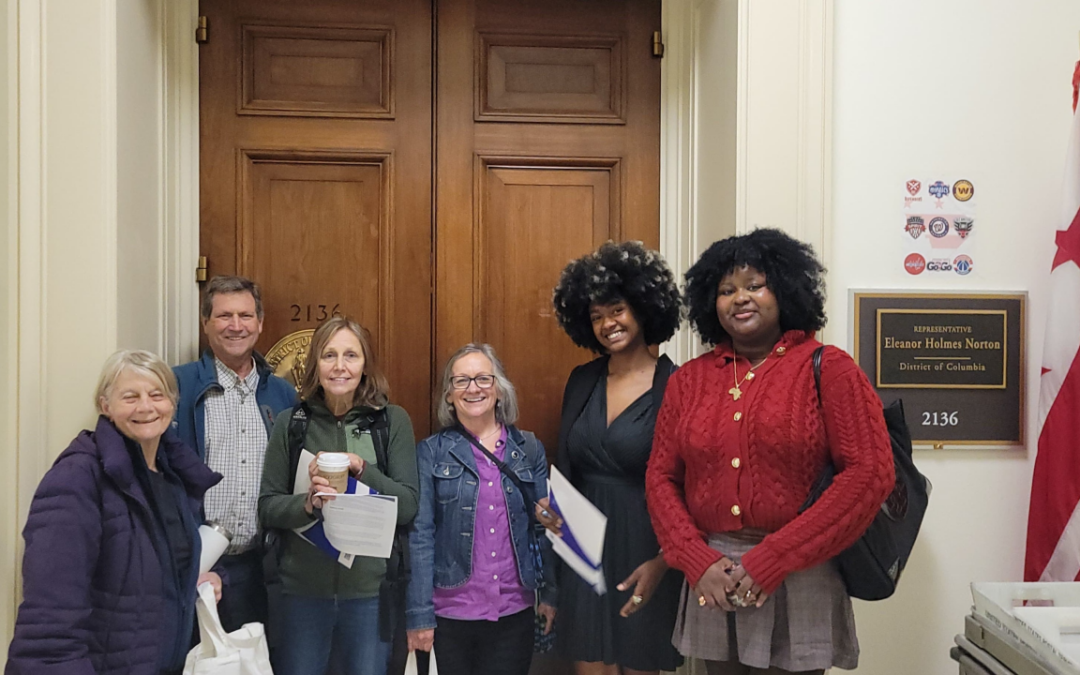
Last week, a group of Citizens for Global Solutions members did something most people assume is reserved for paid lobbyists. They walked the halls of Congress and knocked on doors, ten offices in all, House and Senate, Democratic and Republican. None of them were consultants on retainer. They were members, organizers, and constituents who set aside part of the CGS Annual Meeting to sit across the table from legislative staff and make a case in plain language.
Here is what they carried into those rooms, because it matters far beyond the people who already use the phrase “global governance.”
The case in one line
The UN Charter is 1945 software running in a 2026 world. It was written before decolonization, before the climate crisis, before nuclear proliferation, before artificial intelligence. Fifty-one countries drafted it. Most of today’s membership had no seat at the table. Eighty years on, the question is not whether the current system is straining. It is. The real question is whether the next set of rules gets shaped by raw power, or through an open process where every country has a voice.
Three asks, all about prevention and accountability
Renew the rules through Article 109. Members asked offices to support a review of the UN Charter through Article 109, a provision the drafters built in for exactly this purpose and that has never been used in eighty years. Supporting it does not mean signing on to any single change. It means backing an open, transparent process. Five countries have already endorsed the idea, alongside former heads of state from Ireland, New Zealand, and Liberia.
Give elected representatives a voice at the UN. They made the case for a UN Parliamentary Assembly, a body where elected representatives, including members of Congress, could scrutinize UN budgets and decisions that affect Americans but currently answer to no elected voice. The US already does exactly this through NATO and the OSCE. More than 1,500 current and former legislators around the world have endorsed it.
Pull back from nuclear risk. This third ask belongs to a group that made the whole delegation proud. The CGS Youth Advocacy Network chose nuclear weapons risk as their issue, researched it, wrote the policy brief themselves, and then showed up in person to present it to staff. Their case was clear. In October, the administration moved to resume explosive nuclear testing after a moratorium of more than thirty years. The science does not call for it. The US has kept its stockpile reliable since 1992 without a single explosive test. And the human cost is not theoretical: researchers at Arizona State University estimate that atmospheric tests on US soil between 1951 and 1973 caused between 340,000 and 690,000 American deaths, a toll comparable to Hiroshima and Nagasaki. Their ask was straightforward. Block funding for renewed testing, and back the Back from the Brink resolutions, H.Res.317 and S.Res.323.
Young members walked into senators’ offices knowing their bill numbers cold, explaining why this reaches families back home. That was one of the high points of the week.
Why it traveled across the aisle
This is the part worth sitting with. Members met with offices from California to South Dakota, with senators and with House members, on both sides of the aisle. Prevention and accountability are not partisan ideas. No senator wants the next pandemic, the next arms race, or the next war to find the country unprepared. No representative wants power that crosses borders in seconds to answer to no one. When you lead with the problem instead of the label, the door opens wider than you would expect.
What the citizens proved
The lesson from last week is the same one that has held across seventy-five years of this organization’s work. The ideas matter, but the people in the room matter more. A foundation report and a national op-ed are useful. A constituent who shows up, knows the details, and can explain in plain terms why this affects the people back home is something a staffer remembers long after the meeting ends.
That is what global democracy actually looks like. Not a tower in Geneva. A room full of neighbors, and a few young people who did their homework, making the case for cooperation that reaches as far as the threats do.
What you can do
If you want the rules of global cooperation written by more than the powerful few, you can endorse the appeal for UN Charter review at article109.org.
If you believe elected representatives should have a voice at the UN, the campaign lives at unpacampaign.org.
And if last week sounds like something you would want to be part of, the most useful step is also the most direct one: join CGS and put your name on the next round of meetings. We will be back on the Hill, and the case only gets stronger.
Thank you to everyone who gave their time, especially the CGS Youth Advocacy Network. You made the case better than any of us could have alone.
Citizens for Global Solutions has worked for democratic, accountable global cooperation for seventy-five years. Subscribe to follow the work.
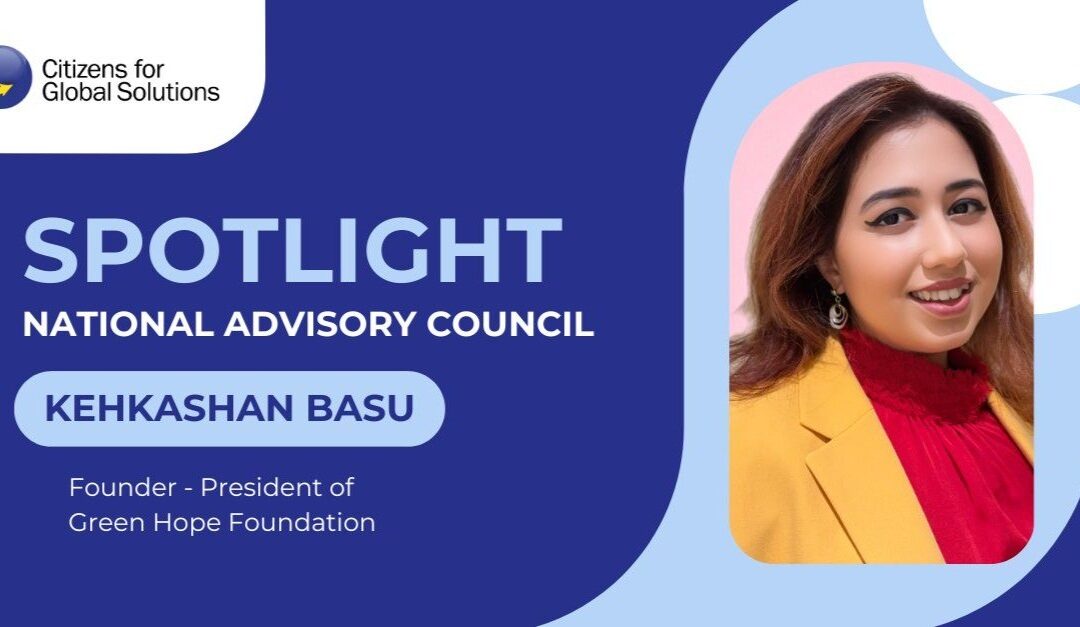
Citizens for Global Solutions (CGS) is proud to welcome Kehkashan Basu, M.S.M., MBA as the newest member of our National Advisory Council (NAC). An internationally recognized environmentalist, human rights champion, and youth advocate, Kehkashan brings a powerful combination of grassroots leadership, global policy engagement, and visionary thinking to the CGS community.
Kehkashan is the recipient of Canada’s Meritorious Service Medal and remains the only Canadian to win the International Children’s Peace Prize. Named to Forbes 30 Under 30, she has emerged as one of the most influential young voices in sustainability, climate justice, and human rights. Her work spans multiple global platforms: she is a United Nations Human Rights Champion, National Geographic Explorer, UNCCD Land Hero, and UN Habitat Young City Champion, among many other roles.
As the Founder-President of the Green Hope Foundation, Kehkashan leads a global social innovation enterprise that operates in 29 countries, empowering more than half a million young people and women, particularly those from vulnerable communities. Through Green Hope, education for sustainable development is transformed into tangible action, harnessing clean energy technologies and community-led initiatives to drive environmental and social change at the grassroots level.
In addition to her grassroots leadership, Kehkashan plays a critical role in global governance conversations. She currently serves as Co-President of the World Federalist Movement/Institute for Global Policy, is a Trustee of the Parliament of the World’s Religions, and is a Co-Lead of UN Women’s Generation Equality Forum Action Coalition on Feminist Action for Climate Justice. She has addressed more than 500 United Nations and international forums, advocating for climate justice, nuclear disarmament, and the empowerment of youth and women.
Kehkashan’s work has earned her numerous international honors, including the Spirit of the United Nations Award, World Literacy Award for Significant Contribution to Literacy by a Young Person, and Canada’s Global Energy Show Emerging Leader Award. She was also named among the Top 100 SDG Leaders in the World and recognized as Innovator of the Year at the HundrEd Innovation Summit for her pioneering work in sustainability education.
She holds an MBA from Cornell University and an Honours BA with High Distinction in Environmental Studies from the University of Toronto.
As she joins the Citizens for Global Solutions National Advisory Council, Kehkashan brings a unique perspective shaped by youth leadership, global advocacy, and deep community engagement. In the following conversation, she shares her insights on global cooperation, youth-led sustainability efforts, and how the next generation can take meaningful collective action.
In this conversation, we sat down with Kehkashan Basu to talk about her inspiring journey and the work that continues to drive her forward. From founding the Green Hope Foundation to shaping global policy conversations, she reflects on the importance of youth leadership, collaboration, and turning passion into meaningful action.
Question 1:
Global cooperation is increasingly essential to address challenges that transcend national borders. As Co-President of the World Federalist Movement/Institute for Global Policy, what role do you believe stronger global institutions and cooperation can play in advancing peace, climate action, and human rights?
Stronger global cooperation is indispensable in addressing the transboundary challenges of our time, but its effectiveness depends on how well global governance connects with realities on the ground. From a world federalist perspective, the priority is not just more cooperation, but more coherent and structured cooperation: institutions that can align global ambition with national implementation and local impact. Whether in advancing peace through coordinated multilateral mechanisms, driving climate justice through enforceable and equitable frameworks, or upholding human rights through universal standards and accountability, strong global institutions are essential to moving beyond fragmented responses toward collective progress. At the same time, bridging the gap between global frameworks and their implementation remains critical. This is where a world federalist approach that is grounded in coordination, subsidiarity, and shared responsibility can strengthen the system as a whole. I speak to this as a feminist, environmentalist, and peacebuilder, perspectives that underscore the need for governance structures that are not only effective, but also inclusive and just. Ultimately, I firmly believe that global institutions must function as connectors, ensuring that international commitments translate into meaningful, real-world outcomes for people and communities everywhere.
Question 2:
Through the Green Hope Foundation, you have empowered over half a million young people and women across 28 countries to turn sustainability education into real action. What inspired you to found Green Hope Foundation, and what have you learned about the power of grassroots youth leadership in driving environmental and social change?
I founded Green Hope Foundation out of a deep sense of urgency that began at a very young age. At the age of 7, I came across an image of a dead bird with its belly full of plastic, which was deeply disturbing to me. Around the same time, I attended a lecture by environmentalist Robert Swan. His words “The greatest threat to our planet is the belief that someone else will save it,” made me realize that I had to make a difference on my own. Thus, on my 8th birthday, I planted my first tree, and from there, my work continued to grow through hands-on action in my community. After working on the ground for many years, I was invited to speak at my first United Nations conference at the age of 11 to share my ground-level actions. However, it was the following year in 2012, when I was 12 years old, that I was invited to speak at the Rio+20 Earth Summit in Brazil, which proved to be a turning point in my life. As one of only 5 people under the age of 18 at the then-largest sustainability conference, I became increasingly aware of a disconnect between policy and action. This is because as I looked around, it was clear that women, youth, and underserved communities were not adequately represented in conversations shaping our future. Thus, on my return home, I founded Green Hope Foundation to create a platform where education is not passive, but transformative – where it empowers people, especially those from marginalized communities, to take meaningful action on the ground. What I have learned since then is that grassroots youth leadership is both impactful and essential. When young people are equipped with knowledge, skills, and a sense of purpose, they take concrete action. They design solutions rooted in their own realities, whether in climate resilience, water access, or sustainable livelihoods, and in doing so, they bring entire communities with them. Youth leadership is about ownership – and when that ownership exists, change becomes not only possible, but lasting.
Question 3:
Many young people care deeply about issues such as climate justice, peace, and global cooperation, but may not know how to get involved. What advice would you give to youth who want to move from concern to collective action, and how can organizations and communities better support them as changemakers?
For young people, the shift from concern to action begins with a simple realization: it is not about waiting for the perfect moment or platform, it is about starting where you are, with what you have. Sustainability is not one defined path – it is broad, intersectional, and deeply personal. My advice has always been to take that extra step, to walk that extra mile. Volunteer at a food bank or a women’s shelter, organize a local cleanup, grow your own food and share it with others, run for office – these are the foundations of real change. It is easy to speak about problems, especially on social media, but lasting impact comes from walking the talk. What comes from the heart, stays. At the same time, young people cannot and should not do this alone. Organizations and communities have a responsibility to create enabling environments where youth are not just participants, but leaders. This means moving beyond tokenism and providing access to education, mentorship, resources, and decision-making spaces. It means trusting young people with responsibility and recognizing their lived experiences as expertise. When we invest in youth not just as voices, but as changemakers, we unlock a powerful force for collective action – one that is rooted in empathy, driven by purpose, and capable of transforming both communities and systems.
Citizens for Global Solutions looks forward to deepening our collaboration with Kehkashan Basu through her role on the National Advisory Council. Even prior to joining the NAC, Kehkashan has already been actively engaged with CGS, serving as a mentor to participants in the Global Governance Fellows program and contributing her experience and insights to support emerging youth leaders. Her continued involvement will strengthen CGS’s youth programming and help inspire the next generation of advocates working toward more effective global governance, climate justice, and human rights. The CGS National Advisory Council provides guidance and counsel regarding our pursuit of world citizenship, a democratized and empowered United Nations, and enduring world peace through enforceable world law.
What does it look like when students move beyond theory and step directly into global policymaking spaces?
For the students of the CGS Global Governance Fellowship, learning doesn’t stop in the classroom. For their Capstone Project at the United Nations, the Fellows will put what they’ve learned in the year-long CGS Fellowship into practice by working with global civil society leaders to organize and present a parallel event at the NGO CSW Forum, held alongside the UN Commission on the Status of Women (CSW 70). Alongside this event, the Fellows will attend official UN sessions and engage with diplomats, advocates, and policy experts—gaining firsthand insight into how international decisions are shaped, while building the confidence, networks, and practical skills needed to become the next generation of global leaders.
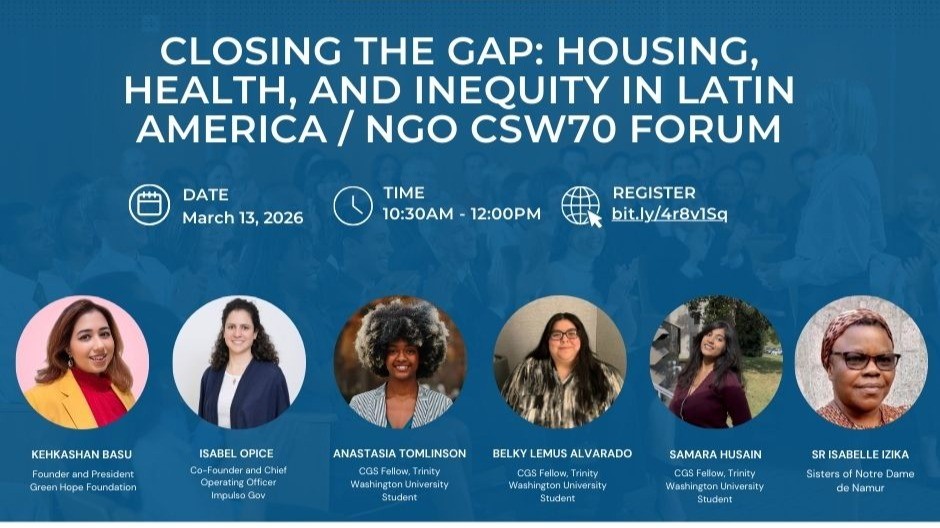
The CGS Global Governance Fellows invite you to attend an intergenerational Zoom Webinar panel examining one of the most urgent issues facing women and girls globally: access to health care justice.
Closing the Gap: Housing, Health, and Inequity in Latin America
📅 Friday, March 13, 2026 | ⏰10:30 AM – 12:00 PM EDT
This timely discussion will explore the intersection of gender, class, housing, health, and social policy, with particular attention to how discriminatory laws and systemic inequities continue to shape women’s lived realities in Latin America. Importantly, the panel will spotlight effective grassroots strategies and movements in Peru and Brazil, highlighting how local action is expanding women’s access to justice, equity, and inclusion across diverse regional contexts.
The panel brings together seasoned global leaders and emerging student advocates, modeling the kind of cross-generational collaboration needed to drive meaningful change:
Kehkashan Basu, Founder-President, Green Hope Foundation
Isabel Opice, Co-founder & COO, Impulso Gov
Sr. Isabelle Izika, Sisters of Notre Dame de Namur, NGO Representative at the UN
Anastasia Tomlinson, CGS Fellow & Trinity Washington University student
Belky Lemus Alvarado, CGS Fellow & Trinity Washington University student
Samara Husain, CGS Fellow & Trinity Washington University student
Together, they will examine both structural barriers and solutions to connect policy analysis with lived experience and on-the-ground organizing. This panel will directly engage with the Priority Theme of the 70th session of the UN Commission on the Status of Women (CSW), taking place March 9–19, 2026 at UN Headquarters in New York:
Ensuring and strengthening access to justice for all women and girls, including by promoting inclusive and equitable legal systems, eliminating discriminatory laws, policies, and practices, and addressing structural barriers.
By centering student leadership alongside global experts, this panel reflects the spirit of the CSW itself: collaborative, action-oriented, and rooted in feminist civil society—representing what is possible when young women are trusted as knowledge-producers, conveners, and advocates on the global stage.
This event is made possible through the generous support and partnership of Citizens for Global Solutions (CGS), Trinity Washington University , Green Hope Foundation , and the Sisters of Notre Dame de Namur.
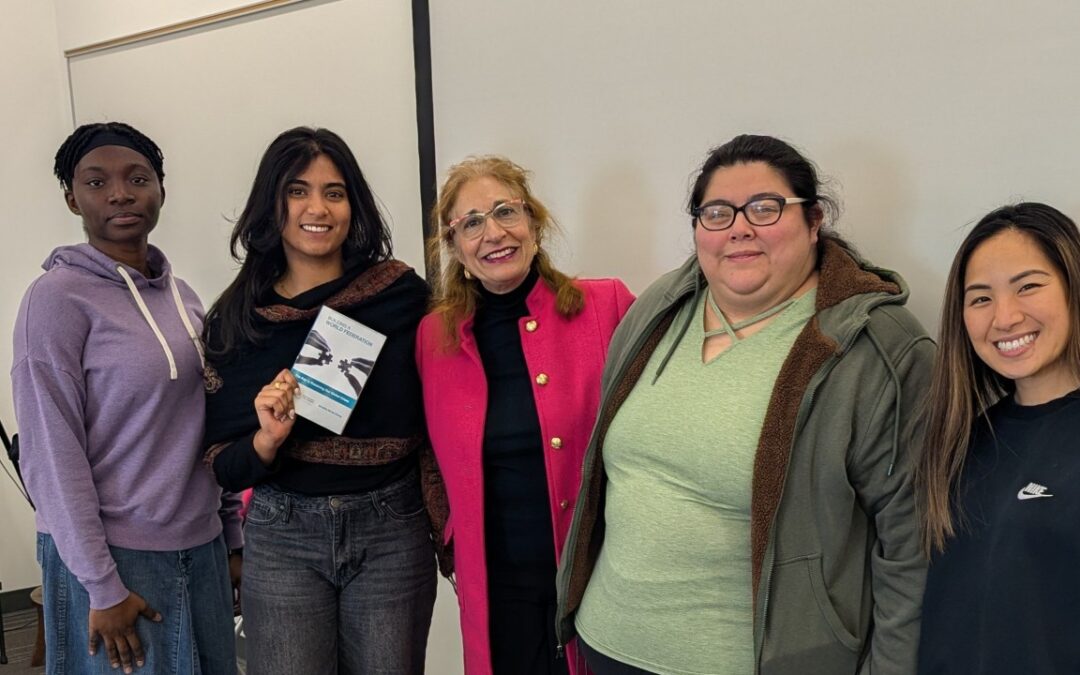
As the holiday season invites us to pause and reflect, we are filled with gratitude for the community that has shaped the Citizens for Global Solutions’ Global Governance Fellowship over the past semester. This program continues to equip students with real-world experiences by offering fellows exposure to multilateral institutions and global organizations working toward meaningful change.
We are deeply grateful for our workshop partners who have generously shared their time, expertise, and wisdom. Their willingness to mentor and guide fellows provide invaluable insight that has supported academic exploration and professional development. These moments of learning and connection are at the heart of what makes this fellowship special.
As we celebrate the seasons, we carry forward a spirit of gratitude, collaboration and hope for a brighter future. We move into the new year inspired by connections we have made and the impact still ahead. May the holidays bring joy and renewed inspiration as we look ahead to another year of learning, leadership and global impact.
A cornerstone of the fellowship this semester was a series of expert-led workshops that offered fellows critical insights into global governance, diplomacy, and institutional reform.
Workshop: Crisis as a Political Driver and the Case for Democratic World Federation
This workshop introduced students to Democratic World Federation, exploring how federal governance principles can scale from regional to global systems. Fellows examined the movement’s history, its modern resurgence, and its potential to address today’s global challenges.
Workshops: World Citizenship, Identity, & Rights (Part I) & Critical Questions of the 21st Century (Part II)
Part I of the workshop focused on answering the questions: what are human rights, what is citizenship, and how have rights been connected historically to citizenship? In the second workshop, fellows discussed a definition of rights and citizenship that transcends the nation-state. They also considered how a universal rights perspective linked to a universal identity can provide an ethical framework for governing the world beyond the nation-state.
Part I explored how shared global ethics, such as justice, equity, and sustainability, can guide the design of new institutions to meet 21st-century challenges. Fellows examined a proposed Global Energy Agency, considering its structure, decision-making processes, and potential to address climate change, nuclear proliferation, and equitable energy distribution. Part II examined what it would take to build a viable system of global collective security in light of recent conflicts in Syria, Ukraine, and Gaza.
This workshop explored the IEP’s research on peace, highlighting the history of peace and the importance of “Positive Peace” in sustaining stable societies. Participants were introduced to key IEP resources, including the Global Peace Index, Positive Peace Report, Ecological Threat Register, Global Terrorism Index, and research on COVID-19 and peace.
This workshop offered a Policy Writing 101 overview. After a brief presentation on the differences between academic and policy writing and how to effectively reach policy audiences, students worked in small groups through the key stages of report writing—from choosing a topic to conducting research to developing an annotated outline.
This town hall explored the founding vision of the United Nations and how its Charter has evolved since 1945. Students examined the legal foundations of the Charter, especially the rarely used Article 109, which enables formal Charter review, and discussed the obstacles to reform posed by permanent member powers. The session also highlighted the role of civil society and introduced the International Coalition for a New UN Charter, showing how students and advocates can support a growing movement for meaningful UN reform.
Workshop: The ICJ and Youth Voices: Building a More Peaceful and Just World
This workshop introduced students to the International Court of Justice and its role in resolving disputes between states to promote global peace and security. Participants explored landmark cases and discussed how civil society has long shaped international law. The session also featured youth leader and environmental advocate Kehkashan Basu, who shared insights on how young people can influence global decision-making and advance justice and sustainability worldwide.
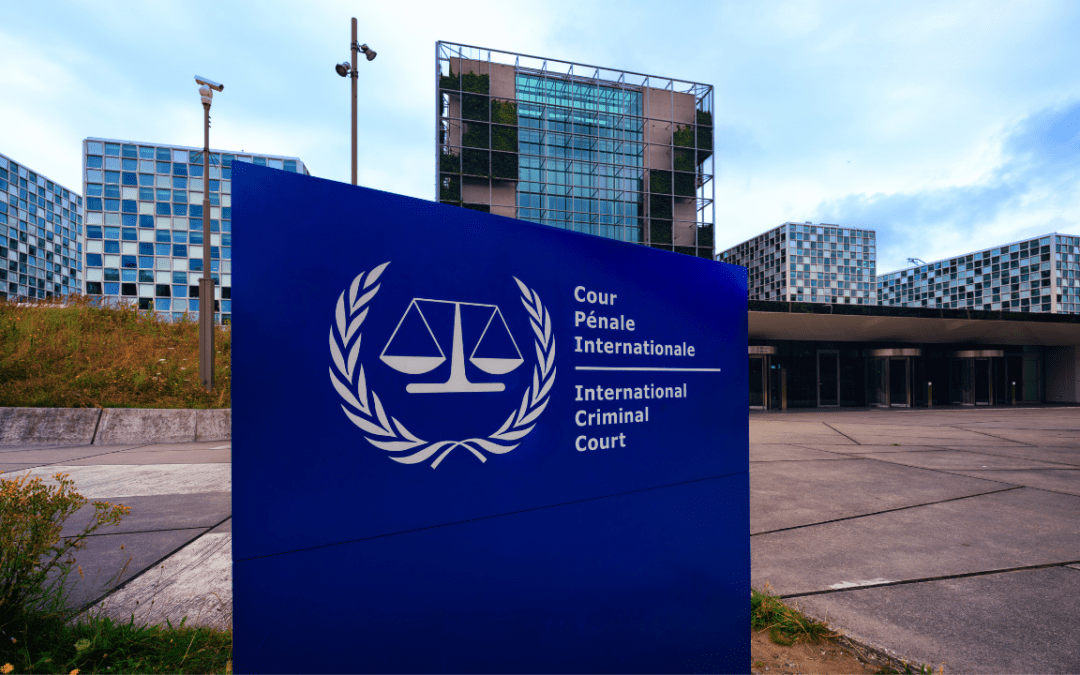
Washington, DC—On January 9, the United States House of Representatives voted in favor of a bill that would sanction the International Criminal Court (ICC). The bill was created to protest the ICC’s arrest warrants for Israeli Prime Minister Benjamin Netanyahu and his former defense minister over Israel’s crimes against humanity in Gaza. CGS led 116 organizations—including faith-based groups, human rights organizations, peace advocates, and legal associations—in an open letter decrying the attack on an independent judicial institution established to advance justice for victims of the most heinous crimes.
The vote passed by an overwhelming margin, with 243 in favor (including 45 Democrats) and 140 against the “Illegitimate Court Counteraction Act,” which threatens sanctions for any foreigner who helps the ICC in its attempts to investigate, detain, or prosecute a US citizen or citizen of an allied country that does not recognize the court’s authority.
The bill will now be passed to the Senate for consideration by the Senate Foreign Relations Affairs, emphasizing the importance of our continued efforts to speak out against it and its implementation, as it is a direct attack on the ICC. Not only that, but the passage of sanctions on the ICC jeopardizes the ability of desperate victims across all the court’s investigations to access justice, weakens the credibility of sanction tools in other contexts, and places the United States at odds with its closest allies, as outlined in the letter we issued to Congress and the incoming presidential administration on January 6.
Washington, DC—As co-convener of the Washington Working Group for the ICC, Citizens for Global Solutions led the effort to join 76 human rights organizations, faith-based groups, legal associations, and academic institutions in an open letter to Congress and the incoming US Presidential administration decrying sanctions against the International Criminal Court (ICC).
As the House of Representatives is scheduled to review this legislation among its first orders of business, we urge Members of Congress to consider the perspectives of the signatories, who include constituents, allies, experts, and survivors in ICC situation countries.