As the holiday season invites us to pause and reflect, we are filled with gratitude for the community that has shaped the Citizens for Global Solutions’ Global Governance Fellowship over the past semester. This program continues to equip students with real-world experiences by offering fellows exposure to multilateral institutions and global organizations working toward meaningful change.
We are deeply grateful for our workshop partners who have generously shared their time, expertise, and wisdom. Their willingness to mentor and guide fellows provide invaluable insight that has supported academic exploration and professional development. These moments of learning and connection are at the heart of what makes this fellowship special.
As we celebrate the seasons, we carry forward a spirit of gratitude, collaboration and hope for a brighter future. We move into the new year inspired by connections we have made and the impact still ahead. May the holidays bring joy and renewed inspiration as we look ahead to another year of learning, leadership and global impact.
A cornerstone of the fellowship this semester was a series of expert-led workshops that offered fellows critical insights into global governance, diplomacy, and institutional reform.
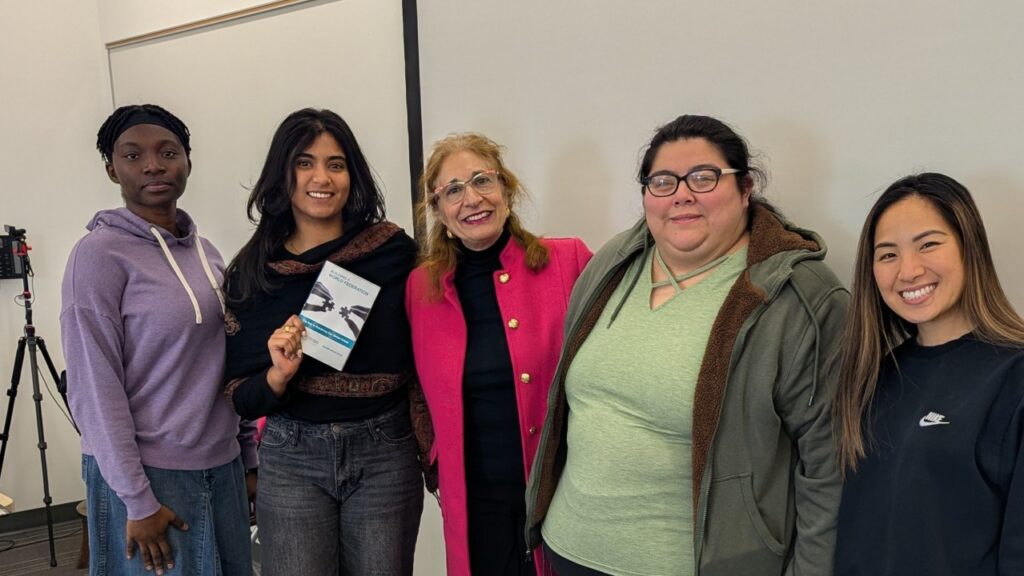
Workshop: Crisis as a Political Driver and the Case for Democratic World Federation
Facilitators: Dr. Allen Pietrobon, Trinity Washington University and Keshet Benschikovski, CGS
This workshop introduced students to Democratic World Federation, exploring how federal governance principles can scale from regional to global systems. Fellows examined the movement’s history, its modern resurgence, and its potential to address today’s global challenges.
Workshops: World Citizenship, Identity, & Rights (Part I) & Critical Questions of the 21st Century (Part II)
Facilitator: David Gallup, World Citizen Government
Part I of the workshop focused on answering the questions: what are human rights, what is citizenship, and how have rights been connected historically to citizenship? In the second workshop, fellows discussed a definition of rights and citizenship that transcends the nation-state. They also considered how a universal rights perspective linked to a universal identity can provide an ethical framework for governing the world beyond the nation-state.
Read the full article on LinkedIn: Advancing World Citizenship and Human Rights: a conversation with Human Rights International Lawyer, David Gallup
Workshops: An Ethics-Based Global Energy Authority (Part I) & A Principle-Driven System Of Collective Security (Part II)
Facilitator: Sovaida Ma’ani Ewing, The Center for Peace and Global Governance
Part I explored how shared global ethics, such as justice, equity, and sustainability, can guide the design of new institutions to meet 21st-century challenges. Fellows examined a proposed Global Energy Agency, considering its structure, decision-making processes, and potential to address climate change, nuclear proliferation, and equitable energy distribution. Part II examined what it would take to build a viable system of global collective security in light of recent conflicts in Syria, Ukraine, and Gaza.
Workshop: Intro Into Positive Peace as a Tool
Facilitator: Michael Collins, Institute for Economics & Peace
This workshop explored the IEP’s research on peace, highlighting the history of peace and the importance of “Positive Peace” in sustaining stable societies. Participants were introduced to key IEP resources, including the Global Peace Index, Positive Peace Report, Ecological Threat Register, Global Terrorism Index, and research on COVID-19 and peace.
Read the full article on LinkedIn: Workshop Recap: Peace as a Positive Tool for US students
Workshop: Policy Writing 101
Facilitator: Julia Gledhill, The Stimson Center
This workshop offered a Policy Writing 101 overview. After a brief presentation on the differences between academic and policy writing and how to effectively reach policy audiences, students worked in small groups through the key stages of report writing—from choosing a topic to conducting research to developing an annotated outline.
Workshop: Article 109
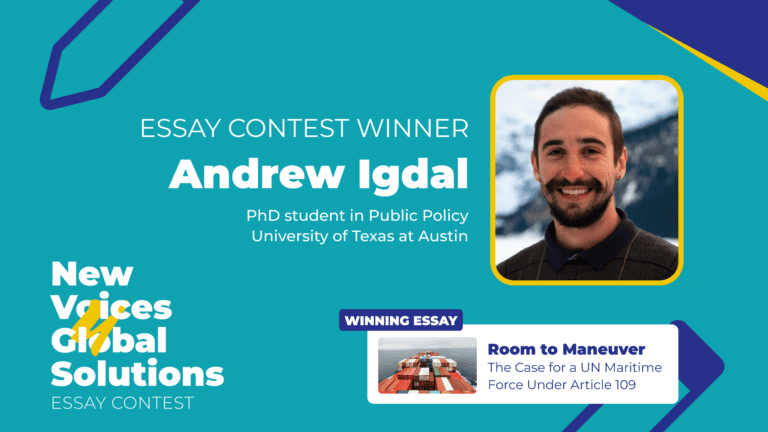
Facilitator: Justin Haner, Article 109
This town hall explored the founding vision of the United Nations and how its Charter has evolved since 1945. Students examined the legal foundations of the Charter, especially the rarely used Article 109, which enables formal Charter review, and discussed the obstacles to reform posed by permanent member powers. The session also highlighted the role of civil society and introduced the International Coalition for a New UN Charter, showing how students and advocates can support a growing movement for meaningful UN reform.
Workshop: The ICJ and Youth Voices: Building a More Peaceful and Just World
Facilitators: Alyn Ware, World Federalist Movement/Institute for Global Policy and Kehkashan Basu, M.S.M., MBA , Green Hope Foundation
This workshop introduced students to the International Court of Justice and its role in resolving disputes between states to promote global peace and security. Participants explored landmark cases and discussed how civil society has long shaped international law. The session also featured youth leader and environmental advocate Kehkashan Basu, who shared insights on how young people can influence global decision-making and advance justice and sustainability worldwide.
Read the full article on LinkedIn: Global Governance Fellows at the Intersection of Justice and Youth Leadership