by Citizens for Global Solutions | May 16, 2013 | Global Cooperation, Human Rights, News
A guest blog post by Tony Fleming as posted on the Global Memo:
Yesterday was the deadline for nominations for Executive Director of UN Women. The candidates will succeed the organization’s first head, Michele Bachelet, who resigned suddenly in March to return home and stand for election to Chile’s presidency.
At least six candidates are rumored to be under consideration.
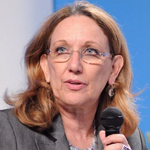
Rebeca Grynspan is considered a strong contender and possibly the front runner for the post. Grynspan is the former Vice President of Costa Rica and currently serves as an Associate Administrator at UNDP. An elections official at the Costa Rican permanent mission in New York stated to Global Memo that the Latin American and Caribbean region is eager to keep the post.
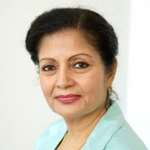
Lakshmi Puri is the current Acting Executive Director, stepping in shortly after Bachelet’s resignation. A source with a leading U.S. human rights group however suggests that few women’s rights groups see her as preferred successor to Bachelet. In December, her husband, Ambassador Hardeep Singh Puri, wrapped up his presence on the UN Security Council as India’s 2-year term on the body concluded. What impact his influence will have his wife’s candidacy and the selection is of particular interest.
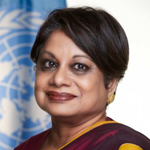
Radhika Coomaraswamy, the former special advisor to the Secretary General on Children and Armed Conflict, is looked upon more favorably by women’s groups, according to the same source. She had been under consideration in 2010. From Sri Lanka, she is currently a visiting scholar at New York University’s Center for Constitutional Transitions.
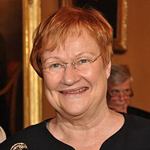
Tarja Halonen, former President of Finland, is also rumored to be a nominee. Like Coomaraswamy, she had also been nominated in 2010, but was not seriously considered as the Secretary General was reportedly seeking a woman from the Global South to head up the new agency initially.
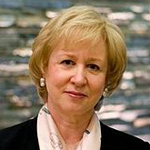
Kim Campbell, the former and first female Prime Minister of Canada, confirmed she has been nominated by her government in mid-April after its leaked in Azerbaijani media reports. Ms. Campbell was the former board chair at the International Women’s Forum and the Council of Women World Leaders. She now sits on the board of the International Crisis Group.
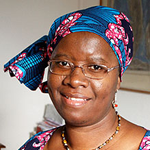
Nyaradzayi Gumbonzvanda is currently the General Secretary of the World YWCA. She is a trained human rights lawyer from Zimbabwe with extensive experience in conflict resolution and mediation, including 20 years experience on issues of women and children’s human rights, with a special focus on crisis countries.
If the process unfolds as it did in 2010, the Secretary General’s senior appointment team will vet the nominees and present to Mr. Ban a short list of three candidates. Following interviews with each, Ban will make the final decision on whom he will appoint to take over the post. The 2010 vetting process and selection was wrapped up in 7 weeks, in part to have the first Executive Director in place before the General Assembly convened. Last month, John Hendra, Associate Executive Director at UN Women, noted that a new search could take up to three months.
But if this year’s process is less competitive, i.e. fewer than 25+ candidates as in 2010, we may see a nominee before the body’s Executive Board meets at the end of June or shortly thereafter.
Unlike in 2010, women’s groups have been very unengaged in regards to the transparency of the Secretary General’s selection or qualifications of any of the candidates. Women Thrive is not active on the race this year, nor is the GEAR campaign, which spearheaded efforts in ensuring the 2010 candidates were highly qualified for the post.
The only NGO known to be engaging in any meaningful way this year is the Association for Women in Development (AWID), which plans to interview each candidate. William Pace, Executive Director of WFM/IGP, stated that “it would be best if the SGs process were more transparent.”
As expected, the Secretary General’s office is officially tight-lipped on the candidates, refusing even to confirm the final number of nominees received.
Tony is a communications and advocacy professional with over 12 years experience supporting progressive non-profit organizations in web design, social media development, program evaluation, and staff training. He serves on the national board of GlobalSolutions.org and with his local United Nations Association chapter.
by Arielle Weaver | Feb 28, 2013 | Global Justice, Human Rights, News
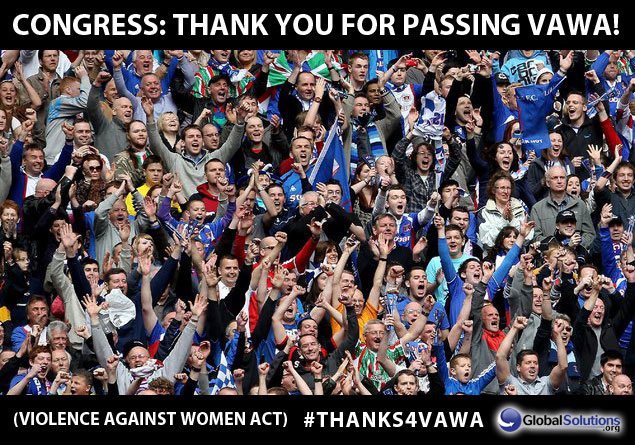
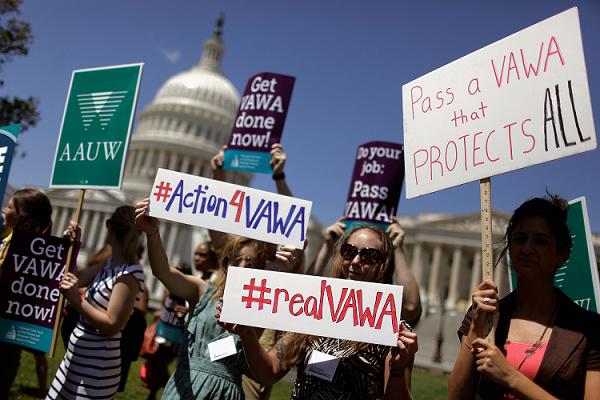
This morning the Violence Against Women Act passed in the House of Representatives. This is exciting news for women all around the country, as this bill protects survivors of sexual and domestic violence and gives them various resources and services to prosecute their attackers. Since it’s passing in 1994, this landmark legislation has reduced domestic violence by 64%, saved taxpayers billions in averted social costs, and was the first bill to make domestic violence a federal crime.
Human rights advocates breathed a sigh of relief, previously unsure of how the VAWA would get through the often-deadlocked House of Representatives. Since the bill has indeed passed and is on its way to President Obama’s desk, it is a sure sign that maybe, just maybe, congress can put petty partisan fights aside and protect those who most need it.
Click here to say thank you to Congress for passing an inclusive VAWA!
by Arielle Weaver | Feb 12, 2013 | Global Justice, Human Rights, News
By a margin of 78-22, the Violence Against Women Act passed in the Senate. Last year—that’s 501 days ago to be exact—Congress let VAWA expire for the first time since it was introduced and passed in 1994. The President released a statement of gratitude:
Today the Senate passed a strong bipartisan bill to reauthorize and strengthen the Violence Against Women Act. This important step shows what we can do when we come together across party lines to take up a just cause. The bill passed by the Senate will help reduce homicides that occur from domestic violence, improve the criminal justice response to rape and sexual assault, address the high rates of dating violence experienced by young women, and provide justice to the most vulnerable among us. I want to thank Senator Leahy and his colleagues from both sides of the aisle for the leadership they have shown on behalf of victims of abuse. It’s now time for the House to follow suit and send this bill to my desk so that I can sign it into law.
The Violence Against Women Act is an essential piece of legislation which, when it was introduced in 1994, created the first U.S. federal legislation that acknowledged domestic and sexual assaults as crimes. Because of VAWA, between 1994 and 2010, the rate of domestic violence decreased by 64%. Not even that, but because of VAWA, rape survivors supported by VAWA advocates were 59% more likely to have police reports filed than survivors without advocates. We can see how under-reported rapes are and how easily they are ignored even when reported. Combating violence against women is still a major concern—every 9 seconds a woman in the US is beaten and every 2 minutes a woman is sexually assaulted. The VAWA empowers survivors of violence and sexual assault to seek justice and find resources necessary to live on to lead a healthy violence-free life.
So, who are the 22 Senators who voted against the VAWA? And why does VAWA still have a fight to continue through the House of Representatives? Such a vital piece of legislation is essential to the U.S., as it has helped countless of women and men flee from volatile and gravely dangerous situations. This opposition to VAWA goes beyond the same old story of politics as usual—this opposition is a twisted effort to let a bill die for no sane reason that I can fathom. Let’s tackle some outlandish myths:
As the Heritage Foundation writes, “Without precedent, the bill surrenders the rights of Americans who are not American Indians to racially exclusive tribal courts.” They are referring to new protections added to the bill which are designed to help Native women. Interesting the Heritage Foundation should frame the problem this way. In actuality, 1 in 3 Native American women will be raped in their lifetime—that’s 2.5 times the national average. At least 86% of sexual assaults are reportedly being perpetrated by “non-Native men, according to the US department of justice.” Without added protections from the Violence Against Women Act, these rapes could continue to be unpunished because of tribal law. So, who in the right mind would be against these protections?
Another ridiculous criticism of the Violence Against Women Act is the budget spin. According to Family Research Council, the “real abuse” is how much it will waste taxpayers dollars. I see what you did there, FRC, was that supposed to be a pun? About sexual and domestic abuse? All ill-worded critics aside, VAWA does not waste money. In fact VAWA is saving U.S. taxpayers money:
VAWA not only saves lives, it also saves money. In its first six years alone, VAWA saved taxpayers at least $14.8 billion in net averted social costs. A recent study found that civil protection orders saved one state [Kentucky] on average $85 million in a single year.
National Network to End Domestic Violence
Now the real challenge is the House of Representatives. After last election’s results, will they still be as stubborn as to block a piece of legislation that has proven to save lives and taxpayer’s money—all in the name of political games? Call you House Representative now and tell him/her to vote for VAWA. For those who rely on the essential services of the Violence Against Women Act, it is a matter of life and death. For the rest—it is our responsibility to protect them.
by Carolyn Blake | Sep 13, 2012 | Global Cooperation, News, Peace & Disarmament
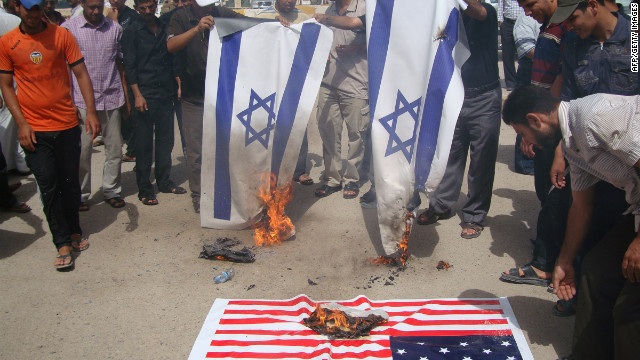
The violent protests against a U.S.-based film that started in Egypt last Tuesday continue to spread throughout the Arab world. The most notable of these occurred outside the U.S. embassy in Libya, where four American diplomats lost their lives. Anti-American demonstrations have also been reported in Yemen, Tunisia, Morocco, Sudan, and Gaza City.
Among the four Americans lost, was the U.S. Ambassador to Libya, Chris Stevens. Ambassador Stevens was a career diplomat who was committed to working with the Libyan people. He was the American envoy to the revolutionaries during the uprising in Libya, and helped bring down Moammar Gadhafi. Ambassador Stevens embodied what it truly means to be a diplomat. He was passionate about building a relationship between the United States and Libya, and cared about the people, not just the politics. He helped free the Libyan people, and his death is a tragedy for American diplomacy.
Among those killed, was also U.S. Foreign Service Information Management Officer Sean Smith. Smith was assigned to Libya on a temporary mission. Our diplomats overseas are more than just our representatives or negotiators; they are our peacemakers, our community builders, our innovators, and our trailblazers. They commit their lives to serving the greater good.
The motivation from these protests came from a film produced in America, called the Innocence of Muslims. The film was a gross depiction of the prophet Mohamed, who is characterized in the film as a child molester and womanizer, among other things. The film is insulting to say the least, but such depictions are considered more than insulting in the Muslim world, where they do not have the same notions about free speech. However, the film was widely unknown to the American population before the events last Tuesday. It was not being shown in our movie theaters or advertised on our television networks.
Still, this obscure film inspired Islamic groups within several countries to set U.S. embassies ablaze, and tear down American flags. It is not just the American people who are confused as to where this film came from, but the cast and crew themselves. In interviews, cast members have stated that they were unaware of the intent of the film and do not even remember a Prophet Mohamed in the original script. It is said that the Producer, thought to be Israeli-American Sam Bacile, misled the crew and re-edited the film.
It is sad and unjust that the actions of one person would lead to the death of American diplomats and the maligning of the United States. In a moment of anger, protestors confused a little-known film motivated by one individual and the United States government as a whole. While the film’s offensive attitude towards Muslims is ill-advised, nothing justifies taking the lives of innocent diplomats trying to promote peace and democracy abroad. The Obama Administration has said that the U.S. will work with the governments of these countries to bring the groups behind these killings to justice.
by Samuel Kane | Jul 11, 2012 | Global Justice, Human Rights, News
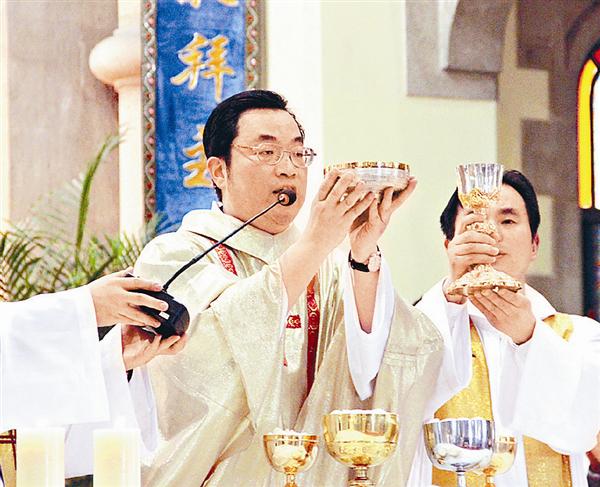
In a development sure to spark renewed tensions between the Chinese government and the Vatican, a Catholic bishop has reportedly been detained by Chinese authorities after announcing his resignation from the state-sponsored Chinese Patriotic Catholic Association (CPCA).
The bishop, Thaddeus Ma Daqin (pictured above), is reportedly being held in a seminary near Shanghai, where he is barred from contact with the outside world. During his Saturday ordination ceremony, Ma announced that he was resigning from the CPCA, declaring that “once you assume your pastoral job…your body and heart should be completely focused on pastoral things and evangelization.” This resignation was apparently perceived as a threat to the authority of the Chinese government, which exercises official supervision over China’s Catholic population through the CPCA.
Of course, Ma’s detainment should not come as a complete surprise to followers of Chinese affairs. After all, the Communist government has long had an uneasy relationship with organized religion, believing that it both contradicts the Communist principle of atheism, and poses a threat to the state’s power. Despite this, however, the Chinese government has largely tolerated the presence of religion, albeit on its own terms. All religious organizations are subject to supervision from the State Administration for Religious Affairs, which officially recognizes only five religions (Buddhism, Daoism, Islam, Catholicism, and Protestantism), and, in the case of Catholicism, oversees the CPCA. In turn, the CPCA serves as Chinese Catholicism’s central organizational body, and, among other things, is responsible for appointing bishops and other members of the clergy.
Essentially, then, the CPCA acts as sort of quasi-Vatican within China, a reality which, naturally, does not sit well with the Holy See. Relations between China and the Vatican have been strained since the Communist takeover of China in 1949, and have been repeatedly aggravated by the CPCA’s insistence on unilaterally appointing bishops without authorization from Rome. However, Ma’s appointment was actually approved by the Pope, which is likely to heighten the negative impact of his detainment on China-Vatican relations.
In a broader sense, Ma’s detainment serves to highlight the tenuous nature of the relationship between the Chinese government and organized religion. At the core of this relationship is a tension between the government’s desire to tightly control Chinese society, and the reality that religion does not easily lend itself to such state supervision. For instance, despite the government’s best attempts to regulate Catholicism through bodies such as the CPCA, so-called “underground” churches continue to flourish, splitting the Chinese Catholic population into two camps: those loyal to the Pope, and those loyal to the CPCA.
Ultimately, Ma’s detainment will come as a disappointment to those hoping for a softening of the Chinese government’s stance towards organized religion. Even more unfortunate for religious-freedom advocates is the reality that such a shift is unlikely to occur at any point in the near future. Quite simply, religion does have the potential to undermine authoritarian governments, and China’s regime is no exception. Moreover, given the fact that it is currently struggling to maintain stability in two regions (Tibet and Xinjiang) with prominent religious minorities, the Chinese government is surely aware of religion’s potential to act as a conduit for anti-government sentiment. In this context, with the regime doing everything it can to maintain its own power, religious leaders who refuse to toe the Party line, such as Ma, are unlikely to be tolerated.
by Melissa Kaplan | Jul 10, 2012 | Global Justice, Human Rights, News
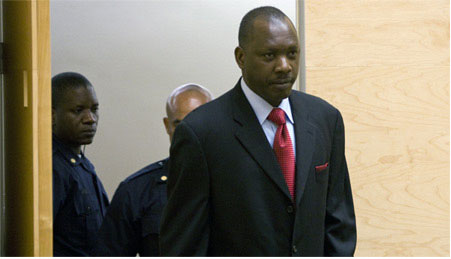
Today, the International Criminal Court’s (ICC) first trial was completed with the sentencing of Thomas Lubanga Dyilo to fourteen years in prison. Lubanga, of the Democratic Republic of Congo, was found guilty by the Court in March of conscripting child soldiers for use in battle.
This first sentencing is certainly a landmark moment for the ICC. It’s good to see the Court complete a trial and ensure that a vicious warlord will be put away, though it’s a bit disheartening to see the length of the sentence is shorter than what the ICC Prosecutor had recommended. The prosecution had asked for Lubanga to serve 30 years for his crimes. His sentence is further reduced because the six years he’s been in custody will count toward his incarceration, so he will only serve an additional eight years (with the possibility of getting out even sooner due to good behavior).
With all that said, I’m still happy to see some measure of justice done in today’s sentencing of Lubanga. I’m proud to see the ICC reach this milestone moment, and I hope this sentence brings some measure of peace to Lubanga’s victims and their families. I look forward to a future in which the Court succeeds in putting many other war criminals behind bars where they belong.