by Chuck Woolery | Jan 11, 2017 | Global Justice, Human Rights
January 11, 2017 is a special day. Not because of the numeric coincidence of 1-11-17. But because of the large number of human beings who remain victims of human trafficking, one of the most degrading, harmful and illegal injustices known on earth, and we have to be reminded of it.
In 2007, the U.S. Senate designated January 11 as the National Human Trafficking Awareness Day — making it the 10th year the world has virtually ignored it. If we knew the real costs of this global injustice we would not need to be reminded. This crime is not just costly. It has deadly and potentially catastrophic consequences for us all.
The Senate marked this day not just to generate awareness, but to generate action. Now they need to take it. Remind them with a phone call, email, tweet, hand written letter, or personal visit. Why? Because the only thing that remains missing is the political will to end it. The political will to create a global structure and system with the means to dismantle trafficking networks and assist survivors in rebuilding their lives, and sometimes their nation.
There are three fundamental ‘self-evident truths’ that will persist in our new ‘post-truth’ era when dealing with nearly any global problem.
- A comprehensive approach is required – no nation alone can effectively address the underlying conditions of global poverty, war, injustice, discrimination, and ignorance that drive most problems.
- A new source of adequate funding is required.
- Sufficient ‘political will’ to do both of these requires more than compassionate motivation. It will require our knowledge that protecting our own national security and fundamental freedoms requires global justice.
Why? Because international human trafficking is often linked to ‘networks’ trafficking in drugs (growing globally), arms (think WMD proliferation and terrorism), and money laundering (involving kleptocrats, banks, offshore accounts and protected entities even within the US). Some gangs are involved in all of these. Some specialize and avoid expanding into the specialty of other criminal groups or institutions. A few violently compete with or eliminate them. Innocent lives are rarely protected.
Basically, there are three sources of people being trafficked globally today. The first is refugees fleeing armed conflicts. The second is “economic refugees” (people migrating from often lethal economic conditions, ethnic/racial tensions, and/or gender-based discrimination within their home country. A third category – or a subcategory of economic migration – is the sex trade. Usually women, but also innocent children.
With ever-tighter immigration policies in many countries, would-be migrants seek “passers” – individuals or groups that offer services’ into other countries, facilitating cross border travel by assisting migrants in avoiding both legal and physical barriers. These passers are rarely nice people like those assisting black American slaves using the underground rail road crossing state border lines in the 1860s.
Modern human trafficking is lucrative and will continue to grow without strong globally enforced counter measures instituted everywhere. Non-governmental organizations can help many but are virtually powerless to stop the flow, without joining with all of us in creating the political will here and abroad for concrete action.
There is another important need — psychological healing. Too often women and children who have been trafficked into the sex trade have a disrupted or violent family life. And often have a poor image of their self-worth. This is where non-governmental, non-profit institutions can best serve those in need.
But aside from human suffering there is another vital reason to shut down this transmission belt of migrants, drugs, weapons and illicit money. Our national security. Walls won’t stop the damaging and potentially lethal consequences of illegal drugs, infectious diseases, or the proliferation of WMD taking the same pathways as trafficked people.
This takes us back to ‘self-evident truths’. U.S. citizens must advocate for sufficient economic investment in prevention of the conditions that fuel migration. That means funding and achieving the globally agreed upon 17 Sustainable Development Goals for the year 2030. Together, these goals represent the most comprehensive means of preventing most the problems we face.
The single greatest barrier to overcome is funding. More accurately, the ‘political will’ needed to find the financial resources and then most effectively apply them. Most governments are in dire debt and unlikely to cut their own domestic programs to fund improvements in desperate global living standards. Those of us who advocate for global justice need to get creative. We don’t have to look far.
The very problems driving migration often generate trillions of dollars for a powerful few. The powerful few who aquire their ill-gotten gains and bank them in off shore accounts and/or shaded investments in more protected nations, including the United States. Researchers at the Hudson Institute’s Kleptocracy Initiative, Natalie Duffy and Nate Sibley, quote the International Monetary Fund which calculates “as much as 5 percent of the world’s gross domestic product is laundered money, and only 1 percent of it is ever spotted.” These moneys could be preventing the unjust factors that drive migration and human trafficking across borders. Instead they fuel “Illicit cross-border financial flows estimated at $1 trillion to $1.6 trillion per year. A 2012 study put the total private wealth held offshore at up to $32 trillion and suggested that, since the 1970s, elites from 139 low-to-middle-income countries had parked as much as $9.3 trillion in offshore accounts.” The Hudson Institute researchers claim “Some of the money is hidden right here.” That the US has been a “driving force behind global economic reform for the past three decades” but has also “played an important role in the rise of the globalized kleptocrat” and “become one of the leading secrecy jurisdictions.” They state that “Delaware, South Dakota, Wyoming and other states do not require disclosure of corporate ownership, meaning that kleptocrats aren’t parking their assets just in exotic locations like the Cayman Islands or the British Virgin Islands anymore.”
Our own government’s resistance to effectively addressing these global problems urgently and comprehensively is a serious threat to nearly every aspect of our nation’s security. Waiting for problems to reach our cities, or trying to stop them at the border is reactionary and expensive – ultimately depleting finite and precious tax dollars away from vital domestic needs like health care, critical infrastructure, and our national economic solvency (all vital to US national security).
We urge U.S. citizens to use the crime of human trafficking to understand how our whole world is irreversibly interconnected and dependent on the ‘self-evident truths’ referenced in our Declaration of Independence. To fully grasp that the fundamental human right to “life, liberty and the pursuit of happiness” is universal, and, that the Universal Declaration of Human Rights acknowledges this ‘self-evident truth’ by detailing the essential precursors to stability and sustainability. Our nation is not going to outright institutionalize global justice putting human rights above states’ rights — as we agreed to do after the Civil War within our own nation. So, for now, the least we can do to prevent most threats to our national security is achieve the Sustainable Development Goals before 2030.
And time is NOT on our side. The acceleration of change, largely driven by unprecedented and barely imaginable advancements in powerful dual-use technologies (cyber, bio, nano, robotics…), These ubiquitous and affordable technologies capable of advancing grandiose objectives or monstrously horrific destruction, is NOT being matched by changes in national or global institutions or effective systems governance.
Whenever systems and structures are not designed using fundamental principles — expect catastrophic consequences. Before 2010 Haitians built most of their structures using cement without re bar. That fundamental flaw costs more lives in 15 minutes than the both bombs dropped on Hiroshima and Nagasaki combined. Those who built the US Constitution failed to incorporate the fundamental principle of ‘inalienable human rights’ into that foundation document. That costs more US lives than both World War I and II combined.
‘We the people’ of the US, and the world cannot, cannot continue making this same fatal error. 11117 (Jan.11, 2017) is our ZIP code for speeding the global delivery of ‘life, liberty and justice for all’. It’s that, or prepare for the lethal, expensive, and sometimes catastrophic consequences of failing to incorporate this self evident truth.
Finally. Remember that most of our global problems from the threat of infectious diseases, war, genocide, climate change, species extinction… can be prevented, or more quickly responded to if we globally apply these fundamental principles. They won’t change. We must.
***********************************************
A grand Thank You! to Rene Wadlow, a Global Justice Corps participant, who alerted our ‘435 Campaign’ to this important issue and offered a first draft for inspiration.
by Rene Wadlow | Dec 17, 2016 | Global Justice, Human Rights
If I were another on the road, I wouldn’t have looked back. I’d have said what one traveler says to another: Hello stranger, wake up your guitar! Let’s postpone our tomorrow to lengthen our road and widen our space, so that we may be rescued from our story together.
— Mahmoud Darwish, Palestinian poet.
By creating special observance days, the United Nations tries to promote international awareness and action on specific issues. Thus 6 February is International Day of Zero Tolerance to Female Genital Mutilation and 20 March is International Day of Happiness. 2 May highlights an issue we do not think about often: World Tuna Day. 18 December has been designated as the International Migrants Day, but even without a special day, migrants and refugees have become world-wide issues leading to political debate, especially in Europe and the USA.
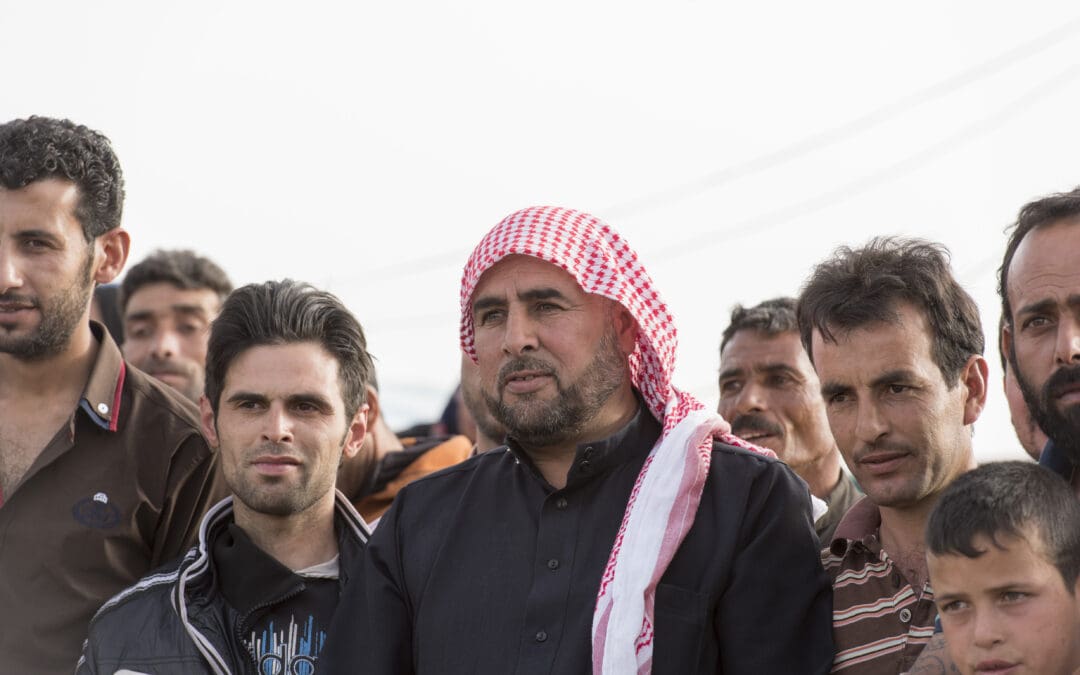
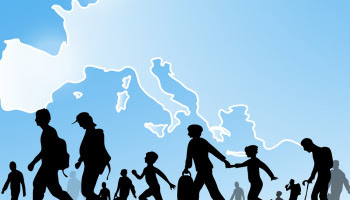
Asylum seekers and immigrants with low level of education are often seen as a “burden”, not only for “Fortress Europe” but also for first reception countries. Thus, today’s borders function as a filter, separating the “wanted” – that is, migrants who can be used – from the “unwanted”. The filter serves to separate those that get in from those who are pushed back.
The filter serves to distort refugee flows. Because unaccompanied minors are more protected by law or policy and are often not deported, there are an increasing number of unaccompanied minors separated from the rest of the family and facing very uncertain futures, especially as concerns education.
There have been some efforts to provide for educational facilities, but most often for students already at the university level. In September 2014, the German Foreign Minister, Frank-Walter Steinmeier announced the establishment of a special scholarship program for refugees from Syria saying “We cannot allow the Syrian conflict to engerder a lost generation. It is particularly young Syrians who will play a crucial role in rebuilding their country and deciding the future as soon as this terrible conflict is over. We want to help give this young generation a future perspective.” Since then there are many signs of a lost Syrian generation, especially for those in the neighboring countries of Jordan, Turkey and Lebanon.
A filter also increases the trafficking of people by organized bands who quickly learn the ways of going around a filter. The trafficking of women and children for the sexual industries occurs in all parts of the world, but increases in areas with armed conflicts. Women in war zones are forced into sex slavery by combatant forces or sold to international gangs. Even without commercial trafficking, there has been a sharp increase in early marriage among Syrian refugee girls in Jordan, marriage being one of the few ways to cope economically and socially.
The systemic failures and bureaucratic delays that characterize government reception systems have left many migrants and refugees in a legal “limbo” in which migrants remain trapped, contributing to processes of alienation. There is obviously a need for co-operation and some co-ordination among States of origin, transit and destination – more easily said than done.
Fortunately, non-governmental organizations (NGOs) have tried to meet the challenges of migrant and refugee flows, often being able to draw upon the spontaneous good will of people. However, there are real limits to what NGOs can do, especially on longer-term issues. There is an obvious need to resolve the different armed conflicts through negotiations in good faith. There is also an obvious need to increase development efforts in those countries from which economic migration is a strong motivation. There is also a need to reverse environmental damage with ecologically-sound development programs.
18 December should serve as a time when we look with compassion at the fate of migrants, refugees and the internally displaced. It is especially a time when we must plan and increase resources for creative action.
******************************
Rene Wadlow, President, Association of World Citizens
by Chuck Woolery | Nov 30, 2016 | Global Justice
Don’t just vote….Petition for Justice.
“Don’t boo! Vote!” President Obama retorted after a crowd reacted to promises of the GOP Presidential Nominee leading up to the 2016 election. Although voting is an important first step for citizens, it is not the only step we can take to have an impact on our politics and our lives. It matters greatly what we do as citizens between elections. Educating our elected officials, regardless of our opinion of them, can make an enormous and lasting difference.
‘We the people’ have the right (dare I say duty) to petition our elected officials on what we see is needed. And, we can do it every day of the year between elections. This means that a small group of committed souls with loving persistence can regularly educate their policy makers. The policy makers can be swayed using accurate, detailed and locally relevant information on why it is in their own best interest (and the interest of his/her constituents) to support or lead on a specific policy issue. This is how our government is supposed to work. Too often ‘we the people’ leave policy makers to the influence of paid corporate lobbyists.
Never before have we had such powerful tools to communicate important information so quickly and organize others so well. Highfalutin ideas and humanitarian motives don’t always move our elected officials to action. Protecting the freedom, security and prosperity of their constituents usually can. These are all non-partisan motivations. And, accurate, timely and specific information can leverage policy action. Working together with others in your community who see themselves as both national and global citizens will be essential in collecting the local information needed for creating sufficient “political will” in your Congressional District. “Political will” is the one missing ingredient needed to fulfill the self-evident truth that ‘all people are created equal’ and endowed with certain inalienable rights including, but not limited to, ‘life, liberty’ and ‘justice for all’.
Existing systems and structures in the US and the world are incapable of delivering on this universal promise. As individuals we can assist in changing that with committed action. The one global agreement that needs urgent attention is the UN’s Sustainable Development Goals (SDGs) for the year 2030. Achieving these goals would be a close equivalent to enforcing the Universal Declaration of Human Rights (68th Anniversary on Dec. 10, 2016) which was intended to prevent future wars. Globally applied, the SDGs would fulfill most human rights and would also help prevent most pandemics, terrorism, genocides, wars, and environmental disruptions. They also would best assist humanity in addressing the threats we cannot prevent.
There are only 435 Congressional Districts in the US. It is entirely possible to find 435 individuals (one person in each) to form a nucleus of a local community movement. A movement of movements that could have profound global consequences. It starts with individuals taking a stand.
If you see yourself as an individual willing to take such a stand we will do our best to empower you in your own Congressional District. Click here to read more about the 435 Campaign for Global Justice and CGS’ efforts to build a US Global Justice Corps. To be included in the Justice Corps send your name, email and zipcode+4 to chuck@igc.org. Your remaining time on this troubled planet will either be spent as a passenger or a crew member. The choice is yours. Help work for global justice between elections.
by Father Ben Urmston | Nov 13, 2016 | Global Justice, World Federation
In the Commonweal magazine article “Protect Thy Neighbor” (June 21, 2016) authors Mark J. Allman and Tobias Winright echo the Catholic Catechism when they say: “If and when the day ever comes when war is abolished—and like all Catholics, we pray for the arrival of that day.”
Catholics are urged by the Catechism (#2307) not only to pray for the day when war is abolished, but work to end it. “Because of the evils and injustices that accompany all war the Church insistently urges everyone to prayer and to action so that the divine Goodness may free us from the ancient bondage of war.”
Forty years after the Declaration of Independence Thomas Jefferson said “Laws and institutions must go hand in hand with the progress of the human mind. … [They] must advance … and keep pace with the times. We might as well require a man to wear still the coat which fitted him when a boy, as civilized society to remain ever under the regimen of their barbarous ancestors.”
What should humanity do now to exchange our old clothes of the past for something more appropriate for today’s world? I propose that we commit ourselves to advancing love over hate and hope over despair. We should strive to implement structures that will make our planet sustainable and our human family more ethical and moral. We should practice active non-violence and wage peace rather than war. We should seek to establish security and justice for all. We should develop a global community where basic human rights are protected and greater economic equity is implemented. We should create a democratic world federation that would be a legal governing body for the Family of Nations. That is an ideal for humanity that has been advocated by many, including in several official pronouncements of the Catholic Church.
“It is our clear duty, then, to strain every muscle as we work for the time when all war can be completely outlawed by international consent. This goal undoubtedly requires the establishment of some universal public authority acknowledged as such by all, and endowed with effective power to safeguard, on the behalf of all, security, regard for justice, and respect for rights. But before this hoped-for authority can be set up, the highest existing international centers must devote themselves vigorously to the pursuit of better means for obtaining common security.” (The Church Today, Part II, Second Vatican Council, Chapter 5, # 82)
Written by Father Benjamin J Urmston, SJ
One can further examine a Vision of Hope at www.xavier.edu/frben
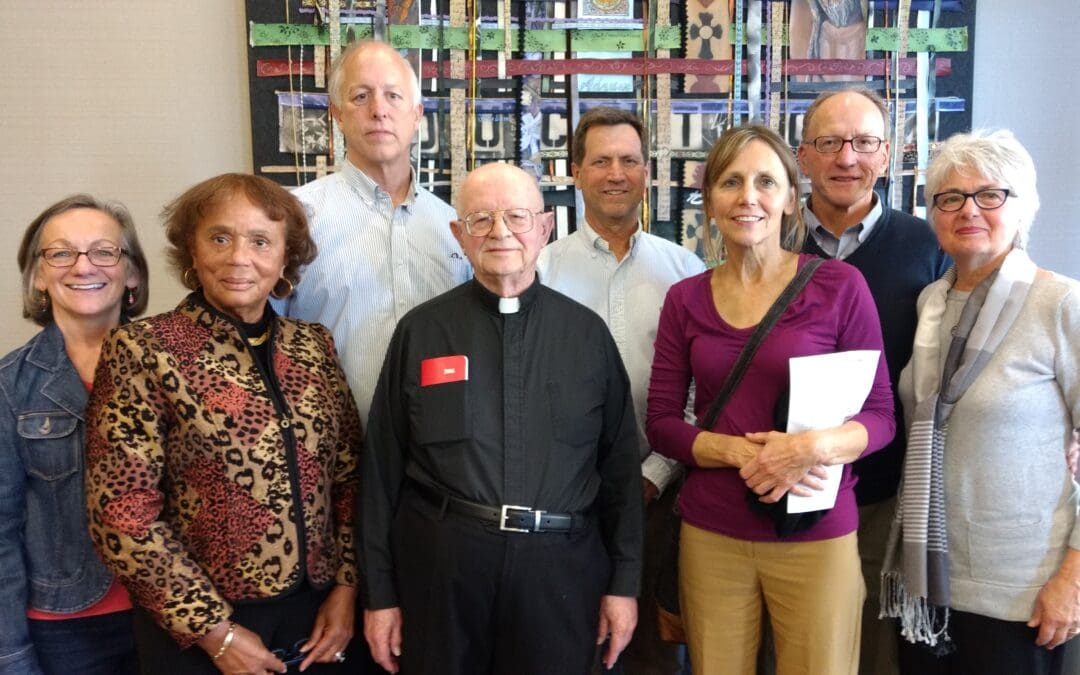
Note: Father Ben Urmston is a Jesuit Priest and Professor Emeritus at Xavier University in Cincinnati, OH. He recently was identified as one of Xavier University “Sustainability Heroes” and was recognized as a Peace and Justice Champion.
by Rene Wadlow | Sep 15, 2016 | Global Justice, World Citizen
Maria Montessori (1870-1952), an Italian childhood educator and world citizen, would have been pleased at the efforts of the United Nations and UNESCO to promote Global Citizenship Education1. Montessori argued for a child’s dignity and autonomy and for the ability of the child to break out of the narrow bonds of nationalistic education. She stressed that children have a unique consciousness and a special sensitivity in the early years which must be nurtured and allowed to develop along its own course.
The world citizen spirit of Maria Montessori’s teaching displeased the narrow nationalist leaders in power in the 1930s. The Fascist government of Mussolini closed the Montessori schools in Italy in 1934 as did Hitler in Germany and then in Austria when Hitler’s troops moved into Vienna. The dictators saw that creative thinking among children was a danger to their authoritarian rule. She spent the Second World War years in India where her educational ideas influenced a growing number of Indian teachers.
She stressed education for world citizenship in both content and methodology for as she pointed out access to education and to various forms of learning is a necessary but not sufficient condition to world citizenship education. A comprehensive system of education and training is needed for all groups of people and at all levels, both formal and non-formal. The development of a holistic approach based on participatory methods is crucial.
Education for world citizenship today builds upon the values and activities of the UN-designated International Decade for a Culture of Peace and Non-violence for the Children of the World (2001-2010). The UN General Assembly proclaimed the International Decade stating that the Decade “would greatly assist the efforts of the international community to foster peace, harmony, all human rights, and democracy throughout the world.” The Decade was to lead to “the promotion of democracy, tolerance, dialogue, reconciliation and solidarity as well as to international cooperation and economic development, and thus to sustainable human development.”
Education for world citizenship is necessary to embrace all facets of human experience. Such education must prepare us to help meet the challenges which face us, challenges so vast, so complex and so constantly changing their nature and scope. Education for world citizenship must prepare us collectively to know the yet unknown. Our physical, social, and spiritual development expands naturally from the personal towards the global. This learning process leads through both chartered and unchartered territory in an ongoing exploration of life.
The visionary and yet very practical educational spirit of Maria Montessori remains an inspiration as we develop world-wide educational forms to prepare us for the emerging world society.
Notes
1. UNESCO has produced a very useful guide “Global Citizenship Education: Topics and Learning Objectives” with a good bibliography and websites of organizations dealing with education for global citizenship. See their website for further information http://www.unesco.org/new/en/global-citizenship-education
by Rene Wadlow | Jul 29, 2016 | Global Justice, United Nations
You wake from dreams of doom and −for a moment− you know: beyond all the noise and the gestures, the only real thing, love’s calm unwavering flame in the half-light of an early dawn. Dag Hammarskjold Markings1
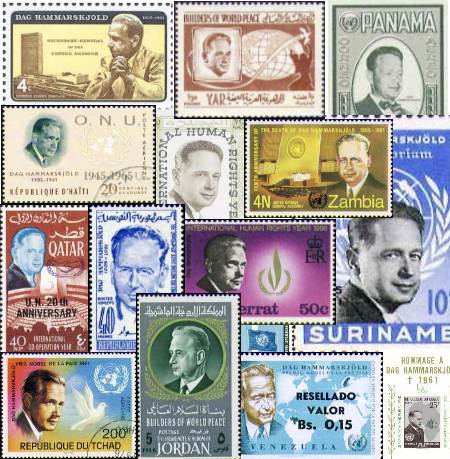
Dag Hammarskjold became Secretary-General of the United Nations at a moment of crisis related to the 1950-1953 war in Korea, and he died in his plane crash in 1961 on a mission dealing with the war in the Congo. The first Secretary-General of the UN, Trygve Lie, had resigned in November 1952 in the light of the strong opposition of the Soviet Union and its allies to the way the United Nations Command operated in Korea. Even though it was called the “United Nations Command”, the main fighting forces and the logistic support were provided by the United States.
Among UN Security Council members and other important delegations, it was felt that, given the way Trygve Lie was pushed out before a second term, he should be replaced by a person from a Nordic country, and the name of Dag Hammarskjold started to be proposed as a suitable candidate from an appropriate country, Sweden. It took five months of discussions before on 10 April 1953 Hammarskjold took office in New York.
Little in his background or experience had prepared Hammarskjold to be a crisis manager. He came from a distinguished Swedish family. His father had been Prime Minister, and other members of his father’s family had been civil servants or military officers. On his mother’s side, the family had been well-known Lutheran clergy and academics. Dag Hammarskjold was known for his active interest in literature, art and music − interests which he continued throughout his life. However, he was trained in economics and by age thirty-six he was chairman of the National Bank of Sweden, concerned with long-range economic trends. He was not a stock-market trader having to make quick decisions with very incomplete information to “buy or sell”.
Hammarskjold had a very strong sense of duty. As he wrote to himself in 1951 in a dairy published after his death as Markings(1) “Only he deserves power who everyday justifies it.”
Hammarskjold came to the United Nations just as socio-economic development was being considered as a permanent mandate for the UN Secretariat. At the time of the creation of the United Nations in 1945, economic and social issues were considered as the functions of specialized agencies formally related to the UN through the Economic and Social Council but in effect, independent with their own governing boards, budgets and administrative procedures: the World Bank and the International Monetary Fund in Washington, and UNESCO, FAO, ILO, WHO, all located in Europe. By 1949, influenced by the “Point Four” idea of US President Harry Truman, there started to grow the idea that the UN itself should become operative in providing economic, administrative, and technical assistance. A modest “Expanded Program of Technical Assistance to Underdeveloped Countries” was created in 1949, and through different incarnations has become the UN Development Program (UNDP)’s, complex and multi layered activities.
Hammarskjold was a strong supporter of economic and social programs. He appointed well-known and active economists to guide these programs. By training and temperament, he would have wanted to follow economic and social issues as he saw such programs as important buildings blocs of the world community.
However, it was as a crisis manager that he filled his days. These were often long days, and he was able to work for 18 hours a day for long stretches of time. He started as Secretary-General when the war in Korea was ending, but peace had not been established. Korea was still divided into two hostile States, a large number of people had been uprooted and much of the economic infrastructure destroyed. The French war in Indochina was still going on, and many observers feared that there could be a generalized Asian conflict. In 1952, the UN General Assembly created the “Commission on the Racial Situation in South Africa” – the start of a decades-long concern. The French war in Indochina was followed by the start of the war in Algeria. In April 1955, the “Asian-Africa Conference” was held in Bandung, Indonesia, a sign that decolonization would stay on the agenda of world issues for a long time. In November 1956, the first session of a UN Special General Assembly condemned the military aggression of the UK, France and Israel against Egypt, which later led to the use of UN Peacekeeping forces.
Dag Hammarskjold became an expert crisis manager, to the point that there was a common slogan in the UN- “Leave it to Dag”. He liked to work alone but had created a team of people working under him who were highly competent and totally devoted to him.
His last crisis-management effort was in the former Belgium Congo which had become independent in July 1960, followed quickly by violence, the breakdown of public order, the murder of the former Prime Minister Lumumba, the effort of Moise Tshombe to create a separate state in Katanga, and the sending of UN troops. USA-USSR Cold War tensions increased over Congo issues. Hammarskjold was to try an effort of mediation at the airport of Ndola, now in Zambia when the UN plane crashed, and all were killed.
Shortly after assuming office Dag Hammarskjold set out his view of his task as a world public servant faced by conflicting government − a vision which he fulfilled fully;
“The Secretary-General should express with full frankness to the governments concerned and their representatives the conclusions at which he arrives on issues before the organization. These conclusions must be completely detached from any national interest or policy and based solely on the principles and ideals to which the governments have adhered as members of the United Nations.”
At a time when there are active discussions on the selection of the next UN Secretary General, it important to recall the drive and initiatives of Dag Hammarskjold.
1Dag Hammarskjold. Markings (New York: Alfred A. Knopf, 1964, 222pp.)


 Asylum seekers and immigrants with low level of education are often seen as a “burden”, not only for “Fortress Europe” but also for first reception countries. Thus, today’s borders function as a filter, separating the “wanted” – that is, migrants who can be used – from the “unwanted”. The filter serves to separate those that get in from those who are pushed back.
 Fortunately, non-governmental organizations (NGOs) have tried to meet the challenges of migrant and refugee flows, often being able to draw upon the spontaneous good will of people. However, there are real limits to what NGOs can do, especially on longer-term issues. There is an obvious need to resolve the different armed conflicts through negotiations in good faith. There is also an obvious need to increase development efforts in those countries from which economic migration is a strong motivation. There is also a need to reverse environmental damage with ecologically-sound development programs.