by Donna Park | Jul 23, 2016 | Global Justice, World Federation
Dear Jake,
I love the attached picture of you and the twins all dressed for this year’s 4th of July celebration! Our 4th of July holiday honors the signing of the “Declaration of Independence” which put forth our belief that “all men are created equal, that they are endowed by their Creator with certain unalienable Rights, that among these are Life, Liberty and the pursuit of Happiness.” Of course with three sisters you realize that in today’s world “men” doesn’t only apply to men but to all people !! Annette, Clair and baby Grace won’t let you forget that.
There is another part of American history that I like to acknowledge and celebrate—the idea of moving from a confederation of states, which the US was after our war of independence, to a federation of states which we are now. When the United States agreed to federate, the states agreed to stop solving their disagreements on the battlefield and instead take them to court. The “rule of law” is an important part of how all Americans are allowed to enjoy life, liberty and the pursuit of happiness.
I would like to take these same principles of federation and the “rule of law” and apply them now across the nations of the world. It is very possible for the nations of the world to come together to solve their disagreement in court instead of in war. The US has proved that this approach works and is a better way to protect the rights of all people on earth.
We are so very lucky that we do not have any ongoing wars fought here in the United States. It is hard for us to understand the horror of war and the death and destruction it brings to both adults and children. Almost 90% of people killed in war at this time are civilians, not soldiers, and include women and children. The US tries to help maintain peace, but unfortunately we often do that by the use of force, by sending our weapons and/or our soldiers. Violence creates more violence, and we are stuck in never-ending war. Rather than spreading our weapons of war, we should be spreading our solution of federation and the rule of law.
I am working hard in retirement to try to spread this idea among other US citizens. I want other parents and grandparents to join me in demanding that the US stop fueling the wars around the world with our weapons and our soldiers. I want to keep the soldiers safe and sound. We need to transform the United Nations from a loose confederation to a strong federation that relies on the “rule of law” to solve disagreements. This page on the GlobalSolutions.org website explains this idea in more detail under the heading “Embracing a United Federation of Nations”: http://globalsolutions.org/about/world-federalist-institute
Give my love to the twins and baby Grace. I look forward to my next visit.
Love, Gram
by Rene Wadlow | Jul 20, 2016 | Global Justice, Human Rights
The UN-mediated peace negotiations for Yemen led by Ismail Ould Cheikh in Kuwait move ahead slowly. The 13-month war was at first between Hauthis tribal forces loyal to the former president Ali Abdallah Saleh and those supporting the current president Abd-Rabbu Mansour Hadi who had been Saleh’s vice-president for many years. The war is a struggle for power but is not an ideological-religious-tribal conflict.
Into this conflict has come a Saudi Arabian-led military coalition using bombs and sophisticated weapons. As a result, some 2.5 million people have been displaced within the country. Yemen was already a poor country which needed to import much of its agricultural and food supplies. As a result of the Saudi bombing raids, the underdeveloped socio-economic infrastructure has been largely destroyed.
Thus, there is a serious need first for post-war planning to be followed by international aid for development. “Reconstruction” would be the wrong term since there was little that had been “constructed”. Rather, we need to look to a post-war socio-economic construction developed on a basic needs approach.
The Basic Needs Approach to Development with its emphasis on people as central to the development process is embodied in the June 1976 World Employment Conference Declaration of Principles and Programme of action.[1] The Declaration underlines the importance of the individual and the central role of the family and household as the basic unit around which to work for development.
Although the Basic Needs Approach builds on the development thinking of the United Nations and national governments of the 1950s and 1960s such as rural development, urban poverty alleviation, employment creation through small-scale industries, the Declaration of Principles is a major shift in development strategies with its focus on the family with the objective of providing the opportunities for the full physical, mental, and social development of the human personality. The Programme of Action defines a two-part approach: “First, Basic Needs includes certain minimum requirements of a family for private consumption: adequate food, shelter and clothing, as well as certain household equipment and furniture. Second, Basic Needs includes essential services provided by and for the community at large, such as safe drinking water, sanitation, public transport, health, education and cultural facilities.”
The Programme added a basic element to the actions: “A Basic Needs-oriented policy implies the participation of the people in making the decisions which affect them through organizations of their own choice.”
The Basic Needs Approach concentrates on the nature of what is provided rather than on income − income having often been used as the criteria for drawing a ‘poverty line’ . The Basic Needs Approach is concerned not only with the underemployed but also with the unemployable: the aged, the sick, the disabled, orphaned children and others. Such groups have often been neglected by the incomes and productivity approach to poverty alleviation and employment creation.
For Yemen which is largely structured on the basis of clan- extended family institutions, the Basic Needs Approach is most appropriate. In practice, there are few institutions or associations beyond the clan level, although tribal and religious identities are often mentioned. Tribes and religious identity are “shorthand” terms as it is impossible to mention the multitude of clans. However, a family welfare – meeting basic needs is the most appropriate strategy on which to base post-war planning. Although the fighting continues sporadically and agreement on a possible “unity government” seems far away, Basic Needs Planning must start now.
Rene Wadlow is President and a Representative to the United Nations, Geneva of the Association of World Citizens.
by Michael Curtin | Jul 16, 2016 | Global Justice, Human Rights
One of the unintended consequences of people fleeing their homelands as a result of conflict, terrorism, famine, and political and religious persecution has been an increase in right-wing nationalism and an anti-immigrant populist uprising as witnessed by the recent “Brexit” vote in Great Britain.
From France to Germany, Italy and Austria; from the Netherlands to Hungary and Greece, a wave of nationalistic leaders has taken center stage across the continent of Europe seeking to capitalize on the anti-refugee bias.
We in the United States have witnessed political rhetoric that feeds on the fears of the populace – real or imagined. Despite passage of the American SAFE Act in response to the terrorist attacks in Paris, some seek to completely bar Syrian refugees from entering the U.S., fearing that refugees are posing as terrorists. The vetting process is extremely stringent, as it should be, but it is wrong to assume all refugees mean us harm.
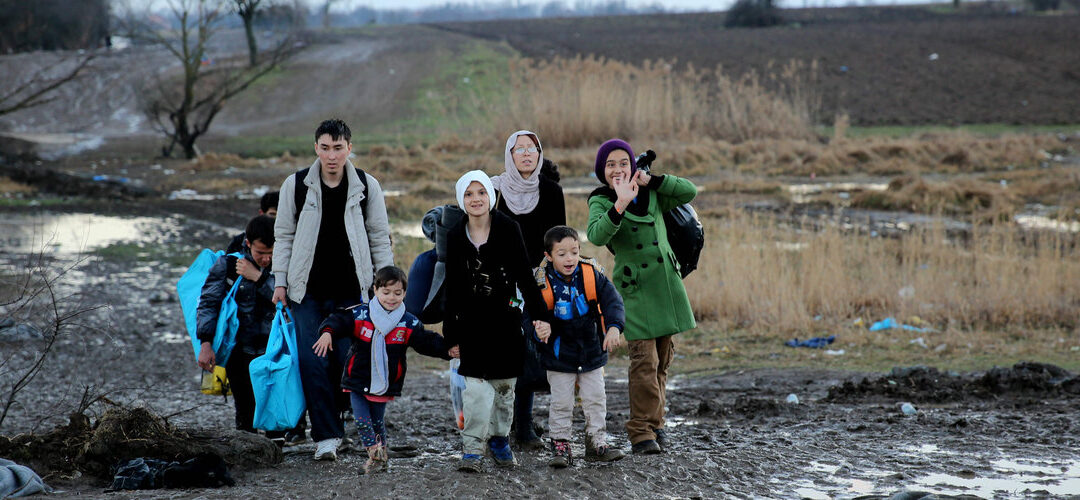
Each year on June 20th the world comes together to mark World Refugee Day. Beginning in 2001 it is a time to commemorate the strength, courage, and resilience of millions of refugees. The U.N. estimates that 65 million people have been displaced as a consequence of ongoing regional hostilities. This is the largest number ever to be reported by the U.N.
To place this figure into some perspective, consider this: one in every 113 people is now a refugee, asylum-seeker or internally displaced. Furthermore, in 2015 24 people had to flee their homeland every minute due to conflict or persecution, according to the U.N.’s Global Trends 2015 report submitted by the Office of the U.N. High Commissioner for Refugees (UNHCR).
Countries with the largest proportion of refugees occurs in Syria, Afghanistan and Somalia, with Colombia producing the greatest number of internally displaced people (IDPs). Despite the rhetoric spewing from Europe and the U.S., the report highlights the fact that a majority of refugees have been centered in the developing world. The UNHCR Filippo Grandi emphasized this point by stating that, “90% of the displaced are not in the rich world – contrary to the perception of most people in the rich world.”
What is particularly disturbing from the report’s findings, and has escaped the extremist’s argument, is that more than half of the world’s refugees are children. They are the innocent victims caught between conflict and persecution and are most often separated from their families. It is the children who need the strong support from the international community.
Organizations like UNHCR and the United Nations Association have stepped up to help these children. When children are displaced and uprooted from their homes, they may not be in school and are being deprived of an education, although some camps have set up makeshift schools.
Through its work, UNA has begun a program titled: Adopt-A-Future. (http://www.unausa.org/component/content/article/17/487-adopt-a-future) UNA has identified more than 60 schools in 9 countries to be matched with American communities to build schools and provide school supplies. The program also includes support for refugees in U.S. communities.
Adopt-A-Future will go a long way in providing opportunities for refugee children, and the Northern New Jersey Chapter will participate.
UNA has taken an active role in helping to assist these children in need. World leaders need to do the same. They should ignore the nationalistic fervor sweeping the U.S. and Europe and take the necessary action to help the most vulnerable amongst us: our children. They deserve our very best efforts.
by Rene Wadlow | May 23, 2016 | Global Justice, Human Rights
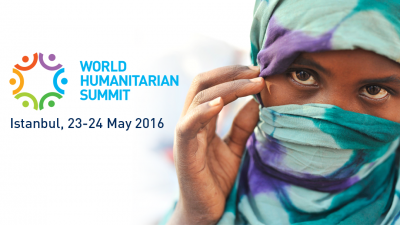
The World Humanitarian Summit organized by the United Nations will open on 23 May 2016 in Istanbul, Turkey. The aim of the conference in the words of the UN Secretary-General Ban Ki moon is to see what should be done “to end conflict, alleviate suffering and reduce risk and vulnerability.” Turkey is on the front lines of the consequences of armed conflict with nearly three million refugees from Syria and Iraq as well as its own attacks against Kurds. Turkey has entered into agreements with the States of the European Union concerning the flow of refugees through Turkey to Europe − agreements that have raised controversy and concern from human rights organizations.
Given the policies of the Turkish government, some non-governmental organizations have refused to participate in protest. Doctors Without Borders − one of the best-known of the relief organizations − has pulled out. However, the Association of World Citizens will participate while working for a settlement of Kurdish issues at the same time.
As with all UN conferences, there has been a good deal of earlier discussion. These discussions within UN agencies, national governments, and non-governmental organizations (NGOs) have led to a synthesis document which sets out the agenda and the main lines for discussion in Istanbul. It is the Secretary-General’s report for the World Humanitarian Summit One humanity: shared responsibility. (A70/709). There is a useful overview of the current world situation of refugees, internally-displaced people and of people on the move to escape persistent poverty. There are also warnings about future displacement of people due to the consequences of climate change.
As the report highlights “The effort necessary to prevent and resolve conflict will be massive but can be broken down into sets of core actions. They include demonstrating courageous leadership, acting early, investing in stability and ensuring broad participation by affected people and other stakeholders.”
As with so many UN reports, there is a call for courageous political leadership and a mobilization of political will. If there were more courageous political leadership, we might not have the scope and intensity of the problems we now face. There is a limited amount that we can do to provide courageous political leadership at the national level. Rather we have to ask what can we do within non-governmental organizations in which we are active to resolve conflicts and deal with some of the consequences of the conflicts such as refugee flows.
I see three areas, outlined in the UN report as agenda items, that we can develop on a non-governmental level. The UN report sets out the values that also guide our NGO actions. “To prevent and alleviate human suffering, to protect life and health and to ensure respect for the human person − these are the most important humanitarian principles.
The first issue for NGO action is to strengthen respect for the laws of war − now more commonly called Humanitarian Law. The recent and wide-spread attacks against medical facilities and medical personnel indicate an erosion of the laws of war. There is an urgent need to strengthen respect for the laws of war. This is an issue on which NGOs and the media can focus. Much humanitarian law has already been codified into the Geneva Conventions and other treaties. States which have not ratified should be encouraged to do so, but States must also be encouraged to live up to their word.
The second area is risk analysis and the publication of findings. All governments do a certain amount of risk analysis and contingency planning, especially the military. However, they make their findings public only when it serves their interests and States give little information as to how the analysis was made. NGOs along with academic institutions can provide analysis from open sources and indicate growing tension areas − what I have called “storm warnings”. For storm warnings to be effective, they need to reach as many people as possible and especially those in the path of the storm. International support for conflict resolution efforts must be made early and in a continuing way. If a storm does not break out quickly, it does not mean that the “storm-creating factors” have gone away and that attention can be put on other possible conflict areas. There need to be constant awareness of the way that tensions may form.
The third issue is training and preparation. There are a relatively large number of people working for (or having worked for) relief operations. They are able to set up tents, field kitchens, field clinics and water supplies. There may be need for more but there is not much room for innovation. However, teaching in refugee camps, dealing with longer-range psychological damage are areas where there is less experience and also less agreement as to what is to be done.
We can wish creative energies for the participants in the World Humanitarian Summit. Hopefully, the broad outline of actions necessary will be set, but the real work of all international conferences comes in the follow up.
by Jennifer Keck | May 5, 2016 | Global Justice, Human Rights
When you think of Ethiopia, images of starving children probably come to mind. But the East African nation has come a long way since the 1984-1985 famine, which claimed over one million lives. Economic growth has increased around 10 percent annually for the past decade, putting it in line with the government’s goal of becoming a “middle-income” nation by 2025.
The country’s “pro-poor” polices are transforming the nation and creating a path to prosperity and stability. Western governments—including the United States and Canada—consider Ethiopia an “island of stability” surrounded by the struggling states of Sudan, Somalia, South Sudan, and Eritrea.
Yet for all its economic success, the Ethiopian government casts a long shadow on human rights.
Last year, a violent crackdown on protesters in Oromia resulted in upwards of 200 deaths, according to Human Rights Watch. The anti-government demonstrations, which were set off by plans to expand the capital Addis Ababa into the region, have been fueled by frustrations over political and economic marginalization. Protesters say the military and police responded with public beatings, unlawful arrests, and even killings.
Eyewitness testimonies, mostly reported via social media and by activists, have been difficult to verify. Restrictions on travel have made independent investigations next to impossible. Journalists can’t travel without permission and are typically assigned a government minder when they do.
Ethiopia’s devastating drought has only pushed human rights concerns further to the margins as the country pleads for foreign aid. And even that narrative is tightly controlled by the government.
CBC Foreign Correspondent Margaret Evans writes of her visit, “Local officials assigned to accompany us on our recent trip were reluctant to allow us to see any real signs of suffering in the face of the drought.”
Restricting access may be due in part to the government’s desire to project an image of strength after decades of being portrayed as a charity case.
“There appears to be a tendency by some in the international humanitarian system to change the message in such a way that what the rest of the world hears from Ethiopia is a shrill cry of an SOS for immediate intervention,” Ethiopia’s communications minister, Getachew Reda, told CBC.
But government control of the national media is far more problematic. Today, Ethiopia is “one of the leading jailers of journalists on the continent,” according to Human Rights Watch.
Ethiopia deserves to be lauded for its economic progress, but unless it begins protecting human rights, millions will be locked out of participating in its development. It will take more than a steady growth rate for the nation to truly become the shining star of East Africa.
by CGS Blog Archive | Apr 26, 2016 | Global Justice, Human Rights
For privileged children in the United States, their biggest worries are getting their homework done in time to watch TV and being able to play outside with their friends. However, for young girls in Ethiopia, they are worried about getting a proper education and hoping their parents don’t force them into marriage.
According to Girls Not Brides, two in every five girls are married before their 18th birthday and one in five girls marry before the age of 15. For these young girls, forced marriage brings their childhood to an abrupt halt.
In Ethiopian culture, some believe that a woman’s main job is to be a wife and mother. Patriarchal ideals such as these contribute to the issue of female genital mutilation: 80% of women in Ethiopia become victims of this practice before the age of one.
Many of the girls who are married off at a young age will be unable to complete their education, either because their families cannot afford it or because their husbands refuse to allow them to attend school. It is common for girls not to even find out they are getting married until a week or a few days prior to the wedding. They are forced to marry men they do not know and who are eight or more years older than they are.
These forced marriages can lead to domestic violence, and the brides encounter many health problems because of early pregnancies and childbirth. The young girls feel helpless because they have no control over household decisions; they are unable to leave their homes because they have little to no education and ultimately nowhere to go. Most parents refuse to take their daughters back because it would tarnish their families’ respect. These young girls are being punished simply because they are born girls.
Many factors contribute to the increase in childhood marriage in Ethiopia such as poverty, lack of proper education and the lack of economic opportunities (common throughout third-world countries.) Child marriages are prevalent in many countries, and it is time to educate the people and protect the youth of these girls.
The International Center for Research on Women (ICRW), in partnership with CARE-Ethiopia and the Nike Foundation educates young girls on having control of their lives so one day they can stand up for their own daughters and promise them a bright future. ICRW is also working to help girls that are already married by empowering them and educating them with the system they are living in.
Young girls deserve to play with others their age and to have a proper education. All these girls are capable of greatness if provided with the right opportunities. Imagine if your daughter, sister, or friend were forced into marriage and denied a childhood, an education. It is our job to raise awareness of this issue because these young girls deserve the same rights as our own loved ones.