by Don Kraus | Nov 5, 2015 | Global Justice, Peace & Disarmament
The perspectives of Russian President Vladimir Putin and U.S President Barack Obama on Syria are so different that you have to wonder if they are living on the same planet.
Putin’s public rationale for intervening in Syria and backing President Bashar al-Assad boils down to a case against failed states. “After the invasion [of] Iraq, the authorities were destroyed, Saddam was hanged, and then the ISIL came there,” Putin told interviewer Charlie Rose. “And what happened in Libya? Full disintegration, no state at all….We don’t like the same thing to be repeated in Syria.” In other words, when Western democracies take down despotic, human-rights-abusing strongmen, the result is chaos and terrorism.
From Obama’s perspective,
When a dictator slaughters tens of thousands of his own people, that is not just a matter of one nation’s internal affairs—it breeds human suffering on an order of magnitude that affects us all….Let’s remember how this started. Assad reacted to peaceful protests by escalating repression and killing that, in turn, created the environment for the current strife.
Both leaders call for a diplomatic solution, with Putin supporting Assad and Obama calling for a managed transition away from Assad. Both leaders are using air assets to bomb “terrorists,” although Obama is going after the Islamic State (ISIS or IS) and Putin is targeting anti-Assad rebels. Both are supplying their proxies with training, arms, and supplies—as are Iran and Saudi Arabia.
Neither leader is pursuing a policy that will bring an end to the conflict or help Syrians who are caught in the middle. Their train-and-equip strategies often make murderers out of otherwise decent people. And no nation can protect innocent civilians from 60,000 feet.
Both leaders are using self-defense as their primary legal justification for their actions. But without UN Security Council approval, the concept is being stretched to the point that self defense has become a meaningless term for any aggressor to use at any time.
It’s past time for a radical solution to this metastasizing conflict.
Enter the UN
Syria has not lived up to the responsibilities of a sovereign UN member state that accepts the obligations contained in the UN Charter. With sovereignty comes responsibility. And the most important responsibility a country has is to protect the people living within its borders. Although many nations have crossed this line in the 70 years since the UN’s founding, Syria under the Assad regime is a particularly heinous example.
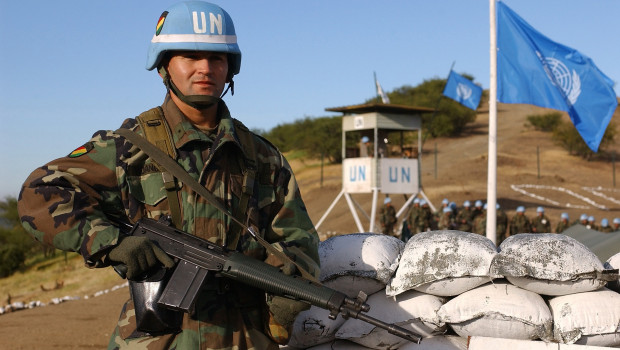
The Syrian conflict threatens the peace and security of the entire world. Perhaps it’s time to use the UN for its founding purpose: to end the scourge of war. The other 192 UN member states, including Assad’s allies Russia and Iran, should suspend Syria’s UN membership, which can be done under Article 5 of the UN Charter. Then the territory should be placed under the auspices of the UN’s Trusteeship Council, a moribund UN organ that basically went out of business when the last of the colonial countries achieved independence. Let’s breathe new life into it and use its chamber as intended rather than as just a glorified conference room in the UN’s headquarters.
The Syrian crisis is a very complex, multi-party conflict. If there’s another way to provide the diplomatic space needed for a political solution, I have not identified it. Some colleagues have already reminded me that the UN has never solved a high-stakes geostrategic conflict. And utilizing an obscure multilateral mechanism that will involve a highly unusual revocation of sovereignty is close to impossible.
However, the UN’s universal membership and legitimacy can provide an umbrella under which the Assad regime and non-IS Syrian rebels, the Iranians and Saudis, and the United States and Russia find the means to halt IS’s barbarous advances and allow Sunnis, Shiites, Kurds, and others to live alongside each other without a strongman-imposed peace.
Temporary Trusteeship
Activating a new UN International Trusteeship System could temporarily place Syria under the trusteeship of a to-be-determined nation. It could be the United States, Russia, or more likely a mutually-agreed-upon state with enough capacity to take on the challenge, such as India or Japan. The Trustee would establish a provisional government that allows all parties to the conflict that eschew violence to participate.
This could permit current Syrian government, moderate rebels, and international forces to focus on halting IS’s vicious campaign. It could create the space for a political settlement of the conflict. Perhaps it could even be structured in a way that gives Assad a face-saving role in the provisional government and yet defangs his ability to slaughter Syrians. Actions to hold Assad accountable for his crimes against humanity would most likely need to be deferred until a more peaceful and just Syrian state is reestablished.
To begin the process, all the UN Security Council permanent members—Russia, China, Great Britain, France, and the United States—would first have to agree. Although Russia and China have vetoed many Security Council votes aimed at the Assad regime, they could very well see this as a solution to an intractable and costly problem that enables them to retain influence in the region.
From Assad’s perspective, the fate of failed dictators like Saddam Hussein or Muammar Gaddafi could motivate him to accept a soft landing provided by a UN trusteeship, particularly if his primary benefactors were pushing him to do so. This alternative would also give him the space to let go of the reins of power in Syria.
From Putin’s viewpoint, a trusteeship scenario would allow Russia to maintain influence in Syria and at the UN while avoiding consigning Russian troops to an Afghanistan-like quagmire. If Putin’s goal in intervening in Syria was “to get attention, then it was brilliant,” according to one senior U.S. official. “If it was to end the fighting in Syria, that’s where we think it’s a strategic error.”
Despite Putin’s diplomatic maneuvers at the UN in September, he was unable to enlist any new nations to be part of his anti-IS coalition. A UN trusteeship administered by a “neutral” nation could attract many more countries to contribute forces to help stabilize the region.
For President Obama, a new UN Trusteeship System would provide an alternative to a scenario with no successful solutions in sight. There are already indications that some top White House advisers and National Security Council staffers are trying to persuade Obama to decrease U.S. engagement in Syria and temporarily accept the legitimacy of Assad’s regime. Other senior staff have proposed deploying Special Forces for the first time in Syria. Neither option leads to a near-term political solution without severe consequences.
If Obama or another world leader proposed the Trusteeship scenario, a veto by Putin would weaken his position and the very thin veneer of legitimacy surrounding Russia’s Syrian intervention. For both leaders, reframing the international response in Syria would reduce the risk of igniting a new Cold War and the possibility of their forces operating in Syria and Iraq accidentally engaging each other. Leadership at the UN would provide the US and Russia the global respect that both nations crave and deserve.
Marshaling the Troops
In the end, peace in Syria (and the surrounding region) will take good governance. Creating the political space to establish it will require the international community to make a significant long-term commitment of military force and resources. Bombing campaigns have already proven to be insufficient to stop IS. Depending on local troops to maintain their own security, even with the best training and equipment, has not worked in Iraq or Afghanistan.
In Iraq, the leadership is reported to be “corrupt, taking bribes to let people go on leave, and that they abandon troops when the battle heats up.” The resurgence of Taliban attacks in Afghanistan has already prompted NATO forces from Germany, Turkey, and Italy to agree to maintain their current force levels alongside the 10,000 U.S. troops stationed there.
Neither the U.S. nor Russia can sustain the kind of political will needed to deploy and maintain sufficient forces in Syria to stabilize the country. Former CIA Deputy Director Michael Morell believes it would take 100,000 troops to destroy IS. It could take a commitment on the magnitude of the deployment of U.S. troops to Europe and Japan after World War II to stabilize Syria, establish a provisional government under a trusteeship, and create conditions for a peaceful society. No one nation or coalition is ready to make such an investment now.
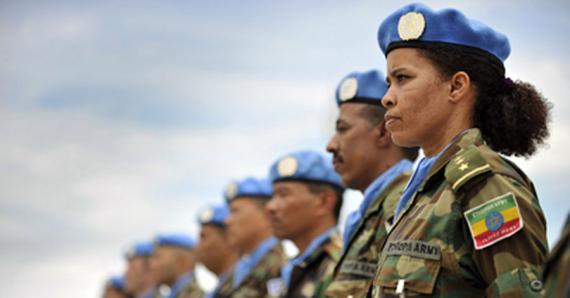
But there is globally a huge reservoir of armed forces that could take part in a UN-sponsored operation to establish a trusteeship and get the job done. Not including Russian, Chinese or Iranian forces, the militaries of countries listed as “Free” in the 2015 Freedom in the World report have around 10.2 million troops.
Collectively, the international community has the capacity to contribute enough forces to send a clear, resounding message that the use of violence to gain or maintain power will not be tolerated. Ideally, UN Security Council and General Assembly resolutions that would authorize temporarily placing Syria under a trusteeship would also commit each member state to contributing some forces to help stop IS, stabilize Syria, and provide the territory with peacekeepers and police while in transition. Given IS’s transnational character, the UN-authorized alliance would need to operate, with some approval from host states, outside of Syria as well. This will work if the majority of the international community participates.
For Saudi Arabia and Iran, although there wouldn’t be a clear winner or loser, both nations would benefit from defusing a costly regional conflict that threatens to engulf the Middle East in a larger war.
The United Nations works best when nations are united. To date, divided national priorities have not allowed the 70-year-old institution to play a significant role to end war in Syria. Promoting a new Trusteeship System to address this problem could be a way to bring nations together to focus on the limits of sovereignty and the responsibility to protect civilian populations.
For the 7.5 million Syrian children who have been brutalized by this war, for the estimated 9 million Syrians who have fled their homes since 2011, and for the hundreds of millions in Europe and around the world who are wrestling with a growing refugee crisis, isn’t it time for a radical win-win solution for Syria?
This article was originally distributed by LobeLog and has been cross-posted with permission.
by Sarah Del Vecchio | Nov 4, 2015 | Global Justice, Human Rights
When you think of gender-based violence, you may think of women abused in a refugee camp or conflict zone; you may think of a wife mistreated by her husband. However, gender-based violence seeps into all aspects of society, including the labor force—and it carries a high cost.
The McKinsey Global Institute recently published a report that found achieving equality in the workplace could result in a $12 trillion to $28 trillion increase to the global annual GDP by 2025. A large part of this inequality stems from the consequences of gender-based violence, such as lost labor force participants who are too intimidated or traumatized by violence to return to work.
Despite these high costs, the International Labour Organization (ILO) has yet to ratify a convention on gender-based violence in the workplace. Prior to the ILO’s Governing Board meeting in 2014, US Democrats called on the ILO to put gender-based violence on their agenda, stating that “an ILO Convention would help address the injustices for women in the garment industry and other industries and would be an important step to improve women’s working conditions worldwide.” Despite this push from government officials and unions, the ILO failed to address a convention in 2014 and 2015.
To fully understand why an ILO convention is necessary, it is important to remember that the victims of gender-based violence in the workplace encompass everyone from a girl groped by her supervisor in a Bangladesh garment factory to a marine sexually assaulted by his roommate. Gender-based violence encompasses child labor and human trafficking, and it is apparent in almost every industry around the world.
An ILO convention would legitimize the global gender-based violence problem and provide a framework for governments and civil society organizations to prosecute offenders. As the McKinsey report reveals, combatting gender-based violence is essential, not only to the victims of discrimination and violence, but to the global economy and workforce as a whole.
by Victoria Barrow | Oct 23, 2015 | Global Justice, Human Rights
With today’s technology, it is easy for us to keep up with what’s going on around the world. We can receive email updates from government institutions, check up on current events from our smart phones, watch the news on our computers, and more.
Although it’s wonderful that we can easily stay informed, there’s one problem with this: sometimes by getting caught up in the “new,” crises that have been occurring for months or years get lost in the crowd.
Here are some of these “forgotten” issues:
1. Refugees in Kenya’s Dadaab Camp
Dadaab refugee camp is the world’s largest, inhabited by some 350,000 people. The camp, which has been in place for over 20 years, is home mostly to Somali refugees who fled their own country’s prolonged fighting and droughts.
Families in the camp struggle to live on the bare minimum provided by aid agencies. The World Food Program (WFP) was forced to drop rations at the camp by 30% this summer due to lack of funding. Hospitals too have suffered, as they can’t afford proper staffing. In Kenya, refugees are not allowed to work for an income, so families survive by engaging in trade within the camps.
Recently, insecurity has been rising in Dadaab. Criminal gangs and Islamic militants frequently attack the camp. The fact that so many young people aren’t able to work or study also contributes to a rise in crime—60% of Dadaab’s population is age 17 and younger. Amongst this chaos, it is not possible for the Kenya police or the UN Refugee Agency to maintain order.
According to international law, refugees have three options if they want to leave camps: apply for resettlement in a third country, return to their country of origin, or integrate into the country where their camp is located. Unfortunately, many Dadaab refugees cannot return to Somalia as the war is still continuing, and they no longer have any belongings there. They cannot settle in Kenya because the government refuses to grant them citizenship. Finally, resettlement in an alternate country is rare, with less than 1% of refugees worldwide successfully doing so.
Dadaab refugees are basically trapped in a horrible cycle, stuck within the boundaries of their camp and dependent on inadequate food aid.
2. Ethnic cleansing of Rohingya Muslims in Burma
A few months ago, the United Nations announced that the Rohingya Muslims in the state of Myannar (Burma) are “the world’s most persecuted minority.” For decades, this ethnic community has faced practices of ethnic cleansing and racial discrimination. This is carried out both by Burma’s government and by Buddhist extremist groups.
Although Rohingya Muslims have lived in Burma for many generations, the national government does not recognize them as Rohingyas and instead treats them as illegal settlers from Bangladesh. For the past 50 years, “Burmanization” has been the government’s policy. This process includes the promotion of a single religion (Buddhism), language (Burmese), and culture (Burman). This focus on “cultural assimilation” has led to the ethnic cleansing of minorities such as the Rohingyas.
On top of government policy, groups led by Buddhist monk Ashin Wirathu are murdering Rohingya Muslims and driving them from their homes. This violence has led thousands to flee Burma via the Bay of Bengal, hoping to end up in Thailand, Indonesia, or Malaysia. Unfortunately, these countries refuse entry to the migrants and force them back to sea, leading to many additional deaths.
On October 15, Burma’s government signed a peace agreement with some of its armed ethnic groups. This agreement, which has been under negotiation since 2011, was refused by eight ethnic armies. The hope that it may bring some peace to the nation is slim.
3. Continued violence in the Central African Republic
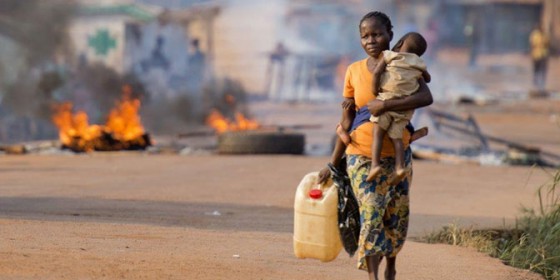
Often referred to as the “forgotten” conflict, violence in the Central African Republic (CAR) has risen to extreme levels ever since the Muslim rebel group Seleka initiated a military campaign in 2013 to overthrow then-president Bozize. Seleka fighters were accused of using child soldiers, looting villages, raping and killing civilians, and other crimes against humanity. Frustrated that these crimes were continuing unpunished, many civilians formed self-defense militias known as Anti-Balaka to confront the Seleka.
Although the Anti-Balaka groups were created for a civilian protection, eventually the fighting became more religion-oriented, with some Anti-Balakas targeting Muslims in response to claims the Seleka had been terrorizing Christian communities. In February 2014, Amnesty International released a report documenting how several Muslim towns were now completely empty of Muslims, as they had been forced to flee the country to escape violence. In other words, Muslim civilians have been facing massive ethnic cleansing.
Nearly 900,000 people from the CAR have been forcibly displaced since the outbreak of violence in 2013, with some 2.7 million in need of humanitarian aid. Violence continues to plague the country, as demonstrated by the new surge that occurred in early October which forced more than 30,000 additional people to be displaced. Despite the fact that the international community has taken note of the crimes against humanity occurring in the CAR, the current funding for adequate humanitarian response is not enough, and it seems that the international community has forgotten about the crisis.
4. Ongoing humanitarian crisis in Iraq
Although it may seem like Iraq is often in the news these days, there are important gaps in what is being covered. Media explanations tend to focus exclusively on the fighting between the Iraqi government and the ISIL militants. What we don’t hear about is the humanitarian consequences of the current crisis. Iraq now has one of the highest populations of internally displaced people (IDPs) in the world–since January 2014, 2.6 million people have been displaced. In addition, a quarter of a million Syrian refugees have made their way into the country. Civilians are increasingly unable to cope with the consequences of the crisis, with children particularly impacted by protection risks and disruption to their education.
Today, security concerns have dominated priorities in Iraq at the expense of humanitarian assistance and efforts to create long-term stability. Although Iraq has been classified as a Level 3 emergency (the highest level) by the United Nations, its displacement crisis is being overshadowed by Syria in terms of funding and international attention. Iraq’s displaced civilians are not allowed in the country’s Syrian refugee camps, for example. This is partially because refugees have a different legal status than IDPs. Governments are responsible for IDPs, who are their citizens, whereas refugees are seen more as an international responsibility.
This September, the situation worsened for Iraqis due to a cholera outbreak in the country. By the end of the month, some 1,700 people with suspected cholera had reported for treatment in hospitals. Water supply systems that have insufficient amounts of chlorine to provide clean water are the main sources of the outbreak.
The Iraq Humanitarian Response Plan, created in June 2015, requests $498 million to provide humanitarian aid in Iraq. To date, only 40% has been received, and humanitarian needs are outpacing available resources.
5. Saudi blockade starving Yemen
Yemen has long been one of the poorest countries in the Middle East. Since March, Saudi Arabia has led an Arab military intervention in the country, in an attempt to get rid of Shia rebels known as Houthis, who forced ex-President Abradduh Mansour Hadi to flee the capital in February. The Saudi-led coalition has been conducting airstrikes across the country, causing injury and death among the civilian population and destroying homes, hospitals, and other infrastructures.
As if this were not enough, the coalition has also imposed a blockade on Yemen. All the major ports, airports, and roads to the country are closed off. Even before the conflict, Yemen depended on imports for 70% of its fuel and 100% of its medicine. Right now, 13 million people are food insecure, as 90% of Yemen’s food is normally imported. There are a total of about 21 million people in need of assistance.
Despite the gravity of the situation in Yemen, the crisis is not featured in the news. This is because the Saudi blockade of the country doesn’t just apply to goods; it applies to people and personnel as well. In the last six months, there have been hardly any journalists in the country, and those who are allowed in must wait months to be granted visas.
A nutritional survey will be done at the end of the month to determine whether a famine is occurring in Yemen. According to the latest figures, 537,000 children under the age of five are at risk of severe malnutrition, and 1.3 million more are moderately malnourished. In addition, UN officials predict negotiations on a resolution to end the war between the Saudi and the Houthi rebels will start by the end of the month. One can only hope these negotiations are successful, and that the blockade on Yemen will be lifted as soon as possible.
Hearing about so many international crises can be very depressing. Rather than feeling helpless, check out some ways in which you can make a difference:
Donate
Sign a Petition
Spread Awareness
Become a Global Citizen
by Jennifer Welden | Oct 5, 2015 | Global Justice, Peace & Disarmament
The UN recently announced its Sustainable Development Goals (SDGs), a set of 17 goals encompassing everything from education to peace and justice. Of them, Goal 2 is to “end hunger, achieve food security and improved nutrition and promote sustainable agriculture.” Though the goal itself and the subsequent sub goals highlight the need for sustainability, they seem to overlook a very important roadblock in the fight to end hunger: food waste.
As I’ve written before, about a third of all food grown around the world is never eaten. Though this is more often reported as occurring in the first world, many would be surprised to know how large the issue is in the developing world: “as much as half of the food grown or produced in the developing world simply never makes it to market.” Often this is because of a lack of technology, whether it’s a lack of refrigeration or of something “as simple as getting farmers in places like Kenya to use crates instead of burlap bags to transport their tomatoes to prevent them from bruising on the way to market.”
While it is probably a stretch to call the fixes for food waste “easy,” it is not one to say that implementing these fixes could have a huge impact on world hunger. By the UN’s own estimate, “if the amount of food wasted around the world were reduced by just 25% there would be enough food to feed all the people who are malnourished.” And yet, in its own SDG the UN fails to address food waste as a part of reaching this goal, advocating instead for increased agricultural productivity.
But pursuing a strategy of growth over efficient consumption has already proven to have its own consequences in the first world. Often we have too much production, leading to too much consumption, which in turn creates high amounts of food waste.
The problem is global but manifests itself in starkly different ways. In developing countries there are high levels of what is known as “food loss”, which is unintentional wastage, often due to poor equipment, transportation and infrastructure. In wealthy countries, there are low levels of unintentional losses but high levels of “food waste”, which involves food being thrown away by consumers because they have purchased too much, or by retailers who reject food because of exacting aesthetic standards. —Kate Lyons, The Guardian
That is why a goal to end hunger without reducing food waste just doesn’t make sense. Rather, we should try to find solutions that address our farming and consumption practices. In the developing world, this can be as simple as improving food storage technology; in the developed world, this will involve not only changing the way we sell food but also the way we consume it. (For more in-depth examples of people reducing food waste around the world, check out this article).
No matter how we start addressing food waste, it is crucial that we do so. So how about we start with ourselves? For those reading, I challenge you to meet Global Solutions’ Goal #1: try and cut your food waste by 25%, whether by changing what you buy, how you eat it, or how you dispose of it. Let’s see if we can feed the world.
by Rene Wadlow | Sep 4, 2015 | Global Justice, Human Rights
During the summer of 2015, the international community has become increasingly concerned with the causes behind the mass exodus of people from their homes—the refugees and migrants.
It has been all too easy to become accustomed to the image of the refugee: the displaced in Europe after World War II, internally displaced Chinese during the Chinese civil war, the struggle of Jews to enter Palestine prior to the creation of Israel followed by the flight of the Palestinians, the Hungarians in 1956, and the boat people from Vietnam—the refugees who made the front pages of the world press and all the others too often forgotten. The sum of human misery since the Second World War has been so heavy and so constant as to have a numbing effect.
However, the summer of 2015 has brought images of refugees and migrants drowning at sea or trying to make their way under barbed wire, with the most recent photos of some 70 persons who died in a closed truck in Austria near the Hungarian border.
Until now, governments within the UN system have gone on the assumption that security and peacekeeping are political matters to be kept as separate as possible from emergency humanitarian efforts. Since, in nearly all the cases that have led to massive departures, the UN has failed in its attempts at conflict resolution, humanitarian aid did what it could to bind up some of the wounds. Both the UN High Commissioner for Refugees and non-governmental organizations working on direct relief avoided political considerations as much as possible. For public political analysis leads to controversy, to charges of being one-sided, and to misunderstanding the historic complexities of the situation.
People flee their countries for a variety of reasons and usually as a result of a combination of factors rather than a single one: wars and insurrections, the breakdown of law and order, oppression, persecution and the denial of socio-economic opportunities. Some people may not have been singled out for repression, but feel that their country cannot provide an adequate future and wish to try their luck elsewhere. Others, especially those who represent ethnic or religious minorities, may be deliberately forced out.
There is a link between the violations of human rights, the lack of possibility for popular participation in development, and migration for economic reasons. Although there is a good deal of writing on the latter, the diversity and scale of the phenomenon is not always documented and much of the migration is clandestine. Migration is of increasing complexity which we are not yet capable of analyzing properly. It is only relatively recently that the World Bank initiated a research program on international migration and development, largely as a result of information on the large amount of money that migrants send to their families in their home country. Likewise, it is only fairly recently that the gender aspects of migration are being studied. The World Bank reports that close to half of the world’s trans-frontier migrants are women and that the percentage is growing, especially among domestic workers and caregivers. In light of this, we see how international migration cannot be fully understood without the prism of gender. We also see how development policies and international migration are parts of the same process.
There are no easy solutions to the problem of mass exodus. There will have to be complex changes in attitudes and values so that we see ourselves as citizens of the world with a joint responsibility to care for and protect the seven billion on the planet.
The world community needs to develop a more adequate early-warning system so that preventive action can be undertaken before the outbreak of destructive violence and yet another flow of refugees. Peace needs peacemakers; there is a need to train more adequate humanitarian workers and to be able to draw more quickly upon those individuals with the necessary skills and experience. In addition, climate change is likely to produce changes in the environment and thus patterns of settlement, creating what some have called “ecological refugees.”
There is a growing awareness of the need for a UN-led World Conference on migration, as there have been past UN conferences on the environment, population, food, women, urbanization and other world issues. The pattern of the world conferences remain largely the same: preparatory regional conferences to look at issues in a regional framework, research and statistics collection, contributions from NGOs, and finally, a world conference that draws up a plan of action.
The impact of UN conferences has been greatest when there is an existing popular NGO-led movement that has sensitized people to the issue. The two UN conferences that have had the most lasting consequences were the 1972 Stockholm conference on the environment, which was held against a growing popular concern with harm to the environment symbolized by Rachel Carson’s widely-read book Silent Spring; and the 1975 International Year of Women and its Mexico conference, which came at a time when in Western Europe and the US there was a strong “women’s lib” movement and active discussions on questions of equality.
Migration does not have a well-organized NGO structure highlighting the issues, but migration and integration have become a widely discussed political issue, a common theme of the narrow nationalist political movements. This anti-immigration rhetoric heightens awareness but presents no answers. A UN-led conference can provide rational discussion based on research and proposals taking in a world view and a longer time frame.
In the meantime, citizens of the world need to stress the global aspects of migration flows, which have an impact on all countries; the changing nature of the world’s economies, which modify migration patterns; and the need to plan for migration as a result of possible environmental changes.
by Jennifer Welden | Aug 21, 2015 | Global Justice, Human Rights
Senators Barbara Boxer (D-CA), Mark Kirk (R-IL), and Jeanne Shaheen (D-NH) recently introduced the Women, Peace, and Security (WPS) Act of 2015 “to ensure [the] promotion of women’s meaningful inclusion and participation in mediation and negotiation processes in order to prevent, mitigate, or resolve violent conflict.” If passed, this would be a huge step forward in a world where less than 30 percent of senior positions in government, military, academia, and think tanks are held by women, despite their making up 50% of the population. And yet, the lack of news coverage alone shows that the world still needs convincing of the significant impact more women in foreign policy could have.
Other than the obvious reasons of gender equality that make this act so crucial, including more women in foreign policy serves a practical purpose: they are better able to address the problems many women face in conflict zones, as they are women themselves. Sexual violence and sexual health in particular are issues that could be positively impacted by an increase in women leaders.
As Liz Ford notes, “The majority of preventable deaths of women and girls – often in pregnancy and childbirth – occur in countries affected by conflict, but these states receive 57% less funding for reproductive healthcare than stable nations.” Furthermore, she points out, “Only 14% of funding appeals for reproductive health services in humanitarian emergencies include provisions for family planning.”
These are the kinds of disparities that require a refocus toward women, both internally and externally. As Carla Koppell argues, this same refocus could be applied when combatting extremism:
Women often have influence within the family, giving them enormous potential to stem recruitment and radicalization. As community members frequently left behind in conflict zones to maintain the home and care for children and other family members, women and girls often have information and insights that can provide early warning of conflict or the potential for violence.
However, adopting this strategy takes not only the acknowledgement of women, but also the inclusion of women; representation matters, especially when engaging with female members of the community. As a woman, it is comforting and inspiring to see other women leading the way in addressing these distinctly gendered issues. This too, though, brings with it its own issues of representation and intersectionality: we must not settle just for women in foreign policy, but for women of all backgrounds in foreign policy.
Achieving this last goal will undoubtedly take time, but the WPS Act is a step in the right direction. Including more women in foreign policy is the only way to address conflict properly–not only to bring about peace, but also to sustain it.