by Rene Wadlow | Nov 25, 2015 | Global Justice, Human Rights
How many victims of silence there are, and at what cost! Silence has its laws and its demands…. Silence demands that its enemies disappear suddenly and without a trace. Silence prefers that no voice of complaint or protest or indignation disturb its calm. And when such a voice is heard, silence strikes with all its might to restore the status quo ante—the state of silence. —Ryszard Kapuscmski, The Soccer War
November 25 is the UN-proclaimed International Day for the Elimination of Violence Against Women. Violence against women is a year-round occurrence and continues to an alarming degree. It presents an attack upon women’s bodily integrity and their dignity. We need to understand the universality of violence against women; the various forms it takes; and the ways in which gender-based violence, discrimination, and the broader system of domination are inter-related. The value of a designated day is that it serves as a time of analysis of the issue and of rededication to taking action.
Pierre Spitz, a former Geneva colleague, had coined the term “silent violence” for policies that not only condone the existing system, but in some cases reinforce it by forestalling the development of a political consciousness which might degenerate into social disorder. In this spirit, we can speak of silent violence against women. Both at the international and national levels, there have been programs devoted to the equality of women and to the promotion of women in all fields for some time. However, only recently has there been growing attention to physical violence against women and to the trafficking of women.
When the issue of violence against women has been raised by NGO representatives in the UN human rights bodies, government representatives often reply that violence against women exists but is very rare in their country and that “domestic violence within the family” is a subject they cannot deal with unless action is taken by the police. Thus, there has been just enough attention given to violence against women to prevent “the development of a political consciousness which might degenerate into social disorder.”
Yet as Susan George, another former Geneva colleague, has written,
That all governments are concerned for, and are representative of, the majority of their people is patent nonsense. Plenty of governments are most concerned with enriching those who keep them in power. Human rights, including the right to food, run a poor second.
At the national level in many countries, women have largely remained invisible and inaudible by being allowed to have the key role in the “informal sector”—those sectors of the economy that are the least organized, often left out of the statistics of the formal economy as if it did not count. Women have turned to the informal sector—or have been pushed into it—as a way of sustaining a livelihood for their families. Women’s work in this sector accounts for a large proportion of total female employment in most developing countries of Africa, Latin America and Asia. The informal sector, though often considered marginal in economic planning, tends to account for a significant proportion of total employment.
In this informal sector, women work as food producers, traders, home-based workers, domestic workers, recyclers of waste, prostitutes, and increasingly as drug traffickers—anything to earn an income to feed their children. The informal sector is their last hope for economic and social survival for themselves and their families.
In the informal society, women survive and often have a major responsibility for the economy of the whole family. Fathers are often absent by need or by choice. Some women do well in the informal sector and serve as a model or a hope for what others can accomplish. Self-employed women are increasingly helped by micro-credit programs. These are useful, but rarely do such loans allow a person to move outside the informal economy.
There has been a good deal of research on women’s roles in agriculture, on women’s informal-sector employment, and increasingly on women’s entrepreneurship. Researchers in different world regions have pointed to the handicaps faced by women to obtain credit and in getting access to new agricultural technologies. However, research has rarely been brought into the mainstream of global or national decision-making.
Inequality and walls built around the informal sector are the marks of the “silent violence” against women. Amartya Sen defined the major challenge of human development as “broadening the limited lives into which the majority of human beings are willy-nilly imprisoned by the forces of circumstance.” On November 25, this day for the elimination of violence against women, we need to look closely at the social, cultural and economic walls that imprison us.

by Michael Curtin | Nov 24, 2015 | Global Justice, Human Rights
The events of November 13th have truly rocked civilized peoples of the world to the core. For many Parisians, it was just another Friday night: some decided to attend a soccer game; others made plans to have a quiet dinner at a favorite restaurant; and other people went to hear a concert.
However, as the world knows, this was no ordinary night. An evening of tranquility quickly turned to chaos. “The City of Light” was suddenly darkened, and what would happen next was uncertain.
The same group wreaking havoc across the Middle East brought its terror to the streets of the French capital. Yes, the Islamic State of Syria (ISIS) struck at the heart of Europe by hitting key soft targets in an attempt to inflict as much pain and suffering as they could. They place no value on human life, as they are willing to sacrifice their own lives in the name of a very twisted and perverse ideology.
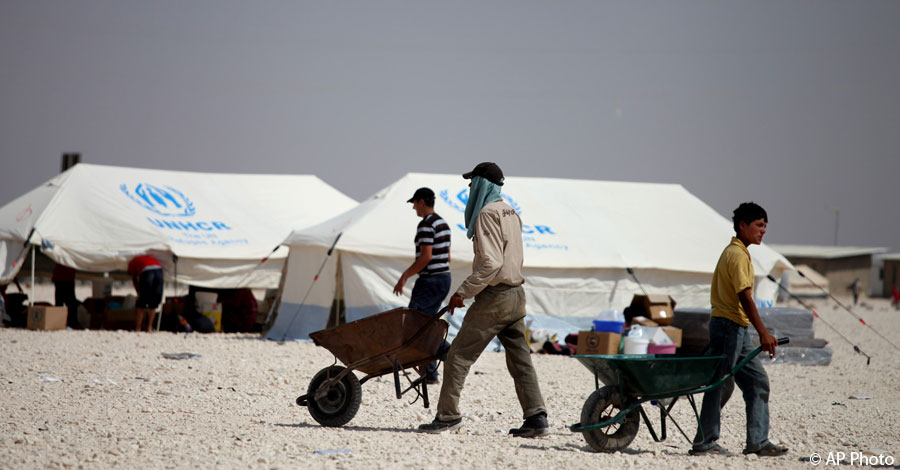
What began as peaceful protests against the Syrian government in 2011 rapidly shifted to a violent insurgency. In its wake, the world is left with the decision of what to do next. One of the unintended consequences of this conflict is the mass exodus of refugees flowing across the Syrian border into neighboring states, like Jordan, Lebanon and Turkey. These countries are now burdened with caring for the many innocent victims of this violence.
How will the international community handle the millions fleeing the conflict and persecution and seeking a safe haven? The events of November 13th have sent shockwaves across the world, especially here in the United States. The news of a terror suspect finding his way to France masquerading as a Syrian refugee prompted 31 U.S. state governors to pronounce they would not accept refugees.
The House of Representatives followed suit by passing legislation on November 19th increasing the level of screening on refugees from Syria. In addition, based on reporting from The New York Times, the bill requires “the director of the F.B.I., the secretary of the Department of Homeland Security and the director of national intelligence confirm that each applicant from Syria and Iraq poses no threat.”
The debate will continue to rage as to who will accept refugees and who will not. In the meantime, these people need to be cared for and the UN, as it usually does in such cases, has taken on this responsibility.
The UN steps up to provide for those in need
On December 14, 1950, the UN General Assembly established the Office of the United Nations High Commissioner for Refugees (UNHCR). Shortly thereafter, on January 1, 1951, the UNHCR’s work began as it laid out its plan to care for the European refugees during World War II.
Today, their task is not much different. Politics are set aside as their sole mission is responding to urgent humanitarian crises; they have been doing this quite effectively for over 60 years.
As they are led by former Prime Minister of Portugal, Antonio Guterres, UNHCR faces unprecedented challenges of peoples displaced by war, conflict and persecution. UNHCR has three core goals in assisting displaced peoples of the world:
When people are uprooted from their homelands, they leave with nothing. It is now a question of survival, and UNHCR provides the basic necessities of life: food, water, shelter, medical care and, of course, security. Time is of the essence in such crises and the staff of UNHCR responds to them in a moment’s notice.
After meeting the survival needs of refugees, UNHCR now focuses its attention on keeping the refugees safe and secure while seeking the best possible solutions for them. Following the cessation of hostilities, the refugee problem does not disappear; to the contrary, it is now just beginning.
There are a number functions UNHCR provides for refugees while it seeks a long-term solution to their situation. It helps governments in the protection of the refugees; assists asylum-seekers confronted with deportation; “monitors borders and detention facilities”; continues to provide the basic care they require, including education.
Of course the goal for all is to make their way home once it is safe to do so. If they cannot be repatriated, UNHCR will assist them to find a home in another country.
UNHCR goes the extra mile for peoples of the world who have been displaced from their homeland through no fault of their own.
Lady Liberty is still welcoming in the harbor
Those famous words written by Emma Lazarus in 1883 are still inscribed on the Statue of Liberty, but do they still garner the same significance?
Give me your tired, your poor,
Your huddled masses yearning to breathe free,
The wretched refuse of your teeming shore.
Based on the rhetoric emanating from individuals of all political persuasions, one has to wonder.
This article was originally written for the Northern New Jersey Chapter of UNA-USA. It has been cross-posted with the author’s permission.
by Rene Wadlow | Nov 20, 2015 | Global Justice, Human Rights
When the Convention on the Rights of the Child (CRC) was unanimously adopted by the United Nations General Assembly on November 20, 1989, governments took a major step forward in establishing a framework of world law to protect the basic dignity and rights of children in all parts of the world.
On November 20, we remember with gratitude those who worked to develop the concepts and reality of the Rights of the Child, but also to measure the tasks that are before us. This year the CRC saw major progress in the form of ratification by South Sudan and Somalia, which leaves the United States as the only country absent.
This universal framework is based on the principle that each child should have the possibility to develop into an active and responsible member of society. The way in which a society treats its children reflects not only its qualities of compassion and protective caring, but also its sense of justice, its commitment to the future and its urge to better the human condition for continuing generations.
TheCRC covers a wide range of human rights, which can be summarized as the three Ps: provision, protection and participation.
- Each child has the right to be provided with certain things and services, such as name, nationality, health care, and education.
- Each child has a right to be protected from certain acts such as torture, exploitation, arbitrary detention, and unwarranted removal from parental care.
- Each child has a right to participate in decisions affecting their lives as well as in community life.
The Convention on the Rights of the Childis meant to provide guidance for governments to review national legislation and policies in their child-related initiatives. It is by examining national law and policy and the effectiveness of government structures and mechanisms that progress can be measured. The Conventionalso provides a framework of goals for the vital activities of NGOs. NGOs work on two lines simultaneously: to remind governments of their obligations through approaches to ministries, elected officials and the media and to undertake their own operational efforts.
To help governments to fulfill their obligations and to review national practices, a Committee on the Rights of the Child was created, as called for in article 43 of the Convention. The Committee is composed of 10 independent experts elected for a four-year term by States that have ratified the Convention. The Committee usually meets three times a year for a month in Geneva to review and discuss reports submitted once every four years by governments. The sessions of the Committee are largely carried out in a non-confrontational dialogue with an emphasis on “unmet needs.” The discussion usually lasts 6-9 hours for each country. The Committee members receive information and suggestions from NGOs in advance. Members ask many questions and, based on the government’s responses, make suggestions for improving the promotion and protection of children’s rights in the country.
By creating a common legal framework of world law, the Convention on the Rights of the Childhas increased levels of governmental accountability, brought about legislative and institutional reforms, and increased international cooperation. As James P. Grant, then UNICEF Executive Director said,
Transcending its detailed provisions, the Convention on the Rights of the Child embodies the fundamental principle that the lives and the normal development of children should have first call on society’s concerns and capacities and that children should be able to depend upon the commitment in good times and in bad, in normal times and in times of emergency, in times of peace and in times of war, in times of prosperity and in times of recession.
by CGS Blog Archive | Nov 19, 2015 | Global Justice, Human Rights
When you’re a teenager, there is a lot to worry about—school grades, friend groups, identity—but for 700 million women alive today, they also had to worry about their husbands. While in the west we usually complain about our parents as teenagers and our mothers-in-law as adults, child brides often need to worry about their mothers-in-law as teenagers. They enter into the household of their spouse with no economic or social power, expected to cook, clean, and be obedient to their new family at the expense of their own health and well being.
You thought dealing with your spouse’s parents was hard. In NPR’s #15Girls piece on a child bride in India, 15-year-old Namir is fighting to keep her grades up in order to attend a boarding school that gives her an excuse to live away from her husband. While young girls in some high schools dream of weddings, drawing images of their dresses and fantasizing about a happily-ever-after, others’ weddings mark the beginning of slavery akin to Cinderella before she met her Prince Charming.
I don’t need to list the ways marrying children off is harmful, but I will. Girls who married before the age of 18 were twice as likely to be “slapped, beaten, or threatened by their husbands,” in a study conducted by the International Center for Research on Women. Worldwide, pregnancy is the one of the leading causes of death for girls between 15 and 19 years of age; infant and maternal mortality are much higher when the mother’s body is not yet ready. Stunted education restricts their economic power, hindering their ability to educate and protect their children.
A 12-year-old bride died in 2010 after damage to her internal organs following intercourse.
But confronting a problem so deeply ingrained into a society and culture is not accomplished with shaming, finger wagging, and condescending tsks. Rather, trying to understand the issues that might lead a family to effectively sell a daughter and lending an empathetic ear is the first step.
Having a child is expensive, as anyone who has paid rent or a mortgage can attest. In addition to the food, shelter, and miscellaneous costs that inevitably bite into one’s budget, schooling for a girl can be an expensive and risky proposition. Transportation alone may mean a dangerous and high-priced trip to a place far from home. Girls in the poorest 25% of the population are 2.5 times more likely to become child brides than children of the richest. When a poor, rural farmer is unable to feed his children, a deal that would ensure she is sheltered and fed in addition to providing a payout for the remaining family members can seem attractive. Add a culture with strong social pressures encouraging him to trade a daughter in order to secure the wife his brother needs, and you have a man crying at his daughter’s wedding for reasons very unlike the ones you would expect.
Education that’s accessible to girls is the most important factor in incentivizing and allowing a family to postpone her marriage or move-in date with the in-laws. The Veerni Institute provides education and boarding to those girls, and Girls Not Brides works to end child marriages.There are examples of change occurring, but it’s necessary to put a spotlight on these issues as well. Bringing awareness can help bring about a cultural change. Supporting girls’ education can help even more.
November 20th is Universal Children’s Day, as well as the release of The Hunger Games: Mockingjay, Part 2. Let us take this weekend to celebrate the healthy, happy children in our lives and the inspiring role models they have to look up to–from the fictional Katniss to the real Nujood––and do what we can to support them. Urge President Obama to bring these issues to the forefront with the Convention on the Rights of the Child.
by Rene Wadlow | Nov 16, 2015 | Global Justice, Human Rights
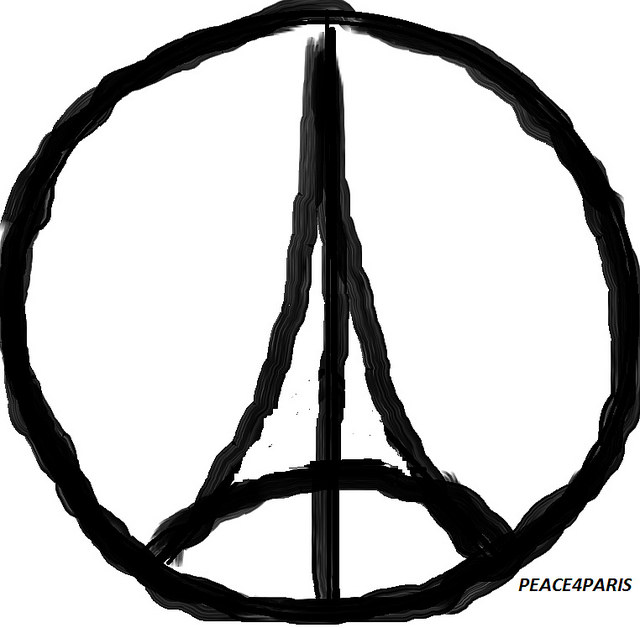
The Islamic State (ISIS, or Daesh in Arabic) either is using a good public relations firm or has its own agents to choose telling symbols and timing for its actions. Within a short time period, the terrorist teams have destroyed a Russian plane with tourists returning from Egypt, badly damaged a Hezbollah center in Lebanon, and attacked symbolic sites in Paris on a Friday the 13th.
Three symbolic sites in Paris were chosen by a well-coordinated team of some 12 active agents and an unknown number of “helpers.” Eight of the ISIS men had explosive belts and were prepared to die to make their motives clear.
The first attack was at the Stade de France, the main sports stadium on the edge of Paris. French President Francois Hollande and his guests joined some 80,000 spectators to watch a football (soccer) match between the national French and German teams. A half hour after the match started, three ISIS agents blew themselves up just outside the stadium. They killed themselves and one person who was passing by.
Had they wanted to kill more people, they could have used their explosives an hour earlier when the street was full of spectators lined up to enter the stadium. But the symbolic strength of the action is that no one noticed the explosions and the football match went on normally. The French President had security agents with him who were informed of events, and he left at half-time. The symbol, however, is clear and goes back to the decline of the Roman Empire. As the Empire declines and will soon be replaced, the Emperors provide the people with bread and circuses to keep them happy. Thus, while the war is on, the French emperor watches a football match.
The second symbolic attack was in a heavily populated part of Paris. The French equivalent of a “Thank God It’s Friday” drink is a whole meal with friends or co-workers at a restaurant. This past Friday was particularly warm for the season, and a good number of people were eating outside at sidewalk tables. At least four ISIS agents in two rented black cars drove down a restaurant-heavy street shooting from the car. People at an Asian and an Italian restaurant in particular were killed or wounded, but shots were fired at other restaurants and cafés along the street.
Again, the message is clear. “A war is on, people are hungry, and you are sitting around eating and drinking –a sign of your decadence.” Since the French government began its air attacks on ISIS in Iraq, ISIS websites have been calling Paris “the capital of prostitution and obscenity.”
The third attack, carried out at about the same time as the others, was on a popular music concert hall, the Bataclan. Though there is music in the Islamic world, for reasons I do not understand the Taliban and ISIS consider music forbidden. The concert at the Bataclan on Friday was sold out; some 1,500 persons had come to hear a California Rock group appropriately named Eagles of Death Metal.
Halfway through the concert, three ISIS agents moved into the music pit below the stage and started shooting, saying that the audience were hostages. The section of the French police trained to deal with hostage taking quickly got into phone contact with the ISIS argents. The police became convinced that negotiations were not possible and started to move in. Two of the ISIS group used their explosive belts, killing themselves and others. The third ISIS member was shot by the police.
The French government’s reaction was swift. President Hollande had gone directly from the sports stadium to the Ministry of the Interior, which is responsible for police and security forces. Hollande quickly made a televised statement saying that the attacks were “an act of war that was committed by a terrorist army, a jihadist army, Daesh.” A State of Emergency has been proclaimed, and police and the military have been placed on alert.
Since the possibility of terrorism has been on the political agenda for some time, there was already an alert status. The State of Emergency is unlikely to change much, but it gives the police some additional powers to close off sensitive areas, to re-establish controls at the frontiers and to move the military from their home base toward Paris.
There are three longer-term challenges where choices must be made, choices made more complex by the attacks:
1) COP21
The French government host decided to hold the Paris climate summit popularly called COP 21 as planned. Most of the foreign government leaders planning to attend will probably still do so, but security considerations are likely to play a large role in practice. In addition to government leaders, many NGO representatives were planning to be in Paris for parallel conferences. There is also a “Climate Pilgrimage” underway with a large number of people on foot or on bikes planning to come to Paris during COP21. Security considerations would have been important in any case, but now they are likely to be more visible.
2) Regional elections December 6 and 13
The government said France’s elections for regional parliaments would be maintained while hoping that campaigns will not lessen the spirit of national unity manifested after the attacks.
In France, most elections are in two segments: a first segment in which several political parties are present and a final round with only two or three parties who have obtained a set percentage of the vote. These December elections are particularly complex as the number of regions has been reduced and re-designed. People will be voting for the first time in these new regions, and many of the political figures running are new. Additionally, the far-right National Front Party is gaining strength, stressing unemployment and the increased danger from “foreigners,” especially Muslims. The Paris attacks may increase the National Front vote.
3) Syria and Iraq
The Paris attacks have increased public awareness of the conflicts in the wider Middle East and their possible impact on the domestic scene. The attacks build on awareness due to massive refugee flows to Europe since July. The responses of the European governments have been very divided. At the popular level, all sorts of fears have been expressed. NGOs dealing with refugees have not been able to cope with the large number of persons coming in a short time period. Obviously there needs to be a reduction in armed violence, hopefully a cease-fire and good faith negotiations in the Syria-Iraq conflict, in Yemen, in Libya, in Lebanon, and Israel-Palestine. The Paris attacks have the merit of highlighting in a cruel light the challenges faced by governments and those of us who are in non-governmental conflict resolution efforts.
by Sarah Del Vecchio | Nov 11, 2015 | Global Justice, Human Rights
While the debate about parental leave rages on within the US, Amnesty International released an upsetting report last week that revealed blatant discrimination against pregnant girls in Sierra Leone. The report states: “Visibly pregnant girls in Sierra Leone are banned from attending mainstream school and taking exams. This prohibition was declared as official government policy by the Ministry of Education, Science and Technology in April 2015, just before schools re-opened following the Ebola crisis.”
The ban is one more obstacle in the way of educating girls in developing countries. Amnesty notes that:
The ban on pregnant girls attending mainstream schools is being enforced, in some cases, through humiliating and degrading treatment of girls…. For example, girls have, publically, had their breasts and stomachs felt by adults on school premises to see if they are pregnant. Some girls have been compelled, by their schools, to take urine tests. Girls described acute embarrassment and fear at being subjected to this treatment when they tried to attend school or sit exams. Fear of being ‘tested’ for pregnancy and or turned away from school has meant some girls who are pregnant, stay away.
Clearly, the policy does more than deprive girls of an education. It degrades and shames those who are pregnant, particularly the girls who have been raped and sexually exploited. Girls who are not pregnant would undoubtedly be intimidated by the physical exams as well. This type of harassment prevents girls from receiving a complete education, and thus prevents them from achieving their full potential.
The ban has long-term consequences as well. The World Bank reports that women already face a “motherhood penalty” in the workplace: “One study of panel data across 97 countries estimated that, on average, a birth reduces a woman’s labor supply by almost two years during her reproductive years.” By denying pregnant women an education, their earning potential will decrease even further. As previously reported, women’s participation in the labor force is essential to a healthy economy.
Denying pregnant girls a proper education provides no social or economic benefit to Sierra Leone. It perpetuates harmful gender stereotypes and potentially eliminates a powerful segment of the future workforce.