by Julia Bunting | Dec 12, 2011 | Climate Justice, Global Cooperation
Negotiators in Durban, South Africa extended their annual conference on climate change 24 hours beyond the expected close of debate in an effort to find a last minute deal on carbon emissions. Discussions appeared to pay off as representatives from almost 200 countries announced a last-minute compromise yesterday morning. While not yet proposing any legally-binding targets to reduce carbon emissions, the Durban Platform lays out a plan to reach such an agreement by 2015.
The agreement also fleshed out several details from the unfinished talks in Cancun last year. Among these were rules for establishing a global climate fund, a strategy for combating deforestation, the structure of an international network of technology centers, and the guidelines for a system to increase transparency in tracking the carbon-emitting activities of nations.
The bigger challenge centered on the agreement to seek a deal for universal emission cutting within the next four years. However, many environmental researchers and advocates warn that this deal may not yield significant results. The language is broad and vague, not specifying if developing and developed nations will have to agree to the same cuts to emissions. It is likely that nations such as China and India will have very different ideas about what will be acceptable targets than the European Union and other Western nations. Effectively, the Durban Platform pushed off an agreement on this issue, long the biggest sticking point in the climate change debates, for four more years. Others also worry that by the time an agreement will have to take effect, 2020, global greenhouse gas emissions will be far beyond sustainable levels.
The progress made on the global Green Climate Fund and the creation of technology centers, which will aid developing nations and support their pursuit of sustainable development, is an encouraging outcome of the talks in Durban. However, much of the hardest work remains. Global leaders need to get serious on agreements to cut emissions, before irreparable damage to the ozone layer is done. Rather than dragging their heels, American politicians should be leading the way by agreeing to curb our own carbon emissions and investing more in green technology. We cannot continue to postpone progress on climate change for one more day, let alone four more years.
by Julia Strasser | Dec 9, 2011 | Global Cooperation, Human Rights
Yesterday Citizens for Global Solutions joined human rights advocates from all over D.C. and the world for the 2011 Annual Human Rights Luncheon hosted by the United Nations Association of the National Capitol Area. Held in the beautiful Cannon House Caucus Room, the event was an inspiring reminder of what true dedication to a cause can produce – just in time for International Human Rights day this Saturday!
The luncheon was in honor of many long-time human rights advocates. The event paid tribute to Richard Griffs, an extremely active UNA-NCA member and the Chair of the Human Rights Committee, who sadly passed away earlier this week. He was the “force behind the Annual Human Rights Luncheon,” and it was clear that he will be sorely missed both at the UNA-NCA and in the field of human rights.
Thomas Buergenthal, former Judge at both the International Court of Justice in The Hague and the Inter-American Court of Human Rights as well as Professor of Law at George Washington University School of Law, was honored for receiving the Louis B. Sohn Human Rights Award. He spoke of his personal experiences and relationship with Louis B. Sohn which was what made this day so special to him. Thomas met Louis in 1960 at Harvard Law School where he was working on his LL.M. degree, and “thus began a student-teacher relationship and friendship that lasted until his {Louis’s} death in 2004.”
Zainab Salbi, Founder of Women for Women International, was also honored with the Perdita Huston Human Rights Award. She spoke of what an exciting time this is in human rights, especially for women. She recognized the three women who were recently awarded the Nobel Peace Prize; Ellen Johnson Sirleaf of Liberia (the first woman to be elected president in modern Africa), the peace activist Leymah Gbowee and Tawakkol Karman of Yemen, a pro-democracy campaigner. But she was clear in her mission that there need to be more women present in peace negotiations and decision-making. She also spoke of the value of listening to people who actually live in conflict-torn places. “Our degrees can’t give us solutions,” she said. They can give us historical perspective, but it is people who live “in the context,” of what is happening who will create workable solutions.
There were also a number of Community Human Rights Awards given to individuals nominated by various organizations. Citizens for Global Solutions was proud to recognize long-time friend and human rights activist Annette Lantos for her decades of work along with her late husband Congressmen Tom Lantos, with the Tom Lantos Human Rights Comission, the Lantos Foundation for Human Rights and Justice, and so much more.
All in all it was an incredibly meaningful afternoon. Having so many determined leaders in one room makes it impossible to not be hopeful for more human rights advances in the future. As I celebrate this Saturday I know I will take inspiration from the experience, and the amazing work of so many individuals and organizations. I hope you do too! Thanks to the UNA-NCA for a great day.
by Julia Bunting | Dec 6, 2011 | Global Cooperation, Human Rights, News
U.S. Secretary of State Hillary Clinton gave a speech today in Geneva in honor of the upcoming International Human Rights Day. Secretary Clinton’s speech focused on promoting Lesbian, Gay, Bisexual, and Transgender rights worldwide. The statement marks the first time a U.S. official has pushed for gay rights abroad.
Secretary Clinton said, “Some have suggested that gay rights and human rights are separate and distinct; but, in fact, they are one and the same. Now, of course, 60 years ago, the governments that drafted and passed the Universal Declaration of Human Rights were not thinking about how it applied to the LGBT community. They also weren’t thinking about how it applied to indigenous people or children or people with disabilities or other marginalized groups. Yet in the past 60 years, we have come to recognize that members of these groups are entitled to the full measure of dignity and rights, because, like all people, they share a common humanity.”
Secretary Clinton also said that ensuring protection of gay rights is a crucial component of U.S. foreign policy. Her statement comes the same day as a Presidential Memorandum on respecting gay rights, at home and abroad. She also announced the creation of a Global Equality Fund to support civil society organizations that promote this issue worldwide.
You can visit the State Department’s website to read the full text of Secretary Clinton’s remarks. International Human Rights Day will be observed this Saturday, December 10, 2011.
by Julia Bunting | Dec 5, 2011 | Climate Justice, Global Cooperation
As climate change talks in Durban, South Africa head into their second week, hope increased for the passing of a universal, legally-binding agreement to cut greenhouse gases. China’s representative Xie Zhenhua made a statement this morning, laying out their criteria for accepting an agreement. These conditions include a new round of Kyoto targets for cutting emissions in developed nations and advances on climate aid and low-carbon technology sharing.
This statement renewed optimism that a substantial deal could be met during the talks in the Durban. The discussions are being held amongst the members of the U.N. Framework on Climate Change (UNFCCC) in their 17th annual conference. World leaders are meeting to discuss reducing carbon emissions and the disbursement of funds from industrialized nations to developing countries to invest in greener technologies.
The United States has been one of the firmest roadblocks to any serious new agreement on climate change. It is one of the few nations to not have signed the UNFCCC’s Kyoto Protocol, which would have set legally binding targets for emission reduction. And it is also the most resistant to establishing a new treaty to replace the Kyoto Protocol when it expires next year.
Kumi Naidoo, Executive Director of Greenpeace, said that the U.S. is trying to push any commitment on emission reduction beyond 2020 and is trying to halt talks. “If the U.S. cannot see the way forward, we’re going to be calling on them to step out of the way and let the rest of the world move forward,” he said.
While the U.S. deserves shame for its resistance to climate talks, China and other nations calling for a deal do not yet deserve praise. It is yet to be seen whether China would agree to a deal calling for significant reductions in their own emissions. Until now, China has resisted efforts to curb emissions while it still develops as a nation. While it is true that China is still industrializing, they surpass even the U.S. in greenhouse gas emissions.
The European Union has proposed a compromise that would put off establishing a new, legally-binding treaty until the future but would have member nations set a deadline for establishing such an agreement by 2015. The short-term focus for the rest of the talks in Durban would then be on increasing transparency in climate talks and agreeing to logistics for disbursing the Green Climate Fund, funds that industrialized nations have agreed to pay to developing nations to offset their costs of curbing emissions.
The EU’s plan seems like a reasonable compromise between nations like China and the U.S. However, this is absolutely one issue that we cannot keep pushing off to be settled by the next round of negotiators or future generations. Climate change is a global issue on which America has long been lacking, shunning our traditional leadership role in the international community.
It is hypocritical of the United States to accuse other nations of acting in their own economic interests on other issues related to human rights, genocide prevention, and nuclear non-proliferation when we do the exact same thing on climate change. The U.S. cannot bemoan our weakening power in the world if we refuse to step up and lead on one of the most pressing issues facing the global community.
by Julia Bunting | Nov 16, 2011 | Global Cooperation, United Nations
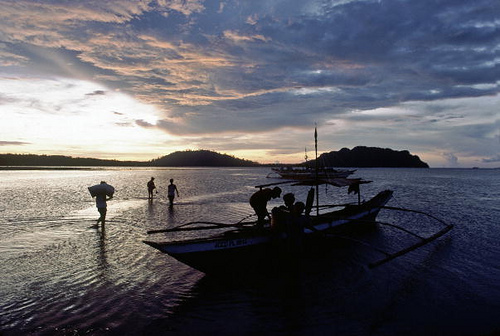
Secretary of State Hillary Clinton made a statement earlier today calling for disputes between China and the Philippines over resources in the South China Sea to be resolved according to the U.N. Convention on the Law of the Sea (UNCLOS). The statement supports Philippine claims that they have the right to explore oil resources within 370 kilometers of their shore. Philippine officials allege Chinese naval vessels have interfered with such exploration, as Beijing asserts that they have historical rights to virtually all of the South China Sea. While the U.S. does not formally take sides in the competing claims of the two nations over the oil and mineral rich body of water, Clinton affirmed that no nation should be able to force its will through coercion or intimidation.
The administration’s position is a strong endorsement of the international treaty, despite the fact that the Senate has yet to ratify the convention. It comes at a politically opportune time, as Senate leaders are considering new efforts to ratify UNCLOS. Access to the South China Sea is one of the strongest examples of the importance of the treaty, as one-third of the world’s shipping travels through its waters, with huge oil and gas reserves under its seabed. China’s attempts to unfairly dominate the South China Sea violate UNCLOS and should push the U.S. to get serious about ratifying the treaty.
Don Kraus, CGS’s Chief Executive Officer, said, “The stakes are higher than ever for the U.S. to ratify UNCLOS.” UNCLOS sets the rules for the world’s oceans, defines maritime zones, protects the environment, preserves freedom of navigation, and establishes guidelines for businesses that depend on the sea for jobs and resources. Kraus added, “[U.S.] absence from the convention handicaps our ability to exploit (or conserve) precious marine resources and protect our investments.”
Secretary Clinton and Philippine Foreign Minister Albert Del Rosario also signed a declaration reaffirming a 60-year old mutual defense treaty between their two nations. In her remarks, Clinton stressed that the bilateral agreement is about more than just mutual defense, as it also focuses on maritime security and highlights the mutual interest in maintaining freedom of navigation across the seas. Indeed, ratifying UNCLOS would promote these security and navigation interests on a global scale.
UNCLOS came into effect in 1994, and to date, 158 countries and the European Union have ratified the treaty. The treaty protects vital environmental, economic, and security concerns of coastal states and is of vital importance to American interests. The time is now for the Senate to do what is right for our nation and for the world.
by Don Kraus | Nov 8, 2011 | Global Cooperation, United Nations
Here’s a few excerpts from my latest blog at Care 2 entitled, “United States’ UN-Wise UNESCO Policy,” which discusses two U.S. laws that halt contributions to U.N. agencies that accept Palestinian membership. These laws forced the United States to stop funding the United Nations Education, Science, and Cultural Organization last week when the organization’s members voted to accept Palestinian membership.
“The big question to answer is who benefits and loses from maintaining this policy. The biggest winners are people who use the Middle East conflict as a platform to spew anti-U.N. views and promote an isolationist agenda for the United States. The biggest loser isn’t the Palestinians or Israelis, or even the U.N. It’s the United States.”
“UNESCO promotes freedom of expression, one of America’s core values. It advocates for freedom of the press and the promotion of an independent media around the globe. It manages a tsunami warning system in the Pacific, which warned Californians of possible aftershocks from Japan’s earthquake last March. The organization assists the United States in its transitions out of Iraq and Afghanistan, by preparing communities and governments for the withdrawal of U.S. forces.
American jobs have been saved and grown by UNESCO’s efforts to connect U.S. companies like Cisco, Apple, Microsoft, and Proctor & Gamble to emerging tech markets in developing countries.”
Sign our petition to get President Obama to ask Congress for a wavier authority to these laws that unfairly force the United States to disengage from U.N. agencies over their acceptance of Palestinian membership.
Click here to read the blog piece in full.