by Rene Wadlow | Dec 5, 2015 | Climate Justice, Global Cooperation
Founded on the values of solidarity and mutual trust, volunteerism transcends all cultural, linguistic and geographic boundaries. By giving their time and skills without expectations of material reward, volunteers themselves are uplifted by a singular sense of purpose. –UN Secretary-General Ban Ki-moon
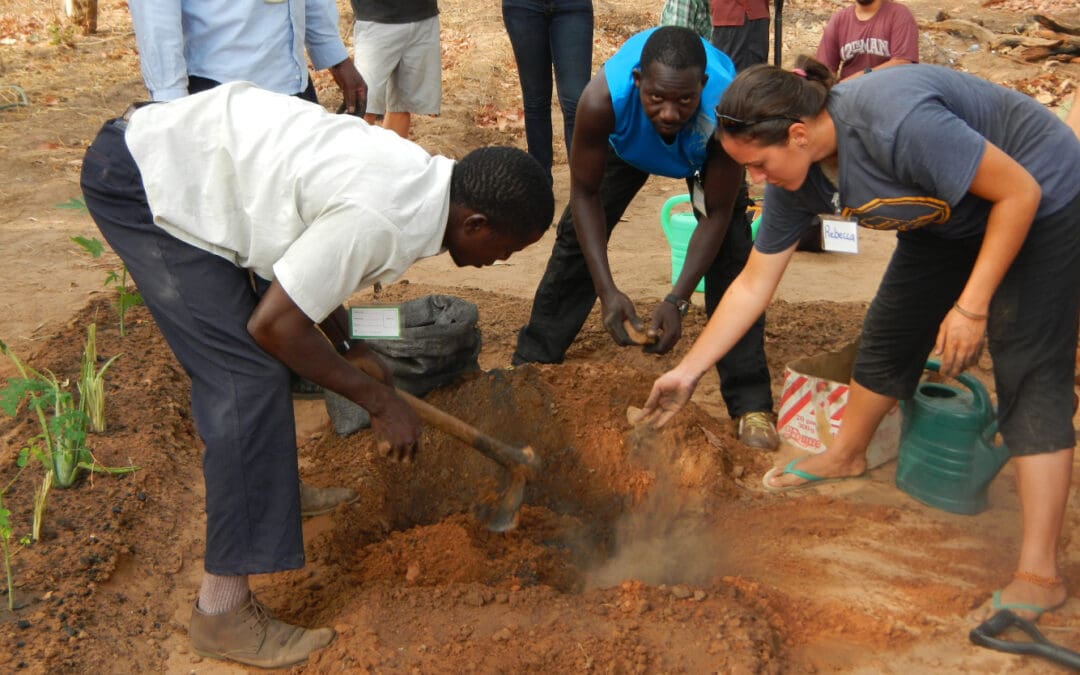
December 5 has been selected as the International Volunteer Day by a 1985 UN General Assembly resolution. This year, Volunteer Day comes as government representatives and NGO volunteers are meeting in Paris to develop a new international climate agreement at COP 21. The NGO representatives are fewer in number than originally planned due to the recent Paris attacks and consequent tightened security. However, those that are present are doubly active as world media attention focuses on the conference and its outcome.
As with all major UN conferences, negotiations among governments have been going on for two years with a good deal of input from NGO representatives. At the Paris stage, there is a preliminary “Final Document and Action Plan” of some 30 pages with a good number of square brackets around words or sentences on which there is no agreement. Negotiations concern making the document shorter so that the main ideas will stand out better and to remove square brackets. If a suitable word is not found, often the whole sentence will be dropped.
Both government representatives and NGOs are discussing post-Paris action and coalition building. There is also a concerted effort to bring the business community, especially transnational corporations, into the action. While the UN system has a structure of consultative status for NGOs through the Economic and Social Council, the world of business largely is not represented. Only the International Labour Organization with its headquarters in Geneva has a three-party membership: governments, trade unions and business associations from each of the member States. The business world is not really a “voluntary association” in the sense of NGOs. Material reward is an important element in business.
COP 21 is a prime example of the need for cooperative action at the local, national and world level. As has been often said, the climate does not recognize national borders. The relations among ecologically sound development, security, conflict resolution and respect for human rights have now assumed a more dynamic form than at any other time since the creation of the United Nations in 1945. To meet these strong challenges, NGOs, academic institutions, business and professional associations and the media must work together cooperatively. International Volunteer Day can serve as a time of reflection on capacity building and improved networking.
by Rene Wadlow | Dec 4, 2015 | Climate Justice, Global Cooperation
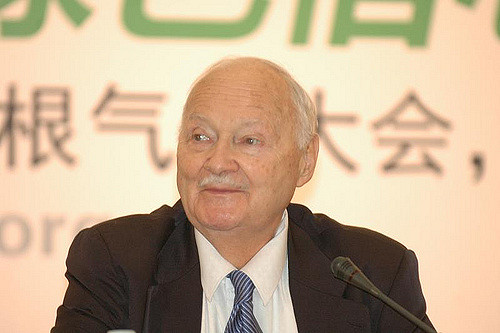
Just on the eve of the Paris Climate Conference (COP 21) and the coming discussions on climate change and a sustainable world society, Maurice Strong died (November 29, 2015).
More than any other person in the UN system, Strong had been the driving force to put environmental action on the “world agenda” for both governments and NGOs. For Strong, to protect the earth’s environment, its biodiversity and life support system was a cause for cooperative action to transform society—a cause for which government and business leaders could rise above their disagreements and act together to protect the planet.
Before a topic becomes the focus of the world agenda, there is a good deal of intellectual preparation needed, and it usually begins outside of governments. Kenneth Boulding, a Quaker, economist, and peace researcher started writing what is now called “ecological economics.” Boulding helped develop the concept of “Spaceship Earth,” stressing the need to modify education in light of ecological realities. He wrote,
…the principal task of education in this day is to convey from one generation to the next a rich image of the total earth, that is, the idea of the earth as a total system…What formal education has to do is to produce people who are fit to be inhabitants of the planet.
This has become an urgent necessity because for the first time in human history, we have reached the boundaries of our planet and found that it is a small one at that. This generation of young people has to be prepared to live in a very small and crowded spaceship. Otherwise they are going to get a terrible shock when they grow up and discover that we have taught them how to live in a world long gone.
The first step to having an impact on the UN conference was to draft a statement setting out in broad terms the challenges faced and some of the steps to be taken. The statement had to be drafted and signed by individuals who had some expertise in ecology, which was then a relatively new field.
Six environmental scientists were gathered in 1970 by Dai Dongat Menton, France, a summer resort. The Menton text is called “A Message to our 3.5 billion neighbors on Planet Earth.” Although we have now seven billion neighbors, the document is still worth reading. It was published in the UNESCO periodical Courier and co-signed by over two thousand biologists and others whose name carried weight on the issues such as Thor Heyerdahl and Margaret Mead.
Dai Dongrepresentatives met a year later with UN Secretary-General U Thant, a Burmese Buddhist sensitive to the same vision of a delicate equilibrium between humans and nature.
The UN Secretariat started its efforts for the Stockholm conference in Geneva in the Palais Wilson, the original League of Nations headquarters just across the street from my office in the Graduate Institute of Development Studies. I often talked with the UN staff who would eat in our building (since we had a cafeteria and they did not). Maurice Strong was the head of the preparatory secretariat and became the Secretary-General of the Conference itself.
Strong was a Canadian who made a great deal of money dealing with oil fields in Canada, and spent the rest of his life in lower-paid UN-related activities. Strong was an intense, self-motivated person and the people who worked with him were driven by the same energy. There are, no doubt, people who did not appreciate Strong, but they faded from the scene, and those who were left with him would not be surprised to see Strong walking across Lake Geneva.
Since Strong came from the business world and not from the regular governmental diplomatic service, he had the necessary respect for government representatives, but not much more. Rather, he had a high regard for “the people” — at least those organized in non-governmental organizations and willing to try out new ideas and methods. In Geneva, there was a group of us—UN Secretariat, university teachers and NGO representatives—united by the desire to place ecological issues at the center of the world agenda, despite a rather timid response from national governments.
It was natural for Strong and his team to reach out to Alfred Hassler and the Dai Dong effort. Thus began what has become an institution with UN conferences: a parallel conference held a few days earlier in the same city with representatives of NGOs—now called “civil society”—who write a statement of what governments should say if they had the intelligence and courage of NGOs. Now the NGOs work on their statement and alternative plan of action for many months in advance.
In 1972, however, the process had not yet been established, and Hassler and Dai Dong organized a first parallel conference of 31 people in Stockholm. Dai Donghad already prepared the statement and, as is often the case in such efforts, people unrelated to the original drafting process can object to certain paragraphs but can rarely propose new ideas. Thus at the Dai Dong–sponsored independent conference, conflicts predictably arose over population issues.
At all international meetings going back to the League of Nations debates, when population questions are mentioned, there are those who suspect family planning as being a way to limit the number of the poor (usually seen as being of a different color or ethnicity than the rest) or as a way of promoting teen sex. Ten of the 31 attending the Dai Dongconference wanted to take some distance from the short paragraph on population without presenting any alternative to unrestrained population growth.
Once the Dai Dongstatement was written, Alfred Hassler read the text to the governments assembled in the UN conference. In many ways, the Dai Dong“Independent Declaration on the Environment” is well worth the text of the governments—largely drafted by the UN Secretariat, since expertise among government representatives was generally low.
The 1972 Stockholm Conference led to the creation within many governments of a “Ministry of Ecology” or a sub-section of an existing ministry. The United Nations created the UN Environment Programme (UNEP), of which Maurice Strong was the first Director.
Basically, Dai Dong’swork finished with the 1972 Stockholm conference. Ecology with a focus on broad poverty reduction, social justice, and harmony with nature was on the world agenda.
After his retirement from UNEP, Strong continued to be a strong voice for ecological action. He was asked by the UN to be Secretary-General of the Rio Conference of 1992, often called the “Earth Summit,” which started to popularize the idea of sustainable development. Maurice Strong is in many ways the model of the world citizen, deeply rooted in his Canadian experience and open to the world, an active agent at the world level for ecologically sound development.
by Citizens for Global Solutions | Dec 2, 2015 | Global Cooperation, Peace & Disarmament
This article was originally published for BogglingFacts. It has been cross-posted with the permission of author Reagan M.
On August 6, 1945, the world changed forever. After an American bomber unleashed the world’s first glimpse of an atomic bomb, countries scrambled to get their hands on the technology to ensure their safety. The power of nuclear weapons is almost unfathomable, and if nuclear war was to ever break out, it would likely spell the end of the world. Luckily, it’s this fact, among others, that has kept war from breaking out thus far. Read on for 10 more horrifying facts about nuclear weapons.
10. A large-scale nuclear war would put 150 million tons of smoke into Earth’s atmosphere, creating a nuclear winter chillier than the Ice Age.
9. On average, regular sized nuclear weapons that detonate over a city would burn away around 40 to 65 square miles in the blink of an eye.
8. The United States’ largest nuclear bomb has the combined detonation power of 200 million pounds of high explosives.
7. The most powerful nuclear weapon ever detonated was the Tsar Bomba, a Russian bomb with a cumulative power of over 50 megatons of TNT.
6. The U.S. and Russia each have thousands of nuclear warheads on high alert, a term used to describe the readiness of said missiles for launching. In this case, it would be mere minutes.
5. Eight Countries, including the United States, Russia, United Kingdom, France, China, India, Pakistan, and North Korea are declared nuclear states, with an additional three suspected countries that remain undeclared.
4. The United States conducted over a thousand nuclear tests between 1945 and 1992, with a primary health consequence of increased radiation exposure leading to cancer. It’s estimated some 6,000 people will die from thyroid cancer as a result.
3. The combined explosions of Hiroshima and Nagasaki killed an estimated 120,000 people, forcing the immediate surrender of Emperor Hirohito in World War 2.
2. Since 1951, the United States has gone on to produce 67,500 nuclear missiles.
1. The aftermath of nuclear explosions are just as deadly and far-reaching; radioactive fallout from the Chernobyl nuclear plant reached as far as Wales and Scotland.
+ Bonus Knowledge Nuggets
Perhaps the most sobering thought in regards to the effects of nuclear detonations is the consideration of what remained of the victims of Hiroshima and Nagasaki. When the dust, fire, and smoke finally cleared, all that remained of the Japanese people were the shadows scorched into stone. Nuclear detonation is so extreme it instantly incinerates the human body.
by Citizens for Global Solutions | Dec 1, 2015 | Climate Justice, Global Cooperation
This article was originally published for the NRDC. It has been cross-posted with the permission of author Jake Schmidt.
World leaders are meeting in Paris to finalize an international climate change agreement that will require deeper emissions reduction commitments from all countries. If all goes well, all major countries will enshrine their new climate commitments in this agreement. The agreement will contain provisions to hold countries accountable to their commitments and mobilize greater investments to assist developing countries in building low-carbon, climate-resilient economies. And encouragingly, businesses, investors, states, provinces, cities, financial institutions, and others are already pledging actions to help governments implement the agreement and even exceed their commitments.
While the Paris agreement won’t “solve” climate change, it can be a critical inflection point. It brings us much closer to a safer climate trajectory and highlights the path forward after Paris.
So what needs to be addressed in the Paris agreement if we are to build stronger international climate action that mobilizes action now and spurs even greater action in the years to come?
These key elements are outlined in the NRDC’s new “issue brief.”
New emissions reduction targets for the Post-2020 timeframe by key countries
In the lead-up to Paris, more than 170 countries responsible for over 90 percent of the world’s climate pollution have announced specific reduction plans. These include actions from all major countries, including the US, Europe, China, India, Brazil, Mexico, and South Korea. The Paris agreement will need to enshrine commitments from all major countries to reduce their emissions for the period after 2020 based upon these proposed targets by setting these as the floor and creating a requirement that countries adopt more aggressive commitments for subsequent five year periods (e.g., from 2025-2030 and then 2030-2035).
Tools to catalyze more aggressive action over time
The agreement will need to strengthen future action by creating systems for countries to upgrade their targets since the best estimates show that these targets don’t yet put us on the necessary safe climate trajectory. As a result, a critical outcome of the Paris agreement is a solid process for reassessing and deepening emissions reduction commitments every five years. This process will need to begin no later than 2020 so that countries can reevaluate their efforts and commit to do more well before 2030. We need another political moment well before 2030 so that countries can detail stepped-up efforts. After all, further clean energy cost reductions, confidence that policies are producing larger than expected emissions reductions, and other factors will inevitably prove to leaders that they can do more before 2030 than they are prepared to detail in 2015. This won’t need to be an intrusive process, but will provide countries an opportunity to show that they are prepared to be even more of a leader on climate change by strengthening their national climate targets.
Financial support to assist developing countries
Countries have already agreed to help mobilize $100 billion by 2020 through public and private financing to assist developing countries in reducing emissions and adapting to climate change. We know that more resources will need to be mobilized after 2020 since we will be headed towards even deeper emissions reductions in subsequent years and the needs for climate resilience will grow more acute. For this reason the Paris agreement will need to send a clear signal that countries will help mobilize even greater financial support to assist the poorest countries in building low-carbon and climate resilient economies. These investments can help spur an even larger clean energy economy around the world, unleash additional emission reduction efforts, and help countries address the devastating impacts of climate change that will set back the well-being of their citizens.
Strengthened transparency and accountability frameworks
The Copenhagen/Cancun agreements built essentially a three-part system for transparency and accountability by:
(1) requiring that countries regularly report their emissions, climate actions, and trajectory towards their targets;
(2) conducting an independent expert review of those country reports; and
(3) evaluating country progress through an international public review.
This system of transparency and accountability will need to be modified and strengthened to help hold governments accountable to their commitments as we build a durable agreement.
Spurring more than countries to take climate action
The Paris conference will add to the growing groundswell of climate actions in an effort to broaden the engagement of other leaders. Governors, mayors, corporations, civil society, financial institutions, and leaders of all stripes will pledge individual and collective actions that can help address climate change now. This groundswell of climate actions will form a key pillar of the Paris agreement and must be a critical part of an “all hands on deck” effort to address climate change in the coming decades. Countries will need to help ensure that these kinds of actions continue after Paris.
Creating a path to even greater action in the years to come
The Paris Agreement won’t “solve” climate change, but it puts us much closer to a safer trajectory and highlights the path forward. Before the Copenhagen Accord in 2009, we were potentially headed for an increase in global average temperatures of 5°C (9°F) above pre-industrial levels by 2100. Today, the meaningful commitments submitted in advance of the Paris climate summit show us that we are on a path to a 2.7° C (4.9°F) temperature rise by the end of the century, closer to the 2°C (3.6°F) goal. As a result, countries will need to set in motion a set of systems both in the agreement and in the accompanying outcomes to encourage even greater actions by countries, companies, cities, states/provinces, and financial institutions. This will need to include the mechanisms to strengthen ambition over time contained in the agreement and arrangements to help the groundswell deliver significant emissions cuts.
————————–
All of this has a solid foundation to build upon as countries have realized that it is in their own interest to cut their carbon pollution. They have concluded that, far from destroying the economy, domestic climate action produces real benefits for their citizens, including new jobs, reduced poverty, and lower mortality rates. And as natural disasters increase in frequency and intensity, they have seen that not addressing climate change has real and lasting consequences. Countries will have to leave Paris and roll-up their sleeves by delivering additional domestic climate actions and laying the groundwork for even more action.
If we get the right pieces in the Paris outcome, we can build a durable agreement to deliver even greater action in the years to come. After all, the first step is often the hardest. It won’t be easy, but citizens are demanding climate action so leaders must rise to the challenge.
by Shirley Davis | Nov 10, 2015 | Global Cooperation, World Federation
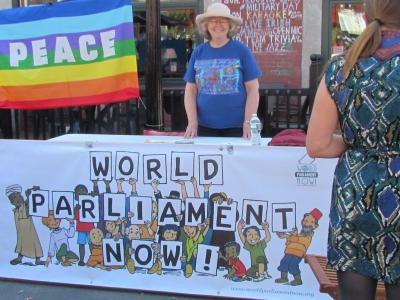
The United Nations is an organization of states, not of persons—even though that’s what the UN Charter promises. The UN is far from democratic. Yet it makes decisions that greatly affect citizens of the 193 member nations. Our representatives at the UN are sent there by the ruling party in each country. They do not represent all of the people. Many believe that there should be more opportunity for the world’s people to have a say in the decisions being made.
One method that has been proposed as a step in the direction of more democratic global governance is a World Parliamentary Assembly (WPA) or UN Parliamentary Assembly (UNPA). Former Secretary-General Boutros Boutros-Ghali is among the supporters of this idea. Creating a UNPA will be difficult, of course. Many problems would need to be overcome, but the barriers are not insurmountable.
According to Joseph Schwartzberg’s Transforming the United Nations System: Designs for a Workable World, this development could occur through three stages of evolution:
- A WPA with only advisory power and representatives appointed or elected by their respective governments;
- A popularly elected body with gradually increasing legislative competence (exercised in conjunction with the General Assembly);
- Well into the future, a maximally democratic system in which national borders are often ignored and the number of constituents per representative is relatively similar everywhere.
I highly recommend this book to anyone interested in Foreign Affairs.
In June, the United Nations Association of Sweden (UNA-Sweden) decided to “express support for the proposal that a democratic UN Parliament should be established and gradually developed.”
The Campaign for the Establishment of a United Nations Parliamentary Assembly (UNPA) is a global network of parliamentarians and non-governmental organizations advocating citizen representation at the UN. The Campaign’s statements are supported by individuals from 156 countries, among them 755 members of parliament, and 394 NGOs from all around the world.
by Citizens for Global Solutions | Nov 1, 2015 | Global Cooperation, News, World Federation
The Boards of Citzens for Global Solutions, Inc. and the CGS Education Fund have announced the appointment of Earl James as Executive Director. He will take up the role effective immediately and will be responsible for implementing the organization’s new five-year strategic plan.
The Board is pleased to appoint Earl James as our Executive Director! As a long time board member, advocate, and staffer, Earl brings experience and passion to our organization. We look forward to working with him to build a strong constituency for world peace and effective global governance.
–Victor Lang, Chairman of the Board (CGS Education Fund)
Earl James has worked for social change in the nonprofit sector for over 40 years, including a previous stint as Development Director for CGS (1994-95), where he was instrumental in establishing and funding a staff position to build a US-based coalition for an International Criminal Court, and in increasing membership in CGS by 40%.
He has also served as an International Election Supervisor in post-war Bosnia-Herzegovina, as Executive Director of CGS’s Pittsburgh Chapter, for the Rachel Carson Homestead Association (PA), and for the National Trust for Historic Preservation.
As Director of Preservation Services for the Pittsburgh History and Landmarks Foundation, he launched Rivers of Steel, a National Industrial Heritage Area, and as Director of Programs and Development for the New Mexico Environmental Law Center he organized statewide coalitions working on environmental health issues, and on cleanup and prevention of mining pollution.
He has conducted grassroots political organizing for Citizens for Global Solutions’ electioneering arm in Eastern Kentucky, Long Island and Washington State, and has helped numerous grassroots advocacy organizations become more effective by offering organizational development support. An award-winning novelist and screenwriter, he lives in Santa Fe, New Mexico with his wife Karen.
As the new Executive Director, Earl writes,
I believe we are taking a path forward that is ripe with more potential to advance our goal of achieving a democratically governed world than ever before. The convergence of two powerful developments has established these new opportunities:
First, in June of 2015, The Hague Institute’s Commission on Global Security, Justice and Governance issued a report titled Confronting the Crisis of Global Governance that clearly delineates deficiencies in the structure and resources of the UN that could be corrected within five years with adequate global grassroots support. Among these are establishment of a rapid response emergency peacekeeping force and a UN Parliamentary Network.
Secondly, CGS staff and boards have devoted a great deal of attention and energy in the last few months to assessing our own strengths. We have greatly refocused our programming to include helping the Commission plan a 2020 World Conference on Global Institutions that will provide a platform and opportunity for many of UN reform recommendations to be enacted. This is an opportunity not to be missed!
More about all of this is to come, so stay tuned! Thank you for your interest in a democratically governed world and in Citizens for Global Solutions.