by Scott Paul | Nov 27, 2007 | Climate Justice, Global Cooperation

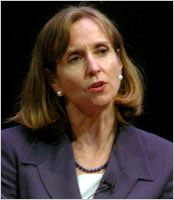
(Under Secretary of State Paula Dobriansky will lead the U.S. delegation to the UN climate change conference next month in Bali. White House Environment Czar James Connoughton will also be there for the high-level section, while chief climate obstructionist Harlan Watson will run the day-to-day negotiations)
Next month’s conference on climate change in Bali will be the 13th Conference of the Parties (COP) to the UN Framework Convention on Climate Change (which includes the U.S.) and the third Meeting of the Parties (MOP) to the Kyoto Protocol (which excludes the U.S.).
Over the past few years, negotiations have moved at a frighteningly
slow pace. I remember at the 11th COP in Montreal, it was considered a
great success that countries agreed to establish an “open-ended working
group” to discuss the next phase of commitments under the Kyoto
Protocol.
These negotiations may be tedious, but they do forge progress over
time. While the Bali conference is a crucial moment towards a climate
agreement that can take effect after 2012 (when the first commitment
period of the Kyoto Protocol expires), no one should expect anything
final to be hammered out next month.
With Australia now fully on board with global climate change efforts and even discussing immediate Kyoto Protocol ratification,
the U.S. is more or less alone among industrialized countries in
opposing internationally binding emissions limits – though it will, as
usual, get some help from Saudi Arabia and other oil-producing states.
Since President Bush took office, there has been some minor evolution in his administration’s rhetoric
but almost no change in policy (the one notable positive change is its
interest in helping communities adapt to the effects of climate change,
but it’s unclear how exactly the administration intends to move forward
on that front). The Bush administration could go one of two ways in the
upcoming climate conference.
The U.S. could continue its campaign of “hard obstruction” of the
past seven years. This course entails preventing the creation of new
binding rules on climate change. In other words, in addition to not
participating in global efforts, the U.S. could attempt to block other
countries from establishing new mechanisms with teeth. The stated
rationale for this is that the U.S. opposes a “one size fits all”
approach and believes no country should have to choose between economic
development and environmental protection. More likely, the U.S. doesn’t
want any other agreement to be created that it will be forced to
reject. This has been official U.S. policy since the beginning of the
Bush administration and it has infuriated friends and foes alike.
Alternatively, the U.S. could try a “soft obstruction.” It could
state its reservations about international climate agreements but not
protest their adoption by others. This would entail no formal
turnaround by the Bush administration, but it would leave the door open
for the next administration to participate fully in international
efforts. From a long-term perspective, ignoring the Bush administration
and creating a more durable, ambitious climate framework would probably
be the most constructive path for the international community to take.
Both of these approaches are obstructionist. Neither are good.
Ideally, President Bush would have a dramatic turnaround and take to
international climate agreements with Schwarzenegger-like vigor, but
I’m not holding my breath. I’ll settle for some soft obstruction and a
new administration that understands the importance of global warming
and doing our share to solve global problems.
Scott Paul
Note: A shout out is due to the members of the SustainUS delegation,
who are headed to Bali to represent the concerns of U.S. youth to other
delegates. Read dispatches from youth delegates at the COP here and here. If you are a young person, send your message to the delegates here.
by Scott Paul | Nov 2, 2007 | Climate Justice
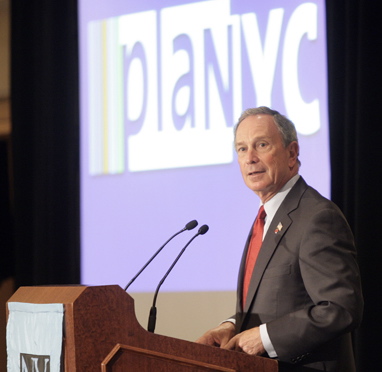
It’s amazing that what passes for political courage in national politics seems commonsense at the municipal level. New York Mayor Mike Bloomberg told the U.S. Conference of Mayors:
Last spring, as part of our PlaNYC initiative, we proposed a system of congestion pricing based on successful programs in London, Stockholm and Singapore. The plan would charge drivers $8 to enter Manhattan on weekdays from 6 a.m. to 6 p.m., which would help us reduce the congestion that is choking our economy, the pollution that has helped produce asthma rates that are twice the national average, and the carbon dioxide that is fueling global warming.
Now, the question is not whether we want to pay, but how do we want to pay. With an increased asthma rate? With more greenhouse gases? Wasted time? Lost business? Higher prices? Or do we charge a modest fee to encourage more people to take mass transit and use that money to expand mass transit service? When you look at it that way, the idea makes a lot of sense, but for the politics, because no one likes the idea of paying more. But being up front and honest about the costs and benefits, we’ve been able to build a coalition of supporters that includes conservatives and liberals, labor unions and businesses, and community leaders throughout the city.
Bloomberg goes on to suggest that in order to prevent the costs of climate change from spiraling out of control, we should be prepared to pay a smaller carbon tax now. Right on.
Additionally, Bloomberg opens a window into his thinking on international affairs. He hasn’t had too many opportunities to comment on his big-picture vision of U.S. foreign policy, so this paragraph is especially interesting:
It’s time for America to re-establish its leadership on all issues of international importance, including climate change. Because if we are going to remain the world’s moral compass — a role that we played throughout the 20th century, not always perfectly, but pretty darn well — we need to regain our footing on the world stage. That means ending the “go-it-alone” approach to foreign affairs that has never served America well. It didn’t work in the 1920s, when we tried to isolate ourself from the world, and it hasn’t work in recent years, when we’ve tried to stand above it, pretending that vital international treaties can simply be ignored. The fight against global warming is a test of America’s leadership — and not just on the environment.
Connecting the dots between climate change and foreign policy? Check. Working with allies? Check. Restoring moral credibility? Viewing multilateral treaties as a foundation for a stable international environment and prosperous United States? Check and check.
Bloomberg may not have extensive foreign policy experience, but he is demonstrating excellent instincts here. Hopefully — whether or not Bloomberg becomes a candidate for higher office — there will be more where this came from.
by Scott Paul | Oct 27, 2007 | Climate Justice, Global Justice, News
(Huene Island, pictured above, part of the Carteret Island chain, has literally been cut in two by rising sea levels)
Papua New Guinea’s Mission to the United Nations recently announced
that it would evacuate the Carteret Islands, a horseshoe-shaped group
of islands in the South Pacific. 2,000 Carteret Islanders slanders will
receive funding to resettle on Bougainville Island, which is a
four-hour boat ride away.
The Carteret Islanders are not the world’s first climate refugees,
but since they have all been displaced together, they may become some
of the best known. Meanwhile, people like Jim Inhofe insist that we sit on our hands.
Below is the press release from the Papua New Guinea Mission to the United Nations (I’d link to it, but as you can see, the PNG Mission web site isn’t quite up and running).
PNG TO RESETTLE CARTERET ISLANDERS AS SEA LEVEL RISES
PORT MORESBY, Papua New Guinea (The National, Oct. 17) – The
Carteret Islands are almost invisible on a map of the South Pacific,
but the horseshoe scattering of atolls in eastern-most Papua New Guinea
is on the front line of climate change, as rising sea levels and storm
surges eat away at their existence. For 20 years, the 2,000 islanders
living there have fought a losing battle against the ocean, building
sea walls and trying to plant mangroves. Each year, the waves surge in
higher, destroying vegetable gardens, washing away homes and
contaminating fresh water supplies. Recently, Prime Minister Sir
Michael Somare appropriated PGK4.1 million [US$1.4 million] to resettle
PNG villagers affected by global warming. The funding was part of a
PGK1.6 billion [US$569 million] supplementary budget handed down by
Treasury and Finance Minister Patrick Pruaitch. Out of the PGK4.1
million funding, PGK2 million [US$712,000] will go to the Bougainville
Autonomous Region’s Carteret Islanders. The local Bougainville
government has an ongoing resettlement program which it hopes to
complete by the end of the year. Rising sea levels will not only
displace human populations. Coral reefs are expected to be affected by
changes in ocean levels and sea surface temperatures.
Scott Paul
by Citizens for Global Solutions | Sep 16, 2007 | Climate Justice, Global Cooperation
Opinio Juris has a fantastic post regarding the Montreal Protocol on Substances that Deplete the Ozone Layer‘s September 16 birthday. According to the post:
The Protocol has aged well, frequently celebrated as the most successful international environmental treaty. It has effectively phased out or controlled the production and consumption of most ozone depleting substances that threaten the ozone layer. In the process, scientists have estimated millions of human lives have been or will be saved from skin cancer and its potentially deadly consequences (not to mention avoiding severe degredation of fisheries, flora and fauna via harmful UV rays that the ozone layer mitigates here on earth). The states parties to the treaty are planning a day of celebration to mark the occasion as well as the commencement of the 19th Meeting of the Parties.
And there is something to celebrate here. In terms of combating the problem itself, Montreal has worked out well so far. Although the ozone hole is now as large as it’s ever been, scientists estimate that over the next 50-75 years, the ozone layer will return to earlier levels. Moreover, the Montreal Protocol’s legal framework offers a model for interstate cooperation in responding to global environmental problems. The treaty has proved more than capable in allowing states to adjust their commitments in light of changes to scientific knowledge.
In light of the repeated beatings international treaties have taken over the past six years, let’s take today to celebrate a shining example of bipartisan, multinational cooperation. Happy birthday, Montreal Protocol!
by Scott Paul | Aug 6, 2007 | Climate Justice, Global Cooperation
I hinted in a couple of posts last week that I attended an interesting meeting with a White House official last week to discuss the summit planned for this fall on climate change. The White House policy is changing for the better – it’s a long way from decent, but it will hopefully create room for others to lead. Here’s a quick download of my meeting:
Background:
During the G8, as the U.S. was feeling the heat for rejecting calls to set an emissions target to prevent what the Intergovernmental Panel on Climate Change agreed would be “dangerous climate change,” President Bush announced that the U.S. would hold a high-level meeting with major emitters to discuss the issue.
U.S. officials originally wanted the meeting to take place in early October, but they didn’t take into account the Chinese holidays and the selection of Chinese Communist Party committee posts taking place at that time (we really ought to know these sorts of things!).
The initial meeting is now scheduled for September 27-28 and is intended to be the first in a series of 4-5 over the next year or two. Invited: U.S. (host) EU President/European Commission, France, Germany, Italy, UK, Japan, China, Canada, India, Brazil, S. Korea, Mexico, Russia, Australia, Indonesia, S. Africa, United Nations.
Key Details:
One of the first details that the White House official disclosed is that this is no longer being called a “major emitters” summit. In deference to some developing countries that don’t currently emit a whole lot, this is now being called a “major economies” summit.
The White House wants a “roll up your sleeves” working meeting, with representation at the minister and sub-minister level. They’ve asked for countries to send senior delegations with specialists on environment, energy security, finance, and commerce.
Many critics, including yours truly, have been concerned that the summit will distract attention and divert energy from the UNFCCC and Kyoto processes, which are scheduled to convene in Bali this November. The White House says it is attuned to these concerns and want to complement the Bali process – though I still have major doubts.
Here’s a brief summary that the White House is putting out on its current stance vis-a-vis the meeting.
Good News:
For starters, the White House official said – to the surprise of perhaps everyone in the room – that the administration is not opposed to a domestic cap & trade regime. I’m still having trouble swallowing this, but the official maintains that the administration has always been open to considering a proposal that doesn’t involve international carbon markets. I’ll believe it when I see it.
I mentioned that the summit would strive to reach a global emissions goal, and even if the goal is voluntary, it’s important for two reasons. First, it means the Bush administration no longer thinks it can fool the world into using an irrelevant metric, “emissions intensity,” in place of raw emissions. Second, pursuing a voluntary goal probably won’t limit the ability of the next president to pursue a binding one.
The other good news is that helping stakeholders deal with the development impacts of climate change (adaptation, in climate-speak) is becoming part of the administration’s agenda. It is now included in President Bush’s speech, it figures to be the focus of much U.S. diplomacy in Bali, and the White House is open to new initiatives on this front. The WH official acknowledges that this is a major “shift in diplomacy.” This may mean that the U.S. has found a way to be a positive influence in the UNFCCC process. I’m hopeful, but – again – I’ll believe it when I see it.
One more notable piece of good news: while the State Department has a role in the planning for this meeting, the White House Council on Environmental Quality and the White House official disclosed is that this is no longer being called a “major emitters” summit. In deference to some developing countries that don’t currently emit a whole lot, this is now being called a “major economies” summit.
The White House wants a “roll up your sleeves” working meeting, with representation at the minister and sub-minister level. They’ve asked for countries to send senior delegations with specialists on environment, energy security, finance, and commerce.
Many critics, including yours truly, have been concerned that the summit will distract attention and divert energy from the UNFCCC and Kyoto processes, which are scheduled to convene in Bali this November. The White House says it is attuned to these concerns and want to complement the Bali process – though I still have major doubts.
Here’s a brief summary that the White House is putting out on its current stance vis-a-vis the meeting.
Good News:
For starters, the White House official said – to the surprise of perhaps everyone in the room – that the administration is not opposed to a domestic cap & trade regime. I’m still having trouble swallowing this, but the official maintains that the administration has always been open to considering a proposal that doesn’t involve international carbon markets. I’ll believe it when I see it.
I mentioned that the summit would strive to reach a global emissions goal, and even if the goal is voluntary, it’s important for two reasons. First, it means the Bush administration no longer thinks it can fool the world into using an irrelevant metric, “emissions intensity,” in place of raw emissions. Second, pursuing a voluntary goal probably won’t limit the ability of the next president to pursue a binding one.
The other good news is that helping stakeholders deal with the development impacts of climate change (adaptation, in climate-speak) is becoming part of the administration’s agenda. It is now included in President Bush’s speech, it figures to be the focus of much U.S. diplomacy in Bali, and the White House is open to new initiatives on this front. The WH official acknowledges that this is a major “shift in diplomacy.” This may mean that the U.S. has found a way to be a positive influence in the UNFCCC process. I’m hopeful, but – again – I’ll believe it when I see it.
One more notable piece of good news: while the State Department has a role in the planning for this meeting, the White House Council on Environmental Quality and the National Security Council are taking lead roles. That means Harlan Watson, the administration’s Obstructer-in-Chief at UNFCCC meetings and one of the most outspoken and effective defenders of a backwards U.S. policy, will probably take a back seat.
Bad News:
The U.S. has proposed four tracks for the meeting: Land use (to include agriculture and forestry and touch on aspects of sequestration and adaptation), transportation (broken up into vehicle efficiency and fuel technology), advanced coal technologies, and energy efficiency.
A sectoral approach makes sense with this group as a complement to the UNFCCC process, but an entire track on clean coal technologies is taking us in precisely the wrong direction. Hopefully, other countries will push back and make a counterproposal that takes a more holistic view of alternative technologies for electricity.
Also, I still do feel this meeting will distract from the UNFCCC and Kyoto processes; if it does, it will be a net negative even if it’s productive.
Oh, one more piece of bad news: the U.S. still has one of the most anti-science climate policies in the world and the administration refuses to do what scientists unanimously agree is its share to limit emissions. That fact will overshadow this fall’s meeting – no matter how productive it turns out to be.
I’ll be getting more info on this throughout the summer and I’ll share more soon.
Scott Paul