Originally published on the CGS blog on November 27, 2007.
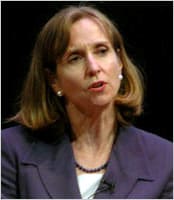
(Under Secretary of State Paula Dobriansky will lead the U.S. delegation to the UN climate change conference next month in Bali. White House Environment Czar James Connoughton will also be there for the high-level section, while chief climate obstructionist Harlan Watson will run the day-to-day negotiations)
Next month’s conference on climate change in Bali will be the 13th Conference of the Parties (COP) to the UN Framework Convention on Climate Change (which includes the U.S.) and the third Meeting of the Parties (MOP) to the Kyoto Protocol (which excludes the U.S.).
Over the past few years, negotiations have moved at a frighteningly
slow pace. I remember at the 11th COP in Montreal, it was considered a
great success that countries agreed to establish an “open-ended working
group” to discuss the next phase of commitments under the Kyoto
Protocol.
These negotiations may be tedious, but they do forge progress over
time. While the Bali conference is a crucial moment towards a climate
agreement that can take effect after 2012 (when the first commitment
period of the Kyoto Protocol expires), no one should expect anything
final to be hammered out next month.
With Australia now fully on board with global climate change efforts and even discussing immediate Kyoto Protocol ratification,
the U.S. is more or less alone among industrialized countries in
opposing internationally binding emissions limits – though it will, as
usual, get some help from Saudi Arabia and other oil-producing states.
Since President Bush took office, there has been some minor evolution in his administration’s rhetoric
but almost no change in policy (the one notable positive change is its
interest in helping communities adapt to the effects of climate change,
but it’s unclear how exactly the administration intends to move forward
on that front). The Bush administration could go one of two ways in the
upcoming climate conference.
The U.S. could continue its campaign of “hard obstruction” of the
past seven years. This course entails preventing the creation of new
binding rules on climate change. In other words, in addition to not
participating in global efforts, the U.S. could attempt to block other
countries from establishing new mechanisms with teeth. The stated
rationale for this is that the U.S. opposes a “one size fits all”
approach and believes no country should have to choose between economic
development and environmental protection. More likely, the U.S. doesn’t
want any other agreement to be created that it will be forced to
reject. This has been official U.S. policy since the beginning of the
Bush administration and it has infuriated friends and foes alike.
Alternatively, the U.S. could try a “soft obstruction.” It could
state its reservations about international climate agreements but not
protest their adoption by others. This would entail no formal
turnaround by the Bush administration, but it would leave the door open
for the next administration to participate fully in international
efforts. From a long-term perspective, ignoring the Bush administration
and creating a more durable, ambitious climate framework would probably
be the most constructive path for the international community to take.
Both of these approaches are obstructionist. Neither are good.
Ideally, President Bush would have a dramatic turnaround and take to
international climate agreements with Schwarzenegger-like vigor, but
I’m not holding my breath. I’ll settle for some soft obstruction and a
new administration that understands the importance of global warming
and doing our share to solve global problems.
Scott Paul
Note: A shout out is due to the members of the SustainUS delegation,
who are headed to Bali to represent the concerns of U.S. youth to other
delegates. Read dispatches from youth delegates at the COP here and here. If you are a young person, send your message to the delegates here.